
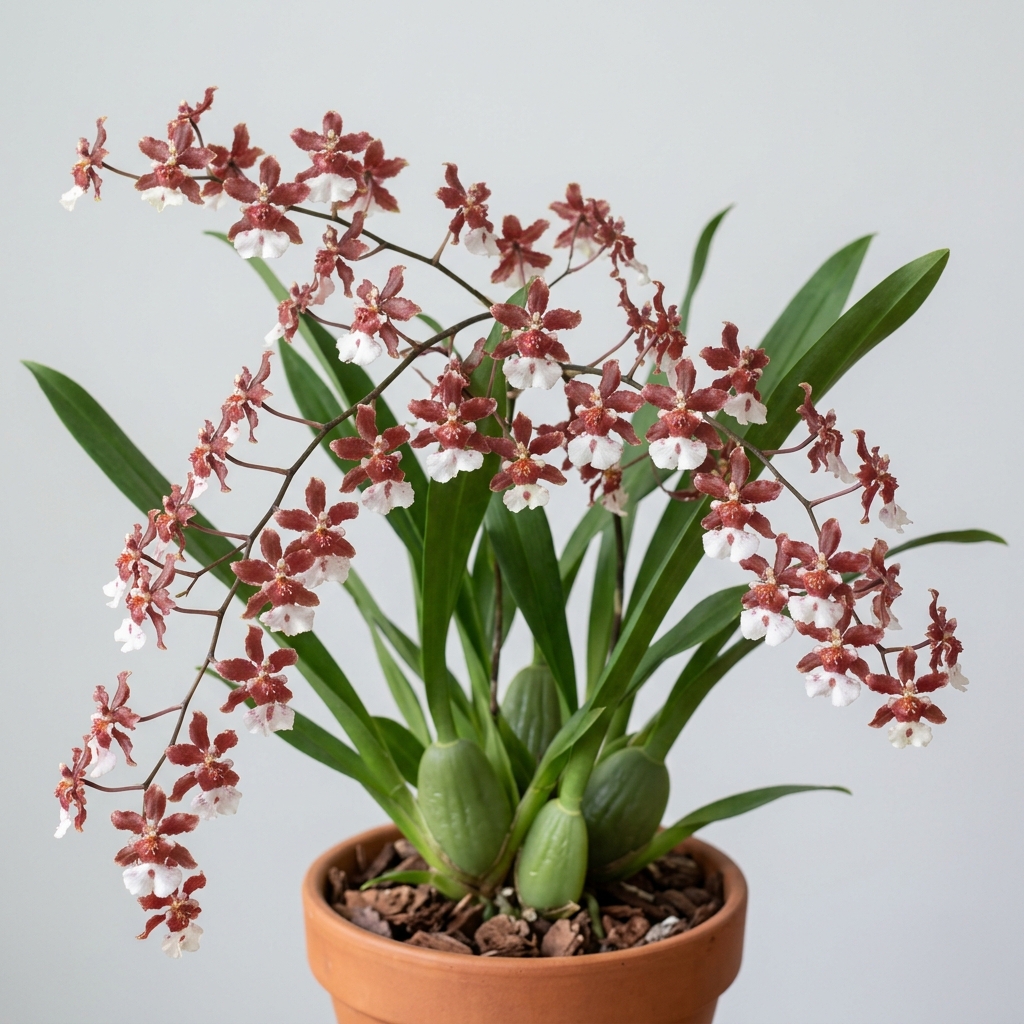
Oncidium Sharry Baby is one of the most celebrated and widely cultivated orchid hybrids in the world, famous for its sweet, chocolate-like fragrance. This sympodial orchid produces branching sprays adorned with dozens of small, reddish-brown and white flowers that can fill an entire room with their rich scent. It is highly valued by both novice growers and experienced collectors for its vigorous growth habit and reliable blooming performance.
Belonging to the Oncidium alliance, often referred to as dancing lady orchids, this cultivar features prominent pseudobulbs and strap-like green leaves. Its ease of care and spectacular floral displays make it a staple in indoor collections and greenhouses alike. When provided with bright, indirect light and consistent moisture, it rewards growers with long-lasting blooms that typically emerge once or twice a year.
💡 Did You Know?
The famous chocolate of Oncidium Sharry Baby is primarily emitted during the morning hours. As sunlight warms the petals, the chemical compounds responsible for the sweet cocoa scent volatilize, filling the surrounding air with a rich aroma that naturally tapers off by late afternoon.
🌿 Botanical Overview
Oncidium Sharry Baby is a sympodial epiphytic orchid characterized by its large, flattened, oval-shaped pseudobulbs. These pseudobulbs serve as water and nutrient storage organs, allowing the plant to survive brief periods of drought in its ancestral lineage’s natural habitats. From the base of these pseudobulbs, long, thin, arching leaves emerge, typically reaching lengths of 12 to 18 inches.
The root system of this cultivar is relatively fine and fibrous compared to larger-rooted orchids like Phalaenopsis. Healthy roots are white or light green with active green growing tips, wrapping tightly around potting media or mounts. As the plant matures, it produces multiple leads, eventually forming a dense, multi-pseudobulb specimen capable of throwing several flower spikes simultaneously.
🌸 Flower Characteristics
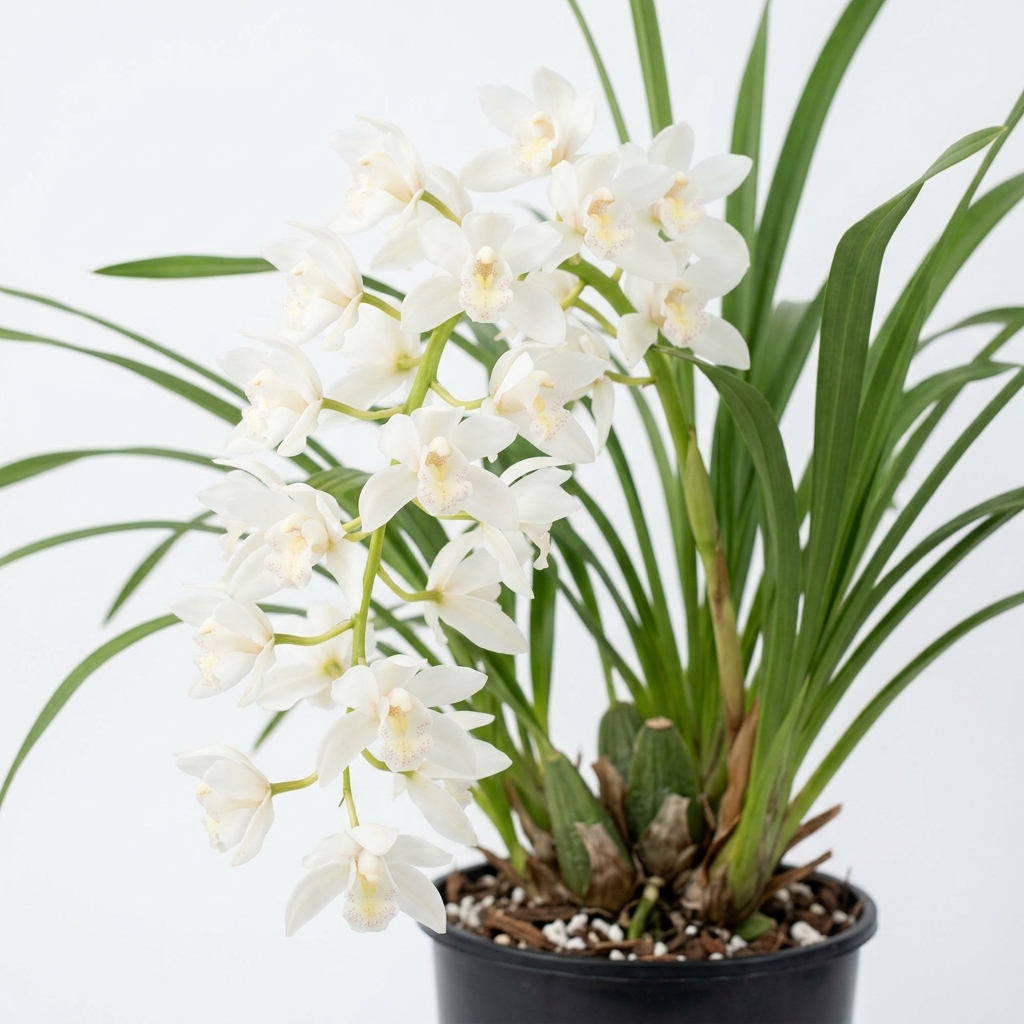
The flowers of Oncidium Sharry Baby are relatively small, usually measuring about 1 to 1.5 inches in diameter, but they make up for their size in sheer quantity. A single mature flower spike can grow up to three or four feet in length, branching extensively to carry dozens, sometimes over a hundred, individual blooms. The petals and sepals are typically a deep reddish-brown or burgundy color, often with subtle yellow or green tips.
The most prominent feature of each flower is the broad, flaring lip, or labellum, which is typically white, pink, or light rose, creating a striking contrast against the darker sepals and petals. This classic dancing lady shape gives the illusion of a tiny skirted figure suspended in mid-air. The overall presentation is a cloud-like spray of color that remains attractive for several weeks.
Fragrance & Bloom Profile
The defining characteristic of Oncidium Sharry Baby is its intense, sweet fragrance, which is widely described as smelling of milk chocolate, cocoa, or vanilla. This scent is usually most potent during the morning and early afternoon hours, especially when the plant is exposed to warm temperatures and bright light. The fragrance can easily fill a medium-sized room, making it a favorite for sensory plant displays.
Individual blooms can last anywhere from four to six weeks, depending on environmental conditions. To maximize the lifespan of the flowers, growers often move the plant to slightly cooler temperatures and lower light once the buds have fully opened.
Parentage & Hybrid Lineage
Oncidium Sharry Baby is a complex hybrid registered in the late 20th century. According to official orchid registries, its parentage is generally accepted as Oncidium Jamie Sutton crossed with Oncidium Honolulu. This lineage combines several ancestral Oncidium species, contributing to the hybrid’s robust vigor, adaptability to home environments, and distinct floral fragrance.
While some variations in flower color and fragrance intensity exist among different clones—such as Sweet Fragrance or Ruby Doll—the fundamental growth habits and care requirements remain highly consistent across the cultivar.
🌱 Growing Conditions
To thrive, Oncidium Sharry Baby requires bright, indirect light. In home environments, an east-facing window or a shaded south- or west-facing window is ideal. The leaves should be a light, grassy green; dark green leaves indicate insufficient light, while yellow or reddish-tinged leaves suggest the light is too intense.
💡 Care Tip
Keep a close eye on the pseudobulbs of your orchid. Plump, smooth pseudobulbs indicate a well-hydrated plant, while slight wrinkling is a reliable signal that it is time to water.
This cultivar prefers intermediate to warm temperatures, ideally ranging from 65°F to 80°F (18°C to 27°C) during the day, with a slight drop of 10°F to 15°F at night to help stimulate flower spike development. Relative humidity should ideally be maintained between 50% and 70%, accompanied by gentle air movement to prevent fungal pathogens from settling on the foliage.
Watering, Feeding & Potting Media
Watering should be frequent enough to keep the potting medium evenly moist but never waterlogged. Because of their fine roots, these orchids do not tolerate prolonged dryness, which can cause the pseudobulbs to shrivel and the leaves to develop accordion-like pleating. Typically, watering once or twice a week is sufficient, depending on the home’s ambient humidity and temperature.
A well-draining potting mix is essential. A blend of fine to medium fir bark, perlite, and a small amount of sphagnum moss works exceptionally well. Feed the orchid regularly during its active growth phase with a balanced, water-soluble orchid fertilizer diluted to quarter or half strength, applying it every two to three weeks.
Blooming Season & Care Notes
While Oncidium Sharry Baby typically blooms in the autumn or spring, mature and healthy specimens can bloom at almost any time of year, sometimes twice annually. When a new pseudobulb matures, a flower spike will emerge from the protective sheath at its base.
Once the spike begins to grow, it may require staking to support the weight of the numerous heavy blooms. After the flowers have faded, cut the spike back to the base of the pseudobulb. Repotting should be done every one to two years, ideally just as new root growth begins to emerge from the base of the newest pseudobulb.
⚠️ Common Issues
⚠️ Common Mistake
Avoid letting this orchid sit in standing water or using heavy, dense potting soil, which quickly suffocates the fine root system and leads to root rot.
- Accordion folding of leaves: This is a classic sign of underwatering or low humidity during the active leaf development phase.
- Pseudobulb shriveling: Indicates dehydration, which can be caused by either underwatering or root rot from overwatering.
- Leaf spotting: Small black spots on the leaves are common in Oncidiums and are often cosmetic, but they can be minimized by improving air circulation and keeping water off the foliage.
- Bud blast: Sudden dropping of unopened buds, usually caused by rapid changes in temperature, drafty conditions, or low humidity.
- Pests: Mealybugs, scale, and spider mites can occasionally target the soft foliage and flower spikes.
❓ Frequently Asked Questions
How do I get my Oncidium Sharry Baby to rebloom?
To encourage reblooming, ensure the orchid receives bright, indirect light and a slight drop in nighttime temperatures once the new pseudobulbs reach maturity. Consistent watering and regular fertilization during the active growing season are also crucial for building the energy required to produce a new flower spike.
Why are the leaves on my orchid folding like an accordion?
Accordion-like pleating of new leaves is a direct response to moisture stress, usually caused by inconsistent watering or low humidity while the leaf was actively growing. Once the leaf is pleated, it will remain that way, but you can prevent future leaves from folding by maintaining steady moisture and increasing humidity.
What is the best potting medium for this cultivar?
A well-draining, fine-grade orchid bark mix is ideal for Oncidium Sharry Baby due to its relatively fine root system. Mixing in some perlite for aeration and a small amount of sphagnum moss to retain light moisture helps mimic its natural epiphytic growing environment.
Is Oncidium Sharry Baby suitable for beginner orchid growers?
Yes, this cultivar is highly recommended for beginners. It is much more forgiving of minor care mistakes than many other orchid genera, grows vigorously, and provides a highly rewarding, fragrant floral display with basic indoor care.
⭐ Final Growing Notes
Oncidium Sharry Baby remains a timeless favorite in the orchid community for good reason. Its legendary chocolate scent, combined with its ease of culture and spectacular, cloud-like blooming habit, makes it an exceptionally rewarding plant to grow. By providing it with bright, filtered light, consistent moisture, and adequate humidity, you can enjoy its delightful fragrance and beautiful dancing blooms for many years to come.
🌱 Propagation Tip
Propagate this orchid by division during repotting, ensuring each new division has at least three to four healthy, mature pseudobulbs to support active new growth.
⭐ Expert Advice
To prolong the life of the fragrant blooms, move the plant to a slightly cooler location with lower levels once the flower buds have fully opened.

Leave A Comment