
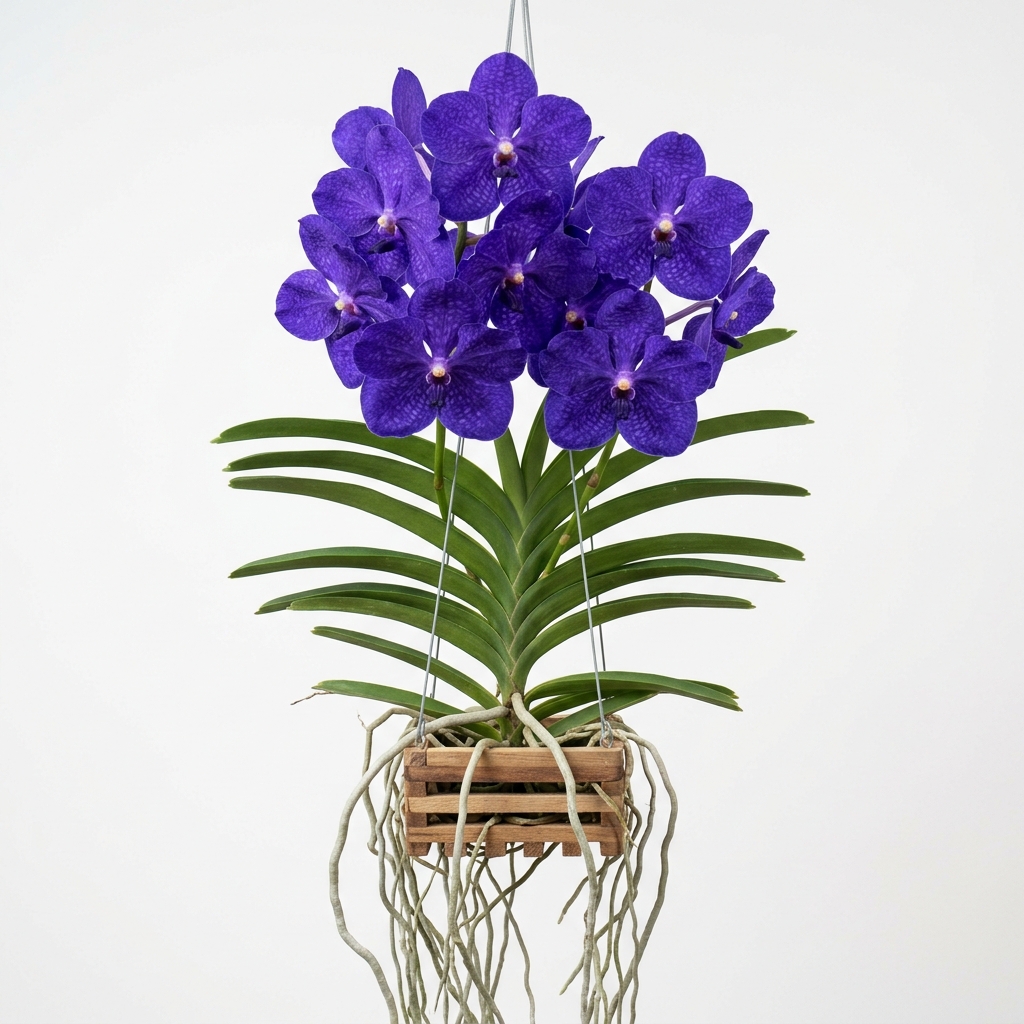
Vanda Robert’s Delight is a highly celebrated hybrid orchid renowned for its striking, large, and intensely saturated blossoms. As a classic representative of the Vanda genus, this cultivar is prized by collectors for its robust monopodial growth habit and its ability to produce magnificent displays of flat, rounded flowers. Its dramatic presentation and vibrant coloration make it a centerpiece in tropical orchid collections worldwide.
Cultivating this orchid successfully requires an understanding of its epiphytic nature, particularly its preference for open-air root systems and high-intensity light. While it demands consistent humidity and diligent watering, the reward of its long-lasting, brilliant blooms makes it an exceptionally satisfying plant for dedicated growers. Whether grown in a hanging wooden basket or mounted, Vanda Robert’s Delight exemplifies the exotic beauty of the orchid family.
💡 Did You Know?
Vanda Robert's Delight is famous for its velamen-coated roots. Velamen is a silvery, sponge-like layer of dead cells that acts like a sponge, rapidly absorbing morning dew and rain in the wild, while also protecting the delicate inner root tissues from intense tropical sunlight and dehydration.
🌿 Botanical Overview
Vanda Robert’s Delight shows a classic monopodial growth pattern, meaning it grows upward from a single vegetative stem. Thick, leathery, strap-like leaves emerge in an alternating, fan-like arrangement along the central stem. This growth habit allows the plant to efficiently capture light and channel water down toward its base in its native-style canopy environments.
The root system of this cultivar is particularly noteworthy. It produces thick, fleshy, silver-grey aerial roots covered in velamen, a specialized spongy tissue that rapidly absorbs moisture and nutrients from the air. Unlike terrestrial orchids, these roots require constant exposure to air and will quickly suffocate if buried in traditional dense potting soils.
🌸 Flower Characteristics
The flowers of Vanda Robert’s Delight are celebrated for their exceptional form, characterized by overlapping, broad petals and sepals that create a nearly perfect circular outline. The blooms are typically large, often reaching four to five inches in diameter, and are presented on strong, upright or slightly arching inflorescences that emerge from the leaf axils.
Coloration is highly intense, ranging from deep, velvety royal blue and violet to rich garnet red, often adorned with darker tessellations or netting patterns across the segments. The small, concentrated lip or labellum sits at the center, providing a structural contrast to the expansive lateral sepals and petals.
Fragrance & Bloom Profile
While some Vanda species and hybrids are known for intense perfumes, the fragrance profile of Vanda Robert’s Delight is relatively subtle. Many growers report a very faint, sweet scent detectable only during the warmest hours of the morning, while other clones may exhibit no noticeable fragrance at all.
The primary appeal of this cultivar remains its visual impact and bloom longevity. A single flower spike can carry up to a dozen or more blossoms, which remain pristine on the plant for six to eight weeks under optimal environmental conditions.
Parentage & Hybrid Lineage
Vanda Robert’s Delight is a complex hybrid resulting from generations of selective breeding aimed at maximizing flower size, roundness, and color intensity. In horticultural records, its lineage is commonly attributed to the cross between Vanda Kasem’s Delight and Vanda Madame Rattana.
Because hybrid registrations can sometimes involve complex taxonomic reclassifications or variations among specific clonal selections, growers should note that subtle differences in flower color and growth vigor may exist among plants bearing this cultivar name.
🌱 Growing Conditions
To thrive, Vanda Robert’s Delight requires bright, indirect sunlight. In tropical climates, it can tolerate morning sun but needs protection from scorching midday rays. Insufficient light is the most common reason for a lack of blooms; healthy leaves should be a light, grassy green rather than a dark forest green.
💡 Care Tip
Always water your Vanda in the morning. This ensures that any water trapped in the crown or leaf axils has ample time to evaporate during the day, significantly reducing the risk of crown rot and fungal infections.
Temperature ranges must remain warm, ideally between 65°F and 95°F (18°C to 35°C). This cultivar is highly sensitive to cold and should be protected from temperatures dropping below 55°F (13°C). High humidity of 70% to 80% coupled with strong, continuous air movement is essential to prevent fungal pathogens from settling on the damp foliage.
Watering, Feeding & Potting Media
Watering is the most active component of caring for Vanda Robert’s Delight. Because it is typically grown bare-root in slatted wooden baskets or hung directly from wires, it has no media to retain moisture. Roots should be thoroughly soaked or heavily misted daily—sometimes twice daily during hot summer months—until they turn from a silvery-white to a vibrant green.
Feeding should be frequent but dilute, a practice often described as “weakly weekly.” A balanced, water-soluble orchid fertilizer applied at a quarter or half strength during active growth periods supports robust leaf and root development. Flushing the roots with pure water between fertilizer applications prevents mineral salt buildup.
Blooming Season & Care Notes
This cultivar is capable of blooming multiple times throughout the year, with peak flowering typically occurring from late spring through autumn. Once a flower spike begins to emerge from the leaf axil, avoid changing the plant’s orientation to the light source, as the spike will bend toward the light and may develop an awkward presentation.
After the blossoms have faded, the flower spike should be cut back close to the main stem using sterilized shears. Repotting or transferring to a larger wooden basket is rarely needed unless the basket itself has decayed, as the roots prefer to grow freely into the surrounding air.
⚠️ Common Issues
⚠️ Common Mistake
A frequent error is planting this orchid in standard potting soil or fine bark. Vanda roots are highly adapted to open air; suffocating them in dense media prevents oxygen exchange, leading to rapid root rot and the eventual death of the plant.
- Root Rot:
Occurs if the roots are kept in stagnant, poorly drained media or if air circulation is inadequate. - Bud Blast:
The sudden yellowing and dropping of unopened buds, usually caused by abrupt changes in temperature, drafty conditions, or low humidity. - Leaf Spotting: Fungal or bacterial spots can develop on leaves if water remains on the foliage overnight without sufficient airflow.
- Dehydration:
Indicated by shriveled, leathery leaves and dry, brittle roots, often due to infrequent watering in low-humidity environments. - Pests:
Thrips, scale, and mealybugs can occasionally target the tender flower buds and leaf axils.
❓ Frequently Asked Questions
How often should I water Vanda Robert’s Delight?
Because this orchid is typically grown bare-root without potting media, it requires daily watering. In hot or dry weather, you may need to spray or soak the roots twice a day. Ensure the roots turn completely green during watering, which indicates they have absorbed sufficient moisture.
Why is my Vanda Robert’s Delight not blooming?
The most common cause of non-blooming is insufficient light. Vanda Robert’s Delight requires very bright, filtered light to trigger flowering. If the leaves are a dark forest green, gradually move the plant to a brighter location where the leaves turn a lighter, grassy green.
Can I grow this orchid indoors?
Yes, but it can be challenging due to its high humidity and light requirements. Indoor growers often succeed by placing the orchid in a bright south- or east-facing window, using a humidifier, and taking the plant to the sink or shower daily for a thorough root soaking.
What is the best way to mount or pot this cultivar?
Vanda Robert’s Delight performs best when grown bare-root in a slatted teak wooden basket. This setup allows the thick aerial roots to hang freely and dry rapidly after watering, mimicking its natural epiphytic habitat. Avoid traditional potting soil or fine bark mixes.
⭐ Final Growing Notes
Vanda Robert’s Delight remains a crown jewel of the orchid world, offering unparalleled visual drama for those willing to meet its unique cultural demands. By providing abundant light, warm temperatures, and daily hydration to its exposed roots, you will be rewarded with spectacular, long-lasting blooms that showcase the very best of tropical orchid hybridization.
🌱 Propagation Tip
Vandas are monopodial and do not divide like sympodial orchids. Propagation is typically achieved by waiting for a keiki to form naturally at the base of the stem. Allow the keiki to develop several strong roots of its own before carefully detaching it.
⭐ Expert Advice
To maximize blooming frequency, maintain a strict fertilizer schedule during the warm growing season. Using a high-phosphorus bloom booster formula every third in late spring can help stimulate the development of multiple flower spikes.

Leave A Comment