
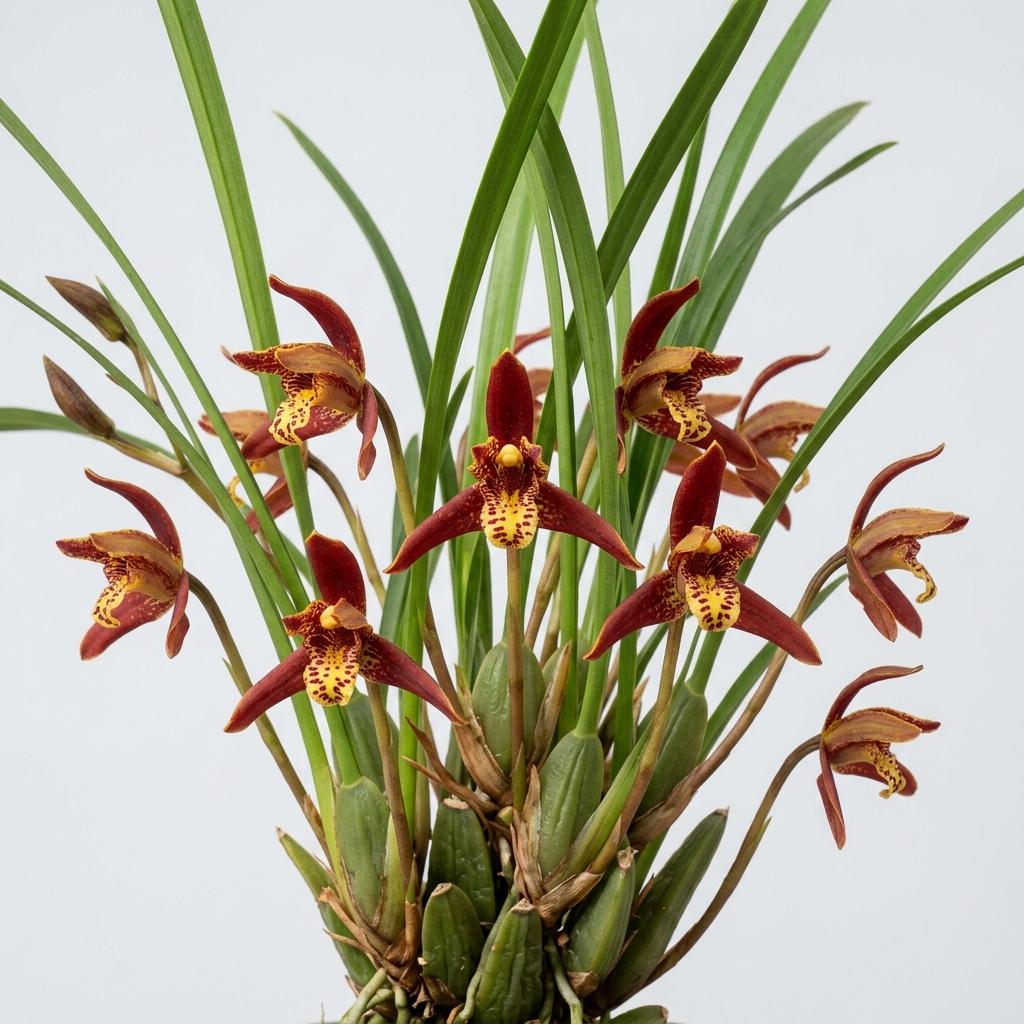
Maxillaria tenuifolia, widely celebrated as the coconut orchid, is a highly popular orchid species prized for its distinct, tropical fragrance and striking red-and-yellow blooms. Native to the low-elevation forests of Mexico and Central America, this epiphytic orchid features a unique growth habit characterized by small, flattened pseudobulbs topped with long, grass-like leaves. Growers of all experience levels value this plant for its vigorous growth and reliable blooming cycle, making it a staple in diverse orchid collections.
Unlike many orchids that produce long, arching flower spikes, Maxillaria tenuifolia produces single flowers on short stalks that emerge from the base of its pseudobulbs. The combination of its intense coconut aroma and its relatively straightforward care requirements has earned it a permanent place in the horticultural world. When grown under optimal conditions, a mature specimen can transform into a dense, grassy clump covered in vibrant, star-shaped blossoms.
💡 Did You Know?
The intense coconut of Maxillaria tenuifolia is produced by volatile compounds within the flower petals that are activated by sunlight and warmth. On cloudy days or during the night, the scent may disappear entirely, only to return in full force once the morning sun warms the blossoms.
🌿 Botanical Overview
Maxillaria tenuifolia belongs to the diverse genus Maxillaria, which comprises hundreds of species native to the tropical Americas. The specific epithet tenuifolia translates to “thin-leafed,” referencing the slender, grass-like foliage that distinguishes this species from broader-leafed relatives. The plant grows via an ascending rhizome, meaning new pseudobulbs form slightly higher than the previous ones, creating a somewhat climbing or scrambling growth habit over time.
In its natural habitat, this orchid grows as an epiphyte on tree trunks and larger branches, where it is exposed to bright, filtered light and frequent rainfall. The pseudobulbs act as water-storage organs, helping the plant survive brief dry spells between rains. Understanding this epiphytic, climbing nature is key to providing the appropriate structural support and potting media in cultivation.
🌸 Flower Characteristics
The flowers of Maxillaria tenuifolia are typically 1.5 to 2 inches (3.8 to 5 cm) in diameter and feature a star-like, triangular shape. The sepals and petals are a rich, dark red to brownish-red color, occasionally showing subtle yellow undertones or speckling. The lip, or labellum, is a standout feature, typically presenting a creamy yellow or white base heavily spotted with dark red or purple dots, creating a beautiful contrast.
Each flower is produced individually on a short, single-flowered inflorescence arising from the base of the newly matured pseudobulbs. Because the flowers sit relatively close to the foliage, a well-grown plant with multiple active leads will showcase blooms nestled among the long, green leaves, creating a highly naturalistic display.
Fragrance & Bloom Profile
The defining characteristic of Maxillaria tenuifolia is undoubtedly its fragrance, which strongly resembles toasted coconut or coconut sunscreen. This sweet, tropical scent is highly potent and typically fills a growing room or greenhouse on warm, sunny days when the flowers are fully open. The fragrance is most intense during the morning and early afternoon hours, fading slightly as evening approaches.
Individual flowers are relatively long-lasting, typically remaining fresh for three to four weeks under ideal conditions. While the primary blooming period occurs in late spring and early summer, healthy plants may occasionally produce sporadic blooms at other times of the year if environmental conditions remain stable.
Parentage & Hybrid Lineage
As a naturally occurring species rather than a man-made hybrid, Maxillaria tenuifolia does not have a complex lineage of parental cultivars. It is widely propagated from seed or division within the horticultural trade to preserve its desirable traits, particularly its strong fragrance and deep red coloration. While some select line-bred cultivars exist with larger flowers or more intense coloration, these are generally classified under the species name.
In orchid hybridization, Maxillaria tenuifolia has been used occasionally to introduce its robust growth habit and unique coconut scent to intergeneric hybrids, though such crosses remain relatively uncommon compared to other orchid alliances. Most plants available to hobbyists are true species selections that closely mirror the wild populations of Central America.
🌱 Growing Conditions
To cultivate Maxillaria tenuifolia successfully, growers should aim to replicate its native tropical forest environment. This orchid thrives in bright, indirect light, similar to the conditions preferred by Cattleya orchids. While it can tolerate some direct morning sun, harsh afternoon sunlight can scorch the thin, grass-like leaves. Under-lighted plants may fail to bloom and will exhibit dark green, floppy foliage.
💡 Care Tip
Provide bright, indirect equivalent to Cattleya conditions. If the grass-like leaves begin to droop or turn a dark, dull green, the plant is likely not receiving enough to trigger future blooms.
Temperature: wise, this species is highly adaptable, classified as a warm-to-intermediate grower. It prefers daytime temperatures between 75°F and 85°F (24°C to 29°C) and a nighttime drop to 60°F to 65°F (15°C to 18°C). High humidity levels of 50% to 70% are ideal, coupled with strong, continuous air movement to prevent fungal pathogens from settling on the dense foliage.
Watering, Feeding & Potting Media
During the active growing season in spring and summer, Maxillaria tenuifolia requires frequent watering to keep the potting medium evenly moist but not waterlogged. The thin leaves and climbing pseudobulbs do not store water as efficiently as some thicker-leafed orchids, so they should not be allowed to dry out completely for extended periods. In winter, watering should be reduced slightly, allowing the medium to dry out more between waterings while preventing the pseudobulbs from shriveling excessively.
A well-draining potting mix is essential. Many growers prefer a medium-grade fir bark mix blended with perlite and charcoal, or a mix of sphagnum moss and bark to retain consistent moisture. Because of its climbing habit, this orchid also performs exceptionally well when mounted on cork bark or tree fern plaques, provided the grower can maintain high humidity and water the plant daily. Feed regularly with a balanced orchid fertilizer diluted to quarter or half strength during active growth.
Blooming Season & Care Notes
The primary blooming season for Maxillaria tenuifolia spans from late spring through early summer. To encourage a robust bloom cycle, it is beneficial to provide a slight cooling period and reduced watering during the late autumn and winter months. This mimics the natural dry season of its native habitat and triggers the development of flower buds at the base of the pseudobulbs.
Repotting should be performed only when necessary, typically every two to three years as the potting medium begins to break down or when the plant outgrows its container. The best time to repot or divide the plant is in the spring, just as new root growth begins to emerge from the base of the newest pseudobulbs. Minimize root disturbance during this process to avoid stalling the upcoming bloom cycle.
⚠️ Common Issues
⚠️ Common Mistake
Avoid letting this orchid dry out completely for extended periods during the summer. Unlike some orchids with thick pseudobulbs, the thin leaves of this species transpire rapidly and will quickly show stress and shriveling.
- Shriveled Pseudobulbs: Often indicates underwatering or root loss due to overwatering; check the roots to determine the cause.
- Leaf Tip Burn: Can be caused by low humidity, mineral buildup from hard water, or excessive fertilizer application.
- Lack of Blooms: Usually a result of insufficient light during the active growing season or a lack of a cooler, drier winter rest.
- Spider Mites:
The thin, grass-like leaves are susceptible to spider mites, especially in dry, low-humidity environments. - Root Rot:
Occurs when the potting medium breaks down and retains too much water, suffocating the root system.
❓ Frequently Asked Questions
How do I get my Maxillaria tenuifolia to bloom?
To encourage blooming, ensure the plant receives bright, indirect light throughout the year and provide a distinct winter rest. During winter, reduce watering slightly and allow temperatures to drop into the low 60s Fahrenheit (15-17°C) at night. This seasonal shift triggers the initiation of flower buds at the base of mature pseudobulbs.
Why are the pseudobulbs on my coconut orchid shriveling?
Shriveled pseudobulbs indicate that the orchid is not absorbing enough water. This can be caused by simple underwatering or, conversely, by overwatering which has rotted the root system. Inspect the roots: if they are firm and white, increase watering frequency; if they are brown and mushy, repot the plant in fresh media and cut back on water.
Can I grow Maxillaria tenuifolia mounted instead of in a pot?
Yes, Maxillaria tenuifolia thrives when mounted on cork bark or tree fern plaques due to its natural climbing growth habit. However, mounted plants dry out much faster than potted ones. If you choose to mount this orchid, you must provide high humidity and water the plant daily, or even multiple times a day during hot summer weather.
What is the best potting mix for this orchid?
The best potting mix balances moisture retention with excellent drainage. A mix of medium-grade fir bark, tree fern fiber, and sphagnum moss works exceptionally well. Some growers use pure sphagnum moss in clay pots, while others prefer a bark-based mix in plastic pots. Adjust the mix based on your local humidity and watering habits.
⭐ Final Growing Notes
Maxillaria tenuifolia remains one of the most rewarding orchids for indoor and greenhouse growers alike, offering an unmatched sensory experience with its delightful coconut fragrance. By providing bright light, consistent moisture, and accommodating its unique climbing growth habit, you can enjoy a healthy, vigorous plant that rewards you with a spectacular display of crimson blossoms year after year.
🌱 Propagation Tip
Propagate during spring repotting by dividing large clumps. Ensure each division contains at least three to four healthy, mature pseudobulbs with active roots to ensure the new plant establishes quickly without stalling.
⭐ Expert Advice
Because of its climbing growth habit, use a tall pot or mount the orchid on a totem. This allows the ascending rhizomes to attach naturally rather than spilling untidily over the edges of a standard shallow pot.

Leave A Comment