
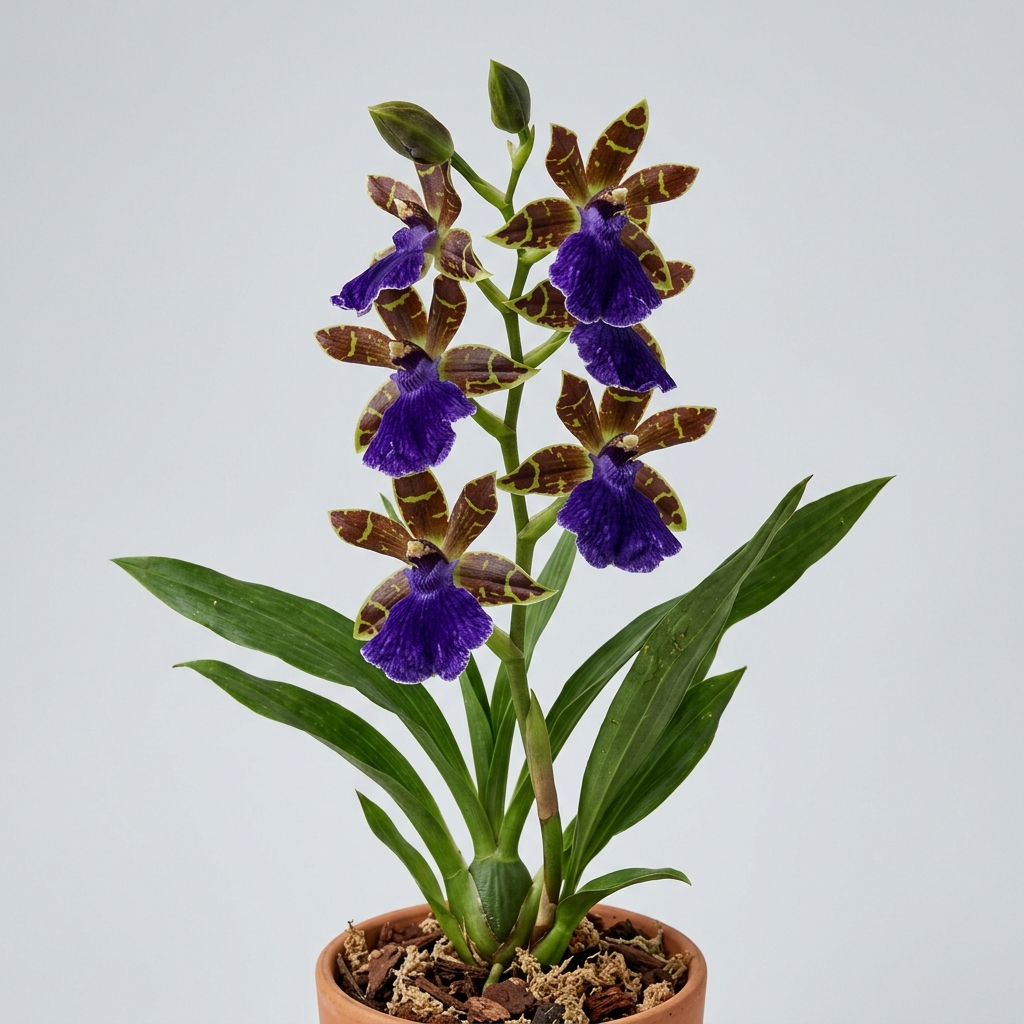
Zygopetalum Advance Australia is a highly celebrated orchid hybrid prized for its dramatic color contrast, vigorous growth habit, and exceptionally intense fragrance. This captivating cultivar produces stunning zygomorphic flowers featuring rich indigo-purple lips set against chocolate-brown and green patterned tepals, making it a standout addition to any indoor orchid collection. Growers of all experience levels value this plant for its ability to deliver exotic, long-lasting blooms without the demanding care requirements of more temperamental orchid genera.
Characterized by its robust sympodial growth, this orchid develops plump, egg-shaped pseudobulbs and elegant, strap-like green foliage. Unlike many other tropical orchids that require strict greenhouse conditions, this resilient hybrid adapts well to typical home environments, provided its basic needs for moisture, filtered light, and moderate temperatures are met. Its reliable blooming cycle and highly rewarding sensory appeal make it a favorite among orchid enthusiasts worldwide.
💡 Did You Know?
Zygopetalum Advance Australia belongs to the Zygopetalum orchid group, where flower presentation is often just as important as . White-flowered cultivars are especially valued indoors because their pale blooms reflect well and pair easily with many home, greenhouse, and display settings.
🌿 Botanical Overview
Zygopetalum Advance Australia shows a classic sympodial growth habit, producing clustered, smooth, light-green pseudobulbs that serve as water and nutrient storage organs. From the apex of these pseudobulbs emerge several long, lanceolate, pleated leaves that are relatively thin and pliable. Because the leaves lack the heavy, waxy cuticle found in genera like Cattleya, they are more sensitive to dry air and intense sunlight, requiring careful environmental management to maintain their pristine appearance.
The root system of this hybrid is robust, consisting of thick, fleshy, white roots covered in a spongy layer of velamen. These roots are highly efficient at absorbing moisture and nutrients but are also sensitive to compaction and prolonged saturation. Healthy root development is closely tied to the plant’s active growth phases, which typically occur during the warmer spring and summer months when new vegetative shoots emerge from the base of the mature pseudobulbs.
🌸 Flower Characteristics
The blossoms of Zygopetalum Advance Australia are a masterclass in natural contrast. Each upright or slightly arching flower spike can carry several large, waxy flowers, typically measuring between two and three inches in diameter. The sepals and petals are base-colored in a bright, grassy green but are heavily overlaid with bold, irregular blotches of deep chocolate brown, creating a tiger-striped effect that frames the center of the bloom.
The defining feature of the flower is its prominent, fan-shaped labellum, or lip. This structure is densely saturated with rich shades of violet, magenta, and deep indigo purple, often accented by intricate white veining or a clean white margin along the ruffled edges. The flowers are held proudly above or alongside the foliage, presenting a dramatic visual display that lasts for several weeks.
Fragrance & Bloom Profile
One of the primary reasons growers seek out Zygopetalum Advance Australia is its extraordinary fragrance. The blooms emit a powerful, complex perfume that combines the sweet, floral notes of hyacinth and freesia with a warm, spicy undertone reminiscent of fresh ground pepper. This scent is highly diurnal, peaking in intensity during the morning and early afternoon hours when warmth and light stimulate the release of volatile oils.
A single mature plant with multiple blooming spikes can easily perfume an entire room. The flowers are remarkably long-lasting, often remaining pristine for four to six weeks. To maximize the lifespan of the blooms, keep the plant in a cool, draft-free location once the buds have fully opened, and avoid spraying water directly onto the delicate petals.
Parentage & Hybrid Lineage
This exceptional grex is widely recognized as a hybrid cross between Zygopetalum Helen Ku and Zygopetalum Titanic. While specific registration dates and individual clonal awards can sometimes vary across regional horticultural registries, this lineage is celebrated for consolidating the most desirable traits of both parents. It inherits the deep, velvety lip coloration of Helen Ku and the robust growth habit, larger flower size, and strong spike presentation of Titanic.
Because it is a complex hybrid, individual plants may exhibit slight variations in the intensity of the purple lip or the density of the brown patterning on the petals. However, the overall quality and vigor of the Advance Australia grex remain remarkably consistent, making it one of the most reliable and highly sought-after Zygopetalum hybrids on the market.
🌱 Growing Conditions
To keep Zygopetalum Advance Australia thriving, aim to replicate its natural cool-to-intermediate forest canopy environment. It prefers bright, filtered light, such as that provided by an east-facing window or a shaded south-facing window. Direct midday sunlight will quickly scorch the thin, pleated leaves, while insufficient light will result in dark green foliage and a failure to produce flower spikes.
💡 Care Tip
For best results, grow Zygopetalum Advance Australia in bright filtered with steady and gentle airflow. Avoid placing the plant in harsh midday sun, but do not keep it in a dark corner; weak is one of the most common reasons cultivated orchids refuse to rebloom.
Temperature management is crucial for this orchid. It prefers daytime temperatures between 70°F and 80°F (21°C to 27°C), with a distinct drop at night to 55°F to 65°F (13°C to 18°C). This diurnal temperature fluctuation is a key trigger for spike initiation. Additionally, maintain a relative humidity level of 50% to 70% and ensure constant, gentle air movement to prevent stagnant air from encouraging fungal pathogens.
Watering, Feeding & Potting Media
Unlike many epiphytic orchids, Zygopetalums do not tolerate drying out completely. The potting medium should remain evenly moist but never soggy. Water the plant thoroughly just as the top layer of the medium begins to feel dry to the touch. During the active summer growth phase, the plant will require more frequent watering, which can be scaled back slightly during the cooler winter months.
Feed your orchid with a balanced, water-soluble orchid fertilizer diluted to one-quarter or one-half strength. Apply this nutrient solution three out of four waterings during the active growing season, flushing the pot with pure water on the fourth week to wash away accumulated mineral salts. A potting mix consisting of medium-grade fir bark, perlite, and a small amount of chopped sphagnum moss provides the ideal balance of moisture retention and root aeration.
Blooming Season & Care Notes
Zygopetalum Advance Australia typically initiates its blooming cycle in late autumn, winter, or early spring. The flower spikes emerge from the base of the newly developing vegetative shoots before the new pseudobulbs have fully matured. Because the spikes and new leaves grow concurrently, it is vital to avoid getting water trapped in the tender new growth, as this can lead to crown rot or bud blast.
Once the blooming cycle is complete, allow the plant a brief period of rest with slightly reduced watering. Repotting should be performed only when new root growth is visible at the base of the newest pseudobulbs, which usually occurs shortly after the flowers fade. Choose a pot that allows for two years of future growth, as Zygopetalums dislike having their roots disturbed too frequently.
⚠️ Common Issues
⚠️ Common Mistake
The most common mistake is by calendar instead of root and potting-media condition. Zygopetalum roots need moisture and air at the same time, so constantly wet bark or sphagnum can lead to root loss even when the leaves still look healthy.
- Fungal leaf spotting: Small black spots can appear on the thin leaves if water is allowed to sit on the foliage or if air circulation is inadequate.
- Root rot: Caused by overwatering or a decomposing, compacted potting medium that suffocates the fleshy roots.
- Bud blast: The sudden yellowing and dropping of unopened flower buds, often triggered by rapid temperature fluctuations, low humidity, or drafty conditions.
- Spider mites and scale: Pests that can target the undersides of the pleated leaves, particularly in dry, low-humidity indoor environments.
❓ Frequently Asked Questions
How often does Zygopetalum Advance Australia bloom?
This hybrid typically blooms once a year, primarily between late autumn and early spring. However, exceptionally vigorous plants grown under optimal conditions can sometimes produce a second flush of blooms in the late summer as new growths mature.
Why are there black spots on my orchid leaves?
Black spots on Zygopetalum leaves are usually cosmetic fungal spots caused by water droplets remaining on the foliage in stagnant air. To prevent this, always water the potting medium directly, avoid wetting the leaves, and increase local air circulation with a small fan.
Can I grow Zygopetalum Advance Australia under artificial LED lights?
Yes, this orchid adapts well to LED grow lights. Position the plant so it receives moderate light intensity, ensuring the leaves maintain a healthy, light-green color. Monitor the temperature closely, as some LED fixtures can dry out the surrounding air, necessitating a humidity tray.
When is the best time to repot this orchid?
The ideal time to repot is immediately after the flowering cycle ends and just as new root tips begin to emerge from the base of the active new growths. Repotting at this stage minimizes transplant shock and allows the roots to establish quickly in the fresh medium.
⭐ Final Growing Notes
Zygopetalum Advance Australia remains a premier choice for orchid lovers who desire a high-impact sensory experience. By balancing consistent moisture, moderate light, and cool-to-intermediate temperatures, you can enjoy its dramatic, jewel-toned blooms and intoxicating fragrance year after year. It is a rewarding, resilient cultivar that brings a touch of exotic sophistication to any indoor growing space.
🌱 Propagation Tip
Propagation should be approached patiently. Most home growers should wait for natural keikis or divide only mature, healthy plants when the orchid type allows it. Never remove a young growth until it has strong roots and enough leaves to support itself away from the parent plant.
⭐ Expert Advice
Repot after flowering when fresh root tips begin to appear. This timing helps the plant anchor quickly into new bark or sphagnum and reduces stress, especially for orchids grown indoors where airflow, , and drying speed can change from season to season.

Leave A Comment