
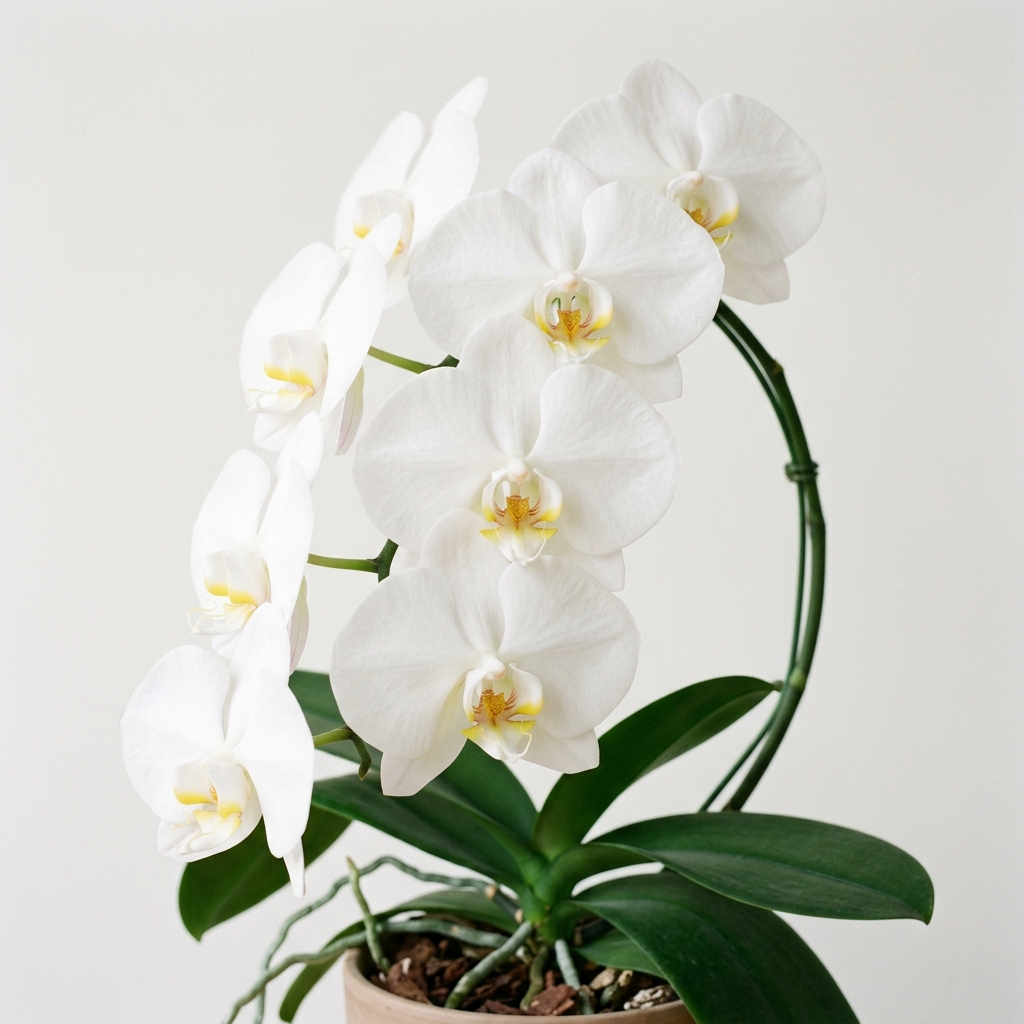
Phalaenopsis Sogo Yukidian is one of the most celebrated white-flowered moth orchid cultivars in the horticultural world, renowned for its breathtaking displays of pristine, snow-white blossoms. This exceptional hybrid produces long, elegant spikes that naturally arch under the weight of numerous large, flat flowers, making it a staple in professional exhibitions and high-end floral designs. Growers highly value this cultivar for its remarkable vigor, reliable blooming habit, and the sheer architectural elegance it brings to indoor plant collections.
As a classic representative of the Phalaenopsis genus, this cultivar adapts beautifully to typical home environments, provided its basic needs for filtered light and moderate humidity are met. Unlike many delicate wild species, Phalaenopsis Sogo Yukidian has been bred for resilience, allowing both novice enthusiasts and seasoned orchidists to enjoy its spectacular, long-lasting floral show. Its ability to maintain pristine blooms for several months at a time cements its status as a masterpiece of modern orchid hybridization.
💡 Did You Know?
Phalaenopsis Sogo Yukidian belongs to the Phalaenopsis orchid group, where flower presentation is often just as important as . White-flowered cultivars are especially valued indoors because their pale blooms reflect well and pair easily with many home, greenhouse, and display settings.
🌿 Botanical Overview
Phalaenopsis Sogo Yukidian shows a classic monopodial growth habit, meaning it grows upward from a single vegetative stem rather than spreading horizontally via pseudobulbs. Its thick, leathery, obovate leaves are deep green and arranged in an alternating, overlapping fashion, serving as vital water-storage organs for the plant. The root system is robust, characterized by thick, silvery-green aerial roots covered in velamen, a specialized spongy tissue that absorbs moisture and nutrients directly from the surrounding air.
In its native tropical ancestors’ habitats, this growth form allowed the plants to cling securely to tree branches in shaded forest canopies. Under cultivation, Phalaenopsis Sogo Yukidian directs its energy into producing substantial vegetative growth during the warm summer months, which later supports the development of its massive, heavy flower spikes. The structural balance between its broad, healthy foliage and its expansive root system is key to sustaining its legendary floral displays.
🌸 Flower Characteristics
The defining feature of Phalaenopsis Sogo Yukidian is its magnificent, round, overlapping flowers, which can reach impressive sizes of four to five inches in diameter. The petals and sepals are a brilliant, clean white, creating a striking contrast against the dark green foliage. The lip, or labellum, is intricately structured with delicate yellow or golden-orange markings at its center, sometimes accompanied by very faint red speckling deep within the column, which guides potential pollinators.
These flowers are arranged symmetrically along a sturdy, arching spike that can grow several feet long. In professional displays, growers often stake these spikes early in their development to create a dramatic, cascading waterfall effect. The substance of the petals is remarkably thick and waxy, which contributes to the individual flowers remaining fresh and unblemished for up to three months or more.
Fragrance & Bloom Profile
While some Phalaenopsis hybrids carry a sweet or spicy scent, Phalaenopsis Sogo Yukidian is generally considered non-fragrant. Any scent produced is extremely faint and typically not consistently documented in common grower references. This lack of fragrance is highly advantageous for indoor display, as it makes the orchid an excellent choice for sensitive individuals or formal settings where strong floral perfumes might be overwhelming.
The bloom profile focuses entirely on visual grandeur. The buds open sequentially from the base of the spike to the tip, ensuring a prolonged display period. Because the flowers open gradually, a single spike can remain in an active state of beauty for a quarter of the year, with older flowers maintaining their pristine white coloration alongside newly opened buds.
Parentage & Hybrid Lineage
Phalaenopsis Sogo Yukidian is a complex hybrid with a rich lineage that traces back to several prominent white-flowered species, most notably Phalaenopsis amabilis. This ancestral species is famous for its large white flowers and arching habit, traits that have been carefully selected and amplified over generations of breeding. The exact hybridizer and registration details are subject to historical variations and are not always consistently documented in standard hobbyist guides, though the Sogo prefix points to its origin from renowned Taiwanese breeding programs.
Through decades of selective hybridization, breeders successfully combined the large flower size of exhibition-grade whites with the vigor and adaptability of commercial cultivars. This genetic background ensures that Phalaenopsis Sogo Yukidian is far more resilient and free-flowering than its wild ancestors, making it a highly stable and reliable performer in a wide range of growing environments.
🌱 Growing Conditions
To cultivate Phalaenopsis Sogo Yukidian successfully, provide bright, indirect light. Direct sunlight will quickly scorch the sensitive, fleshy leaves, while insufficient light will result in dark green, limp foliage and a failure to initiate flower spikes. An east-facing window or a shaded south-facing window is ideal. If growing under artificial lights, such as LEDs, ensure the plant is kept at a safe distance to prevent heat stress.
💡 Care Tip
For best results, grow Phalaenopsis Sogo Yukidian in bright filtered with steady and gentle airflow. Avoid placing the plant in harsh midday sun, but do not keep it in a dark corner; weak is one of the most common reasons cultivated orchids refuse to rebloom.
Temperature ranges should mimic a warm tropical climate, ideally between 65°F and 80°F (18°C to 27°C) during the day, with a slight drop of 10°F to 15°F at night. This nocturnal temperature drop is particularly crucial in the autumn, as it signals the orchid to begin developing its winter flower spikes. Good air circulation is also essential to prevent stagnant air pockets around the leaves and roots, which can invite fungal pathogens.
Watering, Feeding & Potting Media
Watering Phalaenopsis Sogo Yukidian requires a balanced approach: the roots must never sit in standing water, nor should they be allowed to shrivel from extreme dehydration. Water thoroughly when the potting medium is nearly dry. A helpful indicator is the color of the aerial roots; when they turn a silvery-gray, it is time to water, whereas a vibrant green color indicates sufficient moisture.
Use a high-quality, free-draining potting medium, such as coarse fir bark mixed with perlite and charcoal, or high-grade sphagnum moss. Feed the orchid regularly during its active growth phase in spring and summer using a balanced, water-soluble orchid fertilizer diluted to one-quarter or one-half strength. Flush the pot with pure water once a month to wash away any accumulated fertilizer salts that could burn the sensitive root tips.
Blooming Season & Care Notes
The primary blooming season for Phalaenopsis Sogo Yukidian occurs from late winter through spring, though well-established plants can occasionally produce spikes at other times of the year. Once the flower spike begins to emerge from the base of the plant, maintain consistent environmental conditions, as sudden drafts or temperature swings can cause the developing buds to drop prematurely.
After the main flowering cycle is complete, growers have two options for spike care. If the spike remains green, cutting it back to just above the second or third node from the base can encourage the development of a secondary branch of flowers. Alternatively, cutting the spent spike off entirely at the base allows the orchid to redirect its energy into producing new leaves and roots, ensuring a stronger and more spectacular bloom display during the following season.
⚠️ Common Issues
⚠️ Common Mistake
The most common mistake is by calendar instead of root and potting-media condition. Phalaenopsis roots need moisture and air at the same time, so constantly wet bark or sphagnum can lead to root loss even when the leaves still look healthy.
- Root Rot: Caused by overwatering or a compacted potting medium that suffocates the roots.
- Bud Blast: The premature drying and dropping of flower buds, often triggered by sudden temperature drops, low humidity, or drafts.
- Sunburn: Yellow or white bleached patches on the leaves caused by exposure to direct, intense sunlight.
- Mealybugs and Scale: Common pests that hide in the crevices of leaves and flower spikes, sucking sap and weakening the plant.
- Dehydration: Indicated by wrinkled, leathery leaves and shriveled, dry roots, usually due to underwatering or a dead root system unable to absorb moisture.
❓ Frequently Asked Questions
How do I get my Phalaenopsis Sogo Yukidian to rebloom?
To trigger reblooming, expose the orchid to a consistent night-time temperature drop of about 10°F to 15°F (to around 55°F to 60°F) for several weeks in the autumn. This cooling period, combined with bright indirect light, signals the plant to initiate a new flower spike.
Why are the flower buds on my orchid falling off before opening?
This issue, known as bud blast, is typically caused by environmental stress. Common culprits include sudden temperature fluctuations, dry indoor air (low humidity), cold drafts from windows or vents, or underwatering while the spike is developing.
What should I do with the silver roots growing outside the pot?
These are aerial roots, which are perfectly natural for epiphytic orchids like Phalaenopsis Sogo Yukidian. Do not cut them off. They help the plant absorb moisture and oxygen from the air. Simply mist them occasionally or guide them gently into the pot during the next repotting.
Is Phalaenopsis Sogo Yukidian suitable for beginners?
Yes, this cultivar is exceptionally resilient and highly recommended for beginners. Because it has been bred for vigor and adaptability, it tolerates typical household conditions much better than wild orchid species, making it an excellent entry point into orchid growing.
⭐ Final Growing Notes
Phalaenopsis Sogo Yukidian remains an unrivaled masterpiece among white moth orchids, offering an unmatched combination of grand floral display and robust growth. By providing bright indirect light, careful watering, and a slight autumn chill, growers of all skill levels can successfully cultivate this magnificent plant. Its long-lasting, cascading white blooms serve as a rewarding testament to the beauty and resilience of well-bred hybrid orchids.
🌱 Propagation Tip
Propagation should be approached patiently. Most home growers should wait for natural keikis or divide only mature, healthy plants when the orchid type allows it. Never remove a young growth until it has strong roots and enough leaves to support itself away from the parent plant.
⭐ Expert Advice
Repot after flowering when fresh root tips begin to appear. This timing helps the plant anchor quickly into new bark or sphagnum and reduces stress, especially for orchids grown indoors where airflow, , and drying speed can change from season to season.

Leave A Comment