
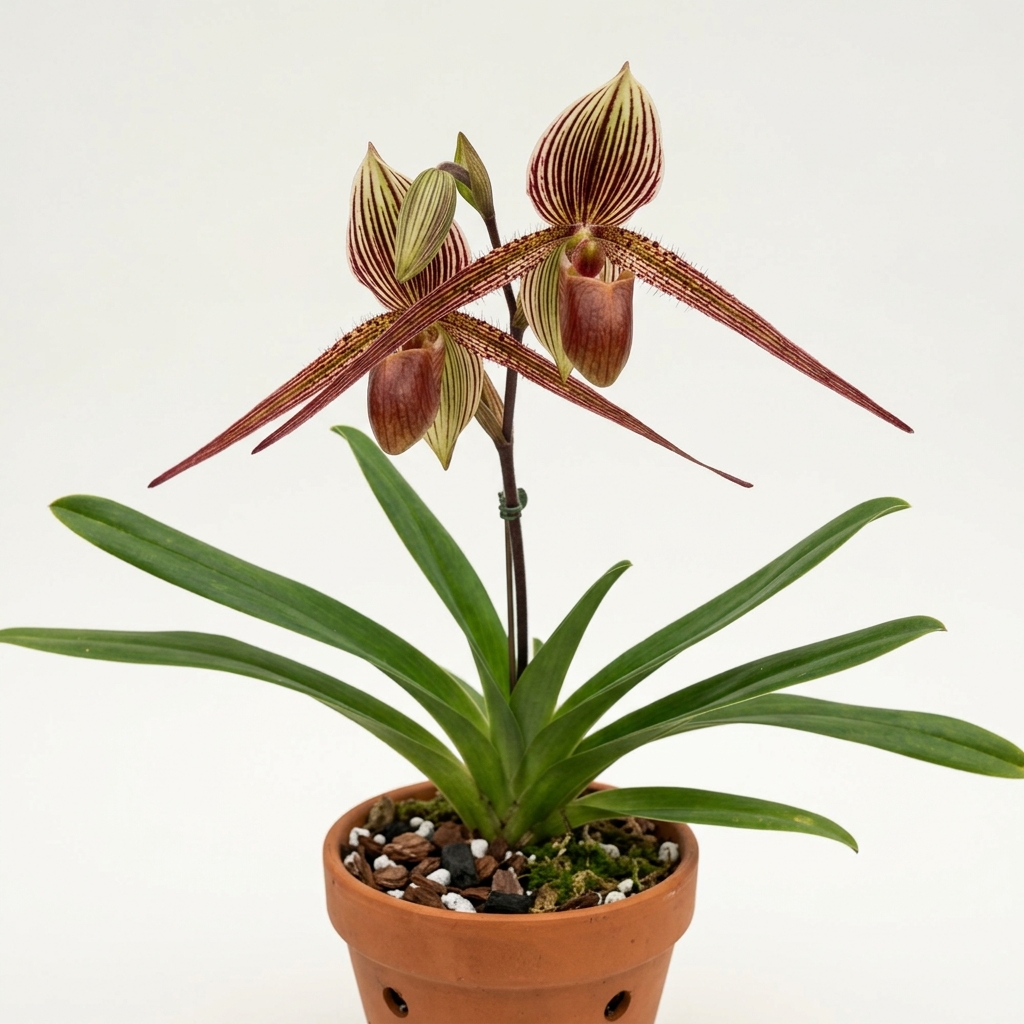
Paphiopedilum rothschildianum, widely celebrated as the King of the Slipper Orchids, is a legendary terrestrial species native to the rainforests of Mount Kinabalu in Borneo. Highly prized by orchid enthusiasts and collectors worldwide, this majestic plant is renowned for its striking, multi-floral blooming habit and imposing stature. Its dramatic flowers feature long, horizontally spreading petals that can reach impressive spans, making it a crowning jewel in any serious orchid collection.
Cultivating this slow-growing masterpiece requires patience, as plants can take several years to reach flowering maturity from seed or division. However, the reward of its towering flower spikes and long-lasting, architectural blooms makes the effort deeply satisfying for dedicated growers. By understanding its specific environmental preferences, growers can successfully replicate its native montane habitat and enjoy its spectacular floral display.
💡 Did You Know?
Paphiopedilum rothschildianum is native to a very restricted range on the slopes of Mount Kinabalu in Sabah, Malaysia. It grows at elevations where it is constantly bathed in mist and cool breezes, making it a highly specialized species that relies on specific environmental cues to thrive and bloom.
🌿 Botanical Overview
Paphiopedilum rothschildianum is a robust, strap-leafed lady slipper orchid that grows primarily as a terrestrial or lithophytic plant in its native habitat. It produces large, fan-shaped growths consisting of leathery, clear green leaves that lack the mottling found in some other Paphiopedilum species. The foliage itself is highly ornamental, providing year-round visual interest even when the plant is not in bloom.
In nature, this species is found at elevations ranging from 500 to 1,200 meters, where it clings to steep, rocky slopes or grows in loose leaf litter. This specific ecological niche dictates its preference for constant moisture, excellent drainage, and intermediate temperatures. Because it is a slow-growing species, maintaining a stable environment is crucial for its long-term health and development.
🌸 Flower Characteristics
The blossoms of Paphiopedilum rothschildianum are among the most distinctive and dramatic in the entire orchid family. A single, sturdy inflorescence can carry up to six massive flowers, each characterized by a tall, striped dorsal sepal and a deeply pouched, reddish-brown lip or labellum. The most striking feature, however, is the pair of long, narrow lateral petals that extend almost horizontally, resembling outstretched wings.
These petals are typically greenish-yellow, adorned with dark purple or chocolate-brown stripes and spots, and fringed with fine hairs along the margins. The overall color palette is a sophisticated blend of cream, copper, deep burgundy, and green. The flowers are remarkably heavy-textured and can remain in pristine condition on the spike for up to six weeks or more.
Fragrance & Bloom Profile
While some slipper orchids possess subtle scents, the fragrance of Paphiopedilum rothschildianum is not consistently documented as a primary feature. Some growers report a faint, earthy or spicy aroma under warm, bright conditions, while others find the blooms to be entirely unscented. The primary appeal of this species remains its outstanding visual architecture rather than its olfactory profile.
The blooming process is a slow, dramatic event, with the flower spike emerging from the center of the mature growth and gradually elongating over several months. Once the buds begin to open, they do so nearly simultaneously, creating an imposing and symmetrical presentation that instantly stands out.
Parentage & Hybrid Lineage
As a pure species, Paphiopedilum rothschildianum does not have hybrid parentage, but it has served as a cornerstone parent in slipper orchid breeding. It is the primary ancestor of many of the most famous multi-floral Paphiopedilum hybrids, such as Paphiopedilum Harold Koopowitz and Paphiopedilum Lady Isabel. Breeding lines utilizing this species aim to pass down its large flower size, horizontal petal stance, and robust growth habit.
When purchasing a plant, growers should look for line-bred seedlings from reputable nurseries, as modern line breeding has significantly improved the vigor, flower count, and ease of culture compared to wild-collected specimens of the past.
🌱 Growing Conditions
To grow Paphiopedilum rothschildianum successfully, provide bright, filtered light that is somewhat stronger than what is typically recommended for mottled-leaf slipper orchids. A location with strong, indirect morning light or shaded southern exposure is ideal. Avoid direct midday sun, which can easily scorch the thick, leathery leaves.
💡 Care Tip
Ensure constant, gentle air movement around your Paphiopedilum rothschildianum, especially when maintaining high levels. Good airflow prevents water from pooling in the leaf axils, which can quickly lead to devastating crown rot.
Temperature management should mimic its montane forest origin, favoring intermediate to warm conditions. Daytime temperatures are best kept between 75 and 85 degrees Fahrenheit, with a night drop to 60 to 65 degrees Fahrenheit. This diurnal temperature fluctuation is highly beneficial for triggering flower spikes on mature growths. Maintain high humidity levels of 60 to 80 percent, supported by active air movement to prevent stagnant air pockets.
Watering, Feeding & Potting Media
Unlike some orchids that prefer to dry out completely between waterings, Paphiopedilum rothschildianum prefers to remain evenly moist but never waterlogged. Water thoroughly when the potting medium approaches dryness, using pure water such as rainwater, distilled water, or reverse osmosis water, as this species can be sensitive to mineral buildup.
A well-draining potting mix is essential to prevent root rot while retaining adequate moisture. A blend of medium-grade fir bark, perlite, charcoal, and a small amount of chopped sphagnum moss or calcium-rich dolomite lime chips works exceptionally well. Feed the plant regularly during the active growing season with a diluted, balanced orchid fertilizer, applying it at one-quarter to one-half strength every second or third watering.
Blooming Season & Care Notes
The typical blooming season for Paphiopedilum rothschildianum is spring to early summer, though cultivated plants may occasionally bloom at other times of the year depending on local conditions. Because the flower spikes are tall and heavy, they often require careful staking as they develop to ensure they present the blooms elegantly and do not bend or break under their own weight.
Repotting should be done every two to three years, ideally just after flowering has finished and new root growth is observed. Avoid over-potting; choose a container that comfortably accommodates the root system with only a little room for future growth, as these plants prefer to be slightly snug.
⚠️ Common Issues
⚠️ Common Mistake
A common mistake is allowing the potting medium to break down completely. Compacted, decomposed bark deprives the roots of oxygen, leading to rapid root loss that can take years for this slow-growing orchid to recover from.
- Root Rot:
Caused by overwatering or a compacted, poorly draining potting medium that suffocates the roots. - Leaf Spotting: Fungal or bacterial pathogens can attack the foliage if humidity is high and air circulation is inadequate.
- Bud Blast:
Sudden changes in temperature, drafty conditions, or low humidity can cause developing buds to yellow and drop. - Mealybugs and Scale: These pests can hide in the tight crevices at the base of the leaves and under the flower bracts.
- Dehydration:
Wrinkled or limp leaves indicate that the plant is not receiving enough water or that the root system has already rotted and can no longer absorb moisture.
❓ Frequently Asked Questions
How long does it take for Paphiopedilum rothschildianum to bloom?
This species is notoriously slow-growing and can take anywhere from seven to ten years to reach blooming size from a seedling. However, purchasing mature, multi-growth divisions can significantly shorten the wait time to flowering.
Does Paphiopedilum rothschildianum need a winter rest?
It does not require a dry winter rest, but it benefits from a slight reduction in watering and fertilizer during the cooler, darker winter months. Maintaining a distinct day-to-night temperature drop during this period helps stimulate spring spike development.
Can I grow Paphiopedilum rothschildianum under LED lights?
Yes, this orchid adapts well to indoor cultivation under high-quality, full-spectrum LED grow lights. Ensure the lights are positioned at a safe distance to provide bright, indirect light without overheating the foliage.
Why are the leaf tips of my Paphiopedilum rothschildianum turning brown?
Brown leaf tips are often a sign of mineral salt accumulation in the potting medium from tap water or over-fertilizing. Flush the pot thoroughly with pure rainwater or distilled water, and ensure you are using a diluted fertilizer formula.
⭐ Final Growing Notes
While Paphiopedilum rothschildianum demands a higher level of patience and attentiveness than more common hybrid orchids, it remains one of the most rewarding species to cultivate. Its majestic presence, historical significance, and breathtaking multi-floral display make it the ultimate centerpiece for any dedicated orchid grower’s collection.
🌱 Propagation Tip
Propagation is best achieved by careful division of mature, multi-growth clumps during repotting. Ensure each division has at least two or three healthy growths with active root systems to guarantee successful establishment and minimize transplant shock.
⭐ Expert Advice
To encourage robust blooming, provide a distinct ten to fifteen degree Fahrenheit drop between day and night temperatures in the autumn. This natural dip mimics its native montane habitat and helps trigger the initiation of flower spikes.

Leave A Comment