
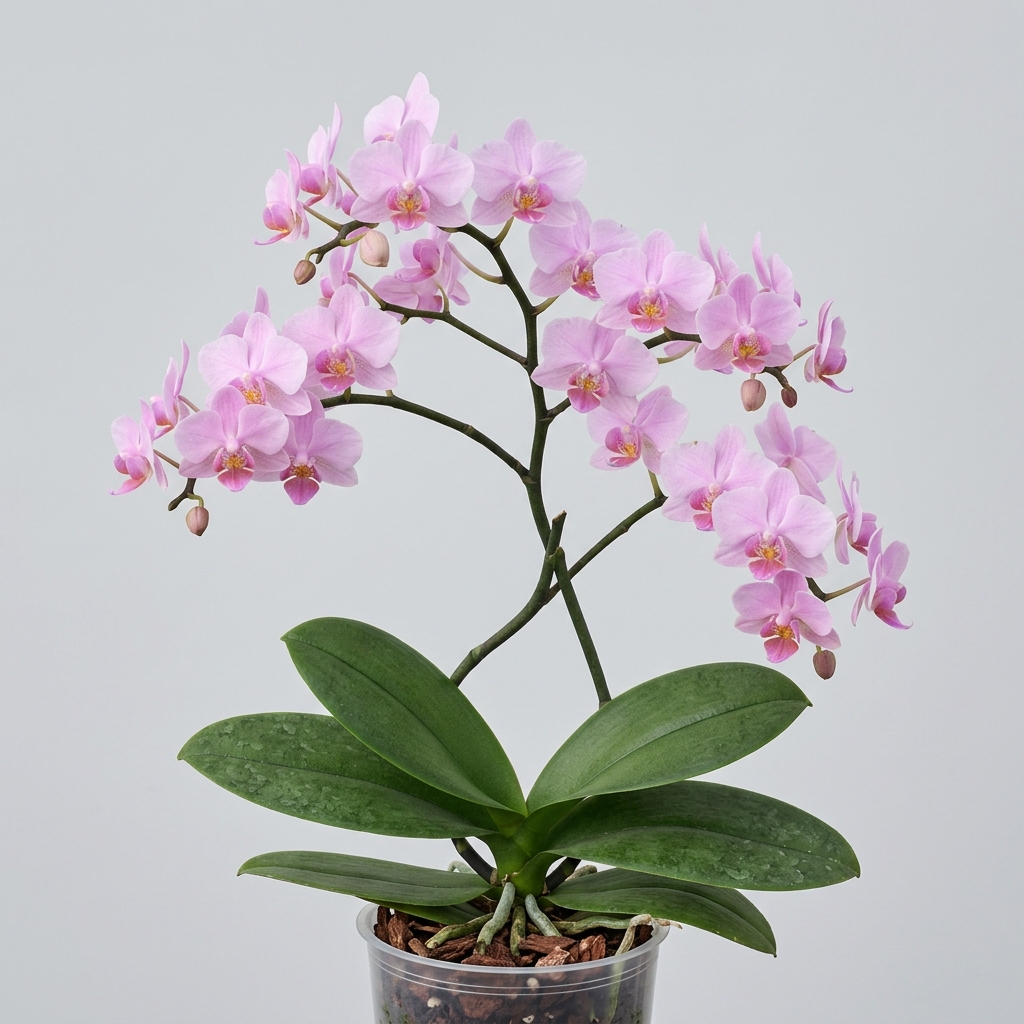
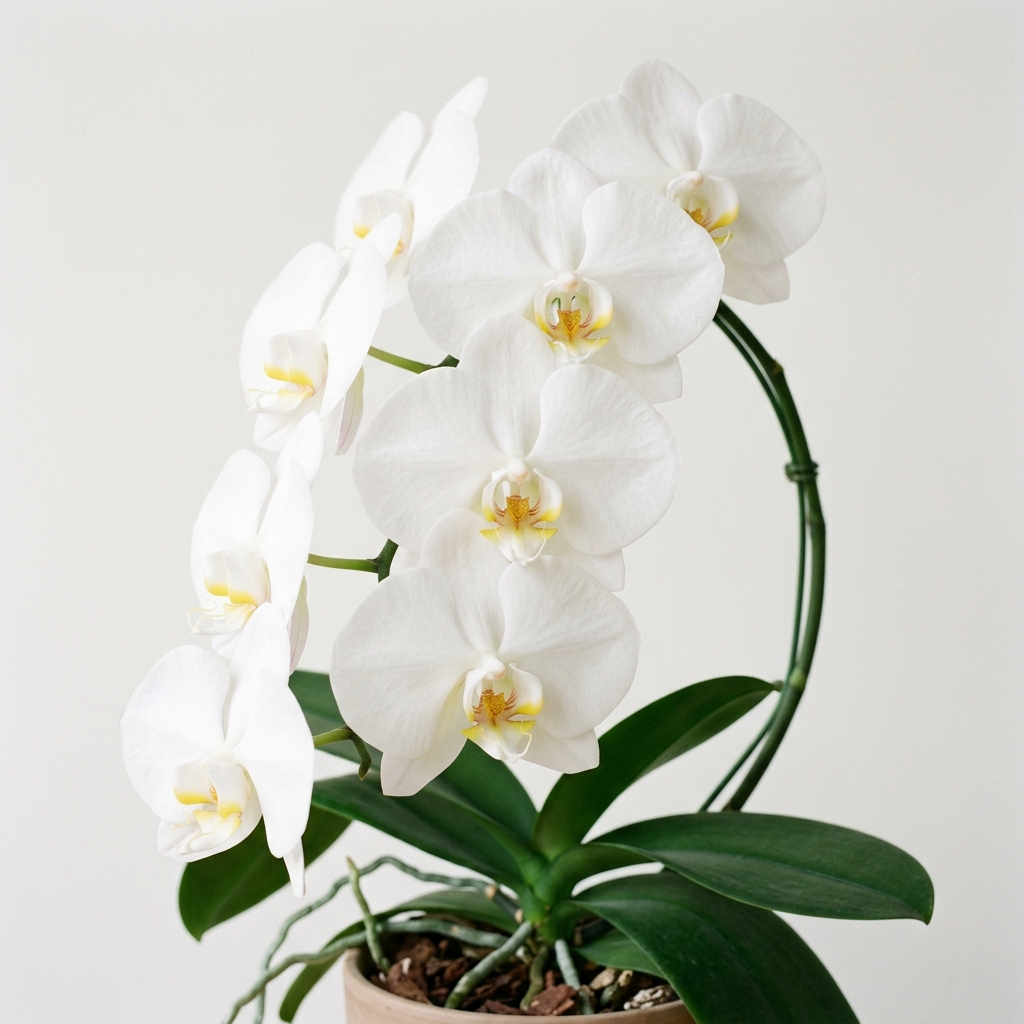
Phalaenopsis Jiaho Pink Girl is a highly celebrated miniature moth orchid cultivar prized for its delightful presentation of soft pink blossoms and compact growth habit. As a multiflora variety, this orchid is favored by indoor growers who appreciate a high volume of flowers on relatively short, manageable spikes. Its elegant stature makes it an ideal choice for windowsill culture, terrariums, or limited-space displays where larger Phalaenopsis hybrids might overwhelm the setting.
Beyond its aesthetic appeal, this cultivar is recognized for its robust nature and relatively straightforward care requirements, making it accessible to both novice hobbyists and experienced orchid collectors. The delicate pastel blooms often display subtle color gradients and a charming lip structure, occasionally accompanied by a faint, sweet fragrance under optimal growing conditions. This combination of compact size, floriferous blooming habit, and ease of culture has secured its place as a staple in modern orchid collections.
💡 Did You Know?
Many miniature Phalaenopsis hybrids like Jiaho Pink Girl inherit their multi-branching flower spikes and occasional delicate from Phalaenopsis schilleriana, a famous species native to the Philippines known for its highly floriferous nature and beautifully mottled foliage. This genetic heritage allows the cultivar to produce dozens of blooms on a single mature plant.
🌿 Botanical Overview
Phalaenopsis Jiaho Pink Girl belongs to the family Orchidaceae and is classified as an epiphytic herb. In their natural habitats, epiphytic orchids grow anchored to the bark of trees rather than in soil, utilizing their specialized root systems to absorb moisture and nutrients from the air, rain, and surrounding organic debris. This cultivar shows a monopodial growth habit, meaning it grows upward from a single vegetative stem, producing new leaves from the central crown over time.
The foliage of this orchid is typical of miniature Phalaenopsis varieties. The leaves are thick, fleshy, and obovate to elliptic in shape, serving as primary water-storage organs to help the plant survive brief periods of dryness. They are generally deep green with a semi-glossy texture, providing an attractive, compact rosette that remains visually appealing even when the plant is not in bloom.
🌸 Flower Characteristics
The defining feature of Phalaenopsis Jiaho Pink Girl is its highly floriferous blooming style. The flowers are miniature, typically ranging from three to five centimeters in width, but what they lack in individual size, they make up for in sheer quantity. The blooms are arranged along slender, often branching spikes that can carry dozens of flowers simultaneously, creating a dense, cloud-like presentation of pastel color.
Each flower features rounded petals and sepals of a delicate, soft pink hue, which can sometimes exhibit subtle lavender or rose-colored undertones depending on light exposure and temperature. The labellum, or lip, is a focal point of contrast, displaying a deeper, more saturated pink or magenta coloration, often highlighted with faint yellow markings near the column. This intricate color contrast draws the eye and adds depth to the overall floral display.
Fragrance & Bloom Profile
While many commercial Phalaenopsis hybrids have lost their scent through generations of breeding for size and color, Phalaenopsis Jiaho Pink Girl is notable for its potential to produce a delicate fragrance. Growers frequently report a soft, sweet, or slightly citrusy scent that is most noticeable during the morning hours when warmth and light stimulate the release of volatile compounds. However, this fragrance is subtle and can be highly dependent on environmental factors such as humidity, temperature, and individual plant vigor.
The bloom cycle of this cultivar is impressively long-lasting. Individual flowers can remain fresh on the spike for several weeks, and a single branching spike can remain in bloom for two to three months as secondary buds slowly mature and open. This extended display makes it an exceptionally rewarding plant for indoor decoration.
Parentage & Hybrid Lineage
As a complex hybrid, Phalaenopsis Jiaho Pink Girl is the result of careful selective breeding aimed at combining the desirable traits of multiple ancestral species. While the exact pedigree and registration details are not always consistently documented in basic hobbyist references, the influence of species such as Phalaenopsis schilleriana is highly evident in its growth habit and floral presentation. The ancestral genetics contribute to the plant’s tendency to produce branching spikes, its soft pink coloration, and its occasional sweet fragrance.
By crossing species known for high flower counts with those of compact growth habits, hybridizers successfully created a plant that delivers a massive floral impact without requiring the extensive space needed by larger, standard-sized Phalaenopsis. This careful genetic balancing act has made the cultivar a classic example of successful miniature orchid breeding.
🌱 Growing Conditions
To keep Phalaenopsis Jiaho Pink Girl thriving, growers should attempt to replicate its natural intermediate-to-warm tropical environment. It performs best in bright, filtered indirect light, such as that provided by an east-facing window or a shaded south- or west-facing window. Direct, intense sunlight must be avoided, as it can quickly scorch the tender, fleshy leaves, leading to permanent damage and secondary infections.
💡 Care Tip
Provide gentle, buoyant air movement around your orchid to prevent stagnant moisture from settling on the leaves or crown, which significantly reduces the risk of bacterial rot. A small, low-powered oscillating fan placed nearby is highly effective.
Temperature ranges should ideally remain between 65°F and 80°F (18°C to 27°C) during the day, with a slight drop of five to ten degrees at night to mimic natural diurnal cycles. High relative humidity between 50% and 70% is highly beneficial, though the plant can adapt to average home humidity if necessary. To prevent fungal and bacterial pathogens from taking hold in humid conditions, maintaining gentle, continuous air movement around the plant is essential.
Watering, Feeding & Potting Media
Watering should be approached with a focus on the condition of the roots and the potting medium rather than a strict calendar schedule. When the roots inside the pot appear silvery-gray, it is time to water thoroughly; if they are vibrant green, the plant still retains sufficient moisture. It is critical to use water at room temperature and to avoid letting water pool in the central crown of the orchid, which can lead to fatal crown rot.
The potting medium must offer excellent drainage and aeration to prevent root suffocation. A high-quality medium-grade fir bark, long-fiber sphagnum moss, or a blend of bark, perlite, and charcoal works exceptionally well. During the active growing season, feed the orchid weakly weekly with a balanced, water-soluble orchid fertilizer diluted to one-quarter or one-half of the recommended strength, flushing the pot with pure water once a month to prevent salt buildup.
Blooming Season & Care Notes
The primary blooming season for Phalaenopsis Jiaho Pink Girl typically occurs from late winter through spring, initiated by the natural drop in night temperatures during the autumn months. Once a flower spike emerges, avoid moving the plant or changing its orientation to the light source, as this can cause the developing buds to twist or fail to open properly. Support the slender spikes with small stakes if they become too heavy with the weight of numerous buds.
After the primary blooms have faded, do not immediately cut the green flower spike down to the base. If the spike remains green and healthy, it may produce secondary branches or additional buds from the lower nodes, extending the blooming season even further. Only cut the spike back to the base of the plant if it turns yellow or brown and dry. Repotting is best done every one to two years, immediately after the blooming cycle has completely finished and new root growth begins to emerge.
⚠️ Common Issues
⚠️ Common Mistake
Avoid allowing water to pool in the center crown of the plant during . Trapped water in the crown is the primary cause of crown rot, which can quickly prove fatal to monopodial orchids like this cultivar.
- Root Rot:
Caused by overwatering or a compacted potting medium that prevents oxygen from reaching the roots. Affected roots turn mushy, brown, and lifeless. - Bud Blast:
The premature drying and dropping of flower buds before they open, often triggered by sudden drafts, low humidity, extreme temperature fluctuations, or chemical fumes. - Crown Rot:
A bacterial infection that occurs when water is allowed to sit in the central leaf crown, leading to rapid leaf loss and the eventual death of the plant. - Pests:
Mealybugs, spider mites, and scale insects can occasionally infest the undersides of leaves and flower crevices, requiring prompt treatment with insecticidal soap or horticultural oil.
❓ Frequently Asked Questions
How do I encourage my Phalaenopsis Jiaho Pink Girl to rebloom?
To stimulate a new flower spike, expose the plant to slightly cooler night temperatures of approximately 55°F to 60°F (13°C to 16°C) for three to four weeks in the autumn, while maintaining bright, indirect daytime light. This temperature drop signals the plant to transition from vegetative growth to floral development.
Can I grow this orchid under artificial LED lights?
Yes, Phalaenopsis Jiaho Pink Girl adapts exceptionally well to artificial LED grow lights. Position the plant approximately 12 to 18 inches below a full-spectrum LED light source, adjusting the intensity or duration to ensure the leaves maintain a healthy, light-green color without burning.
Why are the leaves on my orchid turning yellow?
Yellowing leaves can indicate several issues. If only the oldest, bottom leaf turns yellow and drops, it is likely a natural aging process. However, if multiple leaves yellow simultaneously, it may indicate overwatering, root rot, insufficient light, or exposure to cold drafts.
Should I mist my Phalaenopsis Jiaho Pink Girl daily?
Misting is generally not recommended unless you have excellent air circulation, as standing water on the leaves can promote fungal infections. Instead, increase local humidity by placing the orchid pot on a tray filled with pebbles and water, ensuring the bottom of the pot does not touch the water directly.
⭐ Final Growing Notes
Phalaenopsis Jiaho Pink Girl remains one of the most delightful and rewarding miniature orchids available to modern growers. Its ability to produce a spectacular cloud of soft pink blossoms on a compact frame, combined with its forgiving nature and potential for a sweet fragrance, makes it a standout choice for any collection. By providing consistent, bright indirect light, careful watering based on root color, and maintaining adequate air movement, you can enjoy the elegant beauty of this exceptional cultivar for many years to come.
🌱 Propagation Tip
While Phalaenopsis orchids are typically propagated commercially through tissue culture, home growers can occasionally propagate this cultivar by carefully detaching a keiki, or baby plantlet, once it has developed several healthy roots at least two inches long.
⭐ Expert Advice
To encourage a new flush of blooms in the autumn, expose the plant to a slight drop in night temperatures of about ten degrees Fahrenheit for a few consecutive weeks, ensuring it still receives bright, indirect .

Leave A Comment