
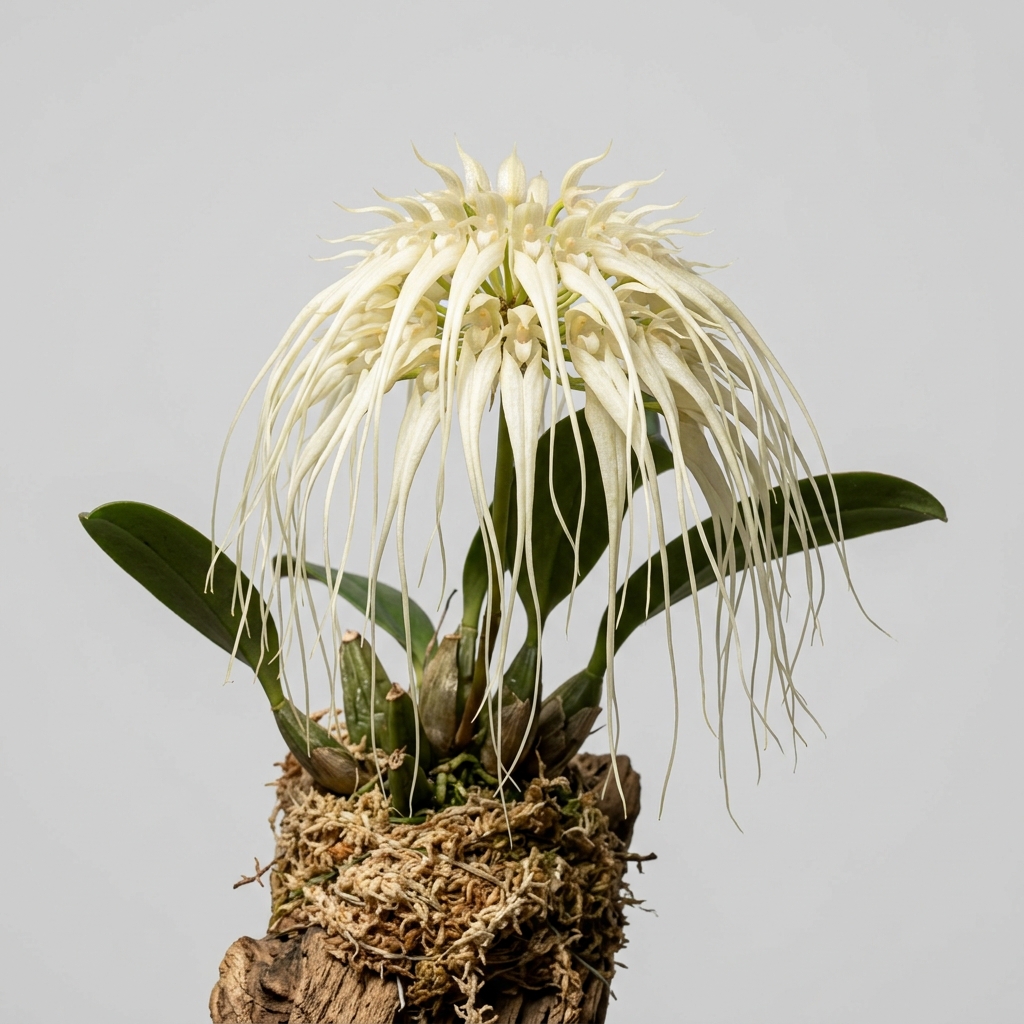
Bulbophyllum medusae, commonly known as the Medusa Orchid, is one of the most distinctive and captivating species within the vast Bulbophyllum genus. Highly prized by orchid enthusiasts worldwide, this epiphytic species is famous for its spectacular, dome-shaped flowering heads. The wild, thread-like appearance of its blooms creates an otherworldly display that instantly becomes the focal point of any greenhouse or indoor growing space.
This fascinating orchid features a creeping growth habit, characterized by clustered, conical pseudobulbs that each support a single, thick, leathery leaf. While individual flowers within the cluster are relatively short-lived, a mature, well-established specimen can produce multiple flower spikes simultaneously. This creates a highly dramatic and rewarding blooming event that makes the specialized care it requires entirely worthwhile for dedicated growers.
💡 Did You Know?
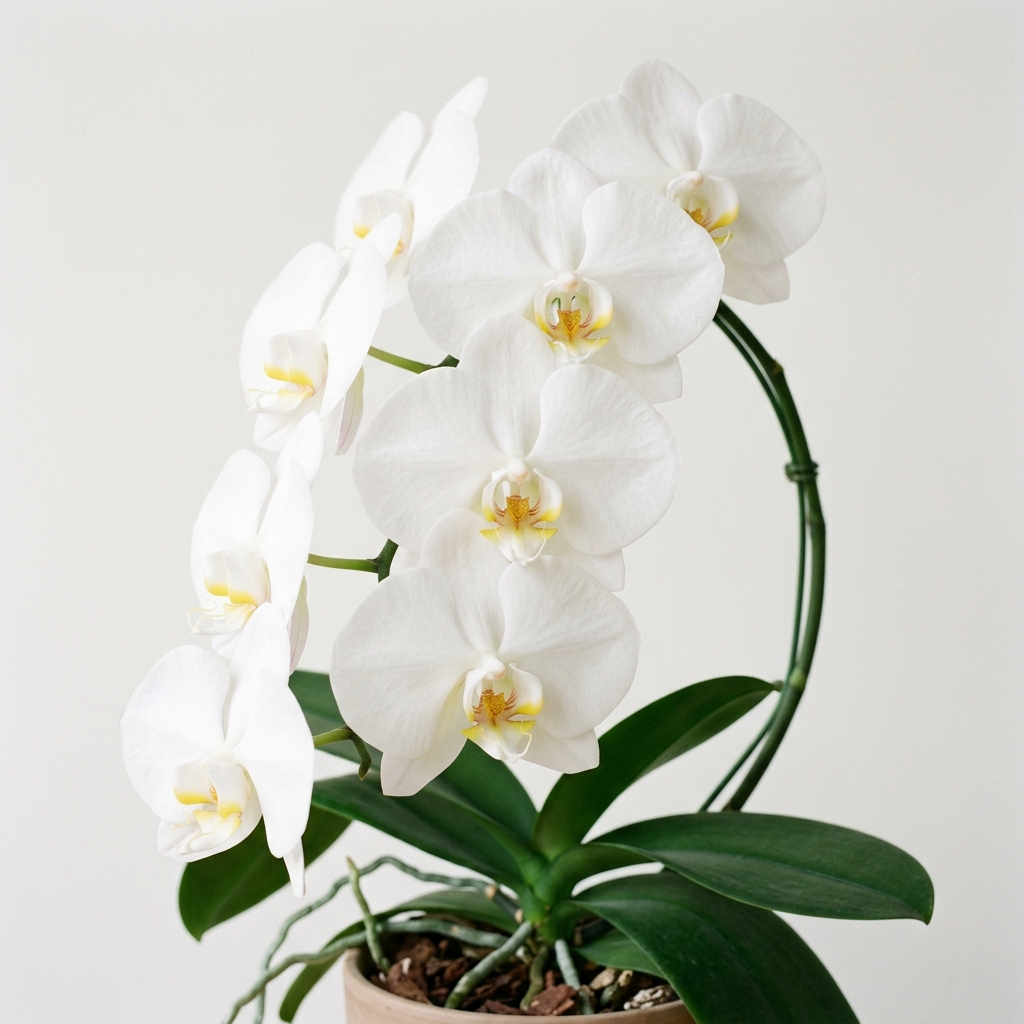
Bulbophyllum medusae belongs to the Bulbophyllum orchid group, where flower presentation is often just as important as . White-flowered cultivars are especially valued indoors because their pale blooms reflect well and pair easily with many home, greenhouse, and display settings.
🌿 Botanical Overview
Bulbophyllum medusae is native to the warm, humid lowland forests of Southeast Asia, including parts of Thailand, Malaysia, Borneo, and Sumatra. In its natural habitat, it grows as an epiphyte on moss-covered tree trunks and branches, where it is exposed to constant moisture, high humidity, and dappled sunlight. Understanding these wild origins is key to successfully cultivating the species in a home or greenhouse environment.
The vegetative structure of the plant consists of a creeping rhizome that produces small, slightly angled pseudobulbs spaced closely together. Each pseudobulb produces a single, erect, oblong leaf that is rigid and dark green. This robust foliage allows the plant to photosynthesize efficiently under the forest canopy, storing moisture and nutrients to support its dramatic seasonal flowering cycle.
🌸 Flower Characteristics
The defining feature of Bulbophyllum medusae is undoubtedly its unique inflorescence. Rather than producing a typical orchid spray, this species sends up a tall, erect spike that terminates in a dense, globose head containing dozens of individual flowers. The actual flowers are quite small, but their lateral sepals are extraordinarily elongated, reaching lengths of up to fifteen centimeters.
These long, thread-like sepals drape downward in a feathery, cream-colored mass, completely obscuring the tiny petals and lip located at the center of each bloom. The overall effect is that of a soft, delicate pom-pom or a wild head of hair. The color is typically a pristine creamy white, sometimes showing subtle yellow or light pink flushes near the base of the sepals under optimal light conditions.
Fragrance & Bloom Profile
The fragrance of Bulbophyllum medusae is a subject of discussion among growers. Unlike some members of the Bulbophyllum genus that emit strong, unpleasant odors to attract fly pollinators, this species typically produces a much milder scent. It is often described as slightly sweet, musty, or earthy, though some growers report almost no detectable fragrance at all.
The blooming cycle usually occurs once a year, with the flower spikes emerging from the base of the mature pseudobulbs. Individual flower heads remain in peak condition for approximately five to ten days. Because the bloom window is relatively short, growers often cultivate larger specimen plants with multiple leads to enjoy a succession of stunning flower heads over several weeks.
Parentage & Hybrid Lineage
Bulbophyllum medusae is a naturally occurring species rather than a man-made hybrid. Consequently, it does not have a complex parentage or hybrid pedigree. In botanical nomenclature, it remains a distinct and recognized species within the Orchidaceae family, valued for its stable, wild characteristics.
While it is occasionally used by hybridizers to introduce its unique, thread-like sepal traits into new Bulbophyllum crosses, such hybrids are relatively uncommon in the general market. Most collectors prefer to grow the pure species to appreciate the exact form that evolved in the tropical rainforests of Southeast Asia.
🌱 Growing Conditions
To keep Bulbophyllum medusae thriving, growers must replicate its tropical forest home. It prefers intermediate to warm temperatures, ideally ranging from 65 degrees Fahrenheit to 85 degrees Fahrenheit during the day, with a slight drop at night. It does not tolerate freezing temperatures and should be protected from cold drafts.
💡 Care Tip
For best results, grow Bulbophyllum medusae in bright filtered with steady and gentle airflow. Avoid placing the plant in harsh midday sun, but do not keep it in a dark corner; weak is one of the most common reasons cultivated orchids refuse to rebloom.
Light levels should be kept moderate. Bright, filtered light is ideal, similar to the dappled shade found under a forest canopy. Direct, intense sunlight will quickly scorch the leathery leaves, while too much shade may prevent the plant from producing flower spikes. High humidity is absolutely critical; a range of seventy to ninety percent is highly recommended, accompanied by continuous, gentle air movement to prevent stagnant conditions.
Watering, Feeding & Potting Media
This species does not possess large water-storing pseudobulbs, meaning it has very little tolerance for drought. The potting medium should be kept consistently moist but never waterlogged. Watering frequency will depend on your local environment, but mounted plants may require daily misting, while potted specimens should be watered just as the medium begins to approach dryness.
High-quality sphagnum moss is a highly recommended potting medium for Bulbophyllum medusae, as it retains the necessary moisture while remaining airy. Alternatively, fine fir bark mixes or mounting the plant directly onto cork bark or tree fern plaques can yield excellent results. Feed the plant weakly with a balanced, diluted orchid fertilizer every one to two weeks during the active growing season, flushing the medium with pure water periodically to prevent salt buildup.
Blooming Season & Care Notes
The primary blooming season for Bulbophyllum medusae is autumn through early winter. As the weather begins to cool slightly, keep a close eye on the bases of the pseudobulbs for the emergence of thin, upright flower spikes. During this development phase, avoid overhead watering or misting directly onto the developing buds, as trapped moisture can easily cause bud blast.
Once the flowering cycle is complete, the plant enters a brief period of rest where growth slows down. Reduce watering slightly during this time, but do not allow the medium to dry out completely. Repotting or dividing should be reserved for the spring months, just as new root growth begins to emerge from the base of the newest pseudobulbs.
⚠️ Common Issues
⚠️ Common Mistake
The most common mistake is by calendar instead of root and potting-media condition. Bulbophyllum roots need moisture and air at the same time, so constantly wet bark or sphagnum can lead to root loss even when the leaves still look healthy.
- Dehydration:
Shriveled or wrinkled pseudobulbs and limp leaves are clear indicators of insufficient watering or critically low ambient humidity. - Root Rot:
Caused by compacted, decaying potting media that retains too much stagnant water; always ensure excellent drainage. - Bud Blast:
Developing flower buds may yellow and drop prematurely if the plant experiences sudden temperature fluctuations or dry air. - Fungal Leaf Spotting: Dark spots on the foliage can occur if humidity is high but air circulation is inadequate; increase fan speed to resolve this.
- Pests:
Mealybugs and scale insects can occasionally hide in the tight crevices between the pseudobulbs and should be treated promptly with horticultural soap.
❓ Frequently Asked Questions
How often should I water Bulbophyllum medusae?
Watering frequency depends on your setup, but the medium should remain consistently moist. Mounted plants typically require daily watering, while those grown in sphagnum moss baskets may need watering every two to three days. Never let the roots dry out completely.
Can I grow Bulbophyllum medusae indoors under artificial lights?
Yes, this orchid can be grown successfully indoors under LED grow lights. Position the plant where it receives moderate light levels, and use a humidifier or humidity tray to maintain the high moisture levels this species requires to thrive.
Why are the pseudobulbs on my orchid shriveling?
Shriveled pseudobulbs usually indicate that the plant is not receiving enough water or that the ambient humidity is too low. However, it can also happen if the roots have rotted due to overwatering, leaving the plant unable to absorb moisture.
Does Bulbophyllum medusae require a winter rest period?
This species does not require a severe dry rest period. However, it does experience a slight slowdown in growth after blooming in winter. During this time, you should slightly reduce watering frequency and withhold fertilizer until active growth resumes in spring.
⭐ Final Growing Notes
Bulbophyllum medusae remains one of the most rewarding orchids a collector can grow, offering an unmatched botanical spectacle when in full bloom. While its high humidity and moisture requirements make it slightly more demanding than standard windowsill orchids, providing consistent care, excellent air movement, and a high-quality moisture-retaining medium will ensure this remarkable species thrives and blooms reliably year after year.
🌱 Propagation Tip
Propagation should be approached patiently. Most home growers should wait for natural keikis or divide only mature, healthy plants when the orchid type allows it. Never remove a young growth until it has strong roots and enough leaves to support itself away from the parent plant.
⭐ Expert Advice
Repot after flowering when fresh root tips begin to appear. This timing helps the plant anchor quickly into new bark or sphagnum and reduces stress, especially for orchids grown indoors where airflow, , and drying speed can change from season to season.

Leave A Comment