
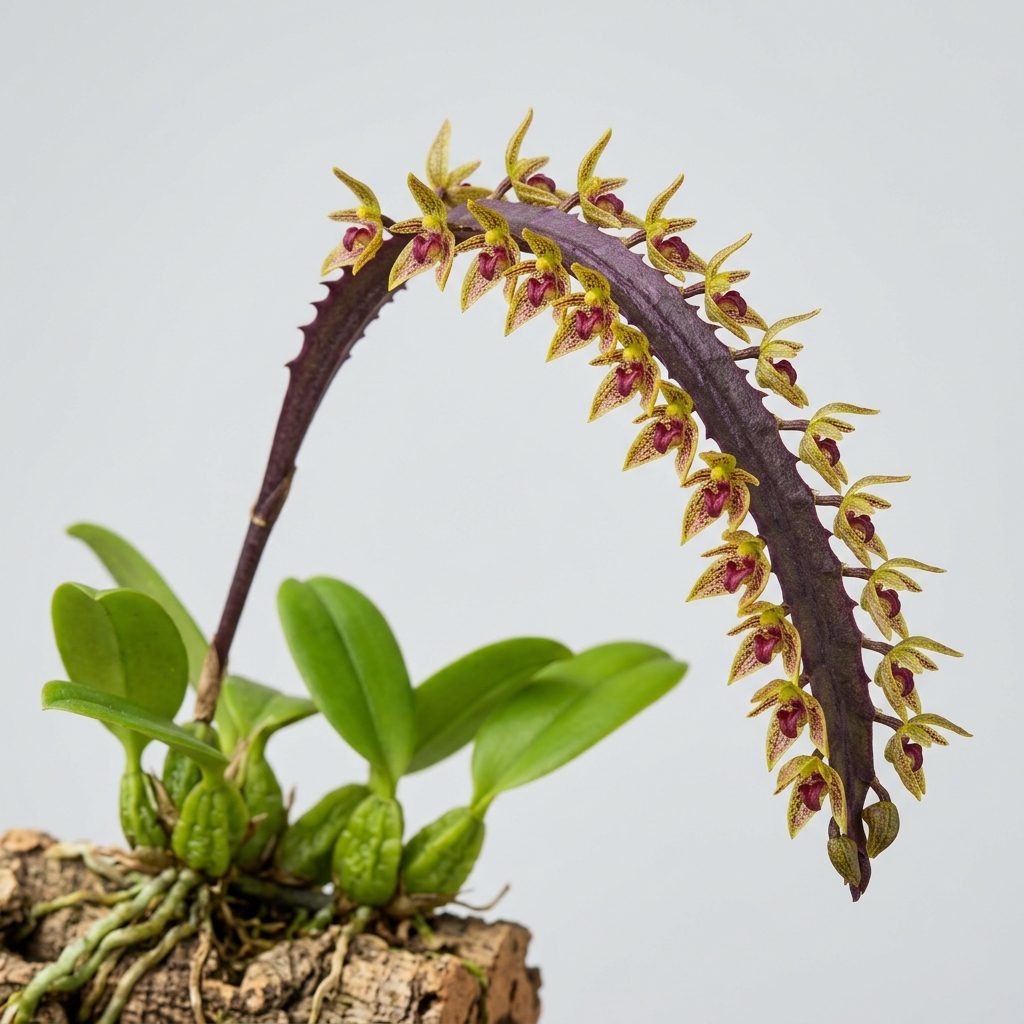
Bulbophyllum Falcatum is a captivating epiphytic orchid species native to the tropical forests of West and Central Africa. Highly prized by collectors and orchid enthusiasts, this species is renowned for its extraordinarily unique, blade-like flower spike that resembles a double-edged saw or a sickle. This structural marvel serves as a striking example of evolutionary adaptation, making it a standout addition to any diverse orchid collection.
The plant itself shows a creeping growth habit, characterized by distinct, four-angled pseudobulbs that produce pairs of leathery, bright green leaves. While its unusual appearance might suggest a difficult care regimen, Bulbophyllum Falcatum is relatively resilient when its basic requirements for warmth, high humidity, and consistent moisture are met, offering a rewarding experience for intermediate growers.
💡 Did You Know?
Bulbophyllum Falcatum is part of the Bulbophyllum orchid group, a favorite among growers because its flowers, growth habit, and care needs make it useful for comparing cultivated orchids within the same . Observing its leaves, roots, and bloom spikes can help growers understand how this cultivar responds to indoor conditions.
🌿 Botanical Overview
Bulbophyllum Falcatum belongs to the vast and diverse genus Bulbophyllum, which is one of the largest genera in the orchid family. In its native African habitat, this species grows as an epiphyte on the trunks and branches of trees in low-elevation tropical rainforests. This environment provides the plant with constant air movement, high humidity, and dappled sunlight filtered through the forest canopy.
The vegetative structure of Bulbophyllum Falcatum is highly adapted to its epiphytic lifestyle. It features a creeping rhizome that produces distinct, yellowish-green, four-angled (tetragonous) pseudobulbs spaced closely together. Each pseudobulb typically bears two narrow, leathery, oblong leaves that remain evergreen under optimal conditions. The compact, spreading growth habit allows the plant to quickly colonize its growing surface, making it an excellent candidate for mounting or shallow basket culture.
🌸 Flower Characteristics
The defining feature of Bulbophyllum Falcatum is its astonishing inflorescence. Unlike most orchids that produce flowers on a typical cylindrical spike, this species produces a highly modified, flattened, and blade-like rachis. This structure is often deep reddish-purple, green, or a combination of both, resembling a small, double-edged saw blade that extends horizontally or arches gracefully away from the base of the pseudobulb.
The individual flowers are tiny, measuring only a few millimeters, and are arranged in a neat, alternating double row along both flat sides of the rachis. The flowers themselves are complex, featuring small yellow, green, or dark red sepals and petals, and a highly mobile, hinged lip (labellum). This sensitive lip moves dynamically with the slightest breeze or vibration, a mechanism designed to attract and assist insect pollinators.
Fragrance & Bloom Profile
The fragrance of Bulbophyllum Falcatum is highly specialized and reflects its evolutionary reliance on dipteran (fly) pollinators. Rather than the sweet, floral scents associated with many popular orchids, this species produces a faint, musty, yeast-like, or slightly organic odor. The scent is typically subtle and rarely noticeable from a distance, making it perfectly suitable for indoor cultivation without overwhelming the growing space.
A single flower spike can remain attractive for several weeks. The flowers along the flattened rachis open sequentially or nearly simultaneously, providing a long-lasting and highly unusual display. The combination of the colorful, blade-like rachis and the intricate, tiny flowers creates a visual presentation that is entirely unique to this group of orchids.
Parentage & Hybrid Lineage
Bulbophyllum Falcatum is a naturally occurring species rather than a man-made hybrid. Because it is a species, its characteristics are stable and passed down directly through seed propagation or vegetative division. In the horticultural trade, several distinct varieties and select cultivars have been recognized, often based on variations in the color of the rachis or the intensity of the flower coloration.
While hybridizers have occasionally used Bulbophyllum Falcatum in breeding programs to introduce the flattened rachis trait to new hybrids, the wild species remains the most popular and widely cultivated form. When purchasing this orchid, growers are typically acquiring the true species, which carries the authentic genetic heritage of its wild African ancestors.
🌱 Growing Conditions
To grow Bulbophyllum Falcatum successfully, it is important to replicate its warm, humid, tropical forest habitat. This orchid thrives in warm to intermediate temperatures, ideally ranging from 65°F to 85°F (18°C to 29°C) during the day, with a slight drop of 5°F to 10°F at night. It can tolerate cooler temperatures down to 55°F (13°C) for short periods, but prolonged cold exposure should be avoided.
💡 Care Tip
For best results, grow Bulbophyllum Falcatum in bright filtered with steady and gentle airflow. Avoid placing the plant in harsh midday sun, but do not keep it in a dark corner; weak is one of the most common reasons cultivated orchids refuse to rebloom.
Light levels should be moderate to bright but strictly indirect. Direct midday sunlight will quickly scorch the leaves and dry out the sensitive pseudobulbs. Filtered light, such as that provided by a sheer curtain or a shaded greenhouse, is ideal. High humidity is crucial for this species, with a target range of 60% to 80%. Excellent air circulation must be maintained at all times to prevent stagnant air, which can lead to fungal and bacterial infections in high-humidity environments.
Watering, Feeding & Potting Media
Bulbophyllum Falcatum does not possess large water-storage organs, meaning it cannot tolerate prolonged periods of drought. The potting medium should be kept consistently moist but never waterlogged. Water the plant thoroughly as soon as the medium approaches dryness. During the active growing season in spring and summer, watering frequency will need to be increased, while a slight reduction is appropriate during the cooler winter months.
Because of its creeping rhizome, this orchid is best grown mounted on cork bark or tree fern plaques, or planted in shallow, wide net baskets. If mounted, daily watering or automated misting is often necessary to maintain adequate moisture. For container culture, a highly draining yet moisture-retentive medium is essential. A mix of fine fir bark, chopped sphagnum moss, and perlite works exceptionally well. Feed the plant regularly during the growing season with a highly diluted, balanced orchid fertilizer applied every second or third watering.
Blooming Season & Care Notes
The primary blooming season for Bulbophyllum Falcatum occurs from late winter through spring, although healthy plants can occasionally produce spikes at other times of the year. The flower spikes emerge from the base of the most recently matured pseudobulbs. It is important to avoid moving the plant or changing its environmental conditions abruptly once the spikes begin to form, as sudden changes can cause the developing buds to blast.
After the blooming cycle is complete, allow the flower spike to dry out and turn brown naturally before cutting it back to the base of the pseudobulb. Repotting or remounting should be performed only when necessary, typically every two to three years as the potting medium begins to decompose or when the creeping rhizome grows completely out of its container. The best time to repot is in the spring, just as new root growth begins to emerge from the base of the newest pseudobulbs.
⚠️ Common Issues
⚠️ Common Mistake
The most common mistake is by calendar instead of root and potting-media condition. Bulbophyllum roots need moisture and air at the same time, so constantly wet bark or sphagnum can lead to root loss even when the leaves still look healthy.
- Shriveled Pseudobulbs: Often a sign of severe dehydration, caused either by underwatering or by root loss due to a decayed, suffocating potting medium.
- Leaf Spotting: Dark spots on the foliage usually indicate fungal or bacterial infections resulting from high humidity combined with inadequate air circulation.
- Bud Blast:
The premature drying and dropping of flower buds, typically triggered by sudden drafts, low humidity, or extreme temperature fluctuations. - Root Rot:
Caused by overwatering or using a potting medium that does not drain quickly enough, leading to mushy, brown roots. - Pests:
Spider mites, mealybugs, and scale can occasionally target the plant, particularly in environments where the humidity is too low.
❓ Frequently Asked Questions
How do I know if my Bulbophyllum Falcatum is getting the right amount of light?
The color of the leaves is an excellent indicator of light levels. Healthy leaves should be a vibrant, medium green. If the leaves turn dark green, the plant is likely not receiving enough light to bloom. Conversely, if the leaves develop a yellowish tint or show reddish-purple freckling, the light is too intense and the plant should be moved to a more shaded location.
Can I grow Bulbophyllum Falcatum successfully in a home environment?
Yes, this species can be grown indoors, provided you can maintain adequate humidity. Using a humidity tray, grouping plants together, or utilizing a cool-mist humidifier near the orchid will help meet its moisture requirements. Growing the plant in a terrarium or a dedicated orchid case is also an excellent option for indoor growers.
Why are the roots of my mounted Bulbophyllum Falcatum dying back?
Mounted orchids dry out very quickly. If the roots are dying back, it is usually because the plant is not being watered frequently enough or the ambient humidity is too low. Adding a larger pad of high-quality sphagnum moss around the roots when mounting can help retain moisture between waterings.
Does Bulbophyllum Falcatum require a winter rest period?
This species does not require a severe dry rest period, but it does benefit from a slight reduction in water and fertilizer during the cooler, darker winter months. Keep the medium slightly damp rather than wet, and resume normal watering and feeding schedules in the spring when active growth and root development resume.
⭐ Final Growing Notes
Bulbophyllum Falcatum remains one of the most intriguing and rewarding orchid species for collectors who appreciate the bizarre and beautiful side of nature. Its extraordinary, sickle-shaped flower spikes and neat, creeping growth habit provide year-round visual interest. By providing consistent warmth, high humidity, and careful attention to moisture, growers can enjoy the fascinating architectural display of this unique African treasure for many years to come.
⚕️ Health, Safety & Edibility
Understanding how a plant interacts with people, pets, and the surrounding environment is part of responsible cultivation. This section uses conservative, general guidance and does not replace professional medical or veterinary advice.
Human Safety: No published evidence currently identifies species-specific toxicity concerns for Bulbophyllum Falcatum during normal handling. As with most ornamental plants, it should not be intentionally consumed.
Pet Safety: Published information does not indicate that this orchid commonly poses a toxicity concern for cats or dogs. However, chewing leaves, flowers, roots, or potting media may still cause mild digestive upset.
Edibility: This orchid is cultivated for ornamental display rather than food. Ornamental plants may carry fertilizers, pesticides, or other horticultural treatments that make them unsuitable for consumption.
Skin Contact: Routine handling is not generally associated with skin irritation. Gardeners with sensitive skin may prefer wearing gloves when repotting, pruning, or handling potting media.
🌱 Propagation Tip
Propagation should be approached patiently. Most home growers should wait for natural keikis or divide only mature, healthy plants when the orchid type allows it. Never remove a young growth until it has strong roots and enough leaves to support itself away from the parent plant.
⭐ Expert Advice
Repot after flowering when fresh root tips begin to appear. This timing helps the plant anchor quickly into new bark or sphagnum and reduces stress, especially for orchids grown indoors where airflow, , and drying speed can change from season to season.

Leave A Comment