Cattleya Mantiqueirae is a highly esteemed orchid cultivar celebrated among collectors for its striking floral presentation and compact growth habit. Drawing inspiration and lineage from the montane regions of South America, this orchid exemplifies the resilience and vibrant beauty of high-altitude Cattleya varieties. Its manageable size makes it an exceptional choice for indoor growers and greenhouse enthusiasts alike who appreciate classic orchid forms without the space requirements of larger relatives.
Growers value this cultivar primarily for its vivid blooms and reliable growth patterns when provided with appropriate environmental conditions. While it maintains the classic epiphytic characteristics of the Cattleya genus, its specific cultural needs reflect its montane heritage, requiring a careful balance of light, moisture, and temperature. Understanding these nuances is key to successfully cultivating this remarkable orchid and enjoying its periodic floral displays.
💡 Did You Know?
Cattleya Mantiqueirae takes its name from the Serra da Mantiqueira, a majestic mountain range in southeastern Brazil. This region is a renowned biodiversity hotspot, characterized by high-altitude cloud forests and rocky outcrops where many of the ancestral species of this cultivar thrive as epiphytes or lithophytes in cool, misty conditions.
🌿 Botanical Overview
Cattleya Mantiqueirae shows a typical sympodial growth habit, producing pseudobulbs along a creeping rhizome. These pseudobulbs serve as water and nutrient storage organs, allowing the plant to withstand brief periods of dryness in its natural or cultivated environment. The leaves are generally thick, leathery, and upright, emerging from the apex of each pseudobulb to maximize light absorption.
The overall architecture of the plant is compact, which is a desirable trait derived from its ancestral lineage adapted to rocky or epiphytic niches in mountainous terrains. This compact stature allows the orchid to cluster tightly, producing multiple leads over time that can result in a more specimen-sized display within a relatively small pot or mount.
🌸 Flower Characteristics
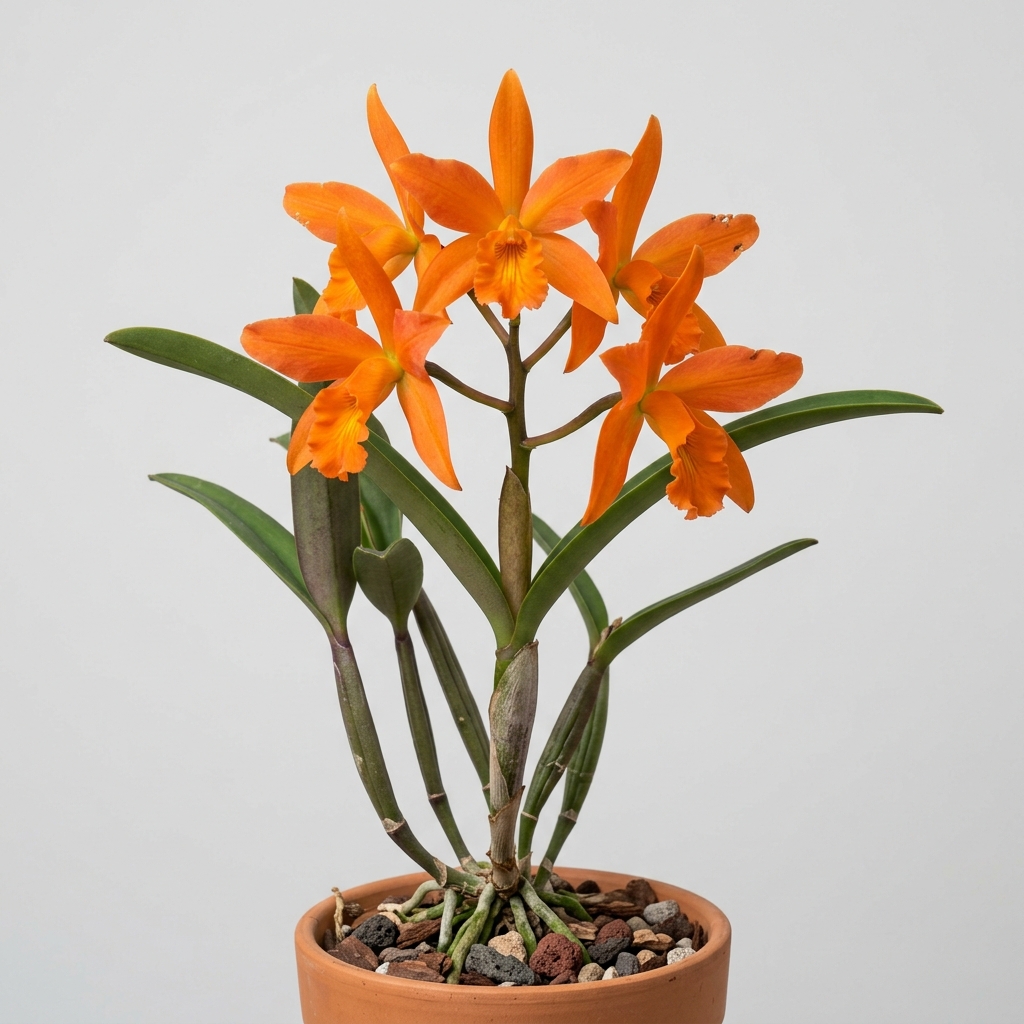
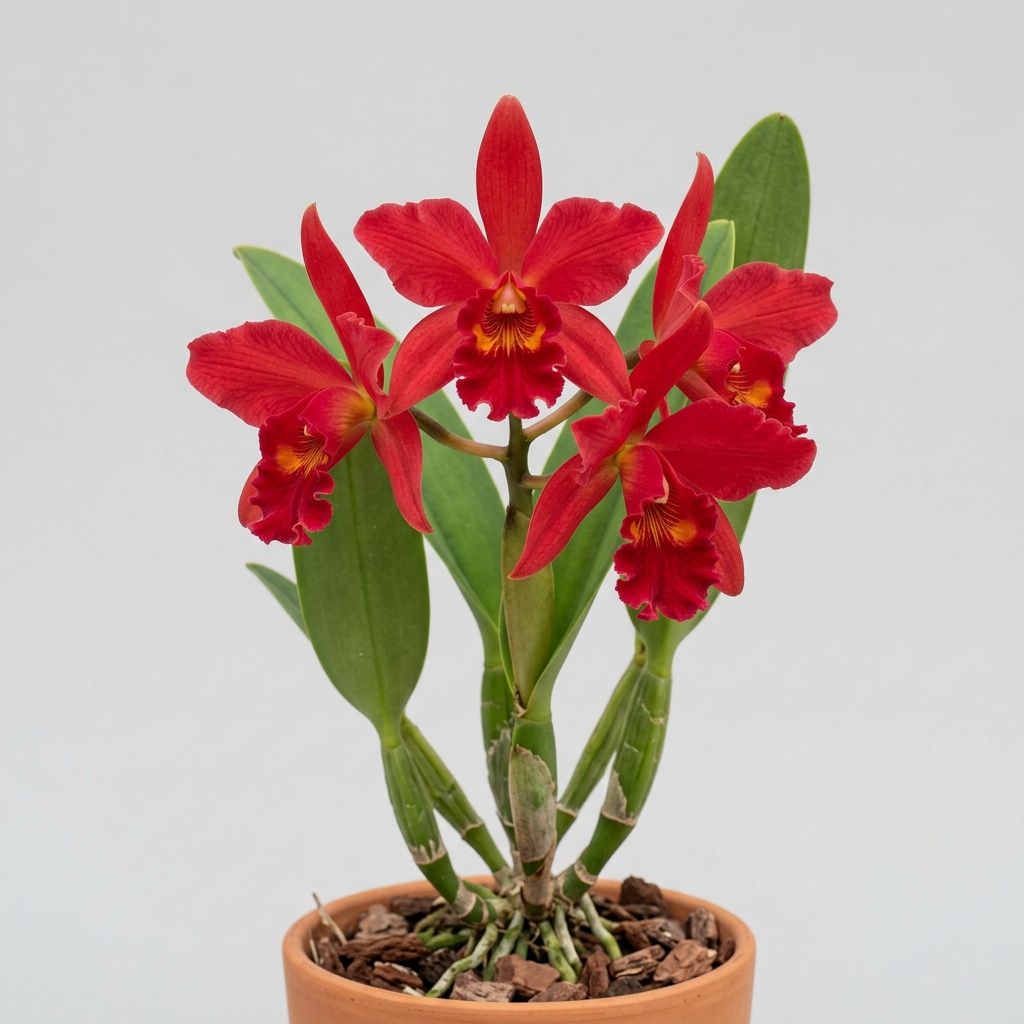
The flowers of Cattleya Mantiqueirae are noted for their rich coloration, often displaying intense shades of red, orange, or deep magenta, depending on the specific clone or selection. The petals and sepals are typically well-proportioned, creating a balanced, star-like or rounded floral silhouette. The labellum, or lip, is often a focal point, featuring intricate veining, contrasting yellow or gold throats, and gently ruffled margins that attract pollinators.
Blooms are produced on short, sturdy inflorescences that emerge from a protective sheath at the top of the mature pseudobulb. Each spike generally carries a few flowers, which are held clear of the foliage for an elegant presentation. The substance of the flowers is firm, contributing to a relatively long-lasting display compared to softer-petaled orchid genera.
Fragrance & Bloom Profile
The fragrance profile of Cattleya Mantiqueirae is not consistently documented across all cultivated specimens, as scent intensity can vary significantly based on environmental factors such as temperature, humidity, and time of day. Some growers report a subtle, sweet, or slightly floral perfume that is most noticeable during the morning hours when light levels increase.
The blooms typically remain in peak condition for several weeks, provided the plant is kept in a cool, draft-free location away from direct midday sun. To maximize the longevity of the flowers, growers should avoid getting water directly on the petals during routine watering sessions, as excess moisture can encourage fungal spotting.
Parentage & Hybrid Lineage
The exact hybrid lineage and registration history of Cattleya Mantiqueirae are subject to varying interpretations in horticultural literature, and they are not consistently documented in common grower references. It is widely understood to carry genetic influences from species native to the Serra da Mantiqueira, a mountain range in southeastern Brazil known for its rich orchid biodiversity, particularly miniature rupicolous and epiphytic species.
Because of this montane heritage, the cultivar inherits a preference for brighter light and cooler night temperatures than many standard lowland Cattleya hybrids. Breeders often use these genetics to introduce compact growth habits and intense, warm-toned floral pigments into modern hybrid lines.
🌱 Growing Conditions
To cultivate Cattleya Mantiqueirae successfully, growers must replicate its native montane environment. It thrives in bright, filtered light, similar to the conditions found under a light forest canopy. East or shaded south-facing windows are ideal, or high-output LED grow lights adjusted to provide moderate to high light levels without overheating the foliage.
💡 Care Tip
Ensure your Cattleya Mantiqueirae experiences a noticeable drop of 10 to 15 degrees Fahrenheit at night. This diurnal shift mimics its native montane habitat and is one of the most critical triggers for successful flower bud development.
Temperature management is crucial for this cultivar. It prefers intermediate to cool conditions, with daytime temperatures ranging from 70 to 80 degrees Fahrenheit (21 to 27 degrees Celsius) and a distinct drop at night to 55 to 65 degrees Fahrenheit (13 to 18 degrees Celsius). This diurnal temperature fluctuation is essential for triggering bud initiation and maintaining overall plant vigor. High humidity, ideally between 50% and 70%, combined with constant, gentle air movement, will prevent stagnant conditions and minimize the risk of pathogen outbreaks.
Watering, Feeding & Potting Media
Watering practices should follow the classic soak and dry cycle typical for epiphytic orchids. The potting medium should be allowed to dry out almost completely between waterings, but not remain dry for extended periods during the active growing season. When watering, flush the pot thoroughly with tepid water to ensure all roots are hydrated and any accumulated fertilizer salts are washed away.
A coarse, well-draining potting mix is essential to prevent root rot. Coarse fir bark mixed with perlite, charcoal, and a small amount of sphagnum moss works exceptionally well in plastic or clay pots. Alternatively, this compact cultivar can be mounted on cork bark or tree fern plaques if high humidity can be consistently maintained. Feed the plant with a balanced, diluted orchid fertilizer weekly during the spring and summer, reducing or halting fertilization during the cooler winter rest period.
Blooming Season & Care Notes
Cattleya Mantiqueirae typically blooms in the spring or autumn, though variations can occur depending on local growing conditions and cultural practices. As the new pseudobulb matures, a green sheath will develop at the leaf base, from which the flower buds will eventually emerge. During this development phase, maintain stable environmental conditions and avoid moving the plant to prevent bud drop.
Once the blooming cycle is complete, the orchid enters a brief period of vegetative rest. This is the ideal time to assess the potting medium and determine if repotting is necessary. Repotting should only be performed when new root tips begin to emerge from the base of the newest pseudobulb, ensuring the plant establishes quickly in its new container with minimal transplant shock.
⚠️ Common Issues
⚠️ Common Mistake
A frequent error is using a heavy potting soil or fine mix that retains water too long. Epiphytic orchids like Cattleya Mantiqueirae require rapid drainage and exceptional root aeration; suffocating the roots in dense media will quickly lead to root rot and plant decline.
- Root Rot: Caused by overwatering or a decomposing potting medium that retains too much moisture around the root system.
- Bud Blast: The sudden yellowing and dropping of flower buds, often triggered by abrupt changes in temperature, low humidity, or drafts.
- Dehydration: Indicated by shriveled pseudobulbs and wrinkled leaves, usually resulting from underwatering or a loss of functional roots due to rot.
- Scale and Mealybugs: Common pests that hide in the crevices of pseudobulbs and under leaf sheaths; treat promptly with insecticidal soap or horticultural oil.
- Leaf Spotting: Fungal or bacterial spots can develop if water is allowed to sit on the foliage overnight without adequate air circulation.
❓ Frequently Asked Questions
How often should I water Cattleya Mantiqueirae?
Watering frequency depends on your specific growing environment, potting medium, and pot type. Generally, water once or twice a week during the active growing season, allowing the medium to dry out almost completely between applications. Reduce watering frequency during the winter rest period.
What is the best light level for this orchid?
This cultivar thrives in bright, indirect light. A location that receives strong morning sun with protection from intense afternoon rays is ideal. If the leaves turn dark green, the plant is likely receiving too little light; if they turn yellow or develop red tinting, the light may be too intense.
Can Cattleya Mantiqueirae be grown mounted?
Yes, its compact growth habit makes it an excellent candidate for mounting on cork bark or tree fern plaques. However, mounted orchids dry out much faster than potted ones and typically require daily watering or misting, along with high ambient humidity.
Why are the pseudobulbs on my orchid shriveling?
Shriveled pseudobulbs indicate dehydration. This can be caused by simple underwatering or, conversely, by overwatering which has rotted the root system, leaving the plant unable to absorb moisture. Inspect the roots to determine the correct cause before adjusting your care routine.
⭐ Final Growing Notes
Cattleya Mantiqueirae is a rewarding orchid that brings a touch of montane elegance to any collection. By respecting its preferences for bright light, distinct day-to-night temperature drops, and a well-draining root environment, growers can enjoy healthy growth and vibrant floral displays for many years. Its compact size and striking beauty make it a highly recommended addition for intermediate growers looking to expand their Cattleya collection.
⚕️ Health, Safety & Edibility
Understanding how a plant interacts with people, pets, and the surrounding environment is part of responsible cultivation. This section uses conservative, general guidance and does not replace professional medical or veterinary advice.
Human Safety: No published evidence currently identifies species-specific toxicity concerns for Cattleya Mantiqueirae during normal handling. As with most ornamental plants, it should not be intentionally consumed.
Pet Safety: Published information does not indicate that this orchid commonly poses a toxicity concern for cats or dogs. However, chewing leaves, flowers, roots, or potting media may still cause mild digestive upset.
Edibility: This orchid is cultivated for ornamental display rather than food. Ornamental plants may carry fertilizers, pesticides, or other horticultural treatments that make them unsuitable for consumption.
Skin Contact: Routine handling is not generally associated with skin irritation. Gardeners with sensitive skin may prefer wearing gloves when repotting, pruning, or handling potting media.
🌱 Propagation Tip
Propagate this orchid by division during the repotting process, ensuring each new division has at least three to four healthy, mature pseudobulbs with active eye buds. Avoid dividing the plant too frequently, as larger specimen-sized clumps produce far more spectacular floral displays.
⭐ Expert Advice
Keep a close eye on the papery sheaths that cover the developing pseudobulbs. In high- environments, these sheaths can trap moisture and harbor pests like scale. Gently peeling away dry, brown sheaths can improve air circulation and make pest detection much easier.