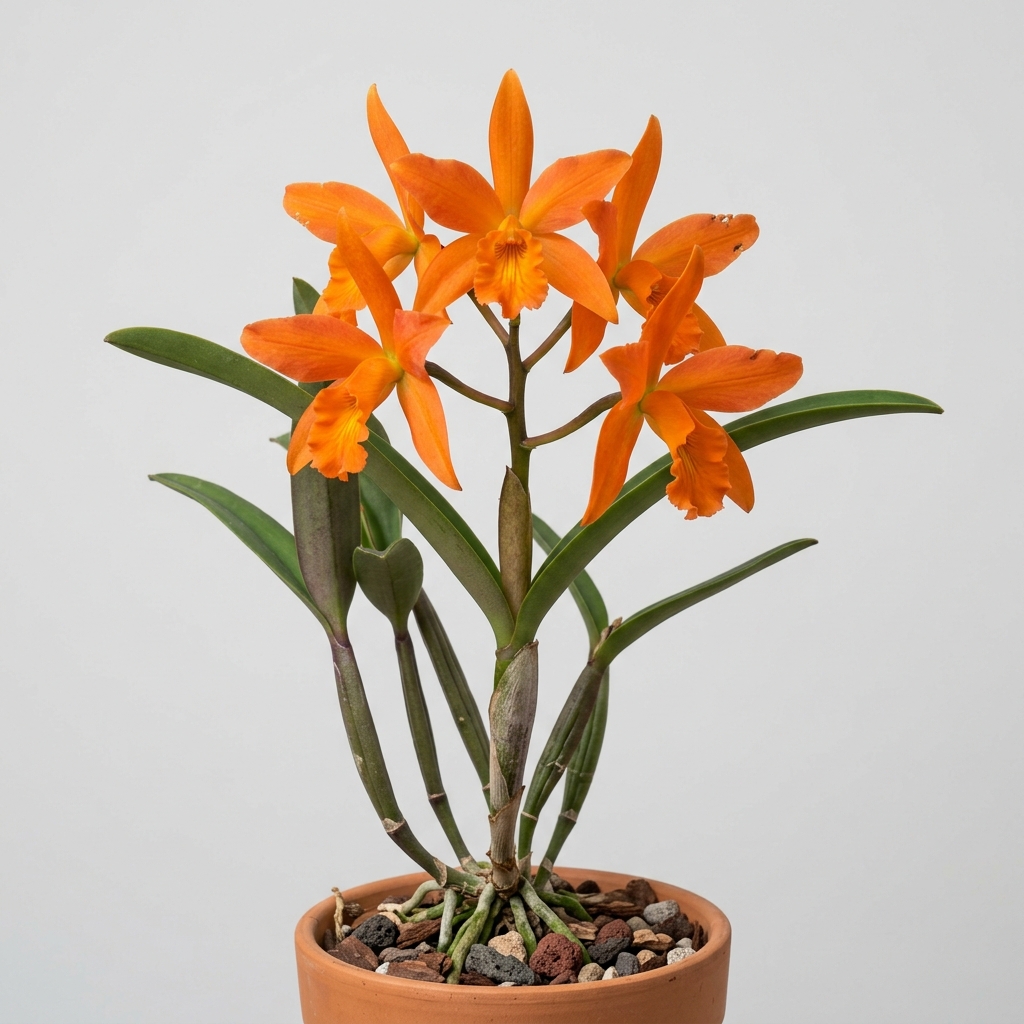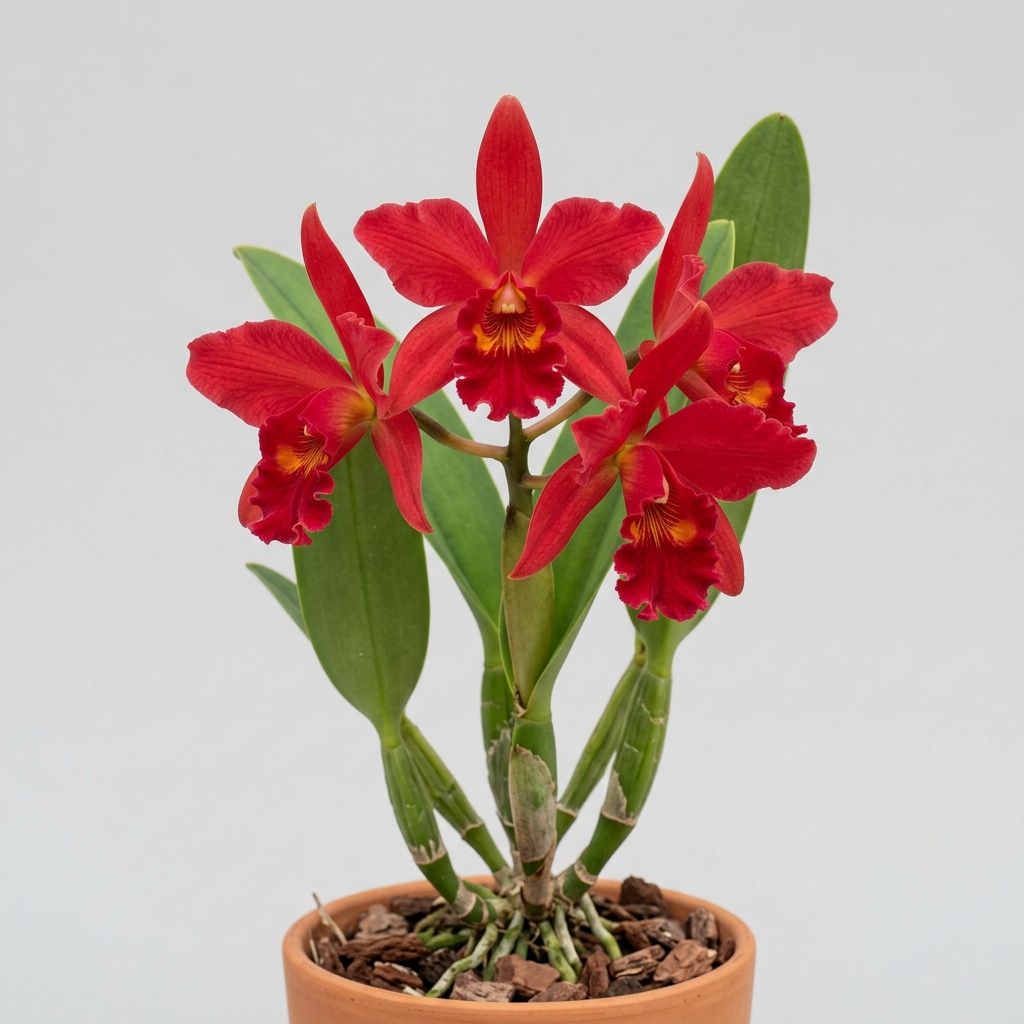
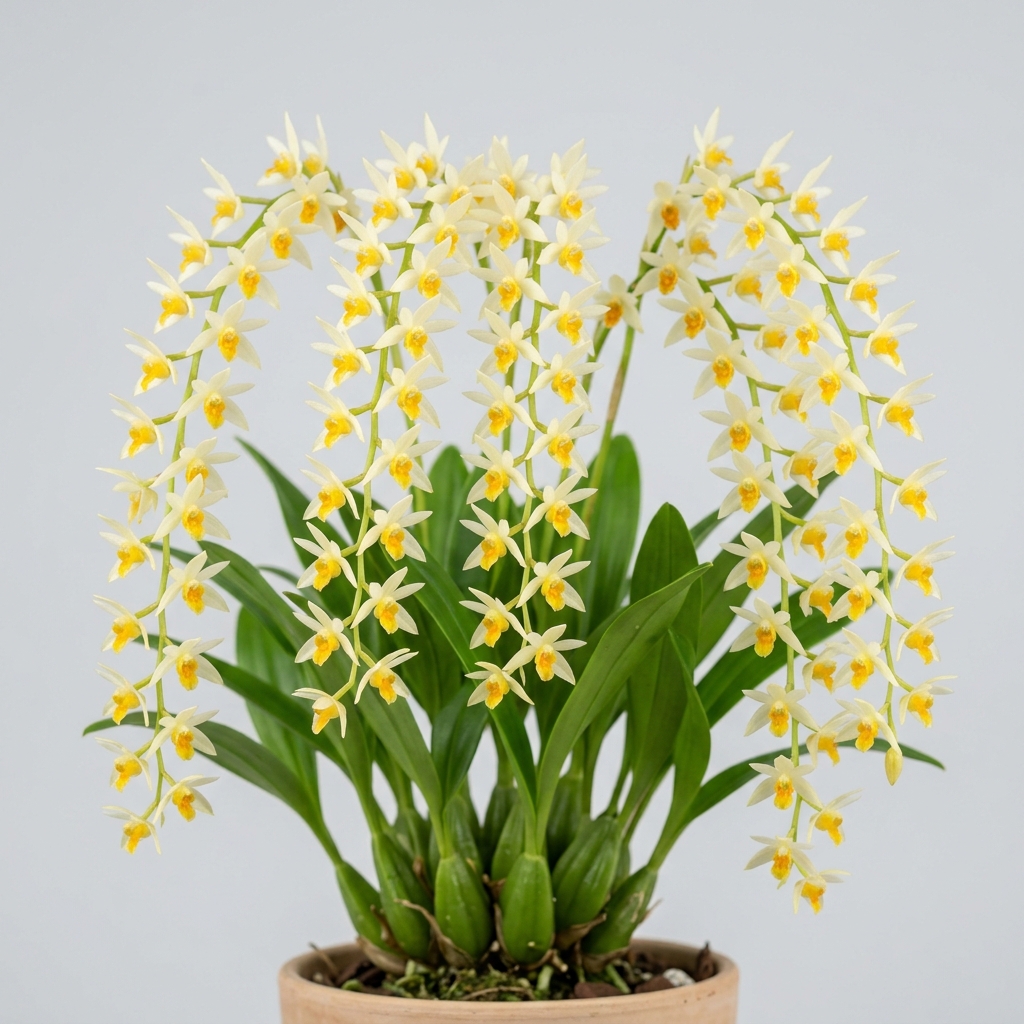
Dendrochilum Cobbianum, commonly known as Cobb’s Dendrochilum or the chain orchid, is a highly celebrated epiphytic orchid species native to the mountainous regions of the Philippines. Prized by orchid enthusiasts for its spectacular, pendulous flowering chains, this species produces dense, arching spikes draped with dozens of miniature, star-like blossoms. Its neat growth habit, featuring tightly clustered pseudobulbs and clean, lanceolate leaves, makes it an attractive specimen even when not in bloom.
Cultivators value this species for its robust growth, reliable blooming cycle, and sweet, honey-like fragrance that can easily fill a growing space. While it presents a delicate, intricate appearance, Dendrochilum Cobbianum is surprisingly resilient and adaptable to indoor cultivation when its basic requirements for humidity and moisture are met. It serves as an excellent representative of the genus, offering a rewarding experience for both intermediate growers and dedicated orchid collectors.
💡 Did You Know?
The common name 'chain orchid' perfectly describes the unique arrangement of Dendrochilum Cobbianum flowers. The individual blossoms are arranged in a precise, alternating double row along a thin, wiry stem, mimicking the structure of a delicate necklace. This evolutionary design helps attract specific insect pollinators in its native Philippine mountain forests.
🌿 Botanical Overview
Dendrochilum Cobbianum belongs to the family Orchidaceae and is native to the high-altitude mossy forests of the Philippines, typically growing as an epiphyte on moss-covered tree branches or occasionally as a lithophyte on damp rocks. The plant features prominent, pear-shaped or conical pseudobulbs that grow in tight clusters. Each pseudobulb supports a single, erect, leathery leaf that is narrowly elliptic and dark green, providing a clean, architectural structure.
The growth habit is sympodial, meaning it expands horizontally by producing new pseudobulbs from a creeping rhizome. Over time, well-grown specimens can form dense, impressive clumps that produce dozens of flower spikes simultaneously. Understanding its montane forest origin is key to successful cultivation, as it highlights the plant’s preference for consistent moisture, high humidity, and excellent air movement.
🌸 Flower Characteristics
The defining feature of Dendrochilum Cobbianum is its remarkable inflorescence. The flower spikes emerge from the apex of newly developing pseudobulbs, initially growing upright before gracefully arching downward under the weight of the developing buds. Each slender, wiry peduncle can carry between 30 and 70 individual flowers arranged in a neat, two-ranked, zigzag pattern resembling a delicate chain or necklace.
The individual flowers are miniature, typically measuring less than one inch across. They feature creamy white to pale yellow sepals and petals that spread widely to form a star shape. The most striking element is the small, prominent lip or labellum, which displays a bright orange or golden-yellow coloration, creating a beautiful contrast against the paler segments. The overall presentation is one of delicate symmetry and abundance.
Fragrance & Bloom Profile
The fragrance of Dendrochilum Cobbianum is a major draw for collectors, often described as sweet, spicy, or reminiscent of warm honey and anise. The scent is typically most pronounced during the morning and early afternoon hours, especially when the plant is exposed to gentle warmth and bright light.
Individual flowers on the chain open nearly simultaneously, starting from the base of the spike and progressing rapidly to the tip. A single inflorescence can remain in pristine condition for two to three weeks, depending on ambient temperatures and humidity levels. Because a mature specimen can produce multiple spikes at once, the overall blooming period of a large plant can extend over several weeks, providing a highly sensory display.
Parentage & Hybrid Lineage
Unlike many highly hybridized orchids found in commercial nurseries, Dendrochilum Cobbianum is a distinct, naturally occurring species rather than a man-made cultivar. While some selected clones or superior cultivars may exist within the trade to highlight specific traits like flower size or color intensity, the plants grown by hobbyists remain genetically close to their wild ancestors.
In botanical nomenclature, some taxonomists have proposed transferring the genus Dendrochilum into the broader genus Coelogyne. While this reclassification is accepted in some scientific circles, the name Dendrochilum Cobbianum remains the standard and most widely recognized designation among orchid growers, societies, and nursery registries.
🌱 Growing Conditions
To replicate its native montane habitat, Dendrochilum Cobbianum requires intermediate to warm growing conditions. It thrives in bright, filtered light, similar to the dappled sunlight found under a forest canopy. Direct, intense afternoon sunlight should be avoided to prevent the leaves from scorching, while too little light may result in weak growth and a lack of flowers.
💡 Care Tip
Maintain a high- microclimate around your orchid by placing the pot on a tray filled with pebbles and water, or group it with other moisture-loving plants. Ensure that the bottom of the pot does not sit directly in the water to prevent root rot.
Ideal daytime temperatures range from 70°F to 80°F (21°C to 27°C), with a slight drop of 10°F to 15°F at night to mimic natural mountain thermoperiods. High relative humidity, ideally between 60% and 80%, is essential for maintaining healthy foliage and preventing the delicate flower buds from drying out. Constant, gentle air circulation is critical to prevent stagnant air, which can encourage fungal pathogens.
Watering, Feeding & Potting Media
Consistent moisture is vital for Dendrochilum Cobbianum, as the plant does not possess large water-storage organs and should never be allowed to dry out completely. Water the plant thoroughly as soon as the potting medium approaches dryness. During the active growing season in spring and summer, watering may be required multiple times a week, whereas watering frequency should be reduced slightly during the cooler winter months.
A well-draining potting medium is essential to prevent root rot. A mix of fine-grade fir bark, perlite, and chopped sphagnum moss works exceptionally well, retaining moisture while allowing oxygen to reach the roots. Alternatively, the plant can be mounted on cork bark or tree fern plaques if high humidity can be consistently maintained. Feed the orchid with a balanced, diluted orchid fertilizer at one-quarter to one-half strength every two weeks during active growth, flushing the pot with pure water periodically to prevent salt buildup.
Blooming Season & Care Notes
Dendrochilum Cobbianum typically initiates its blooming cycle in the autumn or early winter, though occasional spring blooms can occur depending on local growing conditions. The flower spikes emerge from the center of the emerging new growths before the leaves fully expand. It is important to avoid getting water on the developing spikes, as trapped moisture can cause the buds to blast or rot.
Once the blooming cycle is complete, the old flower spikes can be cut back to the base of the pseudobulb. Repotting should be performed only when necessary, typically every two to three years, as this species dislikes root disturbance. The ideal time to repot or divide the plant is in the spring, just as new root growth begins to emerge from the base of the newest pseudobulbs.
⚠️ Common Issues
⚠️ Common Mistake
Allowing the potting medium to dry out completely between waterings is a common mistake. Unlike some orchids with massive pseudobulbs, this species has limited water reserves and will quickly show stress through leaf drop and shriveled pseudobulbs if kept dry.
- Root Rot:
Caused by overwatering or compacted, poorly draining potting media that deprives roots of oxygen. - Bud Blast:
Occurs when sudden drops in humidity, drafts, or water droplets on developing spikes cause buds to dry up and drop before opening. - Leaf Tip Burn: Often a sign of low humidity, underwatering, or excessive mineral salt buildup from fertilizers.
- Pests:
Spider mites, mealybugs, and scale can occasionally target the thin leaves and clustered pseudobulbs; treat promptly with insecticidal soap or neem oil. - Shriveled Pseudobulbs: Indicates dehydration, which can stem from either underwatering or a loss of roots due to rot.
❓ Frequently Asked Questions
How do I encourage my Dendrochilum Cobbianum to bloom?
To encourage blooming, ensure the plant receives bright, filtered light and a slight drop in temperature at night during the late summer and early autumn. Consistent watering and high humidity during the active growing season are also essential for the plant to build up the energy required to produce flower spikes.
Can I grow Dendrochilum Cobbianum under artificial LED lights?
Yes, this species adapts well to artificial LED grow lights. Position the plant under full-spectrum LED lights at a distance that provides moderate to bright intensity without generating excess heat, and maintain a consistent day-night light cycle of 12 to 14 hours.
Why are the leaves on my orchid turning yellow and dropping?
Yellowing leaves can be caused by several factors, including overwatering, underwatering, or natural aging of older pseudobulbs. If the yellowing is accompanied by soft, mushy roots, it is likely root rot from overwatering. If the pseudobulbs are shriveled, the plant may need more frequent watering.
Is Dendrochilum Cobbianum suitable for beginner orchid growers?
This species is generally considered suitable for intermediate growers, but motivated beginners can succeed by carefully managing humidity and moisture. Because it does not tolerate drying out as well as some other orchid genera, consistent attention to watering is required.
⭐ Final Growing Notes
Dendrochilum Cobbianum is a rewarding and visually stunning orchid that brings a unique, architectural elegance to any collection. By providing consistent moisture, high humidity, and bright, filtered light, growers can enjoy the spectacular sight of cascading golden-white chains and their delightful fragrance year after year. Its manageable size and reliable nature make it an enduring favorite in the world of orchid cultivation.
⚕️ Health, Safety & Edibility
Understanding how a plant interacts with people, pets, and the surrounding environment is part of responsible cultivation. This section uses conservative, general guidance and does not replace professional medical or veterinary advice.
Human Safety: Species-specific human toxicity data for Dendrochilum Cobbianum is limited. Use conservative handling practices and avoid intentional consumption.
Pet Safety: Pet-specific safety information for Dendrochilum Cobbianum is limited, so keep it away from animals that commonly chew plants.
Edibility: Dendrochilum Cobbianum should not be treated as edible. Ornamental specimens may contain natural irritants or horticultural residues that make them unsuitable for consumption.
Skin Contact: Skin irritation is not well documented for this plant, but gloves are sensible when repotting, pruning, or handling potting media.
🌱 Propagation Tip
Propagate this species by division during spring repotting. Ensure each division contains at least three to four healthy, mature pseudobulbs with active root systems. Avoid dividing the plant too frequently, as larger specimens produce far more spectacular flower displays.
⭐ Expert Advice
To maximize the and bloom quality, place the orchid in a location with gentle morning sun and excellent air movement. The movement of air not only prevents fungal issues on the dense foliage but also helps disperse the sweet, honey-like scent throughout your growing space.