
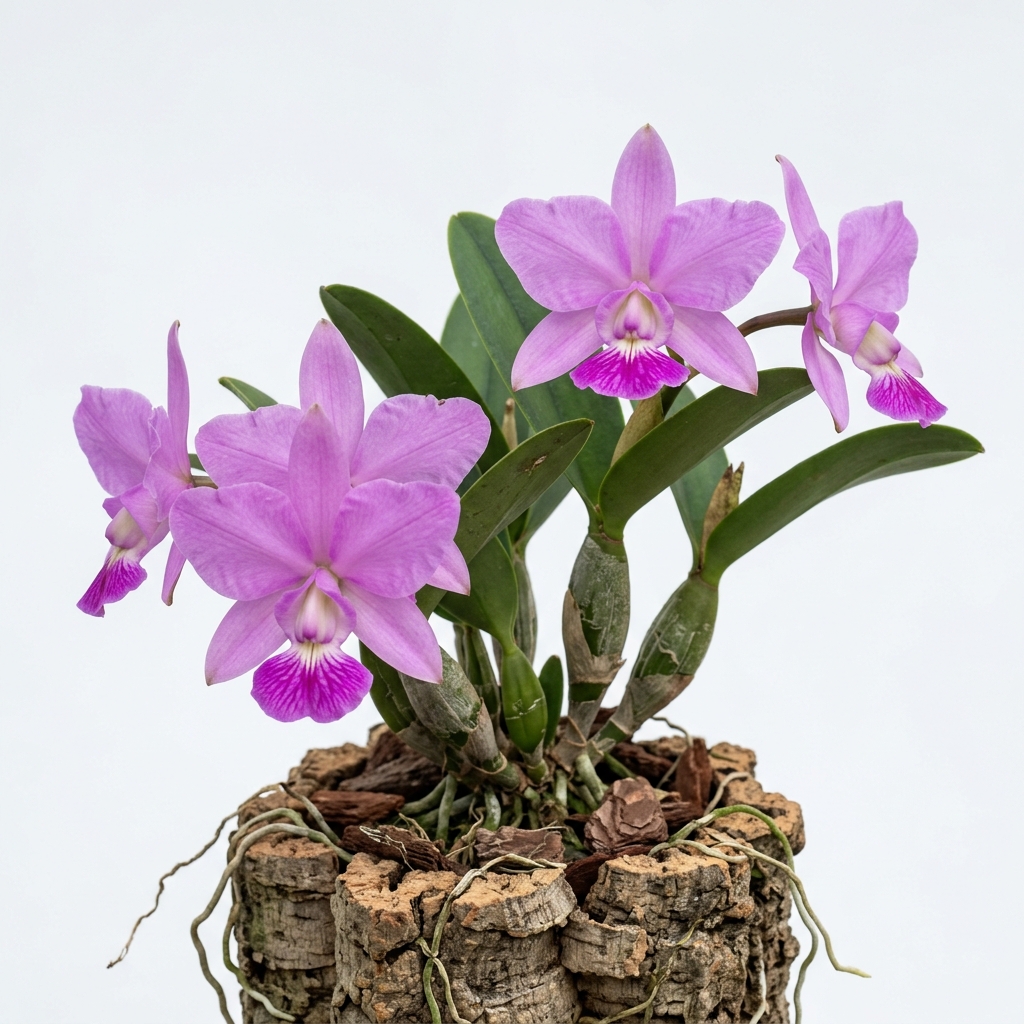
Cattleya walkeriana is a highly prized dwarf orchid species native to Brazil, celebrated by collectors for its exceptionally large, fragrant blossoms relative to its compact vegetative size. Unlike many other Cattleya species, this orchid shows a unique growth habit where the inflorescence typically emerges from a short, specialized leafless shoot arising directly from the rhizome rather than from the apex of a mature pseudobulb. This distinctive trait, combined with its robust resilience, makes it a cornerstone of modern orchid hybridization and a favorite among indoor growers.
Cultivators value Cattleya walkeriana not only for its striking visual presentation but also for its adaptable nature when provided with proper environmental cues. Its ability to thrive in bright light and tolerate periods of drought reflects its natural adaptation to seasonally dry Brazilian habitats. For orchid enthusiasts seeking a rewarding specimen that delivers maximum floral impact without requiring vast greenhouse space, this species represents an ideal choice.
💡 Did You Know?
Cattleya walkeriana belongs to the Cattleya orchid group, where flower presentation is often just as important as . White-flowered cultivars are especially valued indoors because their pale blooms reflect well and pair easily with many home, greenhouse, and display settings.
🌿 Botanical Overview
Cattleya walkeriana is characterized by its short, club-shaped pseudobulbs that typically bear a single, thick, leathery leaf. The plant rarely exceeds six inches in height, making it one of the most compact members of the genus. Its growth habit is creeping, with a strong rhizome that allows the plant to quickly scramble over mounting substrates or the edges of pots.
The most fascinating botanical feature of this orchid is its flowering habit. While most Cattleyas produce flowers from a sheath at the top of a newly matured pseudobulb, Cattleya walkeriana produces its flower spikes from a separate, specialized growth that emerges from the base of the previous pseudobulb. This growth remains short and leafless, dedicating all its energy to supporting the impressive floral display.
🌸 Flower Characteristics
Flowers of Cattleya walkeriana are remarkably flat, heavy-textured, and can measure up to four inches in diameter, nearly matching the height of the plant itself. The petals and sepals are typically broad and symmetrical, presenting a well-rounded, balanced form. The prominent lip, or labellum, is deeply three-lobed, with side lobes that wrap around the column and a broad mid-lobe that often displays a rich, contrasting amethyst or magenta hue.
Fragrance & Bloom Profile
The fragrance of Cattleya walkeriana is legendary among orchid enthusiasts, often described as a powerful, sweet blend of vanilla and cinnamon. This scent is most intense during the morning hours when temperatures begin to rise and can easily fill an entire growing room. Individual flowers are long-lasting, frequently remaining in pristine condition for four to six weeks if kept in a cool, dry environment.
Parentage & Hybrid Lineage
As a naturally occurring species native to the central plateau of Brazil, Cattleya walkeriana does not have a hybrid parentage. However, its outstanding floral characteristics, compact size, and intense fragrance have made it one of the most influential parents in Cattleya breeding. It has been used to create countless compact and miniature hybrids, passing on its flat flower form and robust growth habit to its offspring.
🌱 Growing Conditions
To cultivate Cattleya walkeriana successfully, growers must replicate its native seasonal environment. It requires high light levels, comparable to those needed by Cattleya trianae or Cattleya amethystoglossa, but with careful acclimation to prevent leaf scorch. Intermediate to warm temperatures are ideal, with a distinct drop in night temperatures to stimulate bud development. Strong, continuous air movement is critical to prevent heat buildup and fungal pathogens.
💡 Care Tip
For best results, grow Cattleya walkeriana in bright filtered with steady and gentle airflow. Avoid placing the plant in harsh midday sun, but do not keep it in a dark corner; weak is one of the most common reasons cultivated orchids refuse to rebloom.
Watering, Feeding & Potting Media
This orchid is highly susceptible to root rot if kept constantly wet. It is best grown mounted on cork bark or tree fern plaques, or planted in coarse, fast-draining media such as large fir bark chips in clay pots or open baskets. During the active growing season, water copiously but allow the media to dry out completely between applications. Apply a balanced, diluted orchid fertilizer weekly, flushing the pot with pure water once a month to prevent salt accumulation.
Blooming Season & Care Notes
Cattleya walkeriana typically blooms from late autumn through winter and into early spring. As the new flowering shoots begin to emerge from the base of the pseudobulbs, reduce watering slightly and suspend heavy fertilizing. After flowering concludes, the plant enters a brief semi-dormant period. Repotting or remounting should only be performed when new root tips begin to emerge from the base of the newest pseudobulbs, ensuring rapid establishment in the new medium.
⚠️ Common Issues
⚠️ Common Mistake
The most common mistake is by calendar instead of root and potting-media condition. Cattleya roots need moisture and air at the same time, so constantly wet bark or sphagnum can lead to root loss even when the leaves still look healthy.
- Root rot due to overwatering or degraded, water-retentive potting media.
- Dehydration characterized by shriveled pseudobulbs and wrinkled leaves, often caused by a loss of functional roots.
- Scale insects and mealybugs hiding in the dry sheaths of pseudobulbs or under leaves.
- Bud blast resulting from sudden changes in temperature, low humidity, or drafty conditions during spike development.
- Fungal leaf spotting or black rot if water is allowed to sit on the foliage overnight without adequate air circulation.
❓ Frequently Asked Questions
Why is my Cattleya walkeriana not blooming?
Insufficient light is the most common reason for a lack of blooms. This species requires bright, filtered light to build up enough energy to produce its large flowers. Additionally, ensure the plant experiences a slight drop in night temperatures during the autumn to trigger bud initiation.
Can I grow Cattleya walkeriana under LED grow lights?
Yes, this compact orchid is excellent for under-lights cultivation. Position the plant close to high-output LED fixtures designed for orchids, ensuring they receive 12 to 14 hours of light daily, while monitoring leaf temperature to prevent heat stress.
How often should I water a mounted Cattleya walkeriana?
Mounted plants dry out very rapidly. During the warm summer growing season, they may require daily watering or misting. In the winter, reduce watering to once or twice a week, depending on your indoor humidity levels.
What should I do if the pseudobulbs start to shrivel?
Shriveled pseudobulbs indicate water stress. Check the root system first; if the roots are brown and mushy, the plant has rotted and cannot absorb water. If the roots are healthy and white, increase the frequency of watering while maintaining excellent drainage.
⭐ Final Growing Notes
Cattleya walkeriana remains a crown jewel of the orchid world, offering an unmatched combination of compact growth, magnificent floral display, and intoxicating fragrance. By respecting its need for bright light, rapid wet-to-dry cycles, and a distinct winter rest, growers of all levels can enjoy the rewarding experience of cultivating this iconic Brazilian species.
🌱 Propagation Tip
Propagation should be approached patiently. Most home growers should wait for natural keikis or divide only mature, healthy plants when the orchid type allows it. Never remove a young growth until it has strong roots and enough leaves to support itself away from the parent plant.
⭐ Expert Advice
Repot after flowering when fresh root tips begin to appear. This timing helps the plant anchor quickly into new bark or sphagnum and reduces stress, especially for orchids grown indoors where airflow, , and drying speed can change from season to season.

Leave A Comment