
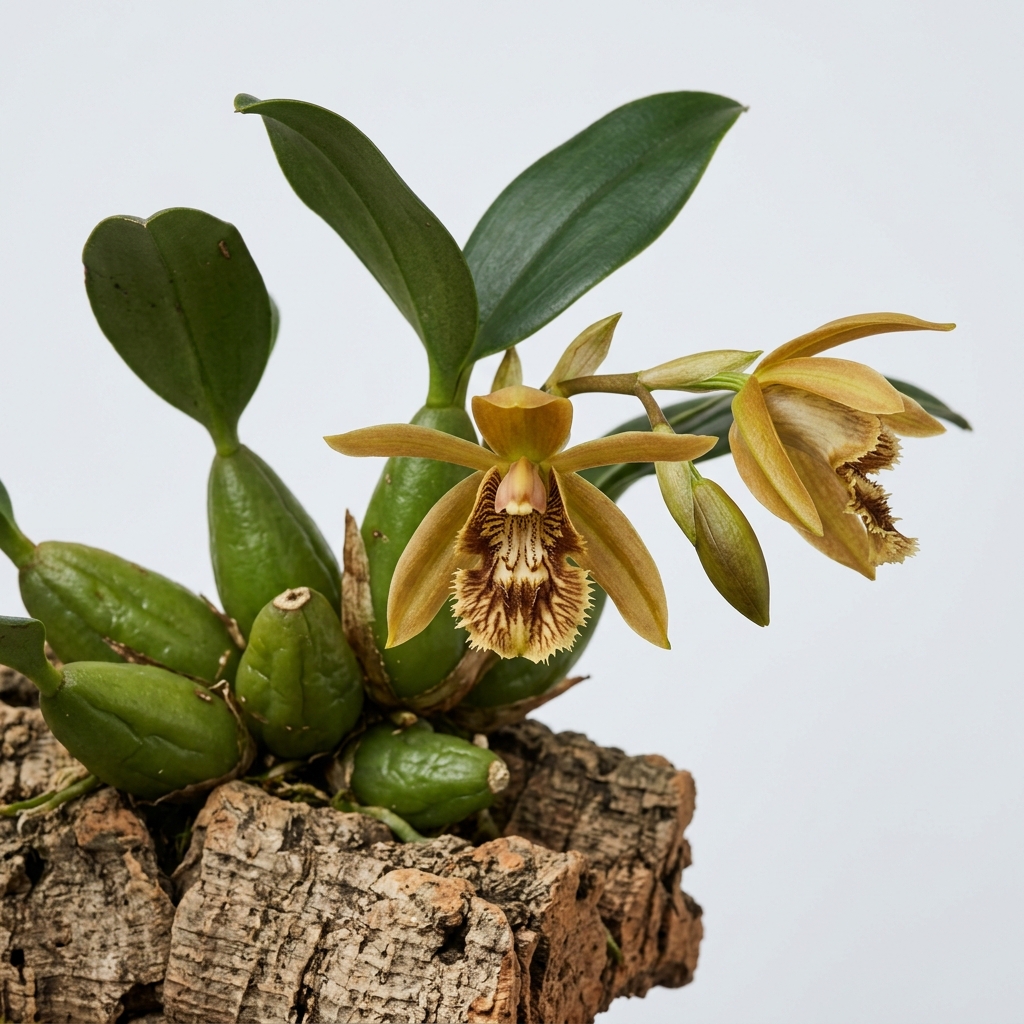
Coelogyne Ovalis is a fascinating epiphytic orchid species native to the Himalayas and Southeast Asia, highly regarded by collectors for its creeping growth habit and intriguing, fringed flowers. Often grown in baskets or mounted on slabs, this resilient orchid produces pseudobulbs spaced along a wandering rhizome, making it an excellent choice for growers seeking a plant with a wild, natural aesthetic.
The blooms of Coelogyne Ovalis are characterized by their warm, earthy tones of yellow, bronze, and brown, highlighted by a dramatically feathered or fringed lip. While individual flowers are relatively small compared to showier tropical orchids, their intricate details and reliable blooming nature make them a rewarding addition to any intermediate orchid collection.
💡 Did You Know?
Coelogyne Ovalis is known for its highly active creeping rhizome, which can grow several inches in a single season. In its native Himalayan habitat, this scrambling habit allows the orchid to quickly colonize mossy tree trunks and rocky cliffs, absorbing moisture and nutrients from the surrounding humid air.
🌿 Botanical Overview
Coelogyne Ovalis is characterized by its distinctive vegetative structure. It features oval to oblong pseudobulbs that arise at intervals along a creeping, woody rhizome. This sprawling growth habit means the plant quickly outgrows standard pots, making it uniquely suited for shallow pans, wide baskets, or mounting directly onto cork bark slabs where the roots can scramble freely.
The foliage consists of two leathery, dark green leaves emerging from the apex of each pseudobulb. These leaves are durable and help the plant store moisture, reflecting its adaptation to seasonally dry periods in its native montane forest habitats.
🌸 Flower Characteristics
The flowers of Coelogyne Ovalis are typically produced singly or in short successive racemes from the apex of mature pseudobulbs. Each bloom is approximately 3 to 5 centimeters across, featuring slender, spreading sepals and petals that range in color from pale yellow-green to a warm, golden-bronze.
The defining feature of the flower is its prominent, three-lobed lip. The mid-lobe of the lip is heavily fringed or hairy, adorned with dark brown, purple, or almost black veins and ridges. This intricate, insect-like lip serves as a visual guide for natural pollinators and provides a striking contrast to the lighter sepals and petals.
Fragrance & Bloom Profile
The fragrance of Coelogyne Ovalis is a subject of some variation among growers, as environmental factors and individual clones can influence the scent profile. Many hobbyists report a mild, pleasant fragrance that is sweet or slightly musky, while others find the scent to be faint or virtually undetectable.
The blooms typically open in succession or simultaneously during the cooler months of the year. While individual flowers may only last for two to three weeks, a well-established specimen with multiple active growth points can produce a succession of blooms that extends the overall flowering display over several weeks.
Parentage & Hybrid Lineage
Coelogyne Ovalis is a naturally occurring species rather than a complex artificial hybrid. While it is occasionally confused with closely related species such as Coelogyne fimbriata, it is distinguished by its larger vegetative size and specific floral details.
In orchid hybridization, Coelogyne Ovalis has been used sparingly compared to larger-flowered members of the genus. Its primary contribution to any breeding lines is its compact, creeping habit and the distinctive fringed lip, though registered hybrids remain relatively uncommon in the commercial trade.
🌱 Growing Conditions
To cultivate Coelogyne Ovalis successfully, mimic its native canopy environment by providing medium to bright indirect light. East- or shaded south-facing windows are ideal, as is a setup under standard LED grow lights. Avoid direct midday sun, which can easily scorch the foliage.
💡 Care Tip
If growing Coelogyne Ovalis in a pot, choose a wide, shallow clay pan or saucer rather than a deep pot. This accommodates the wide-spreading, creeping rhizomes and prevents the potting medium at the bottom from staying too wet.
This species thrives in intermediate to warm temperatures, ideally ranging from 18 to 26 degrees Celsius during the day, with a slight drop at night to stimulate blooming. High humidity of 60% to 80% is highly beneficial, accompanied by constant, gentle airflow to prevent stagnant air and fungal issues.
Watering, Feeding & Potting Media
During the active spring and summer growing season, Coelogyne Ovalis requires abundant moisture. The potting medium should remain consistently damp but never waterlogged. As temperatures cool in the autumn, gradually reduce watering, allowing the medium to dry out slightly between waterings, but do not allow the pseudobulbs to shrivel severely.
A balanced, diluted orchid fertilizer applied every two to three weeks during active growth supports robust pseudobulb development. Because of its creeping habit, the ideal potting medium is highly draining, such as a mix of fine fir bark, perlite, and chopped sphagnum moss. Alternatively, mounting the plant on a cork slab with a pad of sphagnum moss allows its natural climbing form to shine.
Blooming Season & Care Notes
The primary blooming season for Coelogyne Ovalis occurs in the autumn and early winter, triggered by the natural drop in night temperatures and shortening day lengths. Once the flower spikes begin to emerge from the center of new growths, maintain stable environmental conditions to prevent bud drop.
Avoid repotting or disturbing the plant immediately before or during its blooming cycle. If repotting or dividing is necessary, the best time is in the spring, just as new root growth begins to emerge from the base of the newest pseudobulbs.
⚠️ Common Issues
⚠️ Common Mistake
A common mistake is over- during the winter rest period. While the plant should not be allowed to dry out completely to the point of severe shriveling, keeping the media soggy in cool temperatures will quickly lead to root rot.
- Shriveled pseudobulbs: This is typically a sign of under-watering or root loss due to over-watering and later root rot.
- Leaf tip burn: Often caused by low humidity, excessive fertilizer salts in the media, or using water with high mineral content.
- Bud blast: Sudden changes in temperature, drafts, or low humidity can cause developing flower buds to yellow and drop before opening.
- Pests: Mealybugs and spider mites can occasionally hide in the crevices of the creeping rhizomes or under the leaves; treat promptly with insecticidal soap or neem oil.
❓ Frequently Asked Questions
How often should I water Coelogyne Ovalis?
Watering frequency depends on your growing setup. Mounted plants may require daily misting or watering in warm weather, while those in baskets or pots with sphagnum moss should be watered just as the medium begins to approach dryness, typically every 5 to 7 days during active growth.
Why is my Coelogyne Ovalis not blooming?
The most common reasons for a lack of blooms are insufficient light and a lack of temperature drop in the autumn. Ensure the plant receives bright indirect light and experiences a slight cooling of night temperatures to help trigger the flowering cycle.
Can I grow Coelogyne Ovalis mounted on wood?
Yes, mounting is one of the best ways to grow this orchid. Its creeping rhizomes naturally scramble over surfaces. Secure the plant to a cork slab with a small pad of sphagnum moss around the roots to help retain moisture.
What is the difference between Coelogyne Ovalis and Coelogyne fimbriata?
While very similar, Coelogyne Ovalis is generally larger in both its pseudobulbs and leaves compared to Coelogyne fimbriata. Additionally, the flowers of Coelogyne Ovalis are typically larger and feature a more intensely fringed lip with darker markings.
⭐ Final Growing Notes
With its unique creeping habit and beautifully detailed, fringed flowers, Coelogyne Ovalis is a rewarding orchid that brings a touch of wild montane beauty to any indoor collection. By providing it with bright indirect light, consistent humidity, and room to scramble, you will enjoy a healthy, free-flowering specimen for many years to come.
⚕️ Health, Safety & Edibility
Understanding how a plant interacts with people, pets, and the surrounding environment is part of responsible cultivation. This section uses conservative, general guidance and does not replace professional medical or veterinary advice.
Human Safety: No published evidence currently identifies species-specific toxicity concerns for Coelogyne Ovalis during normal handling. As with most ornamental plants, it should not be intentionally consumed.
Pet Safety: Published information does not indicate that this orchid commonly poses a toxicity concern for cats or dogs. However, chewing leaves, flowers, roots, or potting media may still cause mild digestive upset.
Edibility: This orchid is cultivated for ornamental display rather than food. Ornamental plants may carry fertilizers, pesticides, or other horticultural treatments that make them unsuitable for consumption.
Skin Contact: Routine handling is not generally associated with skin irritation. Gardeners with sensitive skin may prefer wearing gloves when repotting, pruning, or handling potting media.
🌱 Propagation Tip
Propagate this orchid by division during the spring repotting season. Ensure each division has at least three to four healthy, mature pseudobulbs and an active lead growth to give the new plant the best chance of rapid establishment.
⭐ Expert Advice
To achieve a spectacular specimen plant, avoid dividing your Coelogyne Ovalis too frequently. Allowing the plant to ramble and overflow its basket or mount will result in multiple active growth leads and a magnificent, multi-spiked autumn bloom display.

Leave A Comment