

Dendrobium Transparens is a highly valued deciduous orchid species celebrated for its delicate, paper-thin blossoms that appear to glow with a translucent quality. Belonging to the diverse Dendrobium genus, this orchid is particularly favored by collectors who appreciate its elegant growth habit and the dramatic contrast between its bare, cane-like pseudobulbs and its ethereal spring flowers. Its slender, pendulous canes make it an excellent candidate for mounted culture or hanging baskets, where its natural cascading form can be fully appreciated.
Cultivating this orchid successfully requires an understanding of its seasonal growth cycle, which includes a distinct dry winter rest period. When provided with the proper balance of summer moisture and winter drought, Dendrobium Transparens rewards growers with a prolific display of soft white and pale violet blooms. This guide outlines the essential care requirements, potting preferences, and environmental conditions necessary to help this beautiful orchid thrive in a home or greenhouse setting.
💡 Did You Know?
Dendrobium Transparens is named for the unique, semi-translucent quality of its petals, which allow to pass through them, creating a glowing effect. In its native Himalayan habitat, this deciduous orchid clings to tree trunks at elevations up to 1,800 meters, where it endures dramatic seasonal shifts from monsoon rains to cool, dry winters.
🌿 Botanical Overview
Dendrobium Transparens is naturally epiphytic, growing on trees in the foothills of the Himalayas and surrounding regions of Southeast Asia. In its native habitat, it experiences distinct seasonal shifts, with wet, warm summers followed by cooler, significantly drier winters. The plant produces slender, upright to arching pseudobulbs, often referred to as canes, which can reach lengths of twelve to twenty-four inches under optimal cultivation.
As a deciduous species, this orchid sheds its leaves annually from its older canes during the autumn and winter months. This leaf loss is a natural part of the plant’s life cycle and serves as a precursor to the spring blooming cycle. The seemingly lifeless, bare canes store energy and moisture, which eventually fuel the development of flower buds at the nodes along the upper portions of the pseudobulbs.
🌸 Flower Characteristics
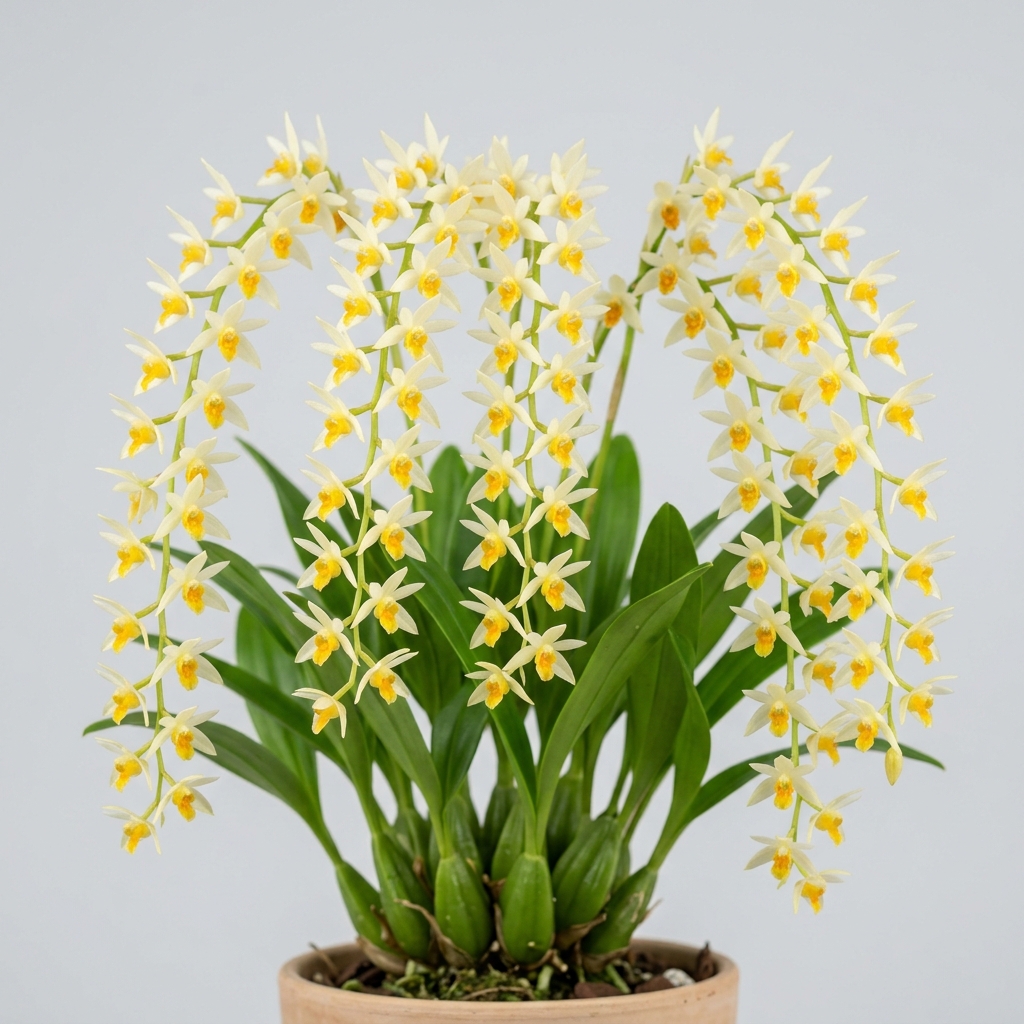
The flowers of Dendrobium Transparens are renowned for their delicate, almost crystalline texture, which gives them a semi-translucent appearance. Each bloom typically measures one to one and a half inches across, featuring pristine white to soft pinkish-purple petals and sepals. The tips of the segments often display a slightly deeper violet hue, adding subtle depth to the overall coloration.
The lip, or labellum, is a defining feature of the flower, presenting a trumpet-like shape with a soft, pubescent surface. It is usually marked with a prominent, deep purple or reddish-purple blotch in the throat, surrounded by a pale yellow or white margin. The flowers emerge in small clusters of two to three from the nodes of the leafless canes, creating a spectacular, cloud-like display when the plant is in full bloom.
Fragrance & Bloom Profile
While some growers report a light, sweet, and slightly honey-like fragrance, the scent of Dendrobium Transparens is not always intensely pronounced and can vary based on environmental conditions. The fragrance is typically most noticeable during the morning hours when temperatures begin to rise and humidity levels are high.
The blooms generally last for three to four weeks, depending on the ambient temperature and air circulation in the growing area. Cooler conditions during the blooming period will help prolong the life of the flowers, whereas excessive heat or dry air can cause them to fade prematurely. Because the flowers open nearly simultaneously along the canes, the overall display is highly impactful.
Parentage & Hybrid Lineage
Dendrobium Transparens is a distinct species rather than a complex artificial hybrid, meaning its genetic lineage is direct and naturally occurring. In orchid registration and horticultural literature, it is recognized as a primary species within the section Dendrobium. It has been used occasionally in breeding programs to introduce its delicate flower texture, pendulous habit, and deciduous nature to new hybrids, though such crosses are not as common as those involving larger-flowered species.
Because it is a true species, plants sold under this name should exhibit the characteristic traits of the wild population, though minor variations in flower size, color intensity, and growth vigor can occur among different seed-grown individuals or select cultivars. Growers seeking authentic specimens should purchase from reputable nurseries that document their propagation sources.
🌱 Growing Conditions
To cultivate Dendrobium Transparens successfully, growers must replicate its native mountain environment. It requires bright, filtered light to thrive, similar to the conditions preferred by many Cattleya orchids. Direct midday sun should be avoided to prevent leaf scorch, but strong morning or late afternoon light is highly beneficial for promoting robust cane growth and later flowering.
💡 Care Tip
To ensure successful blooming, place your orchid in a location where it experiences a distinct drop at night during the winter months. A cool windowsill or a dedicated greenhouse corner where temperatures dip to around 50 to 55 degrees Fahrenheit is ideal for triggering the development of flower buds along the bare canes.
Temperature management is critical for this species. During the active growing season in spring and summer, it prefers warm temperatures ranging from 75 to 85 degrees Fahrenheit during the day, with a slight drop at night. In the winter, the plant requires much cooler conditions, with nighttime temperatures dropping to 50 to 55 degrees Fahrenheit. Excellent air movement is essential at all times to prevent stagnant air pockets and reduce the risk of fungal infections.
Watering, Feeding & Potting Media
Watering practices must change dramatically between the growing season and the winter rest. Throughout the spring and summer, when new canes are actively developing, the plant should be watered copiously, keeping the medium consistently damp but never waterlogged. Weekly applications of a balanced, diluted orchid fertilizer will support this rapid vegetative growth.
As autumn approaches and the leaves begin to yellow and drop, watering must be progressively reduced. During the winter rest, water should be withheld almost entirely, providing only occasional light misting to prevent the pseudobulbs from shriveling excessively. The potting medium must be exceptionally free-draining; a coarse fir bark mix, tree fern fiber, or mounting on cork bark plaques are all highly successful methods for maintaining healthy root systems.
Blooming Season & Care Notes
The primary blooming season for Dendrobium Transparens occurs in mid-to-late spring, typically between April and June. The initiation of flower buds is directly triggered by the cool, dry winter rest combined with an increase in light intensity and a gradual rise in spring temperatures. Once tiny buds appear at the nodes of the bare canes, light watering may resume, but heavy watering should be avoided until the flowers have fully opened and new vegetative growth begins at the base of the plant.
After flowering is complete, the plant will initiate new growth leads from the base of the older canes. This is the ideal time to repot or remount the orchid if the medium has begun to decompose or if the plant has outgrown its container. Care should be taken not to damage the emerging, fragile new roots during this process.
⚠️ Common Issues
⚠️ Common Mistake
The most common mistake is continuing to water the orchid heavily during the autumn and winter. Failing to provide a dry rest period not only prevents the plant from blooming but also frequently leads to root rot and the premature death of the pseudobulbs due to excess moisture in cool conditions.
- Bud Blast:
Sudden drops in temperature, low humidity, or drafty conditions when buds are forming can cause them to yellow and drop before opening. - Pseudobulb Shriveling: While minor shriveling is normal during the winter rest, severe wrinkling indicates extreme dehydration, which should be corrected with a light misting.
- Root Rot:
Overwatering during the winter rest or using a decomposed, water-retentive potting medium will quickly destroy the root system. - Pests:
Spider mites and mealybugs can occasionally target the soft new foliage during the summer growing season; treat promptly with insecticidal soap or neem oil.
❓ Frequently Asked Questions
Why are the leaves on my Dendrobium Transparens turning yellow and falling off?
This is a completely natural, deciduous process that occurs in the autumn. Dendrobium Transparens sheds its leaves annually to prepare for its winter rest and later spring bloom cycle. Do not panic or increase watering; instead, begin reducing moisture as the leaves drop.
How dry should I keep the orchid during its winter rest?
The potting medium should be allowed to dry out completely between very sparse waterings. Typically, a light misting every two to three weeks is sufficient to keep the canes from shriveling excessively while still respecting the dry period necessary to trigger flower buds.
Can I grow Dendrobium Transparens mounted on cork bark?
Yes, mounting is highly recommended for this species. Its natural pendulous growth habit looks beautiful when cascading from a mount, and the quick-drying nature of cork bark helps prevent root rot, especially during the wet summer and dry winter cycles.
What should I do with the bare canes after they have finished blooming?
You should leave the bare canes intact. Even though they have lost their leaves and finished flowering, they continue to store water and essential nutrients that support the growth of new leads from the base of the plant. Only cut away canes that are completely dry, brown, and hollow.
⭐ Final Growing Notes
Dendrobium Transparens is a rewarding orchid that brings a touch of delicate, natural elegance to any collection. While its seasonal requirements—particularly the strict winter rest—may seem intimidating to beginners, they are easily managed once a routine is established. By respecting its natural growth cycle, growers will be rewarded year after year with a breathtaking display of translucent, pastel blooms that epitomize the beauty of epiphytic orchids.
⚕️ Health, Safety & Edibility
Understanding how a plant interacts with people, pets, and the surrounding environment is part of responsible cultivation. This section uses conservative, general guidance and does not replace professional medical or veterinary advice.
Human Safety: No published evidence currently identifies species-specific toxicity concerns for Dendrobium Transparens during normal handling. As with most ornamental plants, it should not be intentionally consumed.
Pet Safety: Published information does not indicate that this orchid commonly poses a toxicity concern for cats or dogs. However, chewing leaves, flowers, roots, or potting media may still cause mild digestive upset.
Edibility: This orchid is cultivated for ornamental display rather than food. Ornamental plants may carry fertilizers, pesticides, or other horticultural treatments that make them unsuitable for consumption.
Skin Contact: Routine handling is not generally associated with skin irritation. Gardeners with sensitive skin may prefer wearing gloves when repotting, pruning, or handling potting media.
🌱 Propagation Tip
This species occasionally produces adventitious offsets, known as keikis, along the nodes of its older canes. Allow the keiki to develop a robust root system with several roots at least two inches long before carefully detaching it and potting it in a fine bark mix or mounting it on cork.
⭐ Expert Advice
When repotting, always choose the smallest container possible or opt for a mount. Dendrobium Transparens performs best when its roots are tightly confined. If using a pot, secure the tall canes with a stake to prevent the plant from shifting, which can damage the highly sensitive new root tips as they emerge.

Leave A Comment