
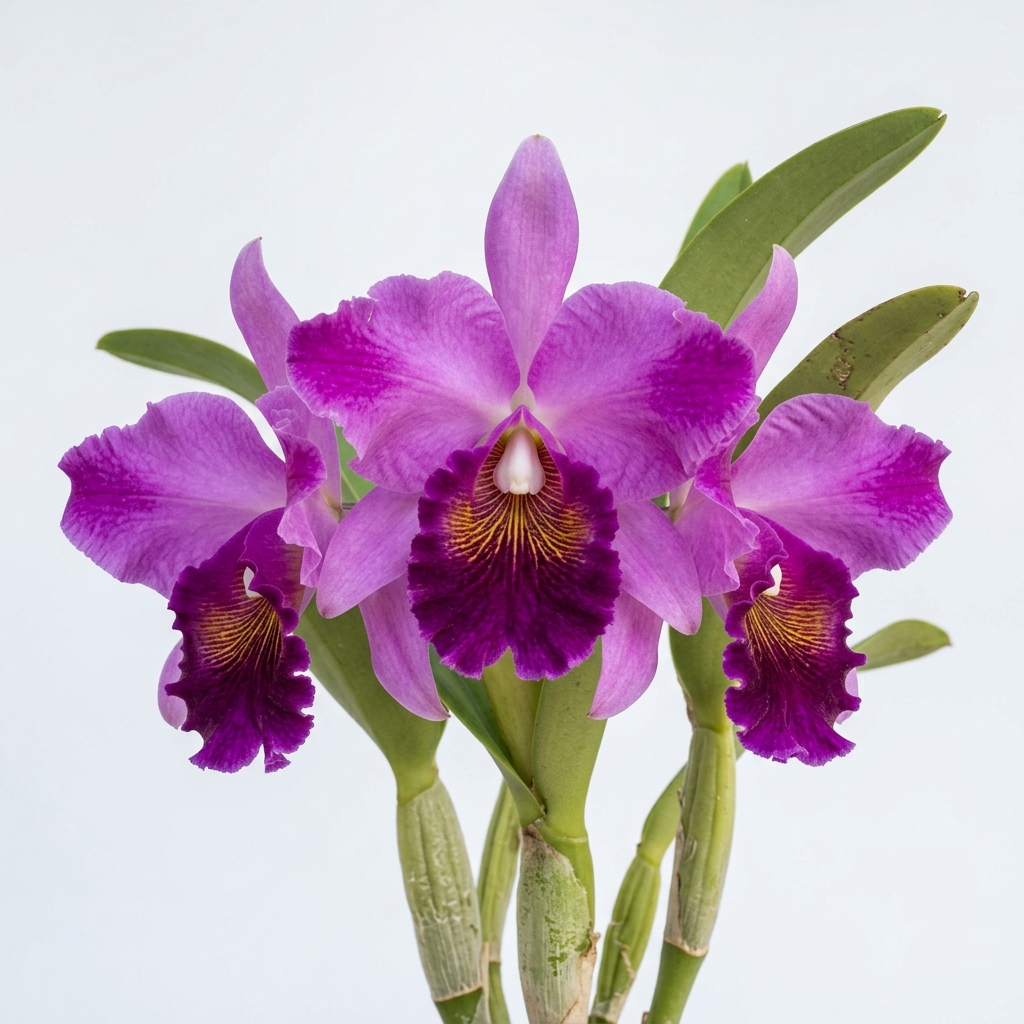
Cattleya Fabia is a highly esteemed orchid hybrid that holds a legendary status among collectors of classical Cattleya orchids. Renowned for its striking, large blooms and rich color palette, this cultivar represents a historic milestone in orchid breeding, combining the robust growth habit of its parent species with an exceptional floral display. Growers particularly value this orchid for its reliable growth, majestic presentation, and the nostalgic charm it brings to modern collections.
As a sympodial epiphyte, Cattleya Fabia produces stout pseudobulbs topped with thick, leathery leaves that store water and nutrients, allowing it to withstand periods of dryness. The flowers typically feature deep lavender to rich magenta petals and sepals, dramatically contrasted by a velvety, highly detailed lip showing intricate gold or yellow veining. This combination of structural resilience and dramatic floral beauty makes it a centerpiece in intermediate to warm orchid houses.
💡 Did You Know?
Cattleya Fabia belongs to the Cattleya orchid group, where flower presentation is often just as important as . White-flowered cultivars are especially valued indoors because their pale blooms reflect well and pair easily with many home, greenhouse, and display settings.
🌿 Botanical Overview
Cattleya Fabia shows the classic growth architecture of the Cattleya genus, characterized by a creeping rhizome from which upright, club-shaped pseudobulbs emerge. Each pseudobulb is topped with a single, rigid, oblong leaf that is light to medium green, reflecting its adaptation to bright canopy environments. This structural form allows the plant to store moisture and energy efficiently, supporting the development of large, resource-intensive flowers.
The root system is robust, consisting of thick, fleshy roots covered in velamen, a spongy layer that rapidly absorbs water and atmospheric moisture. In cultivation, healthy roots are critical to the plant's overall vigor, anchoring the epiphyte securely within its container or onto a mounting substrate. The growth cycle is highly seasonal, with new vegetative shoots emerging in spring and maturing throughout the summer months before initiating the flowering cycle.
🌸 Flower Characteristics
The blossoms of Cattleya Fabia are celebrated for their impressive size, often reaching five to seven inches in diameter, and their classic, well-proportioned form. The sepals and petals are typically a rich shade of lavender, rose-purple, or deep magenta, displaying a satin-like texture that catches the light beautifully. The petals are broad and gently ruffled along the margins, framing the central portion of the flower.
The defining feature of this cultivar is its magnificent labellum, or lip. Inheriting traits from its ancestral lineage, the lip is large, trumpet-shaped, and deeply saturated with dark purple or crimson velvet tones. The throat of the lip is adorned with intricate, radiating veins of bright gold or yellow, creating a dramatic contrast that guides pollinators. The flowers are borne on short, sturdy spikes emerging from a protective green sheath at the apex of the mature pseudobulb.
Fragrance & Bloom Profile
Cattleya Fabia is highly prized for its intense and complex fragrance, which is most pronounced during the morning hours when light and temperature levels begin to rise. The scent is generally described as a rich, sweet, and classic floral perfume with subtle spicy undertones, reminiscent of traditional greenhouse orchids. This powerful aroma can easily fill an entire room or growing area, adding a sensory dimension that enhances its ornamental appeal.
Individual flowers typically remain in pristine condition for two to four weeks, depending on environmental conditions such as temperature and humidity. To maximize the lifespan of the blooms, growers often move the plant to a slightly cooler, shaded location once the flowers have fully expanded. The blooms open nearly simultaneously on the spike, creating a balanced and highly photogenic presentation.
Parentage & Hybrid Lineage
Cattleya Fabia is a historic primary hybrid, originally registered in the late 19th century. It is the direct result of crossing Cattleya labiata, a species famous for its autumn-blooming habit and robust growth, with Cattleya dowiana, a species legendary for its spectacular yellow flowers and richly veined, dark purple lip. This cross successfully combined the vigor and ease of culture of Cattleya labiata with the exquisite lip coloration of Cattleya dowiana.
While some variations exist within the grex due to the specific parent clones used in breeding, most specimens of Cattleya Fabia retain the classic lavender-and-gold color scheme. The hybrid vigor inherited from this cross makes Cattleya Fabia significantly easier to grow and bloom than its temperamental parent, Cattleya dowiana, which is notoriously sensitive to overwatering and cold temperatures.
🌱 Growing Conditions
To cultivate Cattleya Fabia successfully, growers must replicate the bright, airy conditions of its native canopy habitats. Bright, indirect light is essential for promoting strong pseudobulb development and later flowering. A location near an east- or west-facing window, or a shaded south-facing window, is ideal. The leaves should maintain a light, grassy-green color; dark green leaves indicate insufficient light, while yellowing or reddish tints suggest excessive exposure.
💡 Care Tip
For best results, grow Cattleya Fabia in bright filtered with steady and gentle airflow. Avoid placing the plant in harsh midday sun, but do not keep it in a dark corner; weak is one of the most common reasons cultivated orchids refuse to rebloom.
Temperature ranges should be kept within the intermediate to warm category. Daytime temperatures of 75°F to 85°F (24°C to 29°C) coupled with a nighttime drop to 60°F to 65°F (15°C to 18°C) are optimal. This nocturnal temperature drop is particularly important in late summer and autumn to trigger the initiation of flower buds within the sheath. High humidity levels of 50% to 70% should be maintained, supported by strong air movement to prevent fungal pathogens from settling on the foliage.
Watering, Feeding & Potting Media
Watering practices for Cattleya Fabia must respect the plant's wet-and-dry cycle. The potting medium should be allowed to dry out almost completely between thorough waterings. When watering, saturate the pot completely until water drains freely from the bottom, ensuring the velamen on the roots turns from white to green. During the active growing season in spring and summer, watering frequency will need to be increased, whereas a drier rest period is appropriate during the winter months after flowering.
A highly porous, free-draining potting medium is critical to prevent root rot. A mixture of coarse fir bark, horticultural charcoal, and perlite or sponge rock works exceptionally well. Clay pots are often preferred by growers as they allow the root zone to breathe and dry out more evenly than plastic containers. Fertilize weekly with a balanced, diluted orchid fertilizer during active growth, reducing or halting fertilization during the winter rest.
Blooming Season & Care Notes
The primary blooming season for Cattleya Fabia occurs in the autumn, typically from September to November, aligning with the natural cycle of its parent species. As the new pseudobulb completes its growth in late summer, a green sheath will appear at the leaf base. Bud development inside the sheath can take several weeks, during which time consistency in temperature and humidity is vital to prevent bud blast.
Once flowering is complete, the old flower spike should be cut back close to the top of the pseudobulb, taking care not to damage the leaf. The plant will then enter a semi-dormant phase during the winter. Repotting should only be performed when new root growth begins to emerge from the base of the newest pseudobulb, usually in early spring. This timing ensures the plant establishes quickly in its new medium with minimal transplant shock.
⚠️ Common Issues
⚠️ Common Mistake
The most common mistake is by calendar instead of root and potting-media condition. Cattleya roots need moisture and air at the same time, so constantly wet bark or sphagnum can lead to root loss even when the leaves still look healthy.
- Root Rot: Caused by overwatering or a decomposing potting medium that retains too much moisture, leading to soft, black roots and shriveled pseudobulbs.
- Bud Blast: The sudden yellowing and dropping of flower buds before they open, often triggered by abrupt changes in temperature, low humidity, or drafts.
- Scale and Mealybugs: Common sap-sucking pests that hide under the dry sheaths of pseudobulbs or on the undersides of leaves; treat promptly with horticultural soap or isopropyl alcohol.
- Leaf Scorching: Brown or black dry patches on the leaves caused by sudden exposure to direct, unfiltered midday sunlight.
- Fungal Leaf Spotting: Black or brown spots on the foliage resulting from high humidity combined with stagnant air; improve air circulation to prevent spread.
❓ Frequently Asked Questions
How often should I water my Cattleya Fabia orchid?
Watering frequency depends heavily on your home environment, pot type, and potting medium. As a general rule, water Cattleya Fabia when the potting medium is almost completely dry, which typically translates to once every 7 to 10 days. Always check the moisture level deep in the pot using a wooden skewer or your finger before watering, and ensure the pot never sits in standing water.
Why is my Cattleya Fabia not blooming?
The most common reason for a lack of blooms is insufficient light. Cattleya Fabia requires bright, filtered light to build up the energy needed to produce flowers. Additionally, ensure the plant experiences a distinct 10 to 15 degree Fahrenheit drop in temperature at night during the late summer and early autumn, which helps trigger the bud initiation process.
When is the best time to repot Cattleya Fabia?
The ideal time to repot this orchid is in the spring, just as new green root tips begin to emerge from the base of the newest pseudobulb. Repotting at this stage allows the plant to quickly establish itself in the fresh medium. Avoid repotting while the plant is in spike or bloom, or during the dark winter months when growth is slow.
Can I grow Cattleya Fabia under artificial LED lights?
Yes, Cattleya Fabia can be grown successfully under high-intensity LED grow lights designed for plants. Position the orchid close enough to the light source to receive bright, full-spectrum light for 12 to 14 hours a day during the growing season, but monitor the leaves closely for signs of heat stress or bleaching, adjusting the distance as needed.
⭐ Final Growing Notes
Cattleya Fabia remains an enduring favorite among orchid enthusiasts, offering a perfect blend of historical significance, dramatic floral aesthetics, and a rewarding growing experience. By providing bright light, a well-draining medium, and respecting its seasonal wet-and-dry cycles, growers can enjoy spectacular autumn displays of fragrant, gold-veined blossoms for many years. It stands as a testament to the timeless appeal of classic orchid hybridization.
⚕️ Health, Safety & Edibility
Understanding how a plant interacts with people, pets, and the surrounding environment is part of responsible cultivation. This section uses conservative, general guidance and does not replace professional medical or veterinary advice.
Human Safety: No published evidence currently identifies species-specific toxicity concerns for Cattleya Fabia during normal handling. As with most ornamental plants, it should not be intentionally consumed.
Pet Safety: Published information does not indicate that this orchid commonly poses a toxicity concern for cats or dogs. However, chewing leaves, flowers, roots, or potting media may still cause mild digestive upset.
Edibility: This orchid is cultivated for ornamental display rather than food. Ornamental plants may carry fertilizers, pesticides, or other horticultural treatments that make them unsuitable for consumption.
Skin Contact: Routine handling is not generally associated with skin irritation. Gardeners with sensitive skin may prefer wearing gloves when repotting, pruning, or handling potting media.
🌱 Propagation Tip
Propagation should be approached patiently. Most home growers should wait for natural keikis or divide only mature, healthy plants when the orchid type allows it. Never remove a young growth until it has strong roots and enough leaves to support itself away from the parent plant.
⭐ Expert Advice
Repot after flowering when fresh root tips begin to appear. This timing helps the plant anchor quickly into new bark or sphagnum and reduces stress, especially for orchids grown indoors where airflow, , and drying speed can change from season to season.

Leave A Comment