Cymbidium Pumilum, also widely recognized in botanical circles by its accepted synonym Cymbidium floribundum, is a highly celebrated miniature orchid species native to the mountainous regions of East Asia. Prized for its compact growth habit and elegant, grass-like foliage, this species produces dense, upright to slightly arching spikes adorned with numerous small, jewel-like flowers. Unlike its larger relatives, this miniature orchid easily fits on windowsills, making it an exceptionally popular choice for indoor growers and collectors with limited space.
Horticulturally, this species holds a legendary status as one of the primary parents used to breed modern miniature Cymbidium hybrids. It consistently passes down its manageable size, floriferous nature, and remarkable temperature tolerance to its progeny. Whether grown as a collector’s species or appreciated for its historical contribution to orchid breeding, it offers a delightful combination of classic oriental orchid aesthetics and robust, resilient growth.
💡 Did You Know?
Cymbidium Pumilum has been cultivated for centuries in traditional East Asian orchid culture. Unlike Western collectors who historically favored massive, showy flowers, traditional growers in Japan and China deeply appreciated this species for its elegant, grass-like foliage and understated growth habit, viewing the plant as a living sculpture even when not in bloom.
🌿 Botanical Overview
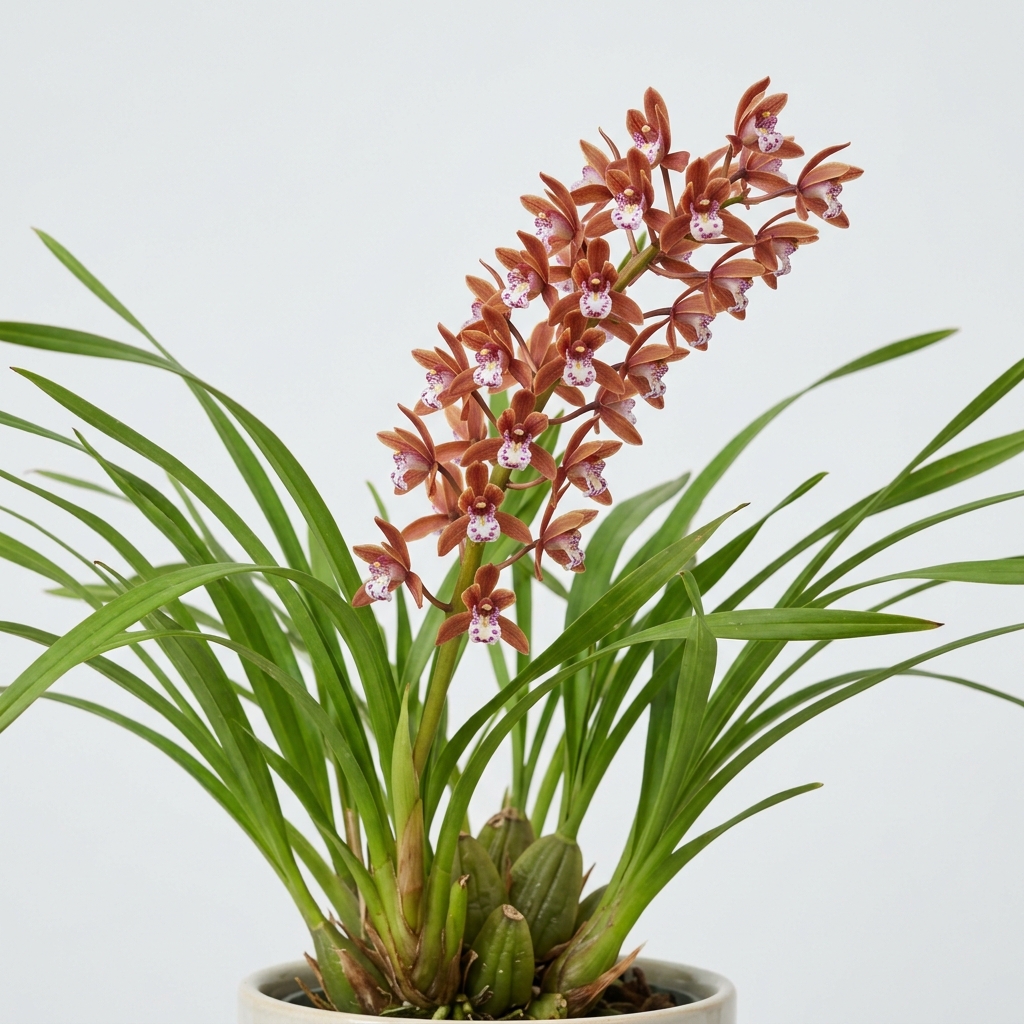
Cymbidium Pumilum is characterized by its small, tightly clustered, egg-shaped pseudobulbs. These pseudobulbs are almost entirely concealed by the bases of several long, narrow, arching leaves that resemble ornamental grass. The foliage typically grows to a height of 20 to 40 centimeters, maintaining a neat and symmetrical clump that remains attractive throughout the year, even when the plant is not in bloom.
In its native habitats of southern China and Japan, this species grows as a lithophyte on mossy rocks or as a terrestrial in organic-rich forest floor debris. These environments experience distinct seasonal shifts, which have programmed the orchid to thrive with cool winter rests and warm, wet summers. Understanding this natural rhythm is the key to successfully cultivating and blooming the species in a home or greenhouse environment.
🌸 Flower Characteristics
The inflorescence of this orchid is a spectacular sight, producing upright or slightly arching spikes that can carry anywhere from 10 to 30 closely spaced flowers. Each individual bloom is relatively small, typically measuring between 2 and 3 centimeters in diameter. Despite their miniature size, the sheer density of the flowers on each spike creates a highly impactful visual display.
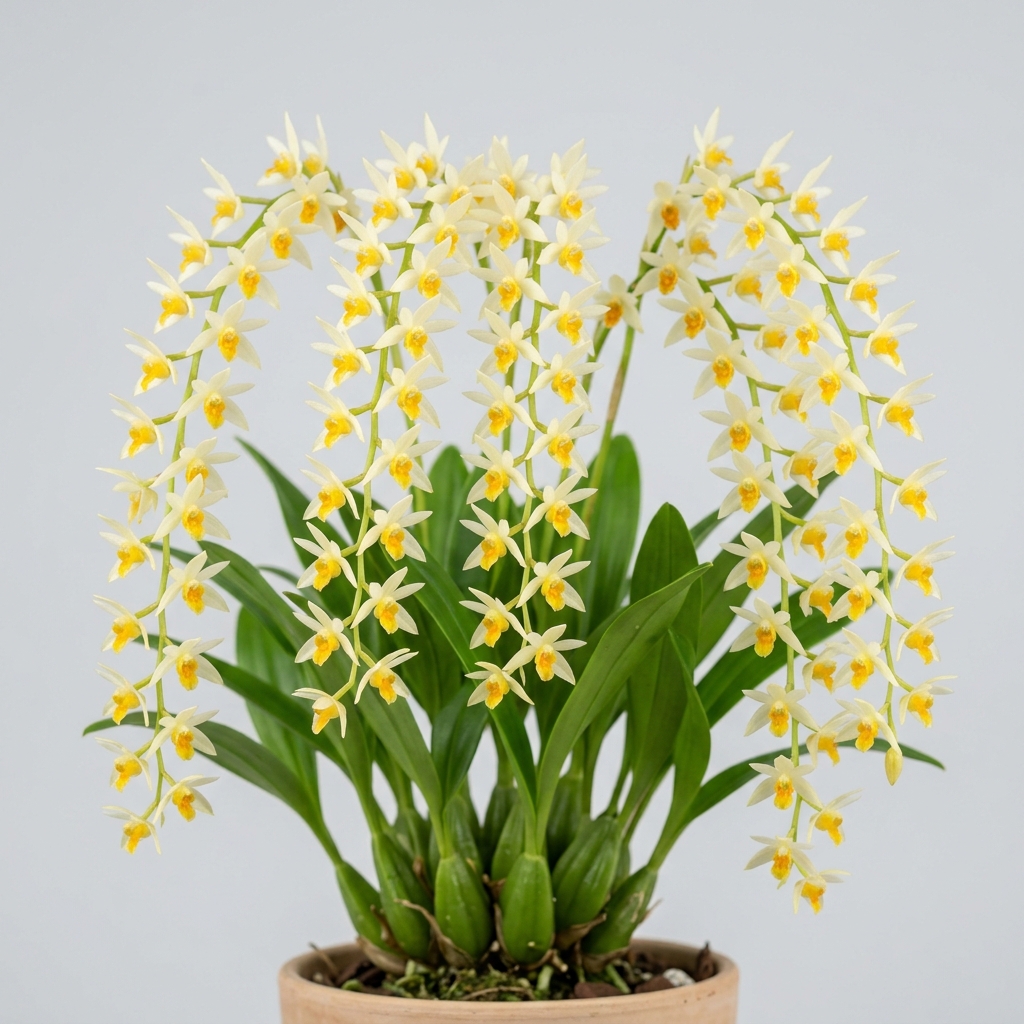
The petals and sepals are commonly a rich, warm reddish-brown or coppery-red, though greenish-yellow color forms also exist in cultivation. The lip, or labellum, provides a striking contrast; it is typically white or pale cream, decorated with vivid purple or red spots and a bright yellow central callus. The flowers are remarkably long-lasting, often remaining pristine on the plant for up to six weeks.
Fragrance & Bloom Profile
Fragrance in this species can be variable and is often cultivar-dependent. While some wild-type selections and specific cultivars emit a very faint, clean, grassy or sweet scent during the warmest hours of the day, many plants in cultivation are virtually unscented. Growers should select this orchid primarily for its exceptional floral display and compact growth habit rather than expecting a powerful perfume.
The blooming cycle typically begins in late winter, with the flower spikes slowly developing and opening by mid-spring. Because the flowers are closely packed along the spike, they create a dense column of color. Maintaining cool temperatures and avoiding drafts during the blooming period will help maximize the longevity of the flowers.
Parentage & Hybrid Lineage
As a true species, its genetic makeup is pure, but its influence on modern orchid hybridization is profound. In the mid-20th century, hybridizers recognized that crossing large, cool-growing standard Cymbidiums with this compact species dramatically reduced the overall size of the offspring while retaining the high flower count and cold tolerance of the parents.
These breeding efforts successfully established the entire class of miniature Cymbidium hybrids enjoyed by growers today. It is also valued for introducing a degree of warmth tolerance into its hybrids, allowing enthusiasts in slightly warmer climates to enjoy Cymbidiums that would otherwise refuse to bloom without extreme winter chills.
🌱 Growing Conditions
To grow this orchid successfully, provide bright, filtered light. A spot near an east-facing window or a shaded south-facing window is ideal. The leaves should maintain a healthy, light apple-green color; dark green leaves indicate insufficient light, while yellowing or bleached spots suggest the light is too intense.
💡 Care Tip
To ensure reliable blooming, place your orchid outdoors in a sheltered, shaded location during late summer and early autumn. The natural drop in night temperatures down to 10°C to 13°C (50°F to 55°F) is the primary environmental trigger required to initiate flower spikes.
Temperature management is crucial for this species. It thrives in cool to intermediate conditions, preferring daytime temperatures between 18°C and 24°C (65°F to 75°F). Crucially, it requires a distinct drop in night temperatures during the autumn months, down to 10°C to 13°C (50°F to 55°F), to trigger the initiation of flower spikes. Good air circulation is also essential to prevent stagnant air from harboring fungal pathogens within the dense foliage clump.
Watering, Feeding & Potting Media
Unlike many epiphytic orchids that prefer to dry out completely between waterings, this semi-terrestrial species prefers to remain evenly moist. Water the plant thoroughly as soon as the top centimeter of the potting medium begins to feel dry to the touch. During the active growing season in spring and summer, watering frequency will need to be increased, while in the winter rest period, watering should be reduced to keep the medium just barely damp.
Feed the orchid with a balanced, water-soluble orchid fertilizer diluted to one-quarter strength. Apply this weak solution every second or third watering during the spring and summer. Flush the pot thoroughly with pure water once a month to prevent harmful fertilizer salts from building up in the medium.
The ideal potting medium should be well-draining yet moisture-retentive. A mix consisting of fine-grade fir bark, perlite, and a small amount of chopped sphagnum moss or peat moss works exceptionally well. Plastic pots are generally preferred over clay pots as they help retain the consistent moisture that this species enjoys.
Blooming Season & Care Notes
The primary blooming season spans from late winter to early summer, depending on local climate conditions. Once the flower spikes begin to emerge from the base of the pseudobulbs, keep the plant in a stable environment. Avoid moving it to a significantly warmer room or placing it near heating vents, as sudden environmental changes can cause the developing buds to yellow and drop prematurely.
After the flowers fade, cut the spike down to the base of the pseudobulb using a sterile cutting tool. This is also the ideal time to assess whether the plant needs repotting. Repotting is typically required every two to three years, or when the potting medium begins to break down and lose its draining capabilities.
⚠️ Common Issues
⚠️ Common Mistake
A frequent error is allowing the potting medium to dry out completely between waterings. While many epiphytic orchids thrive on a wet-to-dry cycle, this semi-terrestrial species prefers consistent moisture. Allowing the roots to dry out completely can stunt growth and cause premature leaf drop.
- Root Rot:
Occurs when the potting medium becomes compacted or waterlogged. Ensure the pot has excellent drainage and never let the plant sit in standing water. - Leaf Tip Burn: Often caused by a buildup of mineral salts from tap water or fertilizer. Flush the pot with distilled or rainwater to resolve this issue.
- Spider Mites:
These pests can target the thin, grassy leaves in dry indoor environments. Increase local humidity and wipe the leaves with a damp cloth or insecticidal soap. - Bud Blast:
The premature dropping of flower buds, usually triggered by sudden temperature spikes, dry air, or cold drafts.
❓ Frequently Asked Questions
How do I get my Cymbidium Pumilum to bloom?
The most common reason for a lack of blooms is a lack of cool night temperatures in the autumn. Ensure the plant experiences a temperature drop down to 10°C to 13°C (50°F to 55°F) for several weeks in late summer or autumn to trigger spike development.
Can I grow this orchid under LED grow lights?
Yes, this compact species adapts well to indoor grow lights. Position the plant under high-output LED lights designed for orchids, ensuring it receives 12 to 14 hours of light daily during the growing season, while still providing the necessary cool autumn nights.
When is the best time to repot this species?
Repot the plant in the spring, immediately after the blooming cycle has finished and just as new vegetative growths begin to emerge from the base of the pseudobulbs.
Why are the leaves on my orchid turning yellow?
Yellowing leaves can indicate excessive direct sunlight, overwatering leading to root damage, or a natural shedding of older leaves from the back pseudobulbs. Inspect the roots to determine the exact cause.
⭐ Final Growing Notes
Cymbidium Pumilum is a rewarding and historically significant orchid that brings the elegance of wild Asian species into the home. By mimicking its native cool, montane habitat with bright light, consistent moisture, and cool autumn nights, growers will be rewarded year after year with a spectacular display of delicate, densely packed blossoms that perfectly embody the timeless appeal of miniature orchids.
⚕️ Health, Safety & Edibility
Understanding how a plant interacts with people, pets, and the surrounding environment is part of responsible cultivation. This section uses conservative, general guidance and does not replace professional medical or veterinary advice.
Human Safety: No published evidence currently identifies species-specific toxicity concerns for Cymbidium Pumilum during normal handling. As with most ornamental plants, it should not be intentionally consumed.
Pet Safety: Published information does not indicate that this orchid commonly poses a toxicity concern for cats or dogs. However, chewing leaves, flowers, roots, or potting media may still cause mild digestive upset.
Edibility: This orchid is cultivated for ornamental display rather than food. Ornamental plants may carry fertilizers, pesticides, or other horticultural treatments that make them unsuitable for consumption.
Skin Contact: Routine handling is not generally associated with skin irritation. Gardeners with sensitive skin may prefer wearing gloves when repotting, pruning, or handling potting media.
🌱 Propagation Tip
Propagate this orchid by division during spring repotting. Ensure each division has at least three active, healthy pseudobulbs with a lead growth. Avoid dividing the plant into single pseudobulbs, as smaller divisions can take several years to recover and bloom again.
⭐ Expert Advice
When repotting, select a deep pot rather than a shallow one. Cymbidiums naturally produce long, fleshy roots that grow downwards. A deep, narrow pot accommodates this root architecture perfectly, helping the plant establish quickly and support its dense foliage.