
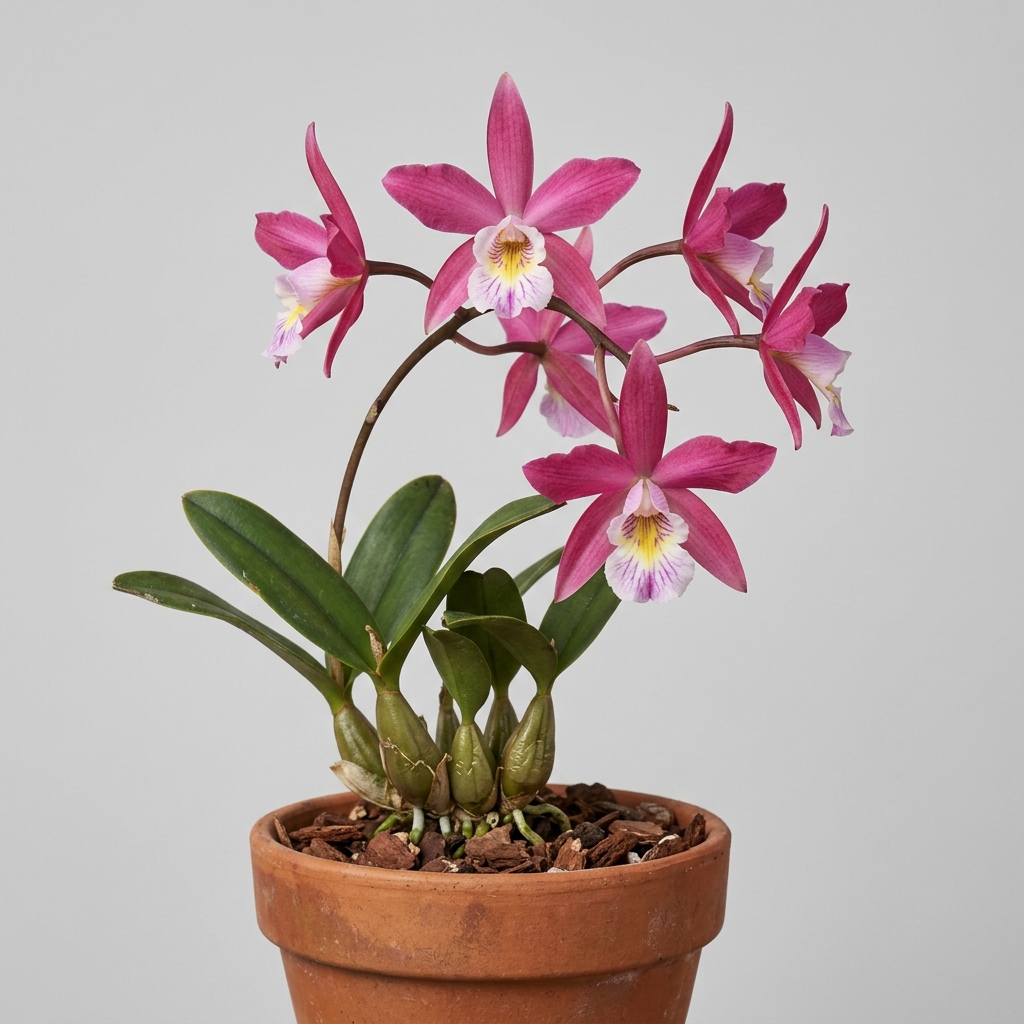
Laelia Autumnalis is a highly prized orchid species native to the high-altitude oak forests of Mexico, celebrated for its striking autumn blooms and robust growth habit. As a sympodial epiphyte, this orchid produces clustered, pear-shaped pseudobulbs topped with leathery, dark green leaves that can withstand a variety of environmental conditions. Growers particularly value this species for its ability to produce long, arching flower spikes during the late autumn months when many other orchids have finished blooming.
The vibrant, star-shaped flowers of Laelia Autumnalis display shades ranging from soft rose-pink to deep magenta, often accented by a contrasting white and yellow lip. Its ease of culture in cool-to-intermediate conditions makes it an excellent choice for both intermediate hobbyists and experienced collectors looking to add reliable autumn color to their greenhouses or indoor growing spaces.
💡 Did You Know?
In its native Mexican habitats, Laelia Autumnalis is locally known as Flor de Todos Santos or Flower of All Saints because its vibrant blooms consistently open around early November, coinciding with traditional Day of the Dead celebrations. This cultural connection makes it one of the most historically significant orchid species in Central America.
🌿 Botanical Overview
Laelia Autumnalis is a medium-sized epiphytic or lithophytic orchid native to the mountainous regions of Mexico. It typically grows on oak trees or rocky cliffs at elevations between 5,000 and 9,000 feet. This high-altitude habitat subjects the plant to bright sunlight, warm days, and cool, dry nights, which has shaped its unique growth requirements.
The plant features hard, pear-shaped or conical pseudobulbs that store water and nutrients, allowing it to survive prolonged dry seasons. Each pseudobulb is topped with two to three rigid, dark green, leathery leaves. This robust vegetative structure is highly adapted to shedding excess moisture quickly while maximizing light absorption under the forest canopy.
🌸 Flower Characteristics
The flowers of Laelia Autumnalis are renowned for their striking, star-like shape and vibrant coloration. Individual blooms typically measure between three and four inches in diameter. The petals and sepals are lanceolate, presenting a range of colors from pale rose-pink to deep, saturated magenta. A rare white-flowered form, known as Laelia Autumnalis var. alba, is also highly sought after by collectors.
The prominent lip, or labellum, is three-lobed and features a white center with bright yellow ridges running down the throat, creating a beautiful contrast against the darker petals. These flowers are borne on long, arching, or erect inflorescences that can reach up to three feet in length, with each spike carrying anywhere from three to twelve blooms well above the foliage.
Fragrance & Bloom Profile
One of the most appealing traits of Laelia Autumnalis is its strong, sweet fragrance. The scent is often described as a mix of floral notes with a subtle, spicy undertone, reminiscent of anise or honey. This fragrance is typically most intense during the morning hours when sunlight warms the blossoms, filling the surrounding growing area with a pleasant aroma.
The blooms are long-lasting, often remaining fresh for four to six weeks if kept in cool, dry conditions. Because the flowering period occurs during the autumn and early winter, this orchid provides a welcome burst of color and scent when many other temperate orchid species are entering dormancy.
Parentage & Hybrid Lineage
Laelia Autumnalis is a naturally occurring species rather than a man-made hybrid. It belongs to the genus Laelia, which is closely allied with Cattleya. Because of its outstanding cold tolerance, star-shaped flower form, and reliable autumn blooming habit, it has been used extensively in orchid hybridization.
When crossed with members of the Cattleya alliance, it passes on its temperature tolerance and long, multi-flowered inflorescences. While its exact historical collection records can vary, it remains a foundational species in breeding programs aimed at creating temperature-tolerant, outdoor-growing orchids for temperate climates.
🌱 Growing Conditions
To cultivate Laelia Autumnalis successfully, growers should attempt to mimic its native high-altitude environment. It requires very bright, filtered light, and can even tolerate some direct morning sunlight. High light levels are crucial for robust pseudobulb development and reliable flower production.
💡 Care Tip
Provide this orchid with exceptionally bright, filtered , similar to Cattleya conditions. If the leaves are a healthy green, the level is correct; dark green leaves indicate too much shade, which can prevent the orchid from producing its signature autumn flower spikes.
Temperature: wise, this orchid thrives in cool-to-intermediate conditions. Summer day temperatures can reach up to 80°F (27°C), but night temperatures should ideally drop to 50°F to 60°F (10°C to 15°C). In the winter, the plant benefits from even cooler nights, sometimes tolerating brief drops near freezing if the growing medium is kept completely dry. Good air movement is essential at all times to prevent stagnant air from causing fungal issues.
Watering, Feeding & Potting Media
During the active spring and summer growing season, Laelia Autumnalis should be watered copiously. The potting medium should be allowed to dry out slightly between waterings, but never remain bone-dry for extended periods while new pseudobulbs are developing. Apply a balanced, diluted orchid fertilizer weekly during this active phase to support rapid growth.
As autumn approaches and the flower spikes begin to emerge, gradually reduce watering and stop fertilizing. During the winter rest period, water should be withheld almost entirely, providing only occasional light misting to prevent the pseudobulbs from shriveling excessively. Coarse fir bark, tree-fern fiber, or mounting on cork slabs are the preferred media, as they ensure the rapid drainage this species demands.
Blooming Season & Care Notes
The primary blooming season for Laelia Autumnalis spans from October through December. As the flower spikes grow, they may require staking to support the weight of the multiple large blooms, especially if grown in drafty areas. Once the flowers fade, the old spikes should be cut back close to the base of the pseudobulb using sterilized cutting tools.
Repotting or remounting should only be performed in the spring when new root tips begin to emerge from the base of the newest pseudobulb. Disturbing the plant at any other time, particularly during its winter rest, can severely set back its growth and delay the next flowering cycle for several seasons.
⚠️ Common Issues
While generally robust, growers may encounter a few common challenges when cultivating this species:
⚠️ Common Mistake
The most common mistake is failing to provide a distinct dry rest period during the winter months. Overwatering when the plant is inactive leads to rapid root rot, which weakens the pseudobulbs and can ultimately prevent blooming or kill the orchid.
- Root rot caused by overwatering, especially during the cool winter dormancy period.
- Bud blast, where developing buds turn yellow and drop, often triggered by sudden temperature fluctuations or low humidity.
- Infestations of scale insects or mealybugs, which tend to hide in the dry sheaths surrounding the pseudobulbs.
- Leaf tip burn, typically resulting from excessive fertilizer salts or insufficient humidity.
❓ Frequently Asked Questions
How do I trigger blooming in Laelia Autumnalis?
To trigger blooming, ensure the orchid receives bright, filtered light throughout the summer and a distinct cooling period in the autumn. A drop in night temperatures combined with a reduction in watering mimics its natural environment and encourages the development of flower spikes.
Can Laelia Autumnalis be grown mounted on cork bark?
Yes, this species is highly suited to mounted culture. Mounting on cork bark or tree-fern plaques mimics its natural epiphytic growth habit, allowing the roots to dry rapidly after watering, which helps prevent root rot.
Why are the pseudobulbs on my orchid shriveling?
Slight shriveling of pseudobulbs is normal during the winter dry rest. However, severe shriveling during the active growing season usually indicates underwatering or a loss of roots due to overwatering, which prevents the plant from absorbing moisture.
What is the ideal winter temperature for this orchid?
During its winter rest, Laelia Autumnalis prefers cool night temperatures between 45°F and 55°F (7°C to 13°C). These cool temperatures, combined with dry conditions, are essential for the plant’s seasonal dormancy and future bloom cycle.
⭐ Final Growing Notes
Laelia Autumnalis is a rewarding and resilient orchid that brings vibrant color and delightful fragrance to the autumn greenhouse or indoor growing space. By respecting its natural seasonal cycle—providing abundant water and light in the summer followed by a cool, dry winter rest—growers can enjoy its spectacular star-shaped blooms year after year. Its tolerance for cooler temperatures makes it an exceptionally forgiving choice for hobbyists looking to expand their collection beyond warm-growing tropical hybrids.
⚕️ Health, Safety & Edibility
Understanding how a plant interacts with people, pets, and the surrounding environment is part of responsible cultivation. This section uses conservative, general guidance and does not replace professional medical or veterinary advice.
Human Safety: No published evidence currently identifies species-specific toxicity concerns for Laelia Autumnalis during normal handling. As with most ornamental plants, it should not be intentionally consumed.
Pet Safety: Published information does not indicate that this orchid commonly poses a toxicity concern for cats or dogs. However, chewing leaves, flowers, roots, or potting media may still cause mild digestive upset.
Edibility: This orchid is cultivated for ornamental display rather than food. Ornamental plants may carry fertilizers, pesticides, or other horticultural treatments that make them unsuitable for consumption.
Skin Contact: Routine handling is not generally associated with skin irritation. Gardeners with sensitive skin may prefer wearing gloves when repotting, pruning, or handling potting media.
🌱 Propagation Tip
Propagate Laelia Autumnalis by division during the early spring when new root growth is just beginning. Ensure each division has at least three to four healthy, mature pseudobulbs to provide enough stored energy for the plant to establish itself in its new container or mount.
⭐ Expert Advice
If you grow this species mounted on cork bark, increase frequency during the hot summer months, sometimes spraying daily. The rapid drainage of a mount mimics its natural cliff-side habitat, promoting a massive, healthy root system that supports larger flower clusters.

Leave A Comment