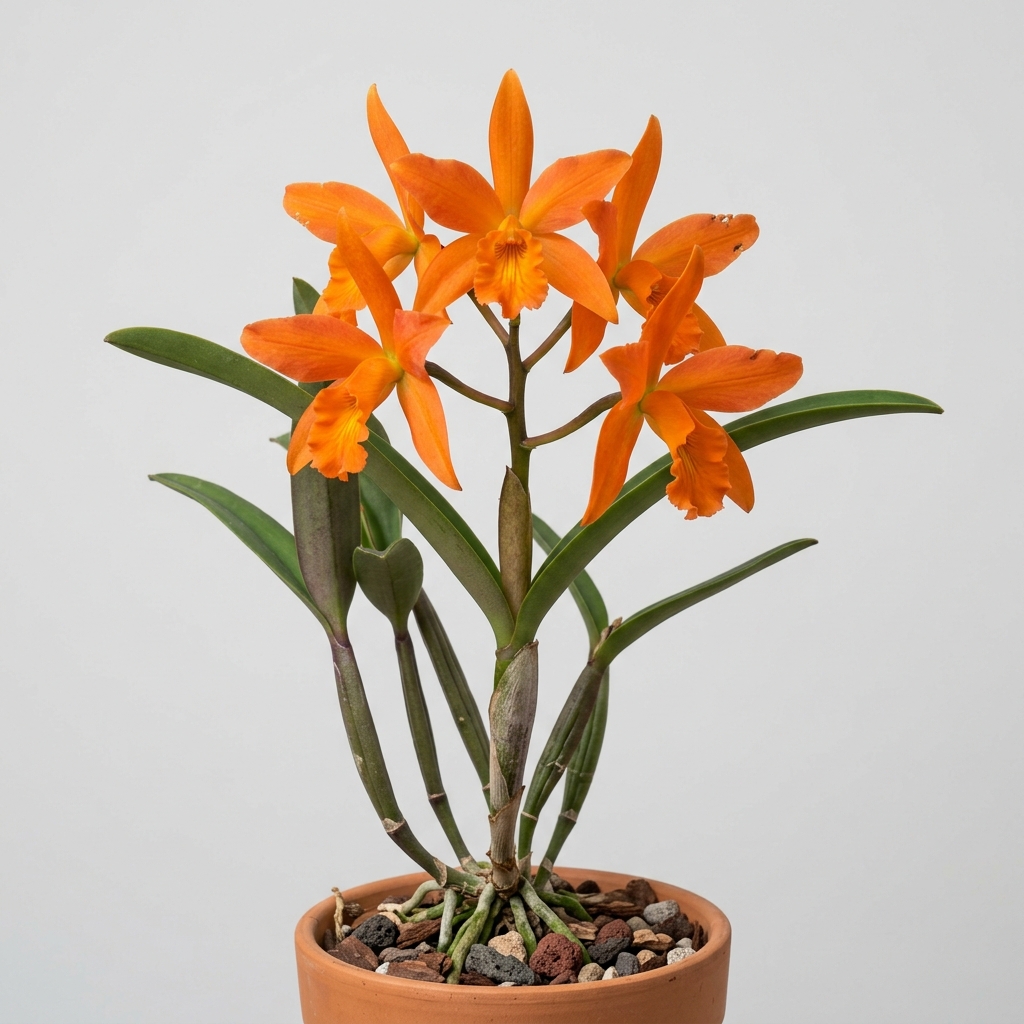
Cattleya Angereri is a striking rupicolous orchid species highly prized by collectors for its vibrant, star-shaped blossoms and robust, upright growth habit. Originally classified under the genus Laelia, this Brazilian native is celebrated for its brilliant orange to reddish-orange flowers that stand out dramatically against its slender, tough pseudobulbs.
Orchid enthusiasts value this cultivar for its architectural form and its ability to thrive in high-light environments that would challenge more delicate orchid species. While it requires specific attention to drainage and watering cycles, its rewarding floral display makes it a standout addition to any intermediate-to-warm greenhouse or indoor growing setup.
💡 Did You Know?
Cattleya Angereri is a rupicolous orchid, meaning it naturally grows on rocks rather than trees. In its native Brazilian habitat, it anchors its roots into rocky crevices filled with organic debris, enduring intense sunlight and rapid wet-dry cycles that shape its unique cultural requirements in cultivation.
🌿 Botanical Overview
Cattleya Angereri belongs to a specialized group of orchids known as rupicolous Cattleyas, which were historically classified under the genus Laelia. These plants are native to the high-altitude, rocky regions of Brazil, particularly within the state of Minas Gerais. Unlike epiphytic orchids that grow on trees, rupicolous species grow directly on or among rocks, anchoring themselves in shallow crevices where organic debris accumulates.
This environmental adaptation is reflected in the physical structure of the plant. Cattleya Angereri features slender, upright, cylindrical pseudobulbs topped by a single, rigid, leathery leaf. The foliage often develops a deep reddish-purple pigmentation when exposed to the high light levels of its natural habitat, a protective mechanism against intense solar radiation. The root system is highly adapted to absorb moisture rapidly during brief rain showers and dry out completely within hours.
🌸 Flower Characteristics
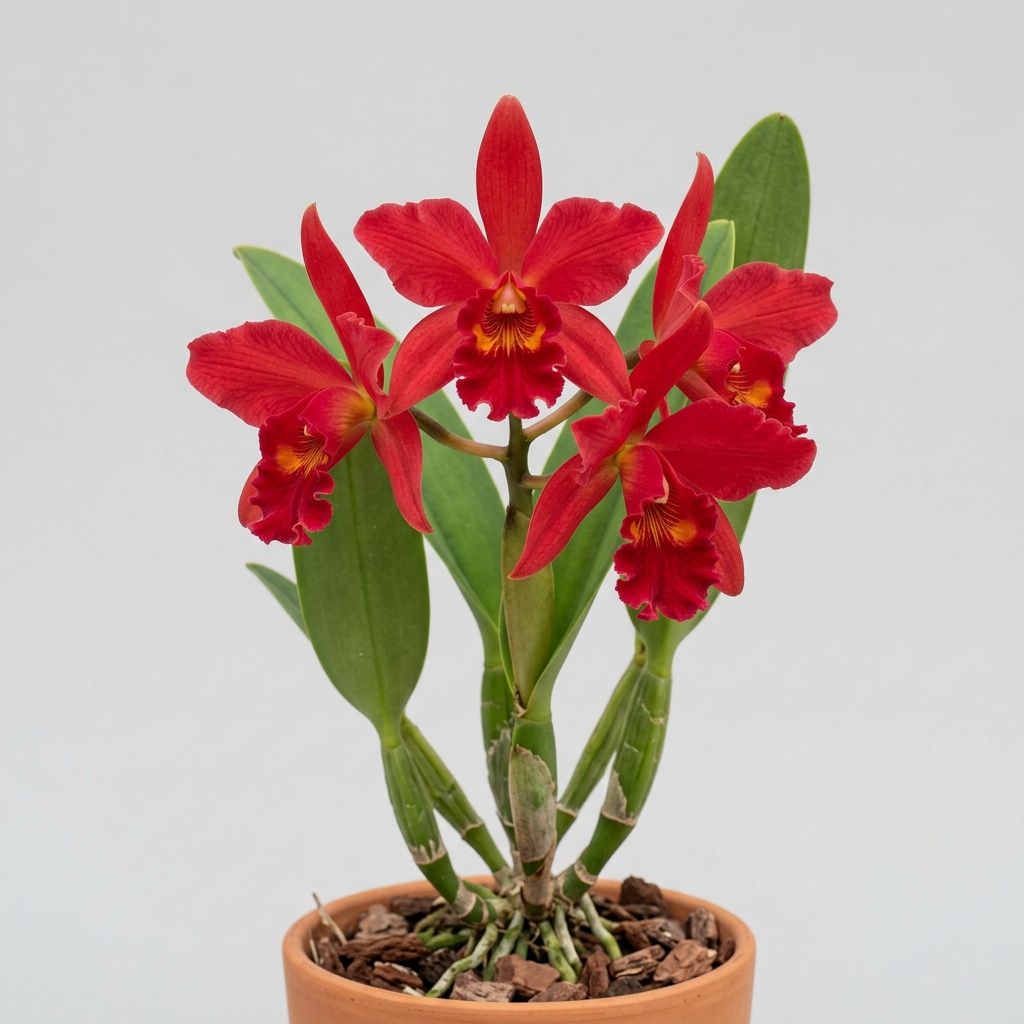
The inflorescence of Cattleya Angereri emerges from the top of the mature pseudobulb, producing an erect, sturdy spike that carries several star-shaped blossoms. The flowers are relatively small to medium in size but make a dramatic impact due to their intense, saturated orange to reddish-orange coloration. Both the sepals and petals are narrow and pointed, giving the bloom a distinctly starry and elegant silhouette.
The lip, or labellum, is typically small, tubular, and closely aligned with the column, often displaying subtle yellow or lighter orange tones in the throat. The flowers are clustered tightly near the top of the spike, presenting a bright, fiery crown that stands well above the foliage. A well-grown specimen can produce multiple spikes simultaneously, creating a spectacular specimen display.
Fragrance & Bloom Profile
Unlike some of the larger, highly fragrant Cattleya species, the fragrance of Cattleya Angereri is not consistently documented and is generally considered to be very faint or absent. In its native habitat, the brilliant, high-contrast orange coloration of the flowers serves as the primary attractant for specific pollinators, reducing the evolutionary need for strong aromatic compounds.
The blooms are long-lasting, often remaining fresh for several weeks if the plant is kept in a cool, stable environment once the flowers open. The blooming cycle typically occurs once a year, with the flower spikes developing as the new pseudobulbs mature in the spring or early summer months.
Parentage & Hybrid Lineage
Cattleya Angereri is a naturally occurring species rather than a man-made hybrid. In botanical literature, it is frequently referred to under its synonym, Laelia angereri. Because of its intense orange color and upright growth habit, it has been utilized by orchid hybridizers to introduce warm, fiery tones and compact, sturdy growth traits into modern Cattleya intergeneric hybrids.
When researching its lineage in commercial registries, growers may find it listed under various hybrid genera depending on the classification system used at the time of registration. However, maintaining its identity as a distinct species is highly valued by collectors who appreciate the unique charm of wild rupicolous orchids.
🌱 Growing Conditions
To successfully cultivate Cattleya Angereri, growers must replicate the high-light, high-airflow conditions of its native Brazilian highlands. This orchid thrives in very bright, filtered light, and can tolerate some direct morning sun. Providing sufficient light is crucial; without it, the plant will fail to produce the energy required to initiate flower spikes.
💡 Care Tip
Provide Cattleya Angereri with bright, filtered similar to cattleya conditions, but ensure excellent air movement to prevent leaf scorch. If the leaves develop a reddish-purple tint, it indicates the plant is receiving the optimal amount of for future blooming.
Temperatures should ideally range from intermediate to warm during the day, with a noticeable drop at night to mimic the montane climate. Adequate air movement is essential at all times to keep the foliage cool under intense light and to prevent fungal pathogens from settling on the leaves or roots.
Watering, Feeding & Potting Media
Watering must be approached with caution. During the active growing season in spring and summer, the plant should be watered thoroughly but allowed to dry out rapidly. The roots must never sit in stagnant moisture. In winter, watering should be reduced significantly, providing just enough moisture to prevent the pseudobulbs from shriveling excessively.
The choice of potting media is critical for this rupicolous species. Traditional bark mixes often retain too much moisture for too long. Many successful growers prefer using inorganic media such as lava rock, growstone, or coarse gravel, sometimes mixed with a small amount of high-quality tree fern fiber or large-grade charcoal. Clay pots are highly recommended as they allow the root zone to breathe and dry out quickly.
Blooming Season & Care Notes
The primary blooming season for Cattleya Angereri is spring, following a cooler, drier winter rest. As the new growth matures, the flower sheath will appear at the apex of the leaf. During this period, it is important to avoid getting water inside the sheath, as trapped moisture can cause the developing buds to rot before they can emerge.
Once the flowers fade, the old spike should be cut back near the base of the leaf. Repotting should only be performed when new root growth is just beginning to emerge from the base of the newest pseudobulb, ensuring the plant establishes itself quickly in its new medium without suffering prolonged transplant shock.
⚠️ Common Issues
⚠️ Common Mistake
The most common mistake is using a heavy, moisture-retaining potting soil or fine bark mix. This species requires exceptionally fast drainage; keeping the roots constantly wet will quickly lead to root rot and the decline of the plant.
- Root Rot:
Caused by overwatering or using a potting medium that decomposes and retains too much moisture. - Bud Blast:
The premature dropping or drying of flower buds, often triggered by sudden changes in temperature, low humidity, or drafts. - Dehydration:
Indicated by severely shriveled pseudobulbs and wrinkled leaves, usually due to a compromised root system or insufficient watering during active growth. - Pests:
Scale insects and mealybugs can hide under the dry sheaths of the pseudobulbs; regular inspection and gentle removal are recommended.
❓ Frequently Asked Questions
How much light does Cattleya Angereri need to bloom?
This orchid requires very bright, filtered light, significantly higher than many standard houseplants. A light reddish-purple tint on the foliage is a good indicator that the plant is receiving sufficient light to trigger blooming.
What is the best potting medium for this species?
An extremely free-draining, inorganic medium such as lava rock, pumice, or coarse gravel is ideal. This mimics its natural rupicolous habitat and prevents the roots from suffocating.
How often should I water Cattleya Angereri during the winter?
Watering should be cut back substantially during the winter rest period. Only water or mist lightly when the pseudobulbs begin to show signs of shriveling, allowing the plant to rest cool and dry.
Can Cattleya Angereri be grown mounted?
Yes, it can be successfully grown mounted on cork bark or tree fern plaques, provided you can maintain high humidity and water the plant frequently enough during the active growing season.
⭐ Final Growing Notes
Cattleya Angereri is a rewarding orchid for growers willing to accommodate its specific light and drainage requirements. By providing bright light, excellent air circulation, and a strict wet-dry cycle, you can enjoy its brilliant orange blossoms year after year, bringing a touch of the rugged Brazilian highlands into your collection.
⚕️ Health, Safety & Edibility
Understanding how a plant interacts with people, pets, and the surrounding environment is part of responsible cultivation. This section uses conservative, general guidance and does not replace professional medical or veterinary advice.
Human Safety: No published evidence currently identifies species-specific toxicity concerns for Cattleya Angereri during normal handling. As with most ornamental plants, it should not be intentionally consumed.
Pet Safety: Published information does not indicate that this orchid commonly poses a toxicity concern for cats or dogs. However, chewing leaves, flowers, roots, or potting media may still cause mild digestive upset.
Edibility: This orchid is cultivated for ornamental display rather than food. Ornamental plants may carry fertilizers, pesticides, or other horticultural treatments that make them unsuitable for consumption.
Skin Contact: Routine handling is not generally associated with skin irritation. Gardeners with sensitive skin may prefer wearing gloves when repotting, pruning, or handling potting media.
🌱 Propagation Tip
Propagate this orchid by division during repotting, ensuring each division has at least three to four healthy, mature pseudobulbs with active eye leads. Avoid dividing the plant too frequently, as larger specimens tend to produce more robust flower spikes.
⭐ Expert Advice
To trigger a successful spring bloom, provide a distinct, cooler, and drier rest period during the winter months. Reduce significantly, only misting occasionally to keep the pseudobulbs from shriveling, and resume regular and feeding once new growth emerges.