
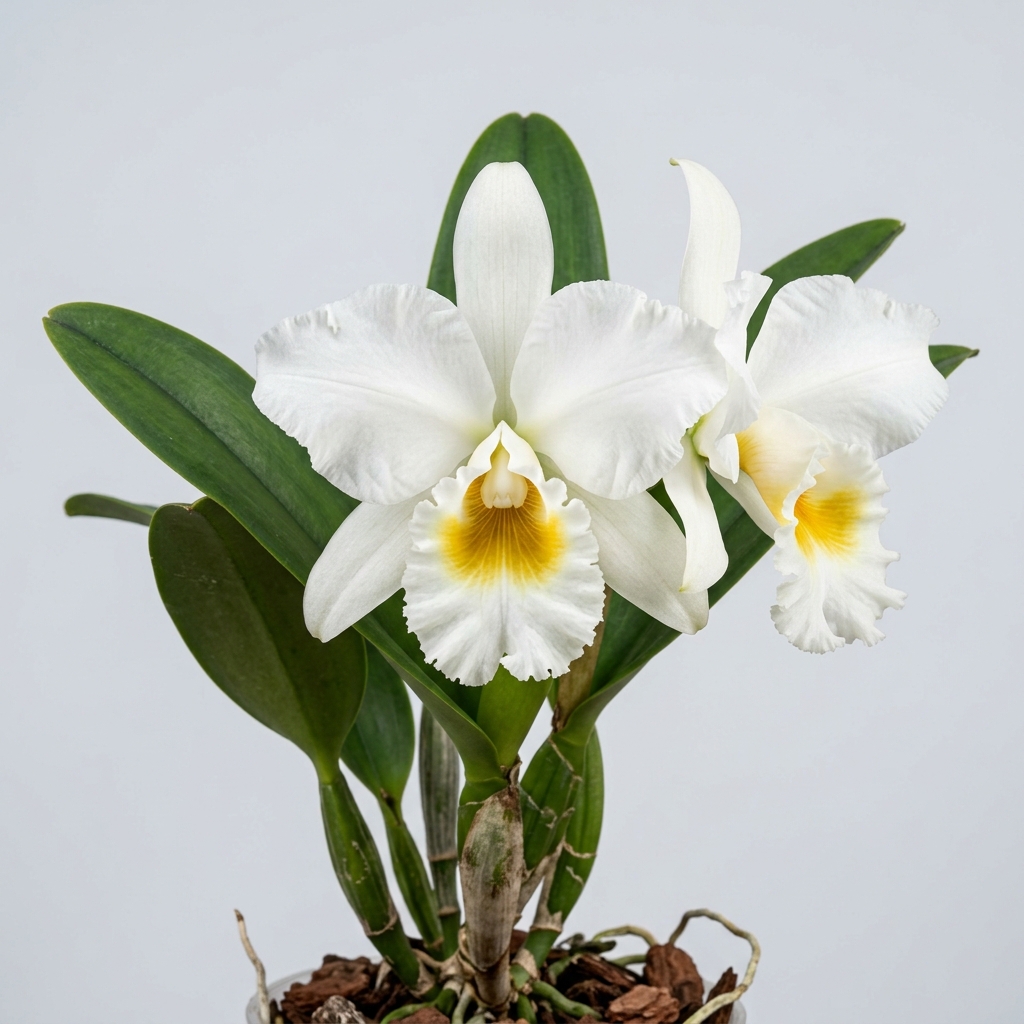
Cattleya Empress Bells is a classic and highly celebrated white-flowered Cattleya orchid hybrid that has long set the standard for elegance in the orchid-growing community. Known for its large, pristine white blooms and majestic presentation, this cultivar represents the pinnacle of mid-twentieth-century orchid breeding. Growers highly value it for its robust growth habit and its ability to produce magnificent, show-stopping flowers that command attention in any collection.
As a sympodial epiphytic orchid, this cultivar develops sturdy pseudobulbs topped with thick, leathery leaves that store water and nutrients. While it requires attentive care to reach its full flowering potential, its reliable growth and spectacular floral display make it a rewarding choice for both intermediate hobbyists and experienced orchid collectors.
💡 Did You Know?
Cattleya Empress Bells belongs to the Cattleya orchid group, where flower presentation is often just as important as . White-flowered cultivars are especially valued indoors because their pale blooms reflect well and pair easily with many home, greenhouse, and display settings.
🌿 Botanical Overview
Cattleya Empress Bells shows the classic sympodial growth pattern characteristic of the Cattleya genus. It produces stout, club-shaped pseudobulbs that arise from a creeping rhizome. Each pseudobulb is typically topped with a single, rigid, oblong leaf that is thick and leathery, designed to conserve moisture in its native-style epiphytic environment.
The root system is robust, consisting of thick, fleshy roots covered in a white velamen layer. This velamen acts like a sponge, rapidly absorbing water and nutrients when available and protecting the inner root core from drying out. Healthy vegetative growth during the spring and summer is crucial, as the strength of the current season’s pseudobulb directly dictates the quality and size of the upcoming bloom cycle.
🌸 Flower Characteristics
The flowers of Cattleya Empress Bells are renowned for their impressive size, often reaching five to seven inches in diameter. The petals and sepals are broad, overlapping, and display a crystalline, paper-white texture that catches the light beautifully. The most striking feature is the large, ruffled labellum, or lip, which features a deeply fringed margin and a rich, golden-yellow throat that provides a stunning contrast to the pure white segments.
Blooms are typically borne on a short, sturdy inflorescence that emerges from a protective green sheath at the apex of the mature pseudobulb. Each spike can carry two to four heavy-textured flowers, which are held well above the foliage for an elegant, balanced presentation.
Fragrance & Bloom Profile
This cultivar is highly regarded for its delightful fragrance, which is typically described as a sweet, complex floral scent with subtle citrus undertones. The perfume is most pronounced during the morning hours when temperatures begin to rise and light levels increase, filling the surrounding growing area with a classic orchid aroma.
Individual flowers are long-lasting, often remaining in pristine condition for three to five weeks if kept in a cool, draft-free environment. To maximize the lifespan of the blooms, growers should avoid getting water directly on the petals, as this can encourage fungal spotting or premature wilting.
Parentage & Hybrid Lineage
Cattleya Empress Bells is a historic grex registered in the mid-20th century, resulting from the cross between Cattleya Bow Bells and Cattleya Edithiae. This lineage traces back to some of the most influential white Cattleya species, particularly Cattleya mossiae and Cattleya trianae.
While exact historical records can sometimes vary across different registries, this hybrid is widely recognized by orchid historians as a cornerstone of modern white Cattleya breeding. Its genetic contribution has been used to introduce flower size, substance, and round form to later generations of white orchid hybrids.
🌱 Growing Conditions
To thrive, Cattleya Empress Bells requires bright, indirect light. A south- or east-facing window with sheer curtain filtering is ideal, or growers can use high-output LED grow lights. The leaves should be a light, grassy green; dark green leaves indicate insufficient light, while yellowing or reddish-purple spotting suggests the light is too intense.
💡 Care Tip
For best results, grow Cattleya Empress Bells in bright filtered with steady and gentle airflow. Avoid placing the plant in harsh midday sun, but do not keep it in a dark corner; weak is one of the most common reasons cultivated orchids refuse to rebloom.
Temperature ranges should mimic intermediate to warm tropical climates. Daytime temperatures between 75°F and 85°F are optimal, with a nighttime drop to 60°F or 65°F. This nocturnal temperature drop is particularly important in the late summer and autumn to help trigger the initiation of flower buds within the developing sheaths. High humidity of 50% to 80% coupled with strong, continuous air movement is essential to prevent stagnant air pockets and minimize disease risk.
Watering, Feeding & Potting Media
Watering should be thorough, soaking the potting medium completely, followed by a drying period. The medium should be allowed to dry out almost entirely before watering again, as constant moisture around the roots will quickly lead to root rot. During the active growing season in spring and summer, watering frequency will need to be increased, while winter rest periods require a more conservative approach.
A balanced, water-soluble orchid fertilizer (such as a 20-20-20 formulation) should be applied weekly at a diluted strength, often referred to as “weakly, weekly.” Flushing the pot with pure water once a month is recommended to wash away accumulated fertilizer salts. The ideal potting medium is a highly porous, free-draining mix consisting primarily of coarse fir bark, horticultural charcoal, and perlite, housed in a clay or plastic pot with ample drainage holes.
Blooming Season & Care Notes
The primary blooming season for Cattleya Empress Bells typically occurs in the autumn or early winter, coinciding with the maturation of the current season’s pseudobulbs. As the new pseudobulb finishes growing, a green sheath will appear at its base. Bud development inside the sheath can take several weeks or even months.
During this critical phase, avoid moving the plant or changing its orientation to the light source, as this can cause the developing buds to twist or fail. Once the flowers fade, the old flower spike should be cut back close to the sheath using sterile cutting tools. Repotting is best performed in the spring, just as new root tips begin to emerge from the base of the newest pseudobulb, ensuring the plant establishes quickly in its fresh medium.
⚠️ Common Issues
⚠️ Common Mistake
The most common mistake is by calendar instead of root and potting-media condition. Cattleya roots need moisture and air at the same time, so constantly wet bark or sphagnum can lead to root loss even when the leaves still look healthy.
- Root Rot:
Caused by overwatering or compacted potting media that retains too much moisture, leading to mushy, brown roots and dehydrated pseudobulbs. - Bud Blast:
The sudden yellowing and dropping of flower buds before they open, often triggered by abrupt changes in temperature, low humidity, or drafts. - Scale and Mealybugs: Common pests that hide under the dry sheaths of pseudobulbs or on the undersides of leaves, sucking plant sap and weakening the orchid.
- Fungal Leaf Spotting: Black or brown spots on leaves resulting from high humidity combined with poor air circulation or water sitting on the foliage overnight.
❓ Frequently Asked Questions
How do I trigger my Cattleya Empress Bells to bloom?
To encourage blooming, ensure the orchid receives bright, indirect light and a distinct 10 to 15-degree Fahrenheit drop in temperature between day and night during the late summer and early autumn. This temperature differential is crucial for signaling the plant to initiate bud development inside the sheath.
Why are the leaves on my orchid turning dark green?
Dark green leaves are a classic sign of light deprivation. Cattleya Empress Bells requires bright, filtered light to produce the energy needed for flowering. Healthy leaves should be a light, grassy green color. Gradually move the plant to a brighter location to correct this issue.
When is the best time to repot this cultivar?
The ideal time to repot is in the spring, immediately after flowering has finished and just as new root growth begins to emerge from the base of the lead pseudobulb. Repotting at this stage minimizes transplant shock and allows the new roots to quickly anchor into the fresh medium.
Can I grow Cattleya Empress Bells under artificial LED lights?
Yes, this orchid can be grown successfully under high-output LED grow lights. Position the lights to provide moderate to high intensity, aiming for approximately 2,000 to 3,000 foot-candles, and maintain a consistent photoperiod of 12 to 14 hours of light daily during the active growing season.
⭐ Final Growing Notes
Cattleya Empress Bells remains an enduring masterpiece of the orchid world, offering a timeless combination of pristine white color, impressive flower size, and rich fragrance. While its specific requirements for bright light, high humidity, and distinct wet-to-dry watering cycles demand a mindful approach, the reward of its magnificent winter blooms is unmatched. By providing consistent care and paying close attention to root health, growers can enjoy the spectacular elegance of this classic cultivar for many years to come.
⚕️ Health, Safety & Edibility
Understanding how a plant interacts with people, pets, and the surrounding environment is part of responsible cultivation. This section uses conservative, general guidance and does not replace professional medical or veterinary advice.
Human Safety: No published evidence currently identifies species-specific toxicity concerns for Cattleya Empress Bells during normal handling. As with most ornamental plants, it should not be intentionally consumed.
Pet Safety: Published information does not indicate that this orchid commonly poses a toxicity concern for cats or dogs. However, chewing leaves, flowers, roots, or potting media may still cause mild digestive upset.
Edibility: This orchid is cultivated for ornamental display rather than food. Ornamental plants may carry fertilizers, pesticides, or other horticultural treatments that make them unsuitable for consumption.
Skin Contact: Routine handling is not generally associated with skin irritation. Gardeners with sensitive skin may prefer wearing gloves when repotting, pruning, or handling potting media.
🌱 Propagation Tip
Propagation should be approached patiently. Most home growers should wait for natural keikis or divide only mature, healthy plants when the orchid type allows it. Never remove a young growth until it has strong roots and enough leaves to support itself away from the parent plant.
⭐ Expert Advice
Repot after flowering when fresh root tips begin to appear. This timing helps the plant anchor quickly into new bark or sphagnum and reduces stress, especially for orchids grown indoors where airflow, , and drying speed can change from season to season.

Leave A Comment