
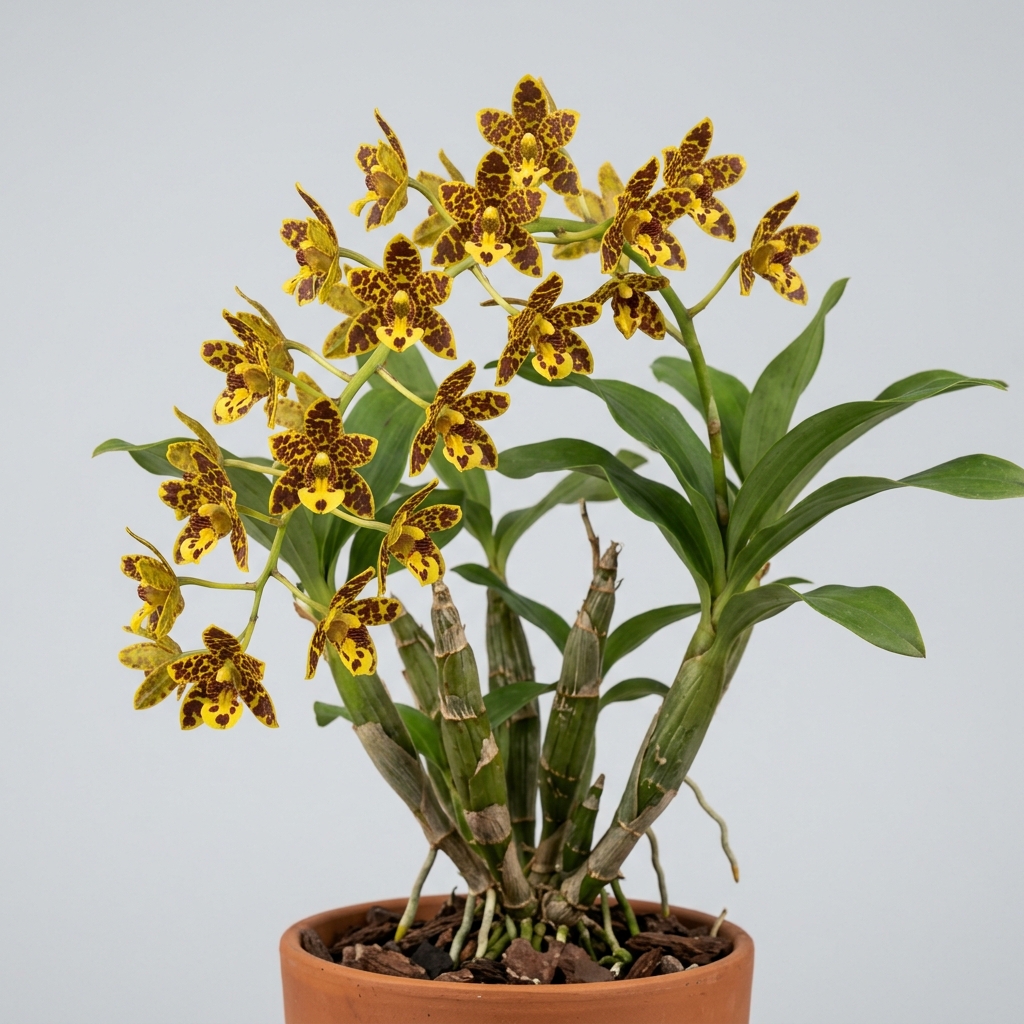
Ansellia Africana, commonly known as the leopard orchid, is a magnificent and robust epiphytic orchid native to the tropical and subtropical regions of Africa. Highly prized by collectors, this species is renowned for its impressive size, cane-like pseudobulbs, and large, branched flower spikes. The blossoms feature a striking yellow or greenish-yellow base color, heavily patterned with dark maroon or brown spots that mimic a leopard’s coat.
Growers value this orchid not only for its dramatic visual appeal but also for its exceptional vigor and long-lasting blooms. When grown under optimal conditions, a mature specimen can produce hundreds of fragrant flowers that remain vibrant for several weeks. Its unique architectural growth habit and historical significance as a monotypic genus representative make it a prized centerpiece in any intermediate to warm orchid collection.
💡 Did You Know?
Ansellia Africana produces specialized, upward-pointing aerial roots that form a structure resembling a miniature bird's nest around the base of the pseudobulbs. In the wild, this trash-basket root system functions as a natural trap, catching falling leaves, twigs, and organic debris that decompose to provide essential nutrients to the orchid in its nutrient-poor canopy home.
🌿 Botanical Overview
Ansellia Africana is native to a wide range of habitats across sub-Saharan Africa, including dry savannas, riverine forests, and coastal woodlands. This expansive distribution has resulted in a highly variable species with diverse growth forms and flower patterns. In its natural habitat, the orchid grows epiphytically on the branches of large trees, often exposed to intense sunlight and seasonal dry periods.
The plant is characterized by its large, ribbed, cane-like pseudobulbs that can reach several feet in height. These pseudobulbs store water and nutrients, allowing the orchid to survive prolonged droughts. A fascinating botanical feature of this species is its specialized, upward-pointing aerial roots. These roots form a dense, nest-like structure around the base of the plant, designed to trap falling organic debris and leaf litter, which slowly decomposes to nourish the orchid.
🌸 Flower Characteristics
The flowers of Ansellia Africana are produced on branched, arching panicles that emerge from the upper nodes of mature pseudobulbs. A single robust inflorescence can carry dozens of blossoms, creating a spectacular cloud-like display. Individual flowers typically measure two to three inches in diameter and feature fleshy, durable petals and sepals.
The base color of the blossoms ranges from pale yellow to deep greenish-gold, adorned with variable dark brown, chocolate, or maroon spots and blotches. The three-lobed lip or labellum is usually bright yellow, often featuring raised ridges or keels that guide pollinators. The contrast between the bright yellow lip and the heavily spotted petals makes this orchid exceptionally eye-catching.
Fragrance & Bloom Profile
Ansellia Africana is known for its pleasant, daytime-active fragrance. The scent is often described as a delicate blend of sweet musk, honey, and light citrus, which intensifies under warm temperatures and bright sunlight. This fragrance is evolutionary designed to attract specific insect pollinators during the brightest hours of the day.
The blooming cycle is highly rewarding, with individual flowers lasting up to two months in pristine condition. The entire flowering display can span several weeks as buds open sequentially along the branched spike. Once the blooming period concludes, the flower spikes should be left to dry naturally before removal, as the plant transitions into its vegetative growth phase.
Parentage & Hybrid Lineage
As a monotypic genus, Ansellia Africana does not have a complex hybrid lineage of different species within its own genus. However, horticulturists have spent decades line-breeding select wild clones to enhance desirable traits. This selective breeding has produced distinct horticultural varieties, such as those with exceptionally dark, dense spotting, larger flower sizes, or even pure yellow, spotless flowers known as Ansellia Africana var. concolor.
In orchid hybridization, Ansellia has occasionally been crossed with related genera in the Cymbidium alliance to create unique intergeneric hybrids. These crosses aim to combine the warmth tolerance and striking spotted patterns of the leopard orchid with the cool-growing, large-flowered characteristics of terrestrial Cymbidiums, though such hybrids remain relatively uncommon in general cultivation.
🌱 Growing Conditions
To cultivate Ansellia Africana successfully, growers must replicate its bright, warm native environment. This orchid thrives in high-light conditions, requiring bright, filtered sunlight to partial direct morning sun. Inadequate light is the primary reason mature plants fail to bloom; the foliage should maintain a light, grassy-green color rather than a deep, dark green.
💡 Care Tip
Provide this orchid with bright, filtered comparable to Cattleya conditions. A slight yellow-green tint on the foliage indicates optimal levels, which are crucial for robust pseudobulb development and successful winter flower spike initiation.
Temperature: wise, the leopard orchid prefers warm to intermediate conditions. Ideal daytime temperatures range from 75°F to 85°F (24°C to 29°C), with a night drop to 60°F to 65°F (15°C to 18°C). The plant can tolerate higher summer temperatures provided there is excellent air movement and high humidity. Maintain relative humidity levels between 50% and 70% to support healthy leaf and root development.
Watering, Feeding & Potting Media
Watering practices must change dramatically with the seasons. During the active spring and summer growing season, Ansellia Africana requires copious watering and should not be allowed to dry out completely. As new pseudobulbs develop, apply a balanced, water-soluble orchid fertilizer weekly at quarter or half strength to support the rapid, heavy growth.
Because of its vigorous root system and large size, this orchid requires a highly porous, fast-draining potting medium. A coarse mix of fir bark, charcoal, and perlite works exceptionally well in large, well-ventilated clay or plastic pots. Alternatively, larger specimens can be mounted on cork slabs or grown in open wooden baskets, which accommodate their unique upward-pointing aerial roots and prevent the media from becoming waterlogged.
Blooming Season & Care Notes
The primary blooming season for Ansellia Africana occurs from late winter through spring. The initiation of flower buds is heavily dependent on a distinct winter rest period. As autumn ends and temperatures cool, growers should gradually reduce watering and halt all fertilizer applications. The plant should receive only enough water to prevent the pseudobulbs from shriveling severely.
This cool, dry winter rest, combined with high light levels, triggers the development of flower spikes from the top of the pseudobulbs. Once the spikes emerge, resume light watering, but avoid heavy feeding until the blooming cycle is complete and new green shoots appear at the base of the plant. Repotting is best done in late spring, just as new root growth begins from the base of the emerging pseudobulbs.
⚠️ Common Issues
⚠️ Common Mistake
The most frequent error is overwatering during the winter rest period. Keeping the medium constantly wet when the plant is inactive easily rots the root system and prevents the dry stress necessary to trigger spring bud development.
- Root Rot:
Occurs quickly if the potting medium remains soggy, especially during the cool winter rest period. - Failure to Bloom: Usually caused by insufficient light during the growing season or a failure to provide a dry winter rest.
- Leaf Spotting: Fungal or bacterial spots can develop on the foliage if air circulation is poor in high-humidity environments.
- Pests:
Scale insects and mealybugs occasionally hide in the tight crevices of the leaf axils and bracts; treat promptly with horticultural oil or insecticidal soap. - Pseudobulb Shrinking: Extreme shriveling during the winter rest indicates severe dehydration; provide a light misting or a small sip of water to restore turgor.
❓ Frequently Asked Questions
How do I trigger my Ansellia Africana to bloom?
To trigger blooming, provide the orchid with very bright light throughout the year and a strict dry rest period in late autumn and winter. Reduce watering significantly and stop fertilizing until the flower spikes begin to emerge from the top of the pseudobulbs.
What are the spiky, upward-pointing roots at the base of the plant?
These are specialized aerial roots often referred to as trash-basket roots. In nature, they catch falling leaves and organic debris, which decompose and provide nutrients. Do not cut or bury these roots, as they are a natural and healthy feature of the plant’s anatomy.
Can I grow Ansellia Africana under LED grow lights?
Yes, but because of its high light requirements and large size, you will need high-output LED grow lights positioned close to the top of the foliage. Monitor the leaf color; if the leaves turn a dark green, the light intensity is too low for flower production.
When is the best time to repot a leopard orchid?
The ideal time to repot is in late spring, immediately after the flowering cycle has finished and just as new vegetative growth and fresh green root tips begin to emerge from the base of the pseudobulbs.
⭐ Final Growing Notes
Ansellia Africana is a magnificent, rewarding orchid that brings a touch of wild African beauty to any collection. While its large size requires ample growing space, its ease of care, unique root structure, and spectacular, long-lasting spotted blooms make it an exceptional choice for intermediate and advanced growers alike. By respecting its seasonal need for a dry winter rest and providing abundant light, you will be rewarded with a breathtaking floral show year after year.
⚕️ Health, Safety & Edibility
Understanding how a plant interacts with people, pets, and the surrounding environment is part of responsible cultivation. This section uses conservative, general guidance and does not replace professional medical or veterinary advice.
Human Safety: No published evidence currently identifies species-specific toxicity concerns for Ansellia Africana during normal handling. As with most ornamental plants, it should not be intentionally consumed.
Pet Safety: Published information does not indicate that this orchid commonly poses a toxicity concern for cats or dogs. However, chewing leaves, flowers, roots, or potting media may still cause mild digestive upset.
Edibility: This orchid is cultivated for ornamental display rather than food. Ornamental plants may carry fertilizers, pesticides, or other horticultural treatments that make them unsuitable for consumption.
Skin Contact: Routine handling is not generally associated with skin irritation. Gardeners with sensitive skin may prefer wearing gloves when repotting, pruning, or handling potting media.
🌱 Propagation Tip
Propagate mature specimens by division during spring repotting, ensuring each new division retains at least three to four healthy, mature pseudobulbs. Avoid dividing too frequently, as larger, established clumps produce far more spectacular, multi-spiked floral displays.
⭐ Expert Advice
To maximize bloom quality, apply a balanced, high-nitrogen fertilizer weekly during the active summer growth phase to build massive pseudobulbs. As autumn approaches, transition to a low-nitrogen, high-phosphorus formula before initiating the dry winter rest.




Leave A Comment