Cattleya Chocolate Drop is a highly celebrated orchid hybrid renowned for its striking, glossy blooms and robust growth habit. This cultivar is particularly favored by collectors for its clusters of waxy, long-lasting flowers that exhibit deep, rich tones ranging from mahogany to warm chocolate-brown. Its compact to medium stature and reliable blooming nature make it an excellent choice for both intermediate growers and dedicated orchid enthusiasts looking to add unique color depth to their collections.
As a bifoliate hybrid, this orchid typically produces sturdy pseudobulbs topped with two thick, leathery leaves that support upright flower spikes. The contrast between the dark, lustrous petals and the vibrant lip creates a dramatic visual display that stands out in any growing space. Beyond its aesthetic appeal, the cultivar is appreciated for its adaptability to standard home and greenhouse conditions, provided its basic requirements for light, warmth, and wet-to-dry watering cycles are met.
💡 Did You Know?
Cattleya Chocolate Drop belongs to the Cattleya orchid group, where flower presentation is often just as important as . White-flowered cultivars are especially valued indoors because their pale blooms reflect well and pair easily with many home, greenhouse, and display settings.
🌿 Botanical Overview
Cattleya Chocolate Drop shows the classic growth form of a bifoliate Cattleya-type orchid. The plant features upright, club-shaped pseudobulbs that serve as water and nutrient storage organs, allowing the orchid to withstand brief periods of drought. Each mature pseudobulb is topped by a pair of rigid, elliptic leaves that are dark green and highly resistant to moisture loss.
The growth habit is sympodial, meaning the orchid spreads horizontally via a creeping rhizome, producing new leads each growing season. Under optimal conditions, a healthy specimen can quickly develop into a multi-lead specimen, producing multiple flower spikes simultaneously. The root system is robust, characterized by thick, fleshy roots covered in a white velamen layer that absorbs moisture and nutrients efficiently.
🌸 Flower Characteristics
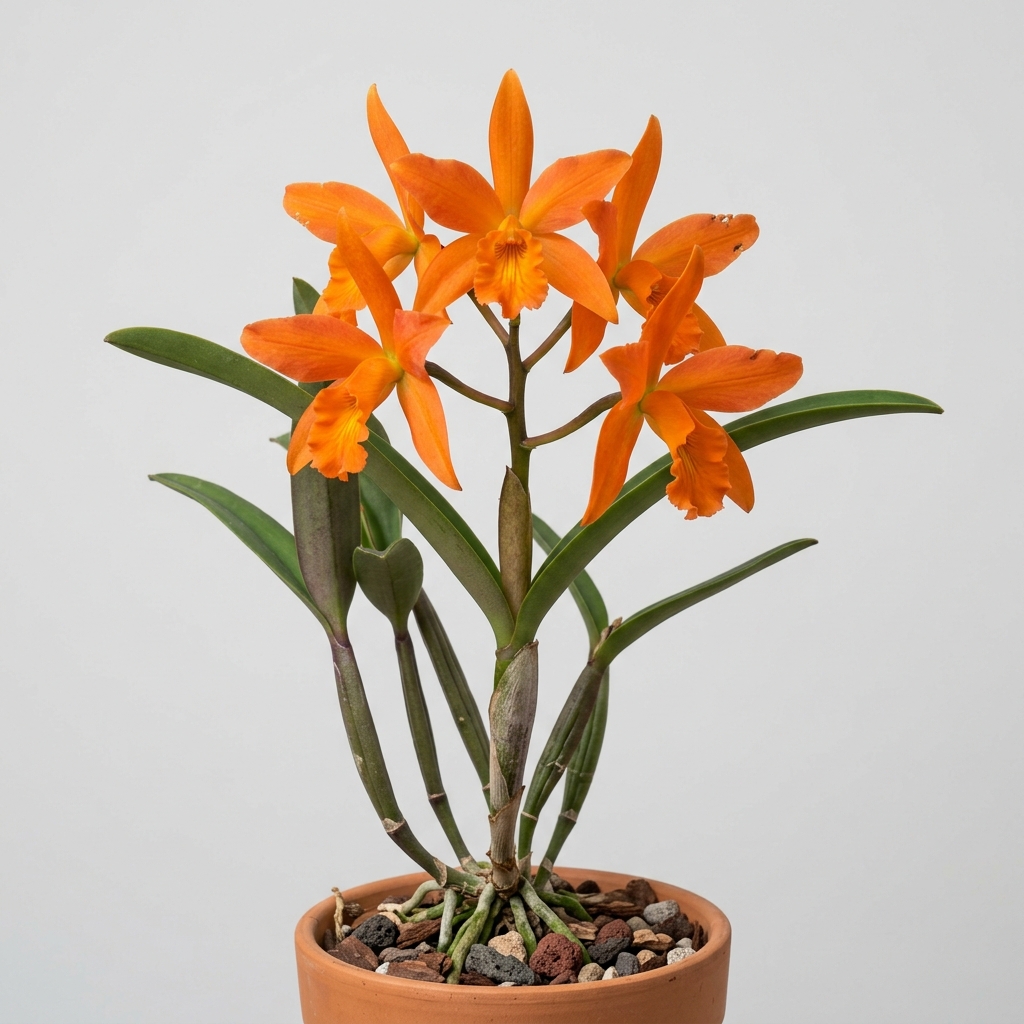
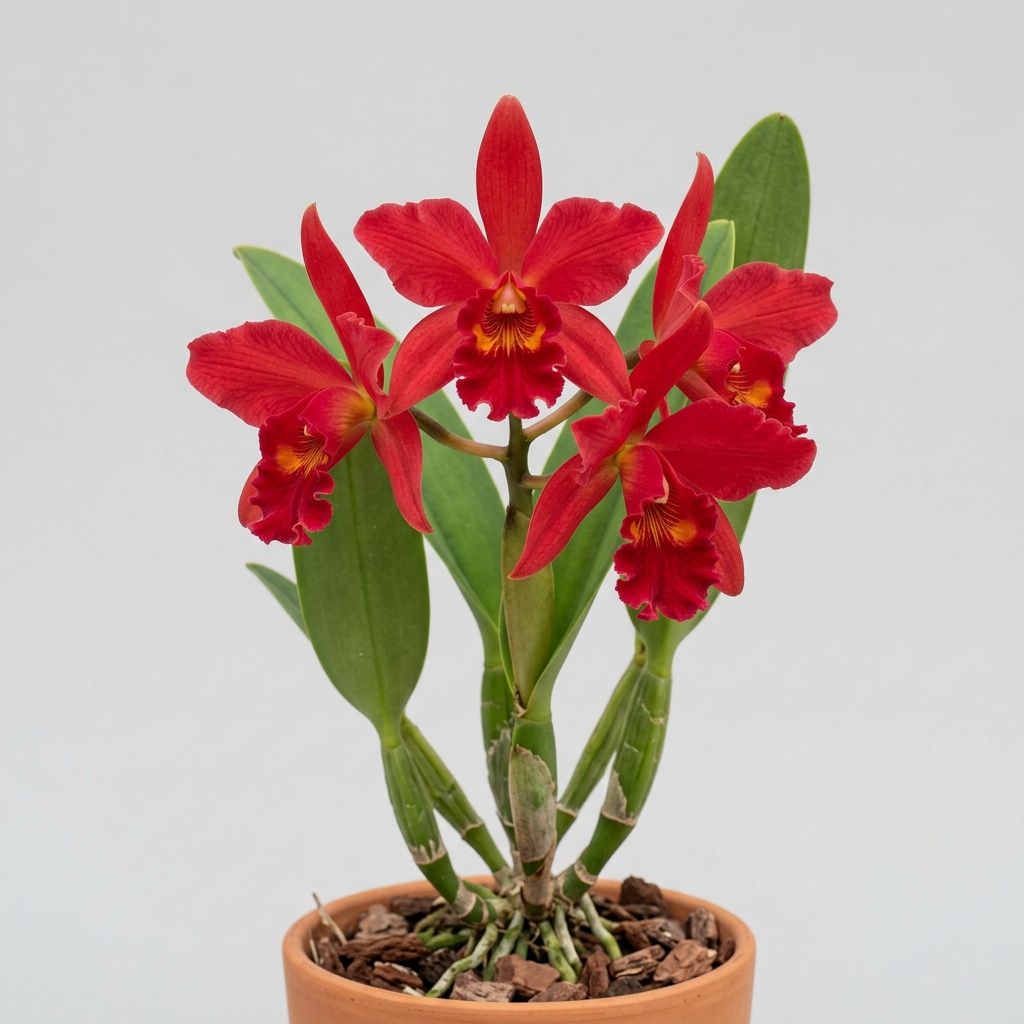
The flowers of Cattleya Chocolate Drop are highly distinctive, characterized by their exceptionally waxy, glossy texture that almost appears lacquered. Individual blooms are typically medium in size, usually measuring between two and three inches in diameter, and are borne in clusters of several flowers on a single, upright inflorescence. The petals and sepals are narrow and reflexed, displaying deep shades of reddish-brown, bronze, or dark chocolate.
The lip, or labellum, provides a stunning contrast to the darker segments of the flower. It is typically a vibrant magenta, rose-purple, or amethyst hue, often with subtle yellow or white markings in the throat. This brilliant pop of color serves as a natural beacon for pollinators and creates a highly dramatic visual effect that defines the cultivar’s enduring popularity.
Fragrance & Bloom Profile
Many growers report that Cattleya Chocolate Drop produces a distinct, sweet fragrance that is often described as spicy, honey-like, or reminiscent of warm cocoa. The intensity of the scent can vary depending on environmental factors such as temperature, humidity, and light levels, typically becoming most pronounced during the morning hours when temperatures begin to rise.
The blooms are exceptionally long-lasting due to their heavy, waxy substance, often remaining fresh and vibrant for four to six weeks or more. To maximize the lifespan of the flowers, growers should avoid getting water directly on the petals and maintain stable, slightly cooler temperatures once the buds have fully opened.
Parentage & Hybrid Lineage
Cattleya Chocolate Drop is a classic hybrid resulting from the cross between Cattleya tenebrosa and Guarianthe aurantiaca. This lineage combines the large, dramatic form and dark coloration of Cattleya tenebrosa with the cluster-blooming habit, waxy texture, and robust growth of Guarianthe aurantiaca.
While registered several decades ago, this hybrid remains a cornerstone of Cattleya breeding, frequently used to introduce deep red and bronze tones, high bud counts, and exceptional flower substance to newer crosses. Because taxonomy in the orchid family is subject to periodic revisions, some older references may list this cultivar under different generic names, but it is most widely recognized and traded under the Cattleya genus today.
🌱 Growing Conditions
To thrive, Cattleya Chocolate Drop requires bright, filtered light. It can tolerate some direct morning sun, but intense afternoon sunlight should be shaded to prevent leaf scorch. A light level similar to that required for other standard Cattleyas—typically around 2,000 to 3,000 foot-candles—is ideal. Healthy leaves should have a light, grassy-green color; dark green leaves indicate insufficient light, while yellowing or red-tinted leaves suggest the light is too intense.
💡 Care Tip
For best results, grow Cattleya Chocolate Drop in bright filtered with steady and gentle airflow. Avoid placing the plant in harsh midday sun, but do not keep it in a dark corner; weak is one of the most common reasons cultivated orchids refuse to rebloom.
Temperature: wise, this hybrid performs best in intermediate to warm conditions. Ideal daytime temperatures range from 75°F to 85°F (24°C to 29°C), with a night drop to 60°F to 65°F (15°C to 18°C). This diurnal temperature fluctuation is crucial for triggering successful bud development. Relative humidity should ideally be maintained between 50% and 70%, accompanied by strong, continuous air movement to prevent fungal pathogens from settling on the foliage.
Watering, Feeding & Potting Media
Watering should follow a distinct wet-and-dry cycle. The potting medium must be allowed to dry out almost completely between waterings. When watering, flush the pot thoroughly with tepid water until it drains freely from the bottom. During the active growing season in spring and summer, the plant will require more frequent watering, whereas watering should be scaled back during the cooler winter rest period.
Fertilize weekly or bi-weekly “weakly” with a balanced orchid fertilizer, such as a 20-20-20 formulation, diluted to one-quarter or one-half strength. Flush the pot with pure water once a month to prevent harmful fertilizer salts from accumulating.
The ideal potting medium is a coarse, free-draining mix, such as medium-grade fir bark blended with perlite, charcoal, or horticultural pumice. Clay pots are highly recommended as they allow the root zone to dry more evenly, though plastic pots can be used if watering is adjusted accordingly.
Blooming Season & Care Notes
Cattleya Chocolate Drop typically blooms in the summer or autumn, though well-grown plants can occasionally bloom twice a year if environmental conditions remain stable. The flower buds develop within a protective green sheath at the apex of the newly matured pseudobulb. During this period, it is important to avoid shifting the plant’s orientation to the light source, as this can cause the developing buds to twist or grow unevenly.
Once blooming is complete, allow the flower spike to dry naturally before cutting it back close to the base of the sheath. Repotting should only be performed when new root growth is just beginning to emerge from the base of the newest pseudobulb, typically in the spring. This ensures the plant establishes quickly in its new medium with minimal transplant shock.
⚠️ Common Issues
⚠️ Common Mistake
The most common mistake is by calendar instead of root and potting-media condition. Cattleya roots need moisture and air at the same time, so constantly wet bark or sphagnum can lead to root loss even when the leaves still look healthy.
- Root Rot:
Caused by overwatering or a decomposing potting medium that retains too much moisture, leading to mushy, black roots and shriveled pseudobulbs. - Bud Blast:
The premature yellowing and dropping of flower buds, often triggered by sudden changes in temperature, drafty conditions, or low humidity. - Scale and Mealybugs: Common pests that hide under the dry sheaths of the pseudobulbs or on the undersides of leaves; treat promptly with insecticidal soap or horticultural oil.
- Leaf Scorch: Bleached or black patches on the leaves caused by sudden exposure to intense, direct afternoon sunlight.
❓ Frequently Asked Questions
How often should I water my Cattleya Chocolate Drop?
Watering frequency depends on your home’s temperature and humidity, but generally, you should water once the potting medium is almost completely dry. This typically translates to once every 7 to 10 days in the summer and less frequently during the winter rest period.
Why are the leaves on my orchid turning dark green?
Dark green leaves usually indicate that the orchid is not receiving enough light. To encourage robust growth and reliable blooming, gradually move the plant to a brighter location where it receives bright, filtered sunlight.
Can Cattleya Chocolate Drop be grown under LED lights?
Yes, this hybrid adapts well to indoor growing under high-output LED grow lights. Ensure the lights are positioned at an appropriate distance to provide the equivalent of bright Cattleya-level light without overheating the foliage.
When is the best time to repot this orchid?
The absolute best time to repot is in the spring, specifically when you see new green root tips beginning to emerge from the base of the newest pseudobulb. Repotting at this stage minimizes transplant shock and allows the orchid to establish quickly.
⭐ Final Growing Notes
Cattleya Chocolate Drop remains a highly rewarding orchid for growers of all experience levels, offering a spectacular return of waxy, chocolate-toned blooms for minimal effort. By respecting its need for bright light, excellent drainage, and a distinct drying period between waterings, you can enjoy its dramatic floral display and sweet fragrance year after year.
⚕️ Health, Safety & Edibility
Understanding how a plant interacts with people, pets, and the surrounding environment is part of responsible cultivation. This section uses conservative, general guidance and does not replace professional medical or veterinary advice.
Human Safety: No published evidence currently identifies species-specific toxicity concerns for Cattleya Chocolate Drop during normal handling. As with most ornamental plants, it should not be intentionally consumed.
Pet Safety: Published information does not indicate that this orchid commonly poses a toxicity concern for cats or dogs. However, chewing leaves, flowers, roots, or potting media may still cause mild digestive upset.
Edibility: This orchid is cultivated for ornamental display rather than food. Ornamental plants may carry fertilizers, pesticides, or other horticultural treatments that make them unsuitable for consumption.
Skin Contact: Routine handling is not generally associated with skin irritation. Gardeners with sensitive skin may prefer wearing gloves when repotting, pruning, or handling potting media.
🌱 Propagation Tip
Propagation should be approached patiently. Most home growers should wait for natural keikis or divide only mature, healthy plants when the orchid type allows it. Never remove a young growth until it has strong roots and enough leaves to support itself away from the parent plant.
⭐ Expert Advice
Repot after flowering when fresh root tips begin to appear. This timing helps the plant anchor quickly into new bark or sphagnum and reduces stress, especially for orchids grown indoors where airflow, , and drying speed can change from season to season.