
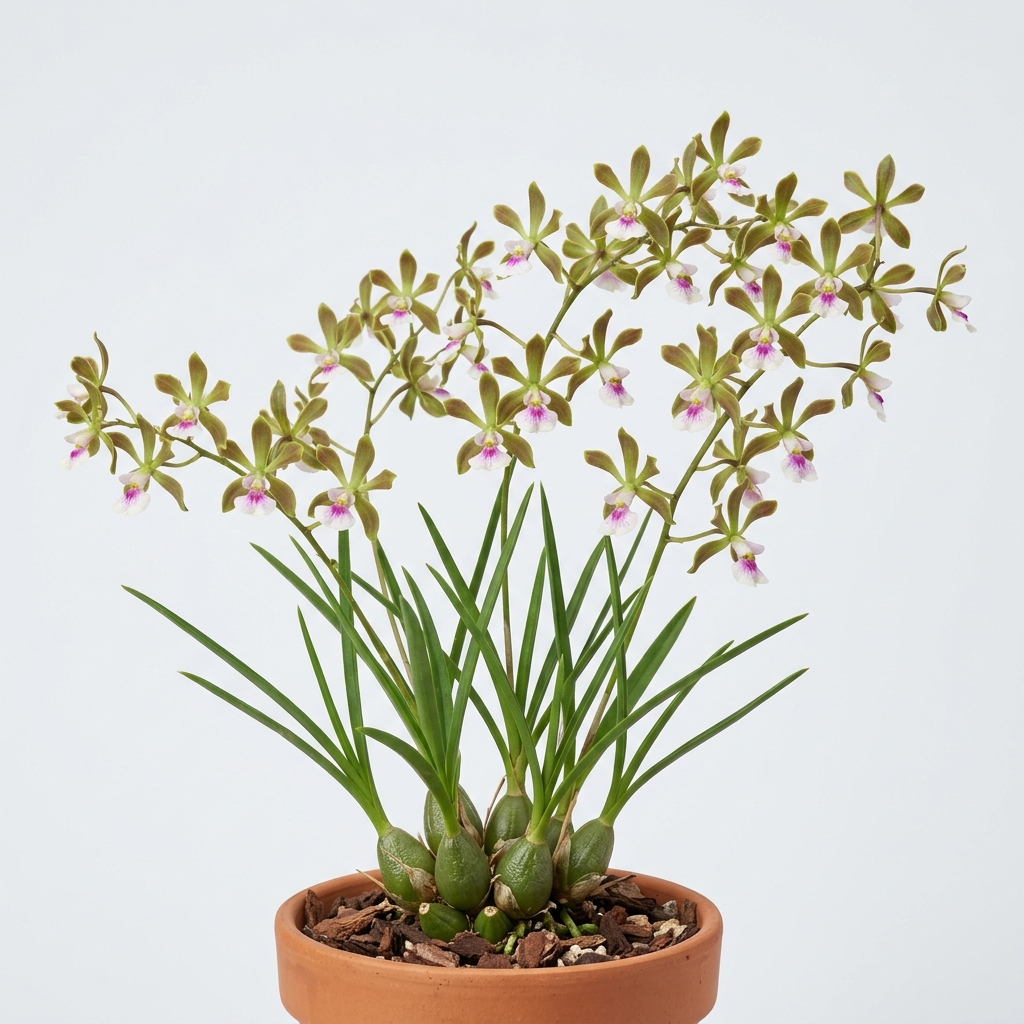
Encyclia Tampensis, commonly known as the Florida butterfly orchid, is a highly valued epiphytic orchid species native to Florida and parts of the Caribbean. Prized for its elegant, butterfly-like blooms, compact growth habit, and overall resilience, this species has long been a favorite among orchid collectors. Its ability to produce dozens of delicate, long-lasting flowers on arching stems makes it a standout addition to any collection.
This orchid features small, egg-shaped pseudobulbs that grow in tight clusters, each producing one to three narrow, rigid, grass-like leaves. Because of its compact size and adaptable nature, it thrives in a variety of growing environments, from indoor windowsills to outdoor shade houses in warmer climates. It is widely considered an excellent choice for both beginners and experienced growers looking for a reliable, warm-growing species.
💡 Did You Know?
Encyclia Tampensis is commonly known as the Florida butterfly orchid because its delicate flowers flutter gracefully in the breeze on long, slender stems, mimicking a swarm of small butterflies. In its native Florida habitats, it was historically so abundant that early botanists reported seeing entire tree canopies covered in its fragrant blooms during the peak summer season.
🌿 Botanical Overview
Encyclia Tampensis is a naturally occurring epiphytic orchid species native to Florida, the Bahamas, and Cuba. In its native habitats, it is commonly found growing on the branches of oak trees, bald cypresses, and palms, where it clings to the bark and absorbs moisture and nutrients from the surrounding air, rain, and organic debris. This natural growth habit makes it highly resilient and adaptable to dry spells.
The plant is characterized by its clustered, onion-shaped pseudobulbs, which act as water storage organs. From the top of each pseudobulb, one to three slender, dark green leaves emerge. The leaves are leathery and narrow, designed to minimize water loss in bright, breezy environments. This compact, tidy growth habit allows the plant to fit easily into limited growing spaces.
🌸 Flower Characteristics
The flowers of Encyclia Tampensis are small but exceptionally charming, typically measuring about one to one and a half inches in diameter. They are produced on slender, arching inflorescences that can be simple or branched, often carrying dozens of blooms on a single mature plant. The petals and sepals are narrow and range in color from yellowish-green to a rich bronze-brown.
The most striking feature of the flower is the labellum, or lip. The lip is predominantly white, featuring a prominent, bright magenta or rose-purple spot or stripe in the center. This contrasting color pattern serves as a visual guide for native pollinators. The delicate flowers dangle from thin stems, giving them a fluttering, butterfly-like appearance when moved by a gentle breeze.
Fragrance & Bloom Profile
This orchid is highly celebrated for its delightful fragrance, which is typically described as sweet, honey-like, or reminiscent of mild vanilla. The scent is most pronounced during the warmest hours of the day, particularly when the plant is exposed to bright, indirect sunlight. It is a clean, pleasant aroma that can easily fill a small growing room or patio area.
The blooming cycle typically begins in late spring and peaks during the summer months. Individual flowers are remarkably long-lasting, often remaining fresh for four to six weeks. A well-grown, mature specimen with multiple active pseudobulbs can produce several flower spikes simultaneously, extending the overall blooming display over a period of two months.
Parentage & Hybrid Lineage
As a true species rather than a man-made hybrid, Encyclia Tampensis does not have a hybrid parentage. It is a distinct, naturally occurring member of the Encyclia genus. However, its desirable traits—such as compact growth, temperature tolerance, ease of culture, and sweet fragrance—have made it a popular parent in orchid hybridization programs.
Hybridizers have crossed this species with other Encyclia species and related genera, such as Cattleya, to produce compact, floriferous, and highly fragrant hybrids. When purchasing this orchid, growers should look for nursery-propagated specimens to ensure that wild populations are protected and that the plant has been cultivated under controlled, healthy conditions.
🌱 Growing Conditions
To cultivate Encyclia Tampensis successfully, provide conditions that mimic its native subtropical canopy habitat. It requires bright, indirect light to grow and bloom well. While it can tolerate some direct morning sunlight, harsh afternoon sun can scorch the foliage. A southern or eastern window exposure is ideal for indoor cultivation, while a shaded patio or greenhouse works well outdoors.
💡 Care Tip
Provide strong air circulation around your Encyclia Tampensis, especially if growing in high . Good airflow mimics its native canopy environment, dries excess moisture from the leaves quickly, and significantly reduces the risk of fungal and bacterial infections.
This orchid thrives in warm to intermediate temperatures. Ideal daytime temperatures range from 70°F to 85°F (21°C to 29°C), with a slight drop of 10 to 15 degrees at night to help stimulate blooming. It is relatively cold-tolerant compared to many tropical orchids, but it should be protected from freezing temperatures. Good air movement is absolutely vital to prevent stagnant air and reduce the risk of disease.
Watering, Feeding & Potting Media
In the wild, Encyclia Tampensis experiences a distinct wet summer season and a drier winter season. During the active growing season in spring and summer, water the plant thoroughly, allowing the potting medium to dry out almost completely between waterings. In the winter, reduce watering frequency significantly, providing just enough moisture to keep the pseudobulbs from shriveling excessively.
An open, fast-draining potting medium is essential to prevent root rot. Coarse fir bark, charcoal, and perlite mixes are highly effective when growing in pots. Alternatively, this species is an excellent candidate for mounting on cork bark, cedar plaques, or tree fern slabs, which allows the roots to dry rapidly after watering. Feed with a balanced orchid fertilizer diluted to quarter-strength every two to three waterings during the active growing phase.
Blooming Season & Care Notes
The primary blooming season for Encyclia Tampensis is late spring through summer. Once the flowers have faded, the old flower spikes can be cut back to the base of the pseudobulb, as they will not produce flowers again from the same stem. Avoid cutting any green pseudobulbs, as they continue to store energy and water for the plant.
Repotting or remounting should only be done when the potting medium has begun to break down or the plant has completely outgrown its container. The best time to repot is in the spring, just as new root growth begins to emerge from the base of the newest pseudobulbs. This timing allows the orchid to establish itself quickly in the fresh medium with minimal transplant shock.
⚠️ Common Issues
⚠️ Common Mistake
The most common mistake is keeping the potting medium constantly wet. Unlike some terrestrial orchids, Encyclia Tampensis has highly epiphytic roots that require a distinct wet-to-dry cycle. Overwatering quickly suffocates the roots, leading to rot and the eventual decline of the plant.
- Root rot caused by overwatering, poor drainage, or compacted potting media that retains too much moisture.
- Dehydration, indicated by severely shriveled pseudobulbs and wrinkled leaves, often resulting from underwatering or a damaged root system.
- Scale insects and mealybugs, which tend to hide in the dry sheaths at the base of the pseudobulbs and under the leaves.
- Leaf spotting or fungal infections, typically triggered by high humidity combined with inadequate air circulation.
- Bud blast, where developing flower buds turn yellow and drop prematurely due to sudden environmental changes or drafts.
❓ Frequently Asked Questions
How do I get my Encyclia Tampensis to bloom?
To encourage blooming, ensure the plant receives bright, indirect light throughout the year. Providing a distinct winter rest with reduced watering and slightly cooler nighttime temperatures also helps trigger the development of flower spikes in the spring.
Can I grow Encyclia Tampensis mounted on wood?
Yes, this orchid is an excellent candidate for mounting on cork bark or hardwood plaques. Mounted plants mimic their natural epiphytic growth habit but will require more frequent watering or misting than potted plants, especially during hot summer weather.
Why are the pseudobulbs on my orchid shriveling?
Slight shriveling of older pseudobulbs is normal during the dry winter rest. However, severe shriveling during the growing season indicates water stress, which can be caused by underwatering or by root rot that prevents the plant from absorbing water.
Is Encyclia Tampensis suitable for beginners?
Yes, it is considered one of the easiest and most forgiving orchid species for beginners. Its tolerance for temperature fluctuations and its ability to withstand brief periods of drought make it highly resilient to common cultivation mistakes.
⭐ Final Growing Notes
Encyclia Tampensis remains a classic and highly rewarding orchid for growers of all experience levels. Its charming, butterfly-like flowers, delightful honey-sweet fragrance, and compact growth habit make it a standout specimen. By providing bright light, excellent drainage, and a distinct seasonal watering cycle, you can enjoy the reliable beauty of this native species for many years to come.
⚕️ Health, Safety & Edibility
Understanding how a plant interacts with people, pets, and the surrounding environment is part of responsible cultivation. This section uses conservative, general guidance and does not replace professional medical or veterinary advice.
Human Safety: No published evidence currently identifies species-specific toxicity concerns for Encyclia Tampensis during normal handling. As with most ornamental plants, it should not be intentionally consumed.
Pet Safety: Published information does not indicate that this orchid commonly poses a toxicity concern for cats or dogs. However, chewing leaves, flowers, roots, or potting media may still cause mild digestive upset.
Edibility: This orchid is cultivated for ornamental display rather than food. Ornamental plants may carry fertilizers, pesticides, or other horticultural treatments that make them unsuitable for consumption.
Skin Contact: Routine handling is not generally associated with skin irritation. Gardeners with sensitive skin may prefer wearing gloves when repotting, pruning, or handling potting media.
🌱 Propagation Tip
This species is best propagated by division during spring repotting. Ensure each division has at least three to four healthy, mature pseudobulbs with active root initials. Avoid dividing the plant too frequently, as larger specimen-sized clumps produce far more impressive floral displays.
⭐ Expert Advice
To maximize flower production and , give this orchid a distinct winter rest. From late autumn to early spring, reduce frequency and stop fertilizing entirely. This cooler, drier period mimics natural seasonal shifts and triggers a much heavier bloom cycle come spring.

Leave A Comment