
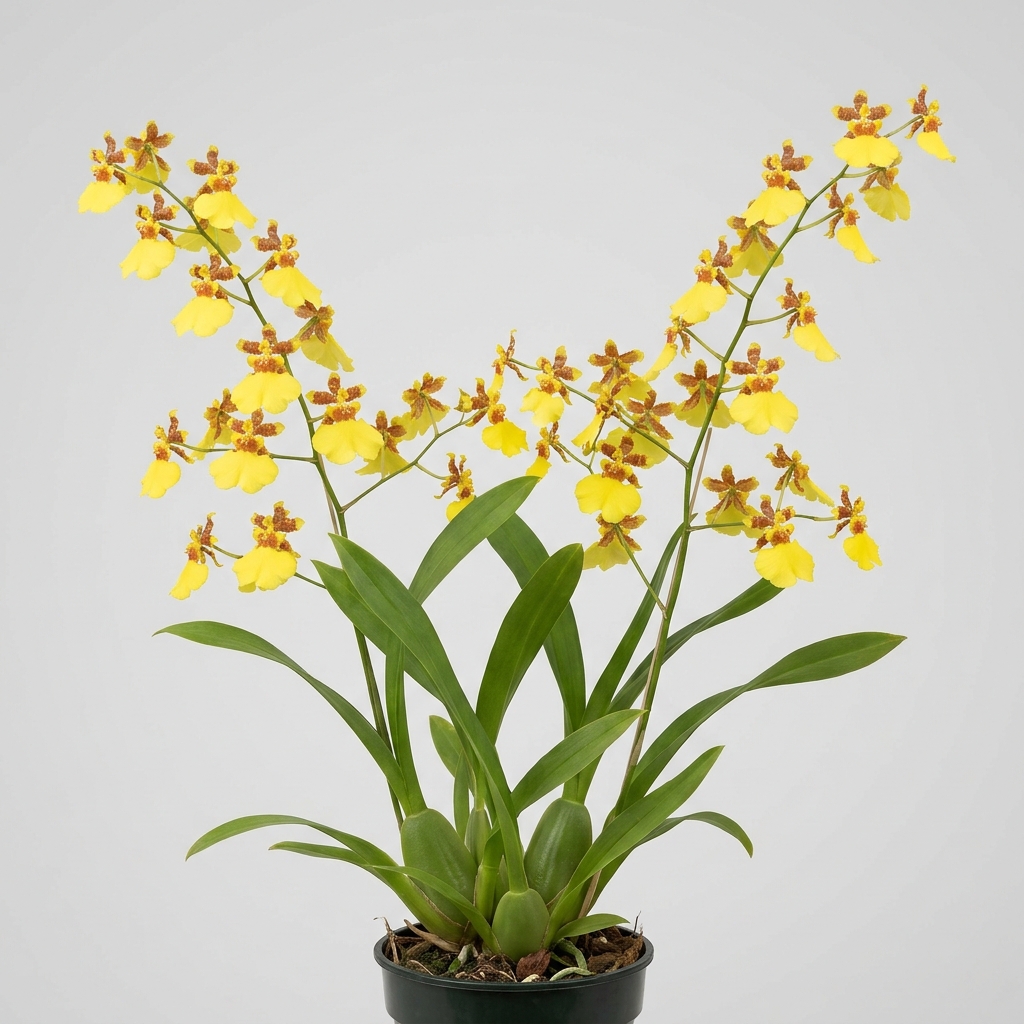
Oncidium Sweet Sugar is one of the most popular and widely cultivated sympodial orchids in the world, celebrated for its cheerful, bright yellow blooms that resemble miniature dancing dolls. This vigorous hybrid is highly favored by both novice growers and seasoned orchid enthusiasts due to its adaptable nature, robust growth habit, and prolific flowering capability. With its prominent pseudobulbs and arching spikes, it brings a lively splash of color to indoor growing spaces.
As a member of the diverse Oncidium alliance, this cultivar is particularly appreciated for its forgiving temperament compared to more temperamental orchid species. Under proper care, a single mature specimen can produce multiple branching inflorescences, each carrying dozens of long-lasting flowers. Understanding its basic cultural requirements is the key to unlocking its full blooming potential year after year.
💡 Did You Know?
The distinctive yellow flowers of Oncidium Sweet Sugar are often called dancing doll orchids because the oversized, flared lip resembles a wide, flowing skirt, while the smaller upper petals and sepals mimic the head and arms of a dancer swaying in the breeze.
🌿 Botanical Overview
Oncidium Sweet Sugar shows a classic sympodial growth habit, characterized by tightly clustered, flattened, egg-shaped pseudobulbs. These pseudobulbs serve as vital water and nutrient storage organs, allowing the plant to withstand brief periods of drought in its native-style environments. From the top of each mature pseudobulb, two to three strap-like, medium-green leaves emerge, arching gracefully outward.
New growths emerge from the base of the previous season’s pseudobulbs. As these new shoots mature, they swell to form new pseudobulbs, which will eventually produce the next generation of flower spikes. Healthy root systems are typically thin, white, and covered in velamen, branching extensively through well-draining media.
🌸 Flower Characteristics
The defining feature of Oncidium Sweet Sugar is its striking dancing doll flower shape. The most prominent part of the bloom is the large, fan-shaped lip (labellum), which is a brilliant, solid yellow. The smaller petals and sepals are situated at the top of the flower, featuring intricate reddish-brown or mahogany bars and spots that contrast beautifully with the golden lip.
The flowers are relatively small, typically measuring about 1 to 1.5 inches in diameter, but they make up for their size in sheer quantity. They are presented on tall, arching, often branched inflorescences that can reach up to two to three feet in length. A single strong spike can support dozens of individual blossoms, creating a spectacular cloud-like display of yellow.
Fragrance & Bloom Profile
While some Oncidium cultivars are famous for intense chocolate or vanilla scents, Oncidium Sweet Sugar is generally noted for having a very light, subtle fragrance. Some growers report a faint, sweet, honey-like scent that is most noticeable on warm, sunny mornings, while others find the blooms to be virtually unscented.
The individual flowers are remarkably long-lasting, often remaining fresh on the spike for four to eight weeks depending on environmental conditions. To maximize the lifespan of the blooms, it is best to keep the plant in slightly cooler temperatures and avoid moving it excessively once the buds begin to open.
Parentage & Hybrid Lineage
Oncidium Sweet Sugar is a well-known artificial hybrid within the Orchidaceae family. In common horticultural literature, its parentage is widely accepted as a cross between Oncidium Aloha Iwanaga and Oncidium varicosum. This genetic heritage combines the robust, easy-growing nature of Aloha Iwanaga with the brilliant yellow, oversized lip characteristic of the varicosum species.
While its registration and exact hybridizer details are well-established in official orchid registries, general retail plants are sometimes distributed under simplified trade names. Its stable genetics make it an excellent representative of the classic yellow-flowered Oncidium group, often referred to collectively as dancing ladies.
🌱 Growing Conditions
Achieving the perfect balance of light is crucial for Oncidium Sweet Sugar. It thrives in bright, indirect light, such as that provided by an east- or shaded south-facing window. The leaves should ideally be a light, grassy green; dark green leaves indicate insufficient light, while yellowing or reddish-tinged leaves suggest the light is too intense.
💡 Care Tip
To keep your Oncidium Sweet Sugar thriving, place it in a location with gentle, continuous air movement. Good ventilation prevents moisture from lingering on the leaves and roots, significantly reducing the risk of fungal spotting and root rot.
This cultivar adapts well to standard household temperatures, preferring daytime temperatures between 70°F and 85°F and a nighttime drop to around 60°F to 65°F. Adequate air movement is essential, especially in high-humidity environments, to prevent fungal pathogens from settling on the foliage or roots. Aim for a relative humidity level of 50% to 70%, which can be supported using humidity trays or room humidifiers.
Watering, Feeding & Potting Media
Watering should be tailored to the growth cycle of the orchid. During the active growing season in spring and summer, water thoroughly as soon as the potting medium approaches dryness. In winter, when growth slows, reduce watering frequency, allowing the medium to dry out more completely between waterings, but do not allow the pseudobulbs to shrivel severely.
A well-draining potting mix is non-negotiable. A blend of fine to medium fir bark, perlite, and a small amount of sphagnum moss works exceptionally well to retain light moisture while ensuring excellent aeration. Feed the plant regularly during active growth with a balanced, diluted orchid fertilizer, flushing the pot with pure water once a month to prevent salt buildup.
Blooming Season & Care Notes
Oncidium Sweet Sugar typically initiates its bloom cycle in the autumn or winter months, though strong, mature plants can occasionally bloom twice a year. The flower spike emerges from the sheath at the base of the newly matured pseudobulb. Once the spike begins to grow, it may require gentle staking to support the weight of the developing buds.
After the flowers have completely faded, cut the spent spike down to the base of the pseudobulb using sterilized cutting tools. Repotting is best done every one to two years, immediately after flowering has finished and just as new root growth begins to emerge from the base of the newest pseudobulb.
⚠️ Common Issues
⚠️ Common Mistake
A frequent mistake is keeping the potting medium constantly soggy. While Oncidiums prefer more moisture than Cattleyas, their fine roots still require oxygen. Allowing the mix to dry out slightly between waterings prevents devastating root rot.
- Wrinkled Pseudobulbs: Often a sign of dehydration, which can be caused by either under-watering or root rot from over-watering. Check the roots to diagnose the cause.
- Accordion Leaf Growth: New leaves that crinkle or fold like an accordion indicate inconsistent watering or low humidity during the leaf development phase.
- Leaf Spotting: Small black or brown spots on the leaves can be caused by fungal or bacterial infections, often exacerbated by poor air circulation and water sitting on the foliage.
- Bud Blast:
The sudden yellowing and dropping of unopened flower buds, usually triggered by rapid changes in temperature, drafty locations, or low humidity. - Pests:
Mealybugs, scale, and spider mites can occasionally target the soft tissue of the leaves and flower spikes; treat promptly with insecticidal soap or neem oil.
❓ Frequently Asked Questions
How do I fix accordion-like crinkling on my Oncidium Sweet Sugar leaves?
Accordion-like crinkling is a classic sign of moisture stress, usually caused by inconsistent watering or low humidity while the new leaf was actively growing. Once the leaf is crinkled, it cannot be straightened, but you can prevent future occurrences by maintaining a steady watering schedule and keeping humidity levels above 50%.
When is the best time to repot Oncidium Sweet Sugar?
The ideal time to repot is during the spring, immediately after the blooming cycle has finished and as new green root tips begin to emerge from the base of the newest pseudobulb. Avoid repotting while the plant is in spike or bloom, as this can cause the flowers to drop prematurely.
Why are the pseudobulbs on my orchid shriveling?
Shriveled pseudobulbs indicate that the plant is not absorbing enough water. This can be due to simple under-watering, or conversely, over-watering which has rotted the root system, leaving the orchid unable to take up moisture. Inspect the roots: if they are firm and white, increase watering; if they are mushy and brown, repot immediately into fresh media.
Can I grow Oncidium Sweet Sugar under artificial LED lights?
Yes, Oncidium Sweet Sugar adapts very well to artificial LED grow lights. Position the plant so it receives moderate to high light intensity, typically about 12 to 18 inches below a full-spectrum LED fixture for 12 to 14 hours a day, adjusting the distance if the leaves show signs of sunburn.
⭐ Final Growing Notes
Oncidium Sweet Sugar remains a timeless favorite for a reason. Its cheerful, dancing yellow blooms, combined with a robust and forgiving growth habit, make it an exceptional addition to any indoor plant collection. By providing bright indirect light, consistent moisture, and good air circulation, you will be rewarded with a spectacular annual display of golden blossoms that bring warmth and energy to the cooler months of the year.
🌱 Propagation Tip
This sympodial orchid is best propagated by division during repotting. Ensure that each division contains at least three to four healthy, mature pseudobulbs with an active lead growth to give the new plant enough stored energy to establish successfully.
⭐ Expert Advice
If your Oncidium Sweet Sugar refuses to bloom despite healthy leaf growth, it is likely not receiving enough . Gradually move the plant to a brighter location where the leaves turn a , grassy green rather than a dark, forest green.




Leave A Comment