
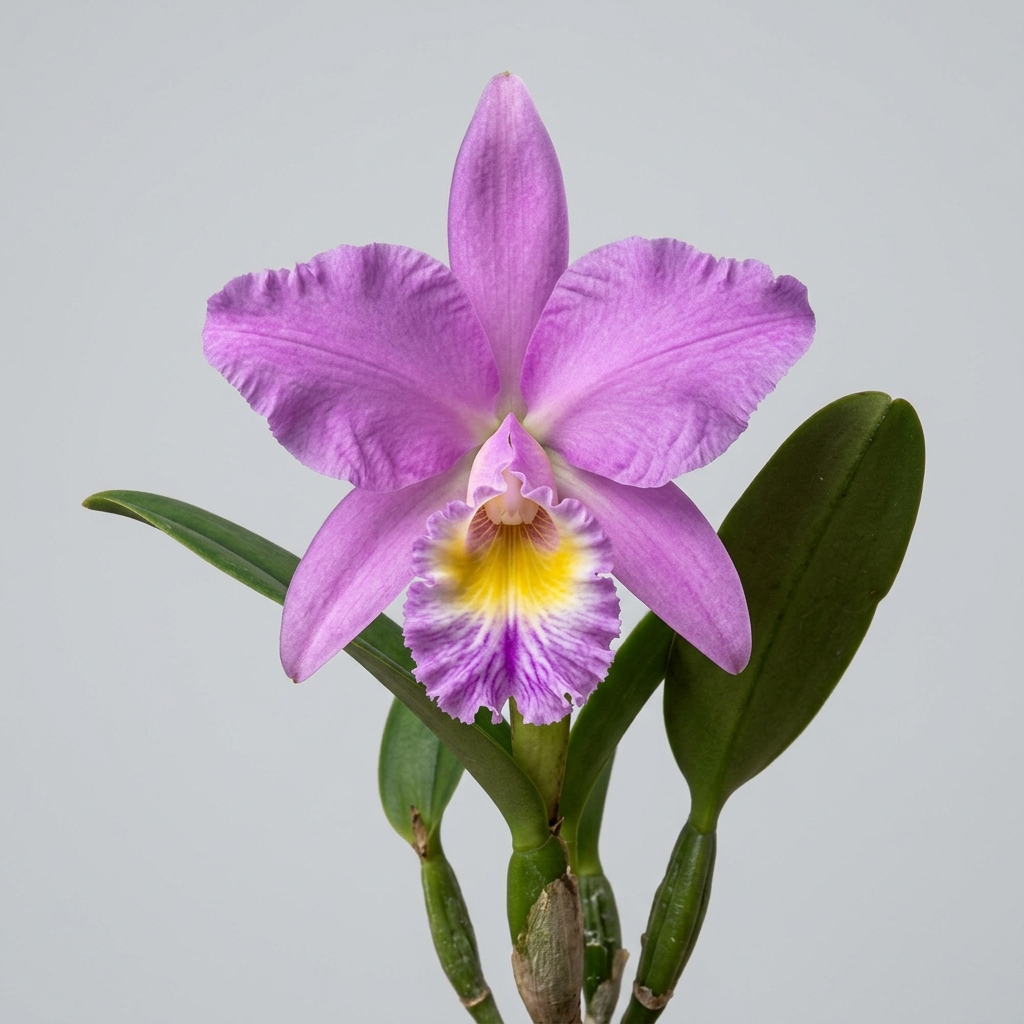
Cattleya Jongheana is a highly coveted, compact orchid species native to the mountainous regions of Brazil, celebrated for producing remarkably large flowers relative to its diminutive vegetative size. Originally classified under the genus Laelia, this epiphytic gem features short, club-shaped pseudobulbs topped with a single, leathery leaf, making it an ideal choice for growers with limited space. Orchid enthusiasts prize this species for its striking floral presentation, which brings a dramatic splash of color to specialized collections without requiring the expansive bench space of larger Cattleya representatives.
Cultivating Cattleya Jongheana successfully requires an understanding of its native montane habitat, where it experiences bright light, distinct seasonal moisture variations, and excellent air circulation. While it has a reputation among some hobbyists as a moderately challenging species, adhering to its specific environmental preferences rewards the grower with long-lasting, structurally elegant blooms. This guide outlines the essential cultural requirements, potting strategies, and seasonal care routines necessary to help this exceptional orchid thrive in a home or greenhouse environment.
💡 Did You Know?
In its native Brazilian habitat, Cattleya Jongheana is adapted to growing on the trunks of Vellozia bushes, a unique group of fibrous, drought-resistant plants. This specialized ecological niche highlights the orchid's need for exceptional root aeration and its ability to withstand dry periods that would challenge more delicate species.
🌿 Botanical Overview
Cattleya Jongheana is native to the Brazilian state of Minas Gerais, where it typically grows as an epiphyte on trees in relatively dry, high-altitude forest environments. These habitats expose the plant to intense sunlight and strong breezes, which have shaped its compact, drought-resistant morphology. The pseudobulbs are short, stout, and closely clustered, rarely exceeding a few inches in height, which helps the plant conserve moisture during dry spells.
The single, rigid, oblong leaf that emerges from the top of each pseudobulb is thick and coriaceous, designed to withstand high light levels. In its native habitat, the species is considered endangered due to over-collection and habitat loss, making responsibly seed-grown or tissue-cultured specimens highly valued in modern horticulture. Understanding its wild origins is key to replicating the cool, bright, and airy conditions it needs to flourish.
🌸 Flower Characteristics
The defining feature of Cattleya Jongheana is the impressive scale of its flowers, which can reach up to five inches in diameter, completely dwarfing the plant that supports them. The petals and sepals are typically a soft rose-purple or lavender hue, presenting a flat, star-like configuration that is highly sought after by breeders. The lip, or labellum, is particularly distinctive, featuring a tubular shape with heavily ruffled margins, a white border, and a rich yellow or gold throat marked with prominent ridges.
Flowers emerge from a short terminal inflorescence that arises from the apex of the mature pseudobulb, usually bearing one to two blossoms per spike. The heavy substance of the petals ensures that the flowers maintain their shape and remain attractive for several weeks, provided they are kept in a stable, cool environment free from excessive humidity fluctuations.
Fragrance & Bloom Profile
Unlike many of its highly fragrant relatives in the Cattleya genus, Cattleya Jongheana is generally noted for having a very mild, subtle fragrance, which some growers describe as faintly floral or completely absent. Because fragrance intensity can be highly subjective and influenced by ambient temperature and humidity, it is not considered a primary characteristic of this species.
The blooms typically open in late winter or early spring, lasting anywhere from three to five weeks under optimal conditions. To maximize the longevity of the flowers, growers should avoid getting water on the petals and maintain moderate temperatures during the blooming cycle, as excessive heat can cause the blossoms to fade prematurely.
Parentage & Hybrid Lineage
As a distinct botanical species rather than a man-made hybrid, Cattleya Jongheana possesses a unique genetic blueprint that has been utilized in orchid breeding to introduce compact growth habits and large, flat flower forms. In historical and modern registration records, it is frequently listed under its older synonym, Laelia jongheana, reflecting its long-standing association with the Brazilian Laelia group before genetic testing reclassified it into Cattleya.
While pure species specimens are highly prized by purists, hybridizers have successfully crossed Cattleya Jongheana with other Cattleya and Sophronitis species to produce compact, cold-tolerant hybrids with vibrant color palettes. When purchasing this orchid, growers should look for reputable nurseries offering line-bred seedlings, which often exhibit improved vigor and flower quality compared to wild-type imports.
🌱 Growing Conditions
To cultivate Cattleya Jongheana successfully, growers must replicate the bright, airy conditions of its native montane forests. It requires bright, filtered light, similar to standard Cattleya levels, but with careful protection from midday sun which can scorch the compact leaves. A slight yellow-green tint to the foliage indicates that the plant is receiving the maximum acceptable amount of light.
💡 Care Tip
To prevent fungal issues, always water Cattleya Jongheana early in the morning so the foliage and pseudobulb sheaths have ample time to dry completely before nightfall when temperatures drop. Good air movement is essential during this drying process.
Temperature: wise, this species prefers intermediate to cool conditions, with daytime temperatures ranging from 70 to 80 degrees Fahrenheit and a distinct drop at night to 50 to 58 degrees Fahrenheit. This nocturnal temperature drop is crucial for triggering bud initiation. High humidity of 60% to 80% is ideal, but it must be accompanied by continuous, gentle air movement to prevent fungal pathogens from settling on the foliage.
Watering, Feeding & Potting Media
Watering practices must align with the plant’s active growth cycle. During the spring and summer, when new roots and pseudobulbs are developing, the plant should be watered thoroughly and then allowed to dry out slightly, but not completely. In the winter, Cattleya Jongheana requires a distinct dry rest period where watering is significantly reduced, providing just enough moisture to prevent the pseudobulbs from shriveling excessively.
Fertilize weekly with a highly diluted, balanced orchid fertilizer during active growth, flushing the pot with pure water once a month to prevent salt buildup. The potting medium must offer exceptional drainage and aeration; coarse fir bark mixed with perlite or charcoal works well in clay pots. Alternatively, because of its creeping habit and need for rapid drying, this species is an excellent candidate for mounting on cork bark or tree fern plaques, provided the grower can maintain high humidity.
Blooming Season & Care Notes
The primary blooming season occurs in late winter and early spring, with flower buds developing within the sheath of the newly matured pseudobulb. During the bud development phase, it is critical to maintain stable environmental conditions, as sudden changes in temperature or drafts can lead to bud blast.
Once the blooming cycle is complete, the plant will enter a brief period of dormancy before initiating new root and shoot growth. Repotting or remounting should only be performed when new root tips begin to emerge from the base of the newest pseudobulb, ensuring the plant establishes quickly in its new medium with minimal transplant shock.
⚠️ Common Issues
⚠️ Common Mistake
The most common mistake is failing to provide a dry winter rest. Overwatering during the cool winter months quickly leads to root rot, which can destroy the plant before the spring growing season begins. Reduce significantly once new pseudobulbs mature.
- Root Rot: Caused by overwatering or a decomposing, waterlogged potting medium that suffocates the roots.
- Bud Blast: Sudden drop of developing buds due to rapid changes in temperature, low humidity, or drafts.
- Pseudobulb Shriveling: Indicates severe dehydration, either from underwatering during the active growth phase or root loss due to rot.
- Pests: Scale insects and mealybugs can hide in the dry sheaths of the pseudobulbs; remove sheaths carefully to inspect and treat.
- Leaf Scorch: Black or brown dry patches on the leaves caused by direct, unfiltered midday sunlight.
❓ Frequently Asked Questions
How do I trigger blooming in Cattleya Jongheana?
Blooming is primarily triggered by a combination of bright light, a distinct winter dry rest, and a consistent night-time temperature drop of 10 to 15 degrees Fahrenheit during the autumn and winter months.
Can Cattleya Jongheana be grown mounted?
Yes, this species thrives when mounted on cork bark or tree fern plaques, as this setup mimics its natural epiphytic habit and ensures the roots dry rapidly after watering.
What should I do if the pseudobulbs start to shrivel?
Slight shriveling during the winter rest is normal, but severe shriveling during active growth indicates either underwatering or root loss from overwatering. Inspect the root system immediately.
Is Cattleya Jongheana suitable for beginners?
It is generally considered a moderate to advanced orchid due to its strict requirements for high light, cool nights, and a dry winter rest, making it better suited for growers with some experience.
⭐ Final Growing Notes
Cattleya Jongheana remains one of the most rewarding compact orchids for dedicated collectors, offering a spectacular visual payoff with its oversized, elegant blooms. By respecting its native montane heritage—providing bright light, cool nights, excellent air movement, and a disciplined winter rest—growers can enjoy the annual spectacle of this Brazilian treasure for many years.
⚕️ Health, Safety & Edibility
Understanding how a plant interacts with people, pets, and the surrounding environment is part of responsible cultivation. This section uses conservative, general guidance and does not replace professional medical or veterinary advice.
Human Safety: No published evidence currently identifies species-specific toxicity concerns for Cattleya Jongheana during normal handling. As with most ornamental plants, it should not be intentionally consumed.
Pet Safety: Published information does not indicate that this orchid commonly poses a toxicity concern for cats or dogs. However, chewing leaves, flowers, roots, or potting media may still cause mild digestive upset.
Edibility: This orchid is cultivated for ornamental display rather than food. Ornamental plants may carry fertilizers, pesticides, or other horticultural treatments that make them unsuitable for consumption.
Skin Contact: Routine handling is not generally associated with skin irritation. Gardeners with sensitive skin may prefer wearing gloves when repotting, pruning, or handling potting media.
🌱 Propagation Tip
Propagate this species by division only when the plant has at least six mature pseudobulbs, ensuring each new division has at least three healthy pseudobulbs and active root growth. Avoid dividing weak or undersized specimens.
⭐ Expert Advice
If growing indoors under LED lights, place Cattleya Jongheana near the center of the footprint to ensure it receives the high intensity it needs to initiate flower buds. Supplement this with a strong nocturnal drop.

Leave A Comment