
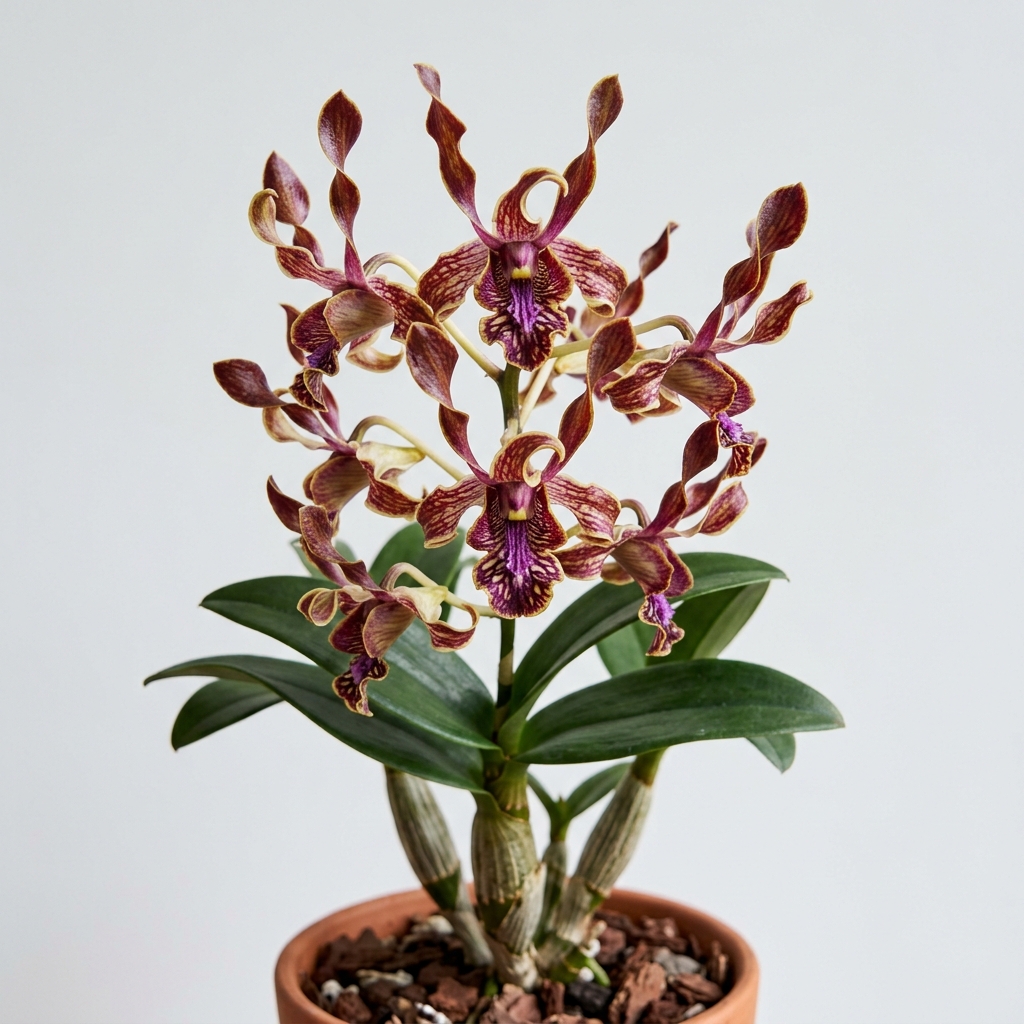
Dendrobium spectabile is one of the most visually striking and dramatic species in the orchid world. Belonging to the Latouria section of the genus Dendrobium, this epiphytic orchid is highly prized by collectors for its bizarre, intricately twisted flowers that resemble flickering flames or fantastical sea creatures. Its robust growth habit and exotic presentation make it a standout centerpiece in any tropical plant collection.
Cultivating this remarkable orchid requires an understanding of its native habitat in the warm, humid regions of New Guinea and the Solomon Islands. While its alien-like blooms suggest a highly delicate nature, the plant is actually quite resilient when provided with consistent warmth, bright light, and high humidity. For growers willing to accommodate its generous size, it offers a rewarding and truly unique botanical display.
💡 Did You Know?
The specific epithet spectabile translates to visually spectacular or remarkable, a fitting description for an orchid whose flowers look like intricate, hand-carved sculptures. In its native habitats of New Guinea and the Solomon Islands, it often grows exposed to bright sunlight on the branches of tall trees, adapting it to handle higher levels than many other tropical orchids.
🌿 Botanical Overview
Dendrobium spectabile is a medium to large epiphytic orchid characterized by its upright, club-shaped pseudobulbs. These pseudobulbs, often referred to as canes, are thick, ribbed, and can reach impressive heights under optimal conditions. They bear several leathery, oblong leaves near the apex, which persist for multiple seasons, providing a lush green backdrop even when the plant is not in bloom.
In its native tropical environment, this species grows high in the forest canopy, clinging to tree branches where it receives abundant air movement and dappled sunlight. Its extensive, thick root system is adapted to rapidly absorbing moisture from frequent rain showers and drying out quickly afterward. This growth habit dictates many of its cultivation requirements in a home or greenhouse setting.
🌸 Flower Characteristics
The flowers of Dendrobium spectabile are arguably some of the most complex and unusual in the entire orchid family. Each bloom features heavily curled, twisted, and wavy sepals and petals that flare outward in a wild, almost chaotic fashion. The base color is typically a creamy yellow or pale green, heavily marked with intricate, dark reddish-brown or purple veins and speckles.
The lip, or labellum, is equally dramatic, featuring a long, pointed, and deeply ruffled tip that curls downward. A single arching inflorescence can produce up to twenty of these spectacular flowers, which can measure several inches across. The spikes emerge from the upper nodes of both mature and older pseudobulbs, creating a dense, multi-layered floral display that lasts for several weeks.
Fragrance & Bloom Profile
Beyond their striking visual appeal, the flowers of this orchid are known for their distinct and powerful fragrance. The scent is commonly described as a sweet, complex aroma with spicy undertones, reminiscent of warm honey or tropical spices. This fragrance is typically most pronounced during the warmer hours of the day, filling a greenhouse or growing room with a rich, exotic perfume.
The blooms are remarkably long-lasting, often remaining in pristine condition for six to eight weeks. Because the flowers have a heavy, waxy substance, they resist wilting and maintain their intricate shapes throughout the entire blooming cycle.
Parentage & Hybrid Lineage
Dendrobium spectabile is a naturally occurring species rather than a man-made hybrid, first described in the late nineteenth century. Within orchid horticulture, it is classified under the Latouria section, a group celebrated for its long-lasting flowers and robust growth. Its unique genetic traits have made it a popular parent in hybridizing programs, where it is used to introduce exotic flower shapes, intense veining, and fragrance to new Dendrobium grexes.
While several selected cultivars and line-bred variations of the species exist in the trade, the fundamental characteristics of the wild species remain highly dominant. Growers should note that while some specific awarded clones exist, the general care requirements remain consistent across all variations of this species.
🌱 Growing Conditions
To successfully cultivate this orchid, growers must replicate its warm, tropical origin. It thrives in bright, indirect light, similar to the conditions preferred by Cattleya orchids. While it can tolerate some direct morning sun, hot afternoon sunlight should be filtered to prevent the leathery leaves from scorching.
💡 Care Tip
Provide this orchid with strong, continuous air movement, especially when maintaining the high levels it prefers. Good ventilation prevents moisture from pooling in the leaf axils and new growths, significantly reducing the risk of bacterial and fungal rot.
Temperature ranges should remain warm year-round, ideally between 75 and 85 degrees Fahrenheit during the day, with a slight drop to 65 to 70 degrees Fahrenheit at night. High humidity levels of 60 to 80 percent are essential for healthy leaf development and root growth. Strong, continuous air movement is critical to prevent stagnant air pockets, which can lead to fungal infections in high-humidity environments.
Watering, Feeding & Potting Media
During the active spring and summer growing season, Dendrobium spectabile requires frequent and abundant watering. The potting medium should be kept consistently damp but never waterlogged. A coarse, fast-draining potting mix consisting of medium to large fir bark, charcoal, and perlite is ideal, as it allows the roots to breathe while retaining adequate moisture.
Apply a balanced orchid fertilizer weekly at a diluted strength during active growth. As the winter months approach and growth slows, reduce watering frequency, allowing the medium to dry out slightly between waterings, and suspend fertilizing. This species does not require a strict dry rest, but a slight reduction in moisture helps trigger the winter-to-spring blooming cycle.
Blooming Season & Care Notes
The primary blooming season typically spans from late winter through early spring, though well-established plants can occasionally bloom at other times of the year. Flower spikes develop from the upper nodes of the canes and should be supported with stakes if they become too heavy.
Repotting should only be performed when absolutely necessary, as this species resents root disturbance. The best time to repot is immediately after flowering, just as new root growth begins to emerge from the base of the newest pseudobulbs. Choose a sturdy, heavy pot to prevent the top-heavy canes from tipping over.
⚠️ Common Issues
⚠️ Common Mistake
A frequent error is overwatering during the cooler winter months. While this species does not need a hard dry rest, keeping the potting medium constantly wet when temperatures drop and growth slows can quickly lead to root rot and the loss of the plant.
- Root rot caused by overwatering or compacted, poorly draining potting media.
- Leaf spotting or fungal infections resulting from high humidity combined with inadequate air circulation.
- Bud blast, where developing buds yellow and drop, often triggered by sudden temperature drops or low humidity.
- Dehydration, indicated by shriveled pseudobulbs and wrinkled leaves, usually due to underwatering or a compromised root system.
- Pests such as spider mites, mealybugs, and scale, which can hide in the crevices of the tightly clustered canes.
❓ Frequently Asked Questions
How often should I water my Dendrobium spectabile?
Water frequently during the active spring and summer growing season, keeping the medium evenly moist. In winter, reduce watering to allow the mix to dry out slightly between applications, but do not allow the pseudobulbs to shrivel completely.
Why are the leaves on my orchid turning yellow and dropping?
Yellowing leaves can indicate several issues, including overwatering, poor root health, or natural aging of older canes. Ensure the potting medium is draining well and that the plant is not sitting in standing water.
Does Dendrobium spectabile require a winter rest to bloom?
Unlike some other Dendrobium species, this orchid does not require a severe dry rest. However, a slight reduction in watering and fertilizer during the cooler winter months, combined with bright light, will help stimulate flower spike development.
What is the best potting medium for this orchid?
A coarse, highly porous medium is best. A mix of medium-grade fir bark, charcoal, and perlite provides the necessary drainage and aeration that its thick, epiphytic roots require to thrive.
⭐ Final Growing Notes
Dendrobium spectabile is a true masterpiece of the orchid world, offering an unparalleled combination of bizarre floral architecture and rich fragrance. While its size and specific warmth requirements may challenge novice growers, its robust nature and spectacular, long-lasting blooms make it an incredibly rewarding species for any dedicated orchid enthusiast.
🌱 Propagation Tip
Propagation is best achieved by dividing large, mature specimens during repotting. Ensure each division has at least three to four healthy, mature pseudobulbs with active lead growths. Avoid dividing the plant too frequently, as larger specimens produce far more spectacular floral displays.
⭐ Expert Advice
To support the heavy, top-heavy canes of mature specimens, use heavy clay pots rather than plastic ones. Clay pots provide excellent stability, and their porous walls allow the roots to dry more evenly, mimicking the natural epiphytic environment of the orchid.




Leave A Comment