
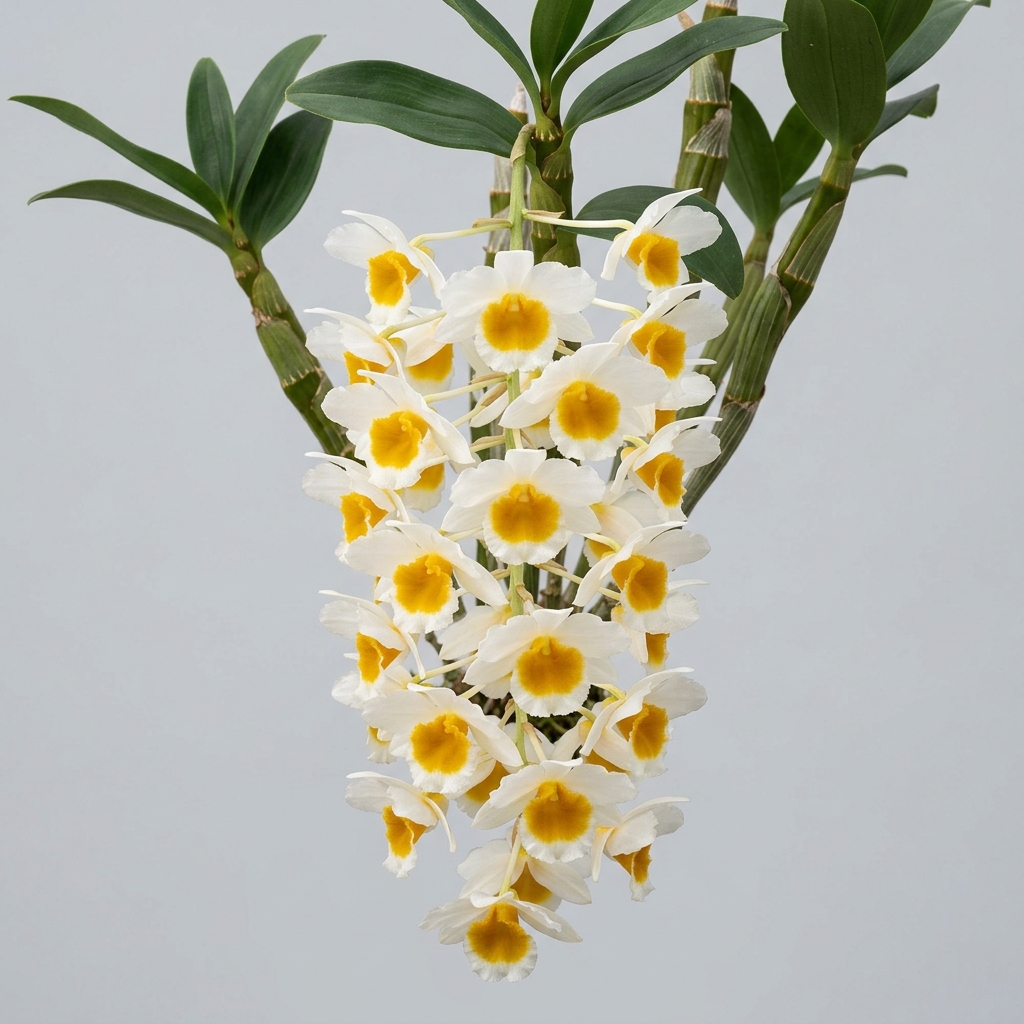
Dendrobium thyrsiflorum, commonly known as the pinecone-like dendrobium, is a highly celebrated epiphytic orchid species native to the mountain forests of Southeast Asia. Renowned for its spectacular, pendulous clusters of flowers, this orchid produces dense, grape-like racemes that drape elegantly from upright, cane-like pseudobulbs. Growers around the world prize this species for its dramatic spring display, which brings a burst of vibrant color and architectural beauty to any orchid collection.
While its individual blossoms are relatively short-lived, the sheer volume of flowers produced during a single flush makes Dendrobium thyrsiflorum a showstopper. Cultivating this species successfully requires attention to its seasonal growth cycle, which includes a distinct winter rest period to trigger blooming. For intermediate growers willing to mimic its native monsoon-influenced climate, this orchid offers an incredibly rewarding horticultural experience.
💡 Did You Know?
The specific epithet thyrsiflorum translates to thyrse-flowered, which refers to the compact, branched, and rounded shape of its flower cluster. This unique structure closely mimics a pinecone or a dense bunch of grapes before the buds open, a visual trait that makes this species instantly recognizable even before its brilliant white and gold blossoms fully expand.
🌿 Botanical Overview
Dendrobium thyrsiflorum belongs to the section Densiflora within the vast Dendrobium genus. It is characterized by its club-shaped, multi-angled pseudobulbs that can grow up to sixty centimeters in height. These sturdy, cane-like structures are topped with several persistent, leathery, dark green leaves that remain on the plant for multiple seasons, providing year-round visual interest even when the orchid is not in bloom.
In its native habitat, which spans regions of India, Myanmar, Thailand, Laos, and southern China, this species grows as an epiphyte on tree trunks and branches at elevations ranging from 1,200 to 2,000 meters. This montane environment subjects the plant to distinct seasonal shifts, characterized by wet, warm summers and cooler, significantly drier winters. Understanding this natural rhythm is the key to successfully maintaining the plant in a domestic greenhouse or indoor growing space.
🌸 Flower Characteristics
The defining feature of Dendrobium thyrsiflorum is its magnificent inflorescence. The flowers emerge from the upper nodes of both old and new pseudobulbs, developing into a dense, hanging raceme that closely resembles a bunch of grapes or a pinecone before opening. Each pendulous spike can measure up to thirty centimeters in length and carry anywhere from thirty to over fifty tightly packed blossoms.
Individual flowers are approximately three to five centimeters across. They exhibit a striking color contrast, featuring pristine white to pale pink sepals and petals that frame a prominent, cup-shaped lip of deep golden-yellow or orange. The lip is covered in fine, velvety hairs, adding a delicate texture to the overall presentation. The sepals and petals are thin and somewhat translucent, creating a luminous effect when backlit by natural light.
Fragrance & Bloom Profile
The blossoms of Dendrobium thyrsiflorum emit a delicate, sweet fragrance that is often compared to honey or fresh beeswax. This scent is typically most noticeable during the warmer hours of the morning and early afternoon, gently filling the surrounding growing area without becoming overpowering.
While the visual impact of the bloom spike is immense, the individual flowers are relatively ephemeral, usually lasting between one to two weeks depending on environmental conditions. To maximize the lifespan of the blooms, growers should keep the plant in cooler temperatures and avoid getting water directly on the open petals. Because the spikes emerge almost simultaneously, the overall display is concentrated into a brief but unforgettable spring spectacle.
Parentage & Hybrid Lineage
Unlike many highly hybridized orchids found in commercial nurseries, Dendrobium thyrsiflorum is a naturally occurring species. It was first formally described in the nineteenth century and has remained a staple of species collections ever since. Because of its outstanding floral density and contrasting colors, it has been used occasionally in hybridizing programs within the Dendrobium genus, though its primary value remains as a pure species.
In horticultural literature, it is sometimes confused with Dendrobium densiflorum, a closely related species. The primary distinction lies in the pseudobulbs and flower color: Dendrobium thyrsiflorum typically features rounded or slightly angled pseudobulbs and white petals with a yellow lip, whereas Dendrobium densiflorum has distinctly four-sided pseudobulbs and entirely yellow or orange flowers.
🌱 Growing Conditions
To thrive, Dendrobium thyrsiflorum requires bright, indirect light. In a greenhouse setting, a light level of approximately 2,500 to 3,500 foot-candles is ideal, which translates to filtered sunlight with protection from the harsh midday sun. If the leaves turn a deep, dark green, the plant may not be receiving enough light to trigger blooming; a healthy leaf color is a medium, grassy green.
💡 Care Tip
Provide strong air movement around your orchid at all times. Good ventilation mimics the breezy montane forests of its native habitat, helping to dry the foliage quickly after and preventing fungal pathogens from taking hold on the leaves.
Temperature management is critical for this species due to its montane origin. During the active growing season in spring and summer, it prefers warm to intermediate temperatures, ranging from twenty-four to thirty degrees Celsius during the day. In the winter, however, the plant requires a cool rest period where night temperatures drop to ten to thirteen degrees Celsius. Strong air movement is essential at all times to prevent stagnant air pockets and reduce the risk of fungal infections.
Watering, Feeding & Potting Media
Watering practices must change dramatically with the seasons. During the active growth phase in spring and summer, when new pseudobulbs and roots are rapidly developing, the plant should be watered copiously. The potting medium should remain consistently moist but never waterlogged. Regular applications of a balanced, diluted orchid fertilizer every two weeks will support this rapid vegetative growth.
As autumn approaches, watering should be gradually reduced, and feeding should stop entirely. During the winter rest, water should be provided only sparingly—just enough to prevent the pseudobulbs from shriveling excessively. A light misting in the morning is often sufficient.
This species can be grown in pots, baskets, or mounted on cork bark. If potting, use a highly porous, free-draining medium such as coarse fir bark mixed with charcoal and perlite. Slotted clay pots or wooden baskets are excellent choices as they allow the roots to dry out quickly after watering and ensure maximum oxygenation.
Blooming Season & Care Notes
The blooming cycle of Dendrobium thyrsiflorum is intimately tied to its winter rest. The cool, dry period during winter triggers the development of flower buds at the nodes of the pseudobulbs. In early spring, as temperatures begin to rise and watering is slowly resumed, the flower spikes will rapidly emerge.
Once the spikes begin to show, avoid moving the plant or changing its orientation to the light source, as this can cause the developing buds to twist or drop. Repotting should only be performed every two to three years, immediately after the spring flowering period has finished and just as new root growth begins from the base of the new pseudobulbs. This species resents root disturbance, so choose a pot size that allows for at least two years of future growth.
⚠️ Common Issues
⚠️ Common Mistake
The most common mistake is too heavily during the winter rest period. Excess moisture when the plant is inactive and temperatures are cool will quickly lead to root rot, which can destroy the root system and prevent spring blooming.
- Bud blast: Rapid changes in temperature, low humidity, or moving the plant while buds are developing can cause them to yellow and drop before opening.
- Pseudobulb shriveling: While slight shriveling is normal during the winter rest, severe shriveling during the growing season indicates underwatering or root loss due to a degraded potting medium.
- Spider mites and scale: These pests can hide in the crevices of the leaves and pseudobulbs, especially in dry winter conditions; regular inspections are necessary.
- Root rot: Caused by overwatering during the winter rest or using a decomposed potting medium that retains too much moisture.
- Fungal leaf spot: Can occur if water sits on the foliage overnight in cool conditions with inadequate air circulation.
❓ Frequently Asked Questions
How do I trigger my Dendrobium thyrsiflorum to bloom?
To trigger blooming, you must provide a distinct cool, dry winter rest period starting in late autumn. Reduce watering significantly, stop fertilizing, and expose the plant to night temperatures between ten and thirteen degrees Celsius for about two to three months.
Why are the leaves on my orchid turning yellow and dropping?
Yellowing leaves can be a sign of natural aging if they are older leaves at the base of mature canes. However, if new leaves are dropping, it may indicate overwatering, root rot, or exposure to sudden cold drafts.
Can I grow Dendrobium thyrsiflorum mounted on wood?
Yes, this species thrives when mounted on cork bark or tree fern plaques, provided you can maintain high humidity. Mounted plants will require more frequent watering during the hot summer months, often daily.
How long do the flowers of Dendrobium thyrsiflorum last?
The individual flower spikes typically last between one to two weeks. To prolong the blooms, keep the plant in a cool, shaded location with good air movement and avoid spraying water on the flowers.
⭐ Final Growing Notes
Dendrobium thyrsiflorum remains one of the most rewarding species for any orchid enthusiast seeking a dramatic seasonal display. By respecting its natural need for a dry, cool winter rest and providing abundant water and warmth during the summer, growers can enjoy the breathtaking sight of its golden-white flower chains year after year. Its architectural growth habit and spectacular blooms make it a true crown jewel of the orchid world.
🌱 Propagation Tip
Propagate this species by division during spring repotting, ensuring each new division has at least three to four healthy, mature pseudobulbs. Avoid dividing the plant too frequently, as larger, established specimens produce far more dramatic flower displays.
⭐ Expert Advice
When the flower buds first begin to emerge from the nodes in early spring, resist the urge to move or rotate the pot. Changing the plant's orientation to the source during this critical phase can cause the buds to develop unevenly or drop entirely.




Leave A Comment