
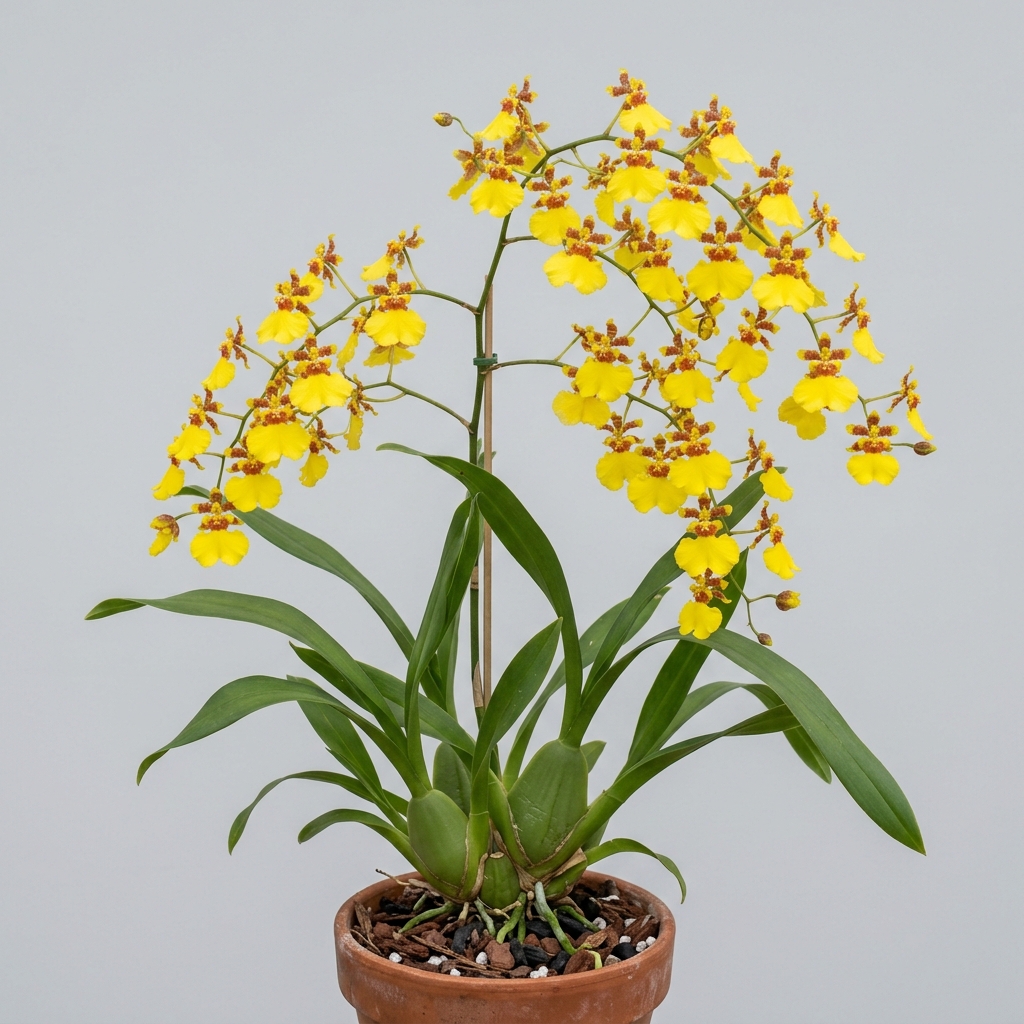
Oncidium varicosum, widely celebrated as the classic Dancing Lady orchid, is a highly prized epiphytic species native to the montane forests of Brazil and neighboring South American regions. Renowned for its spectacular sprays of vibrant yellow flowers that mimic the swirling skirts of dancers, this orchid has captured the imagination of collectors and casual growers alike. Its robust growth habit, characterized by prominent pseudobulbs and arching inflorescences, makes it a dramatic centerpiece in any indoor or greenhouse collection.
Cultivating this species offers a rewarding experience, as a single mature specimen can produce dozens of brilliant blooms on a highly branched spike. While it requires specific attention to light and watering cycles to mimic its natural seasonal habitats, its adaptability makes it an excellent choice for growers looking to transition from basic hybrids to species orchids. Understanding its botanical needs is the key to unlocking its full flowering potential year after year.
💡 Did You Know?
The common name Dancing Lady orchid comes from the unique shape of the Oncidium varicosum flower. The massive yellow lip resembles a flared skirt, while the smaller petals and sepals above look like the head and outstretched arms of a dancer spinning in the wind.
🌿 Botanical Overview
Oncidium varicosum is characterized by its distinctive, flattened, pear-shaped pseudobulbs that typically grow in tight clusters. Each pseudobulb is topped with two or three lanceolate, leathery green leaves that help the plant store moisture and nutrients during drier periods. In its native habitat, it grows as an epiphyte on tree branches, where its extensive aerial root system anchors it securely while absorbing moisture and nutrients from the surrounding humid air.
The growth cycle of this orchid is highly seasonal, closely tied to the wet and dry patterns of its native South American forests. During the active spring and summer growing season, the plant rapidly develops new pseudobulbs. As these mature in late summer, the plant initiates its impressive flowering spikes from the base of the newest pseudobulb, culminating in a spectacular autumn display.
🌸 Flower Characteristics
The defining feature of Oncidium varicosum is its extraordinary floral morphology, which gives rise to its common name. The individual flowers are dominated by an enormously expanded, fan-shaped lip, or labellum, which is typically a brilliant, saturated yellow. This large lip contrasts sharply with the much smaller, inconspicuous sepals and petals clustered at the top of the flower, which are often barred or spotted with reddish-brown or chestnut tones.
These flowers are arranged on a tall, arching, and highly branched inflorescence that can reach up to three feet in length on mature, vigorous plants. A single spike can carry anywhere from thirty to over a hundred individual blooms, creating a cloud-like effect of dancing yellow figures. The sheer volume of flowers and their bright coloration make this species one of the most visually striking in the entire Oncidium genus.
Fragrance & Bloom Profile
While some Oncidium species and hybrids are famous for intense, chocolate-like scents, the fragrance of Oncidium varicosum is generally reported as very mild or entirely absent. Some growers note a faint, clean, sweet scent detectable only during the warmest hours of midday, but this trait can be highly variable and cultivar-dependent.
The primary appeal of this orchid lies in its visual impact rather than its scent. The blooms are remarkably long-lasting, often remaining fresh on the spike for six to eight weeks if kept in cool, stable conditions. This extended bloom period, combined with the sheer density of the flowers, ensures a dramatic and enduring autumn display.
Parentage & Hybrid Lineage
As a true species rather than a man-made hybrid, Oncidium varicosum carries a pure genetic heritage shaped by natural selection in the wild. However, its outstanding floral traits—specifically the massive yellow lip and highly branched spike habit—have made it one of the most influential parents in orchid hybridization history.
It has been crossed extensively with other Oncidium species and related genera to produce famous hybrids such as Oncidium Sweet Sugar. These hybrids often inherit the brilliant yellow color and dancing-lady shape of Oncidium varicosum but are bred for greater temperature tolerance and ease of culture in home environments. In common grower references, the exact wild-collected varieties of this species are sometimes distinguished by lip size, though most cultivated plants today are the result of sibling crosses aimed at maximizing flower size and vigor.
🌱 Growing Conditions
To successfully grow Oncidium varicosum, providing the correct balance of light and temperature is essential. This orchid thrives in bright, filtered light, similar to the conditions preferred by Cattleyas. A east- or shaded south-facing window is ideal, where the leaves should maintain a light, grassy-green color; dark green leaves indicate insufficient light, while yellow or red-tinged leaves suggest too much direct sun.
💡 Care Tip
Provide active air circulation around your Oncidium varicosum at all times. Good airflow mimics its natural canopy habitat, helping wet foliage dry quickly and preventing fungal leaf spots from developing in humid environments.
Temperature: wise, this species prefers intermediate to warm conditions. Ideal daytime temperatures range from 70 to 85 degrees Fahrenheit, with a nighttime drop of 10 to 15 degrees to help stimulate flower spike initiation. High humidity between 50% and 70% is highly beneficial, especially when combined with active air movement to prevent stagnant air from encouraging fungal pathogens on the foliage.
Watering, Feeding & Potting Media
Watering should be adjusted according to the plant’s active growth cycle. During the spring and summer, when new pseudobulbs and roots are actively developing, the orchid requires frequent watering to keep the potting medium evenly moist but never waterlogged. As the pseudobulbs mature in late summer and early autumn, watering should be gradually reduced, allowing the medium to dry out more thoroughly between applications.
A well-draining potting mix is critical to prevent root rot. A mixture of fine to medium fir bark, perlite, and charcoal works exceptionally well in plastic or clay pots. Alternatively, because of its epiphytic nature, Oncidium varicosum can be successfully mounted on cork bark or tree fern plaques, provided the grower can maintain high humidity and water the plant daily. Feed with a balanced orchid fertilizer diluted to quarter-strength every two weeks during the active growing season, flushing the pot with pure water once a month to remove accumulated salts.
Blooming Season & Care Notes
The primary blooming season for Oncidium varicosum occurs in the autumn and early winter. As the new pseudobulbs reach their maximum size, look for the emerging flower spike at the base of the leaf sheath. Once the spike begins to grow, avoid moving or rotating the plant excessively, as this can cause the developing buds to orient themselves awkwardly toward the light source.
After the flowers have completely faded, cut the spent spike back to the base of the pseudobulb using a sterile cutting tool. This is also the ideal time to assess if the plant needs repotting. Repotting should only be done when new root growth is visible at the base of the newest pseudobulb, typically in early spring, to minimize transplant shock and ensure rapid establishment in the fresh medium.
⚠️ Common Issues
⚠️ Common Mistake
Avoid keeping the potting medium constantly wet, especially during the winter rest period. Overwatering leads to rapid root rot, which starves the plant of moisture and causes the pseudobulbs to shrivel severely.
- Root Rot: Caused by overwatering or compacted, decaying potting media that suffocates the roots.
- Leaf Spotting: Small black or brown spots on the leaves, often resulting from water sitting on the foliage in cool, stagnant air.
- Bud Blast: The sudden yellowing and dropping of unopened flower buds, usually triggered by rapid changes in temperature, low humidity, or drafts.
- Pseudobulb Shriveling: A sign of dehydration, which can be caused by either underwatering or a loss of roots due to overwatering.
- Pests: Mealybugs and spider mites can occasionally target the tender new growth and flower buds; treat promptly with insecticidal soap or neem oil.
❓ Frequently Asked Questions
How do I encourage my Oncidium varicosum to rebloom?
To trigger blooming, ensure the orchid receives bright, filtered light throughout the summer and a distinct 10-to-15-degree temperature drop between day and night in the early autumn. This temperature differential, combined with a slight reduction in watering as the new pseudobulbs mature, signals the plant to initiate its flower spikes.
Why are the pseudobulbs on my orchid shriveling?
Shriveled pseudobulbs indicate that the plant is not absorbing enough water. This can be due to simple underwatering, or more seriously, root rot. If the roots have rotted from overwatering, the plant can no longer take up moisture, leading to dehydration. Inspect the root system to determine the correct course of action.
Can I grow Oncidium varicosum mounted instead of in a pot?
Yes, this species is an excellent candidate for mounting on cork bark or tree fern slabs due to its natural epiphytic growth habit. Mounted plants require high ambient humidity and must be watered daily, sometimes multiple times a day during hot summer weather, as they dry out much faster than potted orchids.
What causes the leaves of my orchid to turn dark green?
Dark green leaves are a classic sign of insufficient light. While the plant may continue to grow, it is unlikely to produce the energy required to initiate flower spikes. Gradually move the orchid to a brighter location with filtered sunlight until the leaves transition to a healthy, light grassy-green color.
⭐ Final Growing Notes
Oncidium varicosum remains a cornerstone of the orchid world, beloved for its unparalleled floral display that brings a burst of golden sunshine into the autumn months. While it demands a bit more attention to seasonal watering and light levels than mass-market hybrids, the reward of a fully mature, cloud-like canopy of dancing yellow blooms is well worth the effort. By mimicking its natural South American habitat, growers can enjoy the timeless elegance of this spectacular species for many years to come.
🌱 Propagation Tip
Propagate this orchid by division during spring repotting. Ensure each division has at least three to four healthy, mature pseudobulbs with active lead growth to give the new plants enough stored energy to establish quickly.
⭐ Expert Advice
When the flower spike begins to emerge, stake it early but gently. Do not change the plant's orientation to the source once buds form, as this can cause the flowers to twist and open facing different directions.




Leave A Comment