
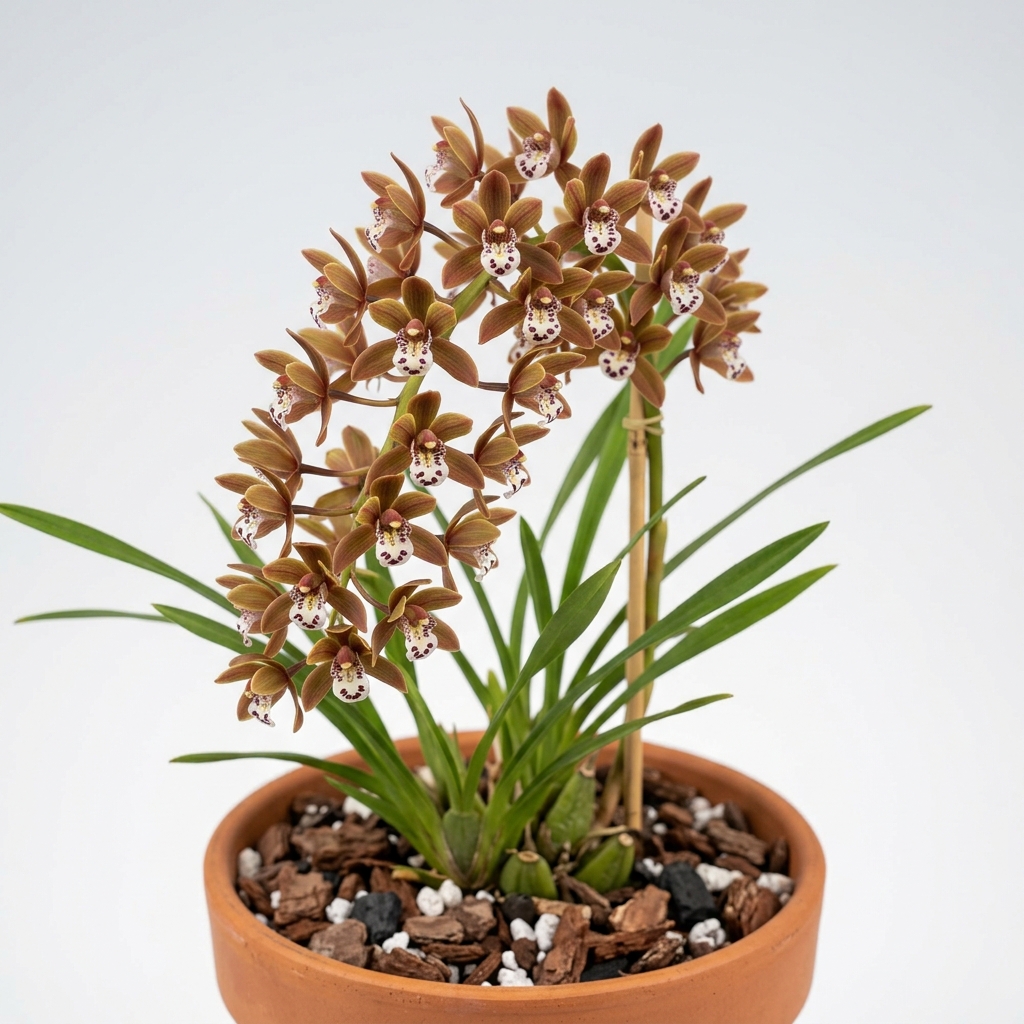
Cymbidium floribundum, commonly recognized as a premier miniature orchid species, is highly celebrated among collectors for its compact growth habit and exceptionally generous blooming displays. Unlike its larger, standard-sized relatives, this elegant orchid produces dense clusters of small, striking blossoms on upright or gently arching spikes, making it an ideal choice for growers with limited space. Its ability to thrive in intermediate conditions has cemented its reputation as a versatile and rewarding addition to indoor and greenhouse collections alike.
Horticulturists particularly value this species for its grassy, arching foliage and its historical significance in breeding lines, where it has passed down its desirable miniature stature to countless modern hybrids. Its ease of culture, combined with the sheer volume of flowers produced during its peak season, ensures that it remains a staple for both novice orchid enthusiasts and seasoned growers seeking a reliable, space-saving specimen.
💡 Did You Know?
Cymbidium floribundum belongs to the Cymbidium orchid group, where flower presentation is often just as important as . White-flowered cultivars are especially valued indoors because their pale blooms reflect well and pair easily with many home, greenhouse, and display settings.
🌿 Botanical Overview
Cymbidium floribundum is native to mountainous regions of East Asia, where it typically grows lithophytically on rocky crevices or epiphytically on tree trunks. This natural habitat equips the plant with a robust root system designed to cling to surfaces and absorb moisture from passing mists and rain. The pseudobulbs are relatively small and tightly clustered, giving rise to narrow, strap-like leaves that remain attractive year-round.
In cultivation, this growth habit translates to a plant that prefers a snug pot and a highly aerated medium. Its compact nature allows it to fit comfortably on windowsills, though it retains the vigorous growth characteristics of its larger wild ancestors. Understanding its montane origins is key to replicating the seasonal shifts in temperature and moisture that trigger its spectacular flowering cycle.
🌸 Flower Characteristics
The blossoms of Cymbidium floribundum are small but numerous, often numbering up to thirty or more on a single, well-developed inflorescence. The petals and sepals typically exhibit rich shades of reddish-brown, copper, or olive green, creating a warm, earthy color palette. This is beautifully contrasted by a prominent, three-lobed labellum, or lip, which is generally white or pale cream and adorned with striking purple or red spots and stripes.
The flowers are arranged closely along the spike, presenting a dense, column-like display that stands out. The individual blooms are long-lasting, often remaining pristine for several weeks under optimal conditions. The structural presentation of the spikes, which emerge from the base of the mature pseudobulbs, provides a balanced contrast to the upright, grassy foliage.
Fragrance & Bloom Profile
The fragrance of Cymbidium floribundum is often described as subtle or light, with some specimens exhibiting a faint, sweet scent during the warmest hours of the day. However, fragrance intensity can be highly variable and is not consistently documented as a dominant trait across all cultivated varieties. Growers should primarily value this orchid for its visual abundance rather than expecting a powerful ambient perfume.
The blooming profile is characterized by a synchronized opening of flowers along the spike, ensuring a high-impact visual display. Once the buds begin to swell, maintaining stable environmental conditions will help ensure that all flowers open successfully and remain fresh for the maximum duration of the bloom cycle.
Parentage & Hybrid Lineage
As a distinct species rather than a complex artificial hybrid, Cymbidium floribundum possesses a pure genetic lineage that has been meticulously documented by botanists. It is widely recognized under its historical synonym, Cymbidium pumilum, in older horticultural literature. This species has played a monumental role in orchid hybridization, serving as a primary parent for creating miniature and ultra-miniature Cymbidium grexes.
Because its genetic traits reliably introduce compact foliage, cold tolerance, and high flower counts, hybridizers frequently cross it with larger standard Cymbidiums. While individual cultivated selections or line-bred cultivars of the species exist, the fundamental care requirements remain closely aligned with the wild species’ natural adaptations.
🌱 Growing Conditions
To cultivate Cymbidium floribundum successfully, providing bright, indirect light is paramount. The foliage should ideally maintain a light, grassy green color; dark green leaves often indicate insufficient light, which can severely inhibit blooming. A east- or semi-shaded south-facing window is typically ideal for indoor cultivation, while a shaded greenhouse or patio works well outdoors in temperate climates.
💡 Care Tip
For best results, grow Cymbidium floribundum in bright filtered with steady and gentle airflow. Avoid placing the plant in harsh midday sun, but do not keep it in a dark corner; weak is one of the most common reasons cultivated orchids refuse to rebloom.
Temperature management is crucial for this species. It thrives in cool to intermediate conditions, preferring daytime temperatures between 70 and 80 degrees Fahrenheit, with a significant drop at night. Good air circulation is also essential to prevent stagnant air pockets around the dense foliage, which can encourage fungal pathogens.
Watering, Feeding & Potting Media
This orchid requires a potting medium that drains rapidly while retaining consistent moisture. A mixture of medium-grade fir bark, perlite, and a small amount of chopped sphagnum moss or charcoal works exceptionally well. The goal is to mimic the moist but highly aerated conditions of its natural lithophytic environment, preventing the roots from sitting in waterlogged media.
During the active growing season in spring and summer, water the plant thoroughly as soon as the medium approaches dryness. Apply a balanced, diluted orchid fertilizer every two to three weeks to support the development of new pseudobulbs. As growth slows in the autumn and winter, reduce watering frequency and suspend feeding to allow the plant to enter its natural rest period.
Blooming Season & Care Notes
Cymbidium floribundum typically initiates its blooming cycle in late winter to early spring. The critical trigger for flower spike development is a distinct drop in night temperatures during the autumn months, ideally down to 50 to 55 degrees Fahrenheit for several weeks. Without this seasonal temperature differential, the plant may continue to produce foliage but fail to initiate flower buds.
Once the flower spikes begin to emerge from the base of the pseudobulbs, keep the plant in a stable position and avoid rotating it excessively, which can cause the developing buds to orient themselves awkwardly. Repotting should be performed every two to three years, immediately after the blooming cycle has finished and before the summer heat sets in, using fresh media to prevent root suffocation.
⚠️ Common Issues
⚠️ Common Mistake
The most common mistake is by calendar instead of root and potting-media condition. Cymbidium roots need moisture and air at the same time, so constantly wet bark or sphagnum can lead to root loss even when the leaves still look healthy.
- Root Rot:
Caused by overwatering or a degraded, compacted potting medium that suffocates the root system. - Leaf Tip Burn: Often a result of excessive fertilizer salt buildup in the media or low humidity levels.
- Spider Mites:
These pests can proliferate in warm, dry environments, particularly targeting the undersides of the grassy leaves. - Bud Blast:
Sudden drops in humidity, extreme temperature fluctuations, or drafty locations can cause developing buds to yellow and drop before opening. - Fungal Leaf Spotting: Occurs when water sits on the foliage in cool conditions with poor air circulation.
❓ Frequently Asked Questions
How do I trigger blooming in Cymbidium floribundum?
To successfully trigger blooming, expose the plant to cooler night temperatures ranging from 50 to 55 degrees Fahrenheit during the autumn months. This temperature drop, combined with bright indirect light, is essential for stimulating the development of flower spikes from the base of the mature pseudobulbs.
What is the best potting mix for this orchid?
A well-draining, aerated medium is vital. A blend consisting of medium-grade fir bark, perlite, and a small portion of horticultural charcoal or sphagnum moss provides the ideal balance of moisture retention and rapid drainage, mimicking its natural lithophytic habitat.
How often should I water Cymbidium floribundum?
Water thoroughly when the potting medium is nearly dry but not completely dehydrated. During the active spring and summer growing season, this may be once or twice a week, whereas watering should be significantly reduced during the cooler winter rest period.
Can this orchid be grown under artificial LED lights?
Yes, Cymbidium floribundum can be grown successfully under high-output LED grow lights. Ensure the lights are kept at an appropriate distance to provide bright, indirect light levels without scorching the foliage, and maintain the necessary seasonal temperature drops.
⭐ Final Growing Notes
Cymbidium floribundum remains one of the most rewarding miniature orchids available to modern growers, offering an exceptional balance of compact size and prolific blooming capability. By respecting its natural montane heritage—specifically its requirements for bright light, excellent drainage, and a cool autumn rest—you can enjoy a spectacular annual display of delicate, richly colored blossoms that bring a touch of wild elegance into your growing space.
🌱 Propagation Tip
Propagation should be approached patiently. Most home growers should wait for natural keikis or divide only mature, healthy plants when the orchid type allows it. Never remove a young growth until it has strong roots and enough leaves to support itself away from the parent plant.
⭐ Expert Advice
Repot after flowering when fresh root tips begin to appear. This timing helps the plant anchor quickly into new bark or sphagnum and reduces stress, especially for orchids grown indoors where airflow, , and drying speed can change from season to season.




Leave A Comment