
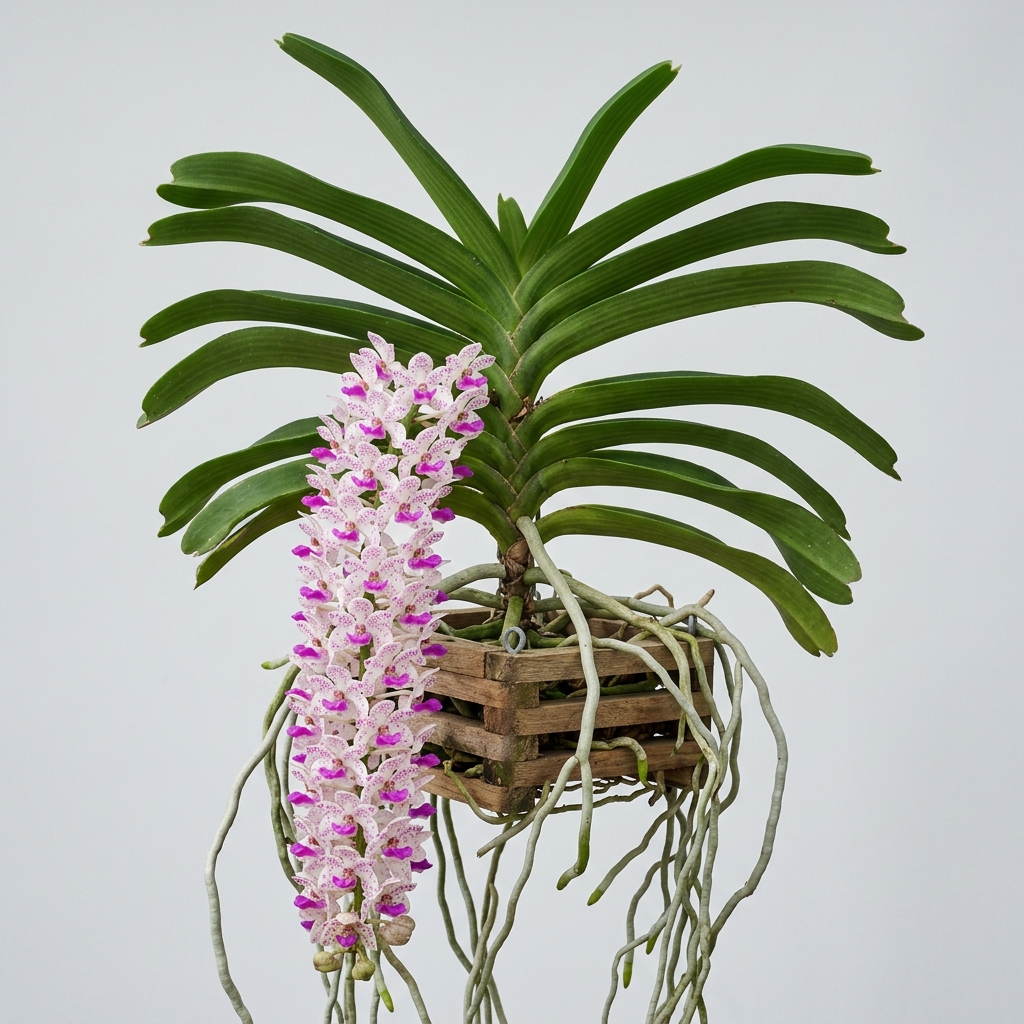
Rhynchostylis retusa, commonly known as the foxtail orchid, is a magnificent monopodial epiphytic species celebrated for its spectacular, densely packed cylindrical flower spikes. Native to the warm, humid regions of South and Southeast Asia, this orchid is highly prized by collectors for its dramatic blooming habit and robust growth. The cascading inflorescences, which can reach up to two feet in length, create a stunning visual display that resembles a fluffy, colorful tail.
Cultivating this species successfully requires replicating its tropical canopy home, characterized by bright, filtered light, high humidity, and exceptional air circulation. Unlike many terrestrial plants, Rhynchostylis retusa thrives when grown with its thick, fleshy aerial roots exposed, making it an ideal candidate for wooden baskets or mounts. For growers willing to meet its specific environmental needs, this orchid rewards patience with an unforgettable seasonal show of fragrant, long-lasting blossoms.
💡 Did You Know?
In its native habitats across India and Southeast Asia, Rhynchostylis retusa holds significant cultural importance. In the Indian state of Assam, the flower is known as the Kopou Phool and is a traditional symbol of love, fertility, and youth, often worn by young women in their hair during the spring Bihu festival celebrations.
🌿 Botanical Overview
Rhynchostylis retusa is a monopodial epiphyte, meaning it grows upward from a single stem rather than producing pseudobulbs. Its growth habit is characterized by thick, leathery, strap-like leaves that are deeply channeled and arranged in a neat, alternating fan pattern. The leaves are typically dark green, sometimes displaying faint lighter green longitudinal striping, and can reach lengths of up to twelve inches. This robust vegetative structure is designed to store moisture and withstand the seasonal dry spells of its native tropical habitats.
The root system of this species is exceptionally vigorous, producing thick, fleshy, silvery-grey aerial roots. These roots are covered in a specialized layer of dead cells called velamen, which acts like a sponge to rapidly absorb moisture and nutrients from the air and rain. In their natural environment, these roots anchor the plant firmly to the bark of host trees, fully exposed to the elements, which explains why traditional potting methods often lead to root decline in cultivation.
🌸 Flower Characteristics
The defining feature of Rhynchostylis retusa is its spectacular inflorescence. The flowers are borne on a pendulous, cylindrical raceme that can hold over one hundred individual blooms, tightly packed together to create the signature foxtail appearance. Each individual flower is relatively small, typically measuring about three-quarters of an inch to one inch in diameter, but the sheer volume of blooms creates an incredibly dense and dramatic display.
The sepals and petals are usually white or pale cream, adorned with delicate, variable spots of pink, purple, or magenta. The lip, or labellum, is typically a solid, vibrant shade of magenta or purplish-pink, pointing downward and providing a beautiful contrast to the spotted petals. The flowers open nearly simultaneously along the spike, resulting in a sudden and breathtaking burst of color that can last for several weeks under optimal conditions.
Fragrance & Bloom Profile
In addition to its visual appeal, Rhynchostylis retusa is highly celebrated for its intense fragrance. The blooms emit a potent, sweet, and slightly spicy scent with distinct citrus undertones. This fragrance is typically most pronounced during the warm daylight hours, filling the growing space with a rich, tropical aroma that attracts natural pollinators in the wild.
The blooming cycle is highly seasonal, with flowers typically emerging in the late spring or early summer months, often triggered by the transition into the monsoonal wet season. While individual flowers are somewhat delicate, the collective spike remains attractive for two to four weeks, provided the plant is kept in a stable environment free from extreme drafts or sudden temperature drops.
Parentage & Hybrid Lineage
As a naturally occurring species rather than a man-made hybrid, Rhynchostylis retusa represents a pure genetic line found throughout the wild canopies of Asia. Because of its desirable traits—namely its compact flower density, pendulous spike habit, and intense fragrance—it has been widely used by orchid breeders to create intergeneric hybrids. It is a key parent in many popular Vandaceous crosses, contributing its unique inflorescence shape to genera such as Vandachostylis and Rhynchocentrum.
While various regional color forms and select cultivars exist within the species—ranging from nearly pure white forms to deeply saturated pink varieties—these variations are generally considered natural geographical adaptations rather than registered artificial cultivars. When purchasing this orchid, growers should look for reputable nursery stock to ensure the plant has been propagated ethically rather than collected from the wild.
🌱 Growing Conditions
To cultivate Rhynchostylis retusa successfully, growers must provide conditions that mimic the warm, humid, and airy environment of a tropical forest canopy. Bright, filtered light is essential for promoting healthy growth and regular blooming. While the plant enjoys high light levels similar to those preferred by Cattleya orchids, direct midday sunlight should be avoided, as it can easily scorch the thick leaves. A location with morning sun and afternoon shade, or a greenhouse with 50% to 60% shade cloth, is generally ideal.
💡 Care Tip
To keep your foxtail orchid thriving, focus on air movement. Hanging the plant in a wooden basket near an open window or a gentle fan prevents moisture from pooling in the leaf crown, which is a primary cause of crown rot.
Temperature management is equally critical. This species is a warm-to-hot grower, thriving in daytime temperatures between 75°F and 90°F (24°C to 32°C), with a slight drop at night to no lower than 60°F to 65°F (15°C to 18°C). High relative humidity, ideally between 70% and 80%, must be maintained year-round. To prevent stagnant air from causing fungal or bacterial rot, constant, gentle air movement from a fan is absolutely necessary, especially in enclosed growing areas.
Watering, Feeding & Potting Media
Watering practices for Rhynchostylis retusa must align with its bare-root nature. During the active growing season in spring and summer, the plant requires frequent, often daily, watering. The thick aerial roots should be thoroughly soaked until they turn a vibrant green, indicating they have absorbed maximum moisture. However, because the roots are highly susceptible to suffocation and rot, they must be allowed to dry completely within a few hours of watering.
Because of this rapid wet-dry cycle, the preferred potting method is to grow the orchid completely bare-root in an open wooden slat basket, or mounted on a slab of cork bark or tree fern. If grown in a pot, the medium must be extremely coarse, consisting of large chunks of charcoal, volcanic rock, or oversized fir bark. Feeding should be done weekly during the growing season using a balanced, water-soluble orchid fertilizer diluted to one-quarter or one-half strength, always applied after a thorough watering to avoid burning the dry roots.
Blooming Season & Care Notes
The primary blooming season for Rhynchostylis retusa occurs once a year, typically in late spring or early summer. The initiation of flower spikes is often influenced by seasonal changes in light intensity and a slight drop in nighttime temperatures during the late winter. Once the green, pointed flower spikes begin to emerge from the leaf axils, it is crucial to avoid changing the plant’s orientation to the light source, as this can cause the developing spike to twist or grow irregularly.
During the blooming period, keep water off the developing buds and open flowers to prevent fungal spotting and premature bloom drop. After the flowers have completely faded, the dry flower spike should be cut back close to the main stem using sterilized shears. Repotting or remounting is rarely needed and should only be performed when the wooden basket begins to decay, or when the plant has completely outgrown its support. The best time for this is immediately after flowering, when new root tips are actively emerging.
⚠️ Common Issues
⚠️ Common Mistake
The most common mistake growers make is potting this orchid in standard, dense potting soil or fine bark mixes. This suffocates the thick, air-loving roots, leading to rapid root rot. Always grow this species bare-root in open baskets or on mounts.
- Root Rot:
Caused by stagnant water, lack of airflow, or using a potting medium that retains moisture for too long. Roots will turn brown, mushy, and hollow. - Leaf Spotting: Fungal or bacterial pathogens can cause black or brown spots on the leaves, often due to water sitting on the foliage overnight or poor air circulation.
- Bud Blast:
The sudden yellowing and dropping of flower buds before they open, typically triggered by rapid changes in temperature, low humidity, or drafty conditions. - Dehydration:
Indicated by wrinkled, leathery leaves and shriveled roots, usually resulting from insufficient watering frequency or low ambient humidity. - Pests:
Scale, mealybugs, and spider mites can occasionally infest the tight crevices between the leaves. Treat promptly with insecticidal soap or horticultural oil.
❓ Frequently Asked Questions
How do I encourage my Rhynchostylis retusa to bloom?
To promote blooming, ensure your orchid receives bright, filtered light throughout the year and a slight drop in nighttime temperatures during the winter months. Maintaining high humidity and consistent, weak fertilization during the active growing season is also essential for building the energy required to produce its massive flower spikes.
Can I grow this orchid indoors without a greenhouse?
Yes, but it can be challenging due to its high humidity and light requirements. Indoor growers often succeed by placing the orchid in a bright south or east-facing window, using a humidifier nearby, and misting the bare roots daily. Growing the plant in a slatted basket hung over a humidity tray can also help maintain moisture around the roots.
Why are the leaves on my foxtail orchid turning yellow?
Yellowing leaves can indicate several issues. If the oldest bottom leaves turn yellow and drop slowly over time, it is often a natural part of the plant’s aging process. However, rapid yellowing of multiple leaves can indicate overwatering, root rot, insufficient light, or exposure to cold drafts.
How often should I water a bare-root Rhynchostylis retusa?
In warm weather, bare-root plants typically need to be watered daily, or even twice a day if grown in very dry conditions. The roots should be thoroughly soaked until they turn green, but they must dry out completely within a few hours. In the cooler winter months, reduce watering frequency to every few days, allowing the plant a slight rest period.
⭐ Final Growing Notes
While Rhynchostylis retusa demands more attention to humidity and watering than standard grocery-store orchids, the reward of its spectacular, fragrant foxtail blooms makes it a crown jewel of any tropical plant collection. By focusing on excellent air movement, bright filtered light, and a growing setup that allows its magnificent aerial roots to breathe, you can enjoy the dramatic seasonal display of this iconic species for many years to come.
🌱 Propagation Tip
Monopodial orchids like Rhynchostylis retusa do not produce pseudobulbs for easy division. Propagation is typically achieved by waiting for the plant to naturally produce a basal offset, or keiki. Once the keiki has developed several strong roots of its own, it can be carefully sliced from the parent plant using a sterile blade.
⭐ Expert Advice
If you struggle to maintain high indoors, try wrapping a very loose layer of high-quality long-fiber sphagnum moss around the roots inside a wooden basket. This retains a small pocket of without suffocating the roots, making transition to home environments much easier.




Leave A Comment