
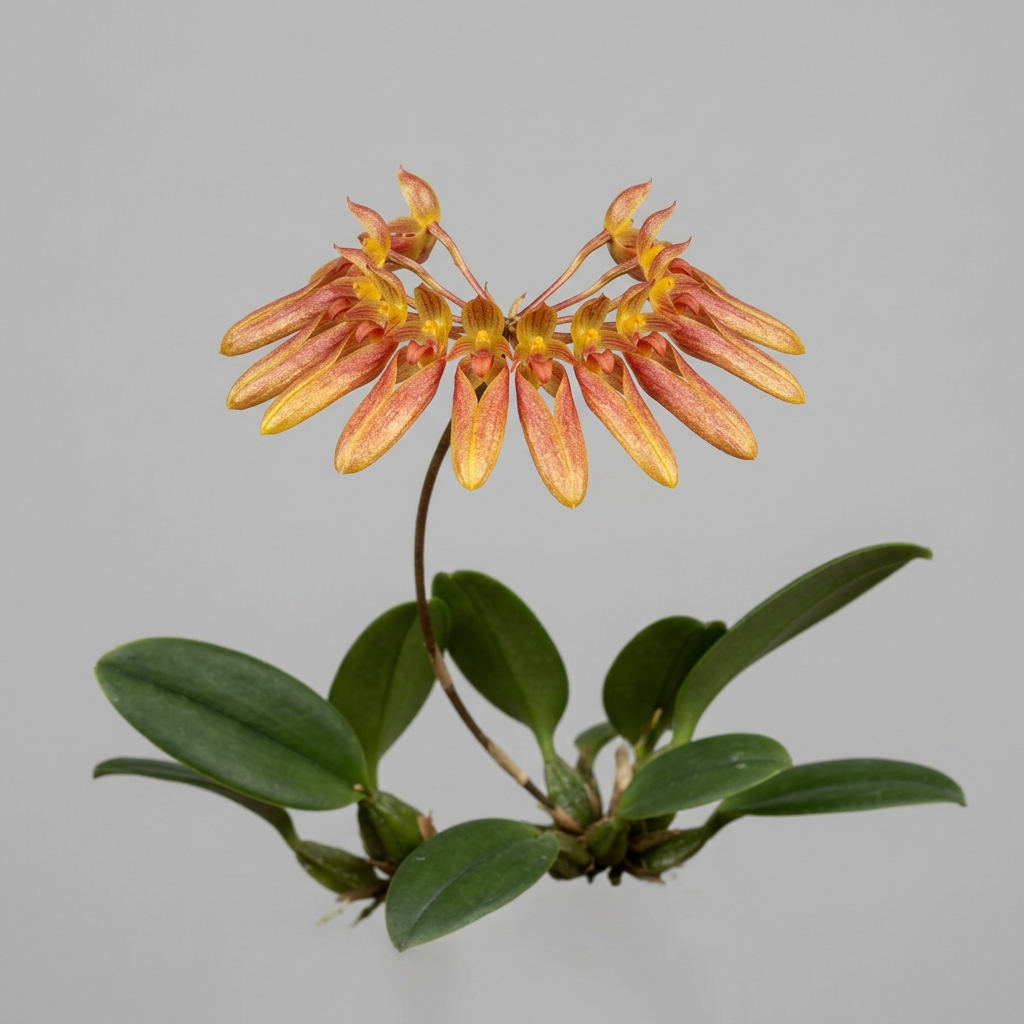
Bulbophyllum Auratum is a captivating miniature epiphytic orchid highly prized by collectors for its unique, fan-like umbrella of golden-yellow to reddish-orange flowers. Belonging to the vast and diverse Bulbophyllum genus, this species—often classified under the Cirrhopetalum section—is native to the warm, humid rainforests of Southeast Asia. Its compact growth habit and intriguing floral morphology make it an exceptional choice for orchid enthusiasts looking to add a touch of exotic elegance to their indoor collections or terrariums.
Unlike many larger orchid genera, Bulbophyllum Auratum thrives in moist, high-humidity environments and is typically grown on mounts or in shallow baskets to accommodate its creeping rhizome. The delicate, shimmering blooms appear in clusters that resemble miniature fans, fluttering with the slightest air movement to attract specialized pollinators. For growers willing to meet its specific moisture and temperature requirements, this orchid offers a rewarding and visually stunning display.
💡 Did You Know?
The fan-like arrangement of Bulbophyllum Auratum flowers is an evolutionary adaptation designed to mimic a larger floral target for pollinators. The tiny, hinged lip of each individual bloom is so delicately balanced that even a gentle breeze causes it to flutter, attracting small flies and gnats that act as the primary pollinators in its native rainforest habitat.
🌿 Botanical Overview
Bulbophyllum Auratum is characterized by its creeping growth habit, featuring small, ovoid pseudobulbs spaced along a thin, wiry rhizome. Each pseudobulb produces a single, leathery, dark green leaf that is oblong to elliptical in shape. This compact vegetative structure allows the plant to spread horizontally, quickly colonizing mounting plaques or shallow baskets when provided with optimal growing conditions.
In its natural habitat, this epiphyte grows on moss-covered tree trunks and branches in low-elevation, humid forests. This environment provides continuous air circulation and high ambient humidity, which the plant relies on to absorb moisture through its fine, shallow root system. Understanding this natural niche is key to successfully cultivating Bulbophyllum Auratum in a home or greenhouse setting.
🌸 Flower Characteristics
The inflorescence of Bulbophyllum Auratum is a striking example of the Cirrhopetalum section’s unique floral architecture. Multiple small flowers radiate from the tip of a slender, arching spike, forming a semi-circular umbel or fan. The lateral sepals are significantly elongated and fused along their inner margins, creating a prominent, slipper-like structure that dominates the bloom’s appearance. The tiny, hinged lip or labellum sits at the center of the fan, designed to pivot and tip forward under the weight of visiting insects, facilitating pollination.
Fragrance & Bloom Profile
The fragrance of Bulbophyllum Auratum is generally described as mild and is not as intensely pungent as some of its larger relatives in the Bulbophyllum genus. Some growers report a faint, sweet, or slightly fruity scent, while others note a subtle, musty aroma that is only detectable at close range. The blooms typically last for one to two weeks, depending on temperature and humidity levels, with the entire fan opening nearly simultaneously to create a brief but spectacular floral event.
Parentage & Hybrid Lineage
Bulbophyllum Auratum is a naturally occurring species rather than a man-made hybrid, and its lineage is rooted in the wild populations of Southeast Asia, including Malaysia, Thailand, Sumatra, Borneo, and the Philippines. While it is occasionally used in hybridization programs to introduce its compact growth habit and fan-shaped inflorescence to new grexes, most specimens found in cultivation are true species selections. Its taxonomic classification has historically shifted between Bulbophyllum and Cirrhopetalum, reflecting ongoing botanical debates regarding the division of this massive orchid group.
🌱 Growing Conditions
To cultivate Bulbophyllum Auratum successfully, growers must replicate its warm, humid forest canopy home. It prefers moderate, filtered light, similar to the conditions favored by Phalaenopsis orchids; direct, intense sunlight will quickly scorch the thin leaves. Temperatures should remain warm, ideally ranging from 70°F to 85°F (21°C to 29°C) during the day, with a slight drop at night. High humidity of at least 70% is crucial, accompanied by constant, gentle air movement to prevent stagnant air from encouraging fungal pathogens.
💡 Care Tip
To maintain the high this orchid craves without risking root rot, place the pot or mount over a tray filled with water and pebbles. Ensure the bottom of the container does not touch the water directly, and use a small fan nearby to keep the air gently circulating around the foliage.
Watering, Feeding & Potting Media
This orchid does not possess large water-storing pseudobulbs, meaning it has a low tolerance for prolonged dry spells. The potting medium should remain consistently damp but never waterlogged. High-quality New Zealand sphagnum moss or a fine-grade bark mix works exceptionally well in shallow pots or net baskets. Alternatively, mounting the plant on cork bark or tree fern plaques wrapped with a pad of moss allows the creeping rhizome to spread naturally, though mounted plants require daily watering. Feed weekly with a highly diluted, balanced orchid fertilizer during the active growing season, flushing the media regularly with pure water to prevent salt buildup.
Blooming Season & Care Notes
Blooming typically occurs in the late summer or autumn, triggered by subtle seasonal shifts in light and temperature. Once the flower spikes begin to emerge from the base of the mature pseudobulbs, avoid changing the plant’s orientation or environmental conditions, as sudden drafts or drops in humidity can cause the developing buds to blast. After the blooming cycle is complete, continue to provide consistent moisture and warmth to support the development of new vegetative leads, which will form the pseudobulbs for the following year’s flowers. Repotting or dividing should only be performed when new root growth is active, typically in the spring.
⚠️ Common Issues
⚠️ Common Mistake
A common mistake is allowing the potting medium to dry out completely between waterings. Unlike Cattleyas or Dendrobiums, this species lacks large water-storing pseudobulbs and has very fine roots that can die back rapidly if left dry for even a couple of days, leading to severe plant stress.
- Root rot: Caused by compacted, poorly draining media or overwatering, leading to the rapid decline of the shallow root system.
- Dehydration: Indicated by shriveled pseudobulbs and wrinkled leaves, often due to underwatering or insufficient ambient humidity.
- Leaf spotting: Fungal or bacterial spots can develop if water sits on the foliage overnight without adequate air circulation.
- Bud blast: The sudden drying and dropping of unopened flower buds, usually triggered by low humidity, dry drafts, or sudden temperature fluctuations.
- Pests: Mealybugs and spider mites can occasionally hide in the crevices of the creeping rhizomes or under the leaves; treat promptly with insecticidal soap or neem oil.
❓ Frequently Asked Questions
How often should I water Bulbophyllum Auratum?
Bulbophyllum Auratum should be watered frequently to keep the growing medium consistently moist but not soggy. Mounted specimens typically require daily watering, while plants in pots or baskets may need watering every two to three days, depending on your home’s humidity and temperature.
Can I grow Bulbophyllum Auratum under artificial LED lights?
Yes, this orchid adapts very well to indoor cultivation under LED grow lights. Position the plant under moderate-intensity lights, ensuring it receives about 12 to 14 hours of light daily, and monitor the leaves to ensure they do not turn yellow or red, which indicates excessive light.
Why are the pseudobulbs on my orchid shriveling?
Shriveling pseudobulbs are a classic sign of dehydration. This can be caused by underwatering, low ambient humidity, or a compromised root system that can no longer absorb water due to root rot. Check the roots and adjust your watering schedule or humidity levels accordingly.
Is Bulbophyllum Auratum suitable for a terrarium or vivarium?
Yes, its miniature size, creeping growth habit, and high humidity requirements make Bulbophyllum Auratum an excellent candidate for tropical terrariums. Ensure the enclosure has adequate ventilation or internal fans to maintain the necessary air movement and prevent stagnant conditions.
⭐ Final Growing Notes
Bulbophyllum Auratum is a rewarding and visually fascinating orchid that brings the charm of Southeast Asian rainforests into the home. While its high humidity and consistent moisture requirements demand more attention than standard houseplants, its spectacular, fan-like golden blooms make every effort worthwhile. By providing gentle air movement, filtered light, and a stable environment, growers can enjoy the unique beauty of this miniature botanical treasure for many years to come.
⚕️ Health, Safety & Edibility
Understanding how a plant interacts with people, pets, and the surrounding environment is part of responsible cultivation. This section provides conservative, general guidance and should not replace professional medical or veterinary advice.
Human Safety: Bulbophyllum auratum is generally regarded as non-toxic to humans. However, it is an ornamental plant and should not be intentionally consumed. Young children should be supervised around all plants.
Pet Safety: This orchid species is widely considered non-toxic to dogs and cats. Even so, chewing or ingesting plant material may cause mild gastrointestinal upset in some pets.
Edibility: Like most ornamental orchids, Bulbophyllum auratum is not grown as a food plant and is not intended for human or animal consumption.
Skin Contact: Normal handling is not known to cause skin irritation in most people. Individuals with sensitive skin may prefer to wear gloves when repotting or dividing plants, as a general gardening precaution.
🌱 Propagation Tip
Propagate Bulbophyllum Auratum by division during the spring when new root growth is visible. Carefully cut the creeping rhizome, ensuring that each new division contains at least three to four healthy pseudobulbs with active roots, and secure the division firmly to its new mount or basket to prevent movement.
⭐ Expert Advice
For maximum bloom production, grow this orchid on a cork mount wrapped in high-quality sphagnum moss. The mounted culture allows the rhizome to creep freely in all directions, resulting in a larger specimen with multiple growth points that can produce several flower spikes simultaneously during the blooming season.




Leave A Comment