
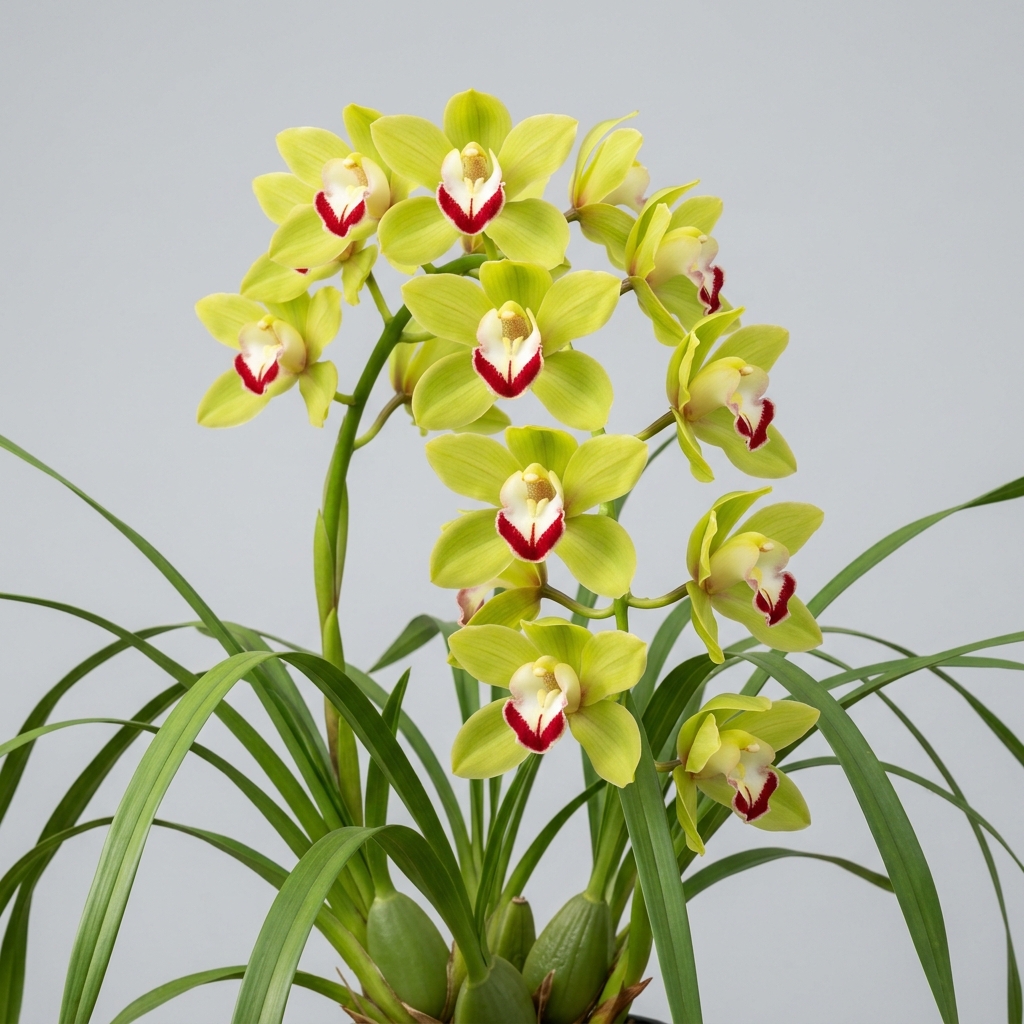
Cymbidium Lowianum is a highly celebrated cool-growing orchid species renowned for its dramatic, arching flower spikes and striking color contrast. Native to the high-altitude forests of Southeast Asia, this robust epiphyte or lithophyte has been a cornerstone of Cymbidium hybridization for over a century. Growers prize it for its elegant, strap-like foliage and its ability to produce spectacular, long-lasting floral displays during the late winter and spring months.
Cultivating this classic orchid successfully requires an understanding of its seasonal rhythms and temperature preferences. Unlike many tropical orchids, Cymbidium Lowianum thrives in cooler conditions and demands a distinct drop in nighttime temperatures to trigger its impressive blooming cycle. Its resilience and majestic growth habit make it an excellent choice for dedicated hobbyists with cool greenhouses or suitable outdoor microclimates.
💡 Did You Know?
Cymbidium Lowianum was first introduced to Western horticulture in the late nineteenth century after being collected in Myanmar. Its striking red V-shaped lip marking was so distinctive that early botanists and growers used it as a primary genetic marker to track the parentage of early cool-growing hybrids, establishing it as a cornerstone of modern orchid breeding.
🌿 Botanical Overview
Cymbidium Lowianum is characterized by its large, ovoid pseudobulbs that are laterally compressed and enveloped by the bases of its leaves. The leaves are long, linear, and arching, often reaching up to three feet in length, creating a lush, grassy clump even when the plant is not in bloom. This vegetative structure allows the orchid to store water and nutrients, supporting its massive seasonal flowering effort.
In its natural habitat, this species grows as an epiphyte on mossy tree branches or occasionally as a lithophyte on damp rocks in montane forests. These environments provide excellent drainage, constant air movement, and high humidity. Replicating these conditions in cultivation is key to maintaining a healthy root system and encouraging robust vegetative growth year after year.
🌸 Flower Characteristics
The flowers of Cymbidium Lowianum are famously striking, measuring up to four inches across and arranged along a stout, arching inflorescence that can reach up to four feet in length. Each spike can carry between fifteen and forty individual blooms, presenting a magnificent cascade. The sepals and petals are typically a translucent apple-green to yellow-green, often marked with faint brownish veins that add depth to their appearance.
The defining feature of the bloom is its prominent, trilobed lip or labellum. The midlobe of the lip features a brilliant, velvety, V-shaped band of rich crimson or brick-red, contrasted sharply against a white or pale yellow background. This bold coloration acts as a visual guide for natural pollinators and remains one of the most recognizable features of the species.
Fragrance & Bloom Profile
While some growers report a faint, delicate scent under warm, sunny conditions, Cymbidium Lowianum is generally not grown for its fragrance. Its primary appeal lies in its visual grandeur and the exceptional longevity of its flowers. Individual blooms can remain pristine on the plant for eight to twelve weeks, provided they are kept in cool, stable conditions.
The blooming process is a slow and rewarding spectacle. The flower spikes begin to emerge from the base of the mature pseudobulbs in late autumn, developing slowly over several months before opening in late winter or early spring. This slow development ensures that the floral tissues are robust and capable of enduring cool seasonal drafts.
Parentage & Hybrid Lineage
As a true species, Cymbidium Lowianum does not have hybrid parentage, but its genetic legacy is vast. It has been widely used as a primary parent in orchid breeding since the late nineteenth century, contributing its cold tolerance, high flower count, and distinctive red-lipped pattern to thousands of modern Cymbidium hybrids.
Its most famous primary hybrid, Cymbidium Lowio-grandiflorum, demonstrated the species’ ability to pass on its vigorous growth habit and arching spike presentation. When researching historical records, growers will find that many of today’s standard green and red-lipped Cymbidium cultivars trace their lineage directly back to wild-collected specimens of this enduring species.
🌱 Growing Conditions
To cultivate Cymbidium Lowianum successfully, growers must provide bright, filtered light. While it can tolerate some direct morning sun, hot afternoon sunlight will scorch the long leaves. A light level similar to that required by Cattleyas—around 3,000 to 4,000 foot-candles—is ideal for promoting strong pseudobulb development and later flowering.
💡 Care Tip
To ensure successful blooming, place your orchid outdoors in a sheltered, shaded spot during the late summer and early autumn. The natural drop in nighttime temperatures is the most reliable trigger for flower spike initiation.
Temperature control is perhaps the most critical factor. During the summer, daytime temperatures can rise to 80 degrees Fahrenheit, but nighttime temperatures should ideally drop into the 50s. In the autumn, a distinct drop in night temperatures to around 45 to 50 degrees Fahrenheit for several weeks is necessary to initiate the flower spikes. Without this cool period, the plant may produce only vegetative growth.
Watering, Feeding & Potting Media
During the active spring and summer growing season, Cymbidium Lowianum requires frequent and thorough watering. The potting medium should be kept consistently moist but never waterlogged. As winter approaches and growth slows, watering should be reduced significantly, allowing the medium to dry out slightly between waterings, though it should never be allowed to dry out completely.
A balanced, water-soluble orchid fertilizer should be applied weekly at half-strength during the active growing phase. Many growers prefer a high-nitrogen formula in spring to encourage leaf growth, shifting to a low-nitrogen, high-phosphorus formula in late summer to support spike initiation. The potting medium must be highly porous and free-draining; a mix of medium-grade fir bark, perlite, and horticultural charcoal works exceptionally well.
Blooming Season & Care Notes
The primary blooming season spans from February through May. Once the flower spikes begin to emerge, they should be supported with sturdy stakes to prevent them from bending or breaking under the weight of the heavy blooms. Staking should be done gradually as the spike grows, keeping the tie points loose to allow for natural movement.
Repotting should only be performed every two to three years, immediately after the flowering cycle has finished and new growth begins to emerge. Cymbidiums prefer to be slightly pot-bound, and unnecessary root disturbance can delay the next blooming cycle. When repotting, remove any dead roots and backbulbs that are completely shriveled and yellowed.
⚠️ Common Issues
⚠️ Common Mistake
A frequent error is keeping this orchid too warm during the autumn months. Without a consistent drop in night temperatures below fifty-five degrees Fahrenheit, the plant will continue to produce vegetative growth instead of developing flower spikes.
- Root rot: Caused by overwatering or a compacted, decomposing potting medium that prevents oxygen from reaching the roots.
- Leaf tip burn: Often a sign of excessive fertilizer salt buildup in the medium or insufficient humidity. Flush the pot thoroughly with pure water.
- Bud blast: Sudden dropping of flower buds, usually triggered by abrupt temperature fluctuations, drafty conditions, or low humidity.
- Spider mites: These pests thrive in warm, dry environments and can quickly infest the undersides of the long, strap-like leaves.
- Scale insects: Frequently found hiding under the dry sheaths at the base of the pseudobulbs or along the flower spikes.
❓ Frequently Asked Questions
Why is my Cymbidium Lowianum not blooming?
The most common reason for a lack of blooms is insufficient light or a failure to provide a cool temperature drop in autumn. Ensure the plant receives bright, filtered light throughout the summer and experiences night temperatures around 45 to 50 degrees Fahrenheit for several weeks in the fall to trigger spike development.
How often should I repot this orchid?
Repotting should be done every two to three years, or when the potting medium begins to break down and retain too much moisture. Always perform this task in late spring, immediately after the flowering season has ended, to allow the new growths to establish their own root systems before winter.
Can Cymbidium Lowianum be grown outdoors?
Yes, in temperate climates with mild winters and cool summers, such as coastal California, this orchid thrives outdoors year-round. It can tolerate light frosts down to 30 degrees Fahrenheit for brief periods, but must be protected from freezing temperatures and intense, direct afternoon sun.
What is the best potting mix for this species?
A well-draining, moisture-retentive mix is essential. A combination of medium-grade fir bark, coarse perlite, and horticultural charcoal is highly recommended. Some growers add a small amount of peat moss or coco coir to help retain moisture without compromising aeration.
⭐ Final Growing Notes
Cymbidium Lowianum remains a classic and rewarding choice for orchid enthusiasts who can accommodate its cool-growing requirements and generous size. By providing bright light, cool autumn nights, and consistent moisture during the growing season, you will be rewarded with a spectacular annual display of long-lasting, green and crimson flowers that bring vibrant life to the late-winter greenhouse.
⚕️ Health, Safety & Edibility
Understanding how a plant interacts with people, pets, and the surrounding environment is part of responsible cultivation. This section uses conservative, general guidance and does not replace professional medical or veterinary advice.
Human Safety: Cymbidium Lowianum is generally considered non-toxic to humans, though handling the.
Pet Safety: This orchid species is widely reported to be non-toxic to dogs and cats, making it a.
Edibility: Like most ornamental orchids, this plant is not intended for human or animal.
🌱 Propagation Tip
When dividing a mature specimen during repotting, ensure each new division has at least three active, healthy pseudobulbs and a strong lead growth. Smaller divisions often struggle to establish and may take several years to bloom again.
⭐ Expert Advice
Keep a close eye on the potting medium's structural integrity. Because Cymbidiums require frequent during their active growth phase, organic media like fir bark can decompose rapidly, leading to compacted, anaerobic conditions that suffocate roots.




Leave A Comment