
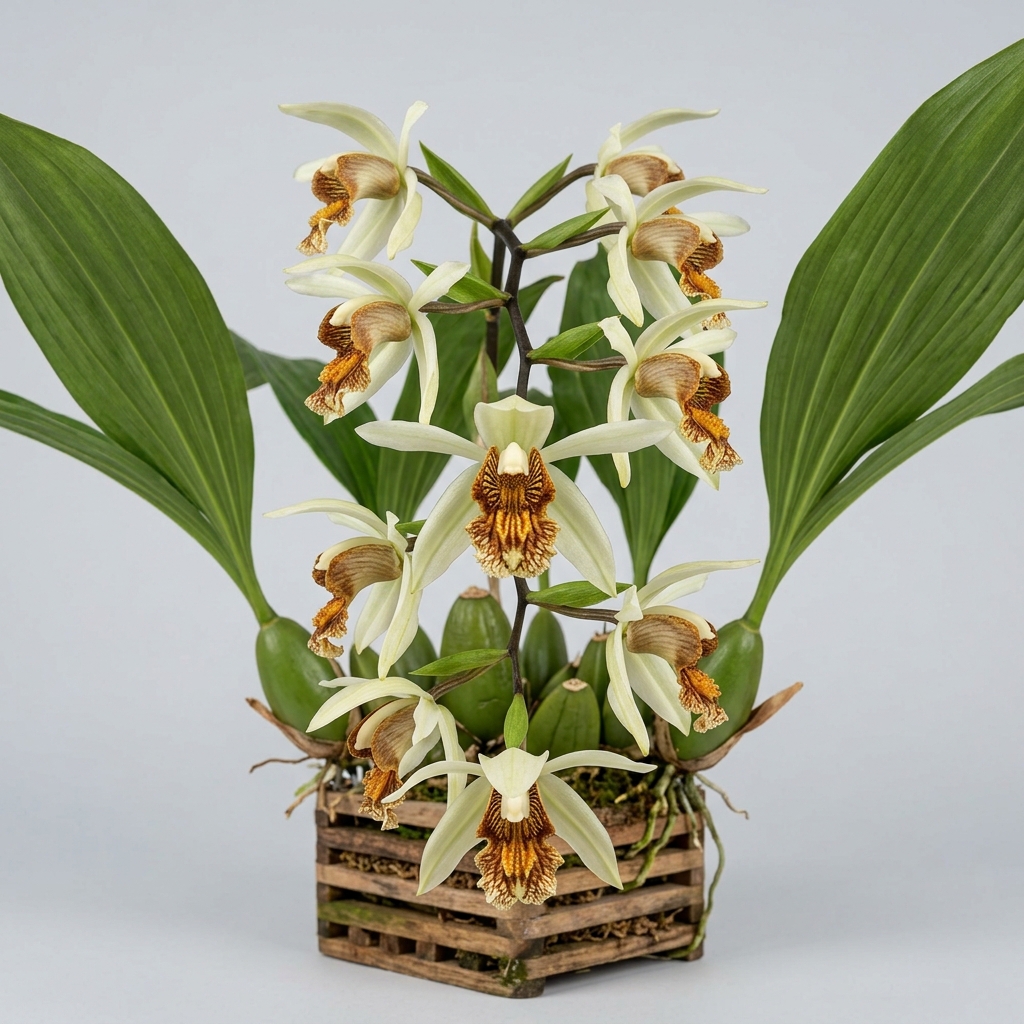
Coelogyne Asperata, commonly known as the rough-lipped Coelogyne, is a robust and highly celebrated orchid species native to the warm, humid rainforests of Southeast Asia. Renowned for its dramatic growth habit and spectacular arching flower spikes, this species produces large, fragrant blooms that command attention in any collection. Orchid enthusiasts prize this plant for its vigorous nature and the striking contrast between its pale sepals and its intricately textured, richly colored lip.
Cultivating this species successfully requires an understanding of its tropical lowland origins, where it thrives in high humidity and consistent warmth. While it can grow into a massive specimen over time, its rewarding floral display and sweet, spicy fragrance make it a highly desirable addition for intermediate to advanced growers. Providing the correct balance of moisture, light, and airflow is key to unlocking the full potential of this magnificent orchid.
💡 Did You Know?
The specific epithet asperata comes from the Latin word for rough or uneven, directly referencing the unique, heavily textured ridges on the flower's lip. This distinctive feature helps guide pollinators in the dense, dim understory of its native Southeast Asian rainforests.
🌿 Botanical Overview
Coelogyne Asperata is a large-statured, sympodial orchid characterized by its prominent, fleshy pseudobulbs. These pseudobulbs are typically ribbed, light green, and can reach impressive sizes, often growing close together to form dense, heavy clumps. Each pseudobulb is topped by a pair of large, lanceolate, deeply veined leaves that remain attractive throughout the year, even when the plant is not in bloom.
In its natural habitat, this species grows primarily as an epiphyte on large tree branches or occasionally as a lithophyte on moss-covered rocks in lowland rainforests. Its extensive root system is adapted to absorbing moisture rapidly from tropical downpours while benefiting from the high airflow found in the forest canopy. Because of its potential to reach substantial dimensions, growers must plan for adequate space as the plant matures.
🌸 Flower Characteristics
The inflorescence of Coelogyne Asperata is a spectacular, arching to pendulous raceme that emerges from the center of new growth. Each flower spike can carry up to twenty or more individual blooms, creating a cascading waterfall effect. The flowers themselves are relatively large, often measuring three to four inches in diameter, and feature a striking structural elegance.
The sepals and petals are typically a pale cream, ivory, or soft greenish-yellow, providing a clean backdrop for the highly detailed labellum. The lip, or labellum, is the defining feature of the species, covered in prominent, fleshy, wart-like ridges that give it a rough texture. This textured lip is beautifully marked with radiating veins of deep brown, rust-orange, and bright yellow, serving as a visual guide for natural pollinators.
Fragrance & Bloom Profile
One of the most compelling reasons to cultivate Coelogyne Asperata is its powerful and complex fragrance. As the flowers open, they release a strong, sweet scent that is often described as a blend of citrus, spice, and licorice. The aroma is most intense during the morning hours and can easily fill an entire greenhouse or growing room.
The blooms open nearly simultaneously along the spike, creating an immediate and dramatic visual impact. While individual flowers are somewhat delicate and may last only two to three weeks, the sheer volume of blooms and the intensity of the fragrance make the flowering period a highly anticipated annual event for growers.
Parentage & Hybrid Lineage
As a naturally occurring species, Coelogyne Asperata does not have a hybrid parentage. It is a distinct species within the genus Coelogyne, which comprises over two hundred species distributed across Southeast Asia and the Pacific Islands. In horticultural circles, it is recognized under its accepted botanical name, though some older references may classify it under historical synonyms.
While primarily grown as a species, Coelogyne Asperata has occasionally been used in hybridization programs to introduce its large flower size, robust growth habit, and intense fragrance to new grexes. However, registered hybrids utilizing this species remain relatively uncommon compared to other orchid genera, making pure specimens of Coelogyne Asperata highly valued by species collectors.
🌱 Growing Conditions
To cultivate Coelogyne Asperata successfully, growers must replicate its warm, tropical lowland environment. This orchid thrives in warm to hot temperatures, ideally ranging from 75°F to 85°F (24°C to 29°C) during the day, with a mild drop at night. It does not tolerate cold temperatures well, and exposure to temperatures below 55°F (13°C) can cause significant stress or damage to the foliage.
💡 Care Tip
Ensure excellent air circulation around your Coelogyne Asperata, especially when maintaining the high levels it prefers. Good airflow prevents fungal pathogens from settling on the large leaves and delicate emerging flower spikes.
Light levels should be bright but indirect. Filtered sunlight, such as that provided by a shade cloth or a sheer curtain, is ideal. Direct midday sun will quickly scorch the large, thin leaves. High humidity is crucial for this species, with a target of 60% to 80% year-round. Strong air movement must be maintained to prevent stagnant air, which can lead to fungal infections in high-humidity environments.
Watering, Feeding & Potting Media
Coelogyne Asperata requires a generous watering schedule, particularly during its active growth phase in the spring and summer. The potting medium should be kept consistently moist but never waterlogged. As the pseudobulbs mature in the autumn, watering can be slightly reduced, but the plant should never be allowed to dry out completely for extended periods.
A well-draining, chunky potting mix is essential to protect the roots from rot. A combination of medium-grade fir bark, perlite, and charcoal works well, often topped with a layer of sphagnum moss to retain humidity. Due to its arching growth habit, many growers prefer to cultivate this species in open wooden baskets or shallow, wide pots. Feed the plant weekly with a diluted, balanced orchid fertilizer during the growing season, flushing the pot with pure water periodically to prevent salt buildup.
Blooming Season & Care Notes
The primary blooming season for Coelogyne Asperata occurs in late spring and early summer, coinciding with the emergence of new vegetative growth. The flower spikes develop rapidly from the center of the developing pseudobulbs. It is critical not to get water trapped inside the emerging growth, as this can cause the delicate flower buds to rot before they can open.
Once the blooming cycle is complete, the plant will focus its energy on developing the new pseudobulbs and expanding its root system. Repotting should only be performed when absolutely necessary, as Coelogyne species generally dislike root disturbance. The best time to repot or divide the plant is immediately after flowering, just as new roots begin to emerge from the base of the new growth.
⚠️ Common Issues
⚠️ Common Mistake
A common mistake is allowing water to collect in the center of new vegetative growth where the flower spikes emerge. This trapped moisture can quickly lead to rot, causing the developing buds to blast and turn black.
- Root Rot: Caused by overwatering or compacted, poorly draining media that deprives the roots of oxygen.
- Leaf Scorch: Large, bleached, or black patches on the leaves resulting from exposure to direct, unfiltered sunlight.
- Bud Blast: Premature dropping or drying of flower buds, often triggered by sudden changes in temperature, low humidity, or water pooling in the new growth.
- Pseudobulb Shriveling: A sign of dehydration, which can occur due to underwatering or a loss of functional roots from rot.
- Pests: Spider mites, mealybugs, and scale can occasionally target the large leaves and crevices around the pseudobulbs; treat promptly with insecticidal soap or neem oil.
❓ Frequently Asked Questions
How often should I water Coelogyne Asperata?
During the active growing season in spring and summer, water Coelogyne Asperata frequently to keep the potting medium consistently moist but not soggy. In the winter, reduce watering slightly to allow the medium to dry out marginally between waterings, but do not let the pseudobulbs shrivel excessively.
Why are the leaves on my orchid turning yellow?
Yellowing leaves can indicate several issues, including natural aging of older foliage, overwatering leading to root rot, or excessive light exposure. Assess the root health and adjust your watering frequency or move the plant to a slightly shadier location if necessary.
Can Coelogyne Asperata be grown mounted?
Yes, Coelogyne Asperata can be grown on large mounts or in open wooden baskets, which accommodates its natural epiphytic habit. However, mounted plants dry out very quickly and will require daily watering and exceptionally high humidity to thrive.
How do I encourage my Coelogyne Asperata to bloom?
To promote blooming, ensure the plant receives adequate bright, indirect light and consistent warmth throughout the year. Maintaining high humidity and providing regular fertilizer during the active growth phase will help the plant build the energy required to produce strong flower spikes.
⭐ Final Growing Notes
Coelogyne Asperata is a magnificent orchid that rewards the dedicated grower with an unparalleled display of textured, fragrant blooms. While its large size and specific humidity requirements make it more demanding than common household orchids, its vigorous growth and dramatic presentation make it a true centerpiece of any tropical plant collection. By providing consistent warmth, abundant moisture, and bright, filtered light, you can enjoy the spectacular beauty of this rough-lipped species for many years.
⚕️ Health, Safety & Edibility
Understanding how a plant interacts with people, pets, and the surrounding environment is part of responsible cultivation. This section uses conservative, general guidance and does not replace professional medical or veterinary advice.
Human Safety: Coelogyne Asperata is generally considered non-toxic to humans, with no known reports.
Pet Safety: This orchid is generally regarded as non-toxic to dogs and cats. Chewing leaves or flowers may still cause mild digestive upset from plant fiber or potting media.
Edibility: Ornamental orchids are not intended for human or animal consumption. Cultivated plants may carry fertilizers, pesticides, or other horticultural treatments that are unsuitable for eating.
Skin Contact: Direct skin contact rarely causes irritation, but sensitive growers may prefer gloves when repotting, pruning, or handling potting media.
🌱 Propagation Tip
Propagate mature specimens by division during repotting, ensuring each division has at least three to four healthy pseudobulbs. Avoid dividing the plant too frequently, as Coelogyne species can take several seasons to recover and bloom again after root disturbance.
⭐ Expert Advice
Use a shallow, wide clay pot or a wooden slat basket rather than a deep plastic pot. This accommodates the creeping, sympodial growth habit of the pseudobulbs and ensures the roots receive the high oxygen levels they require.




Leave A Comment