
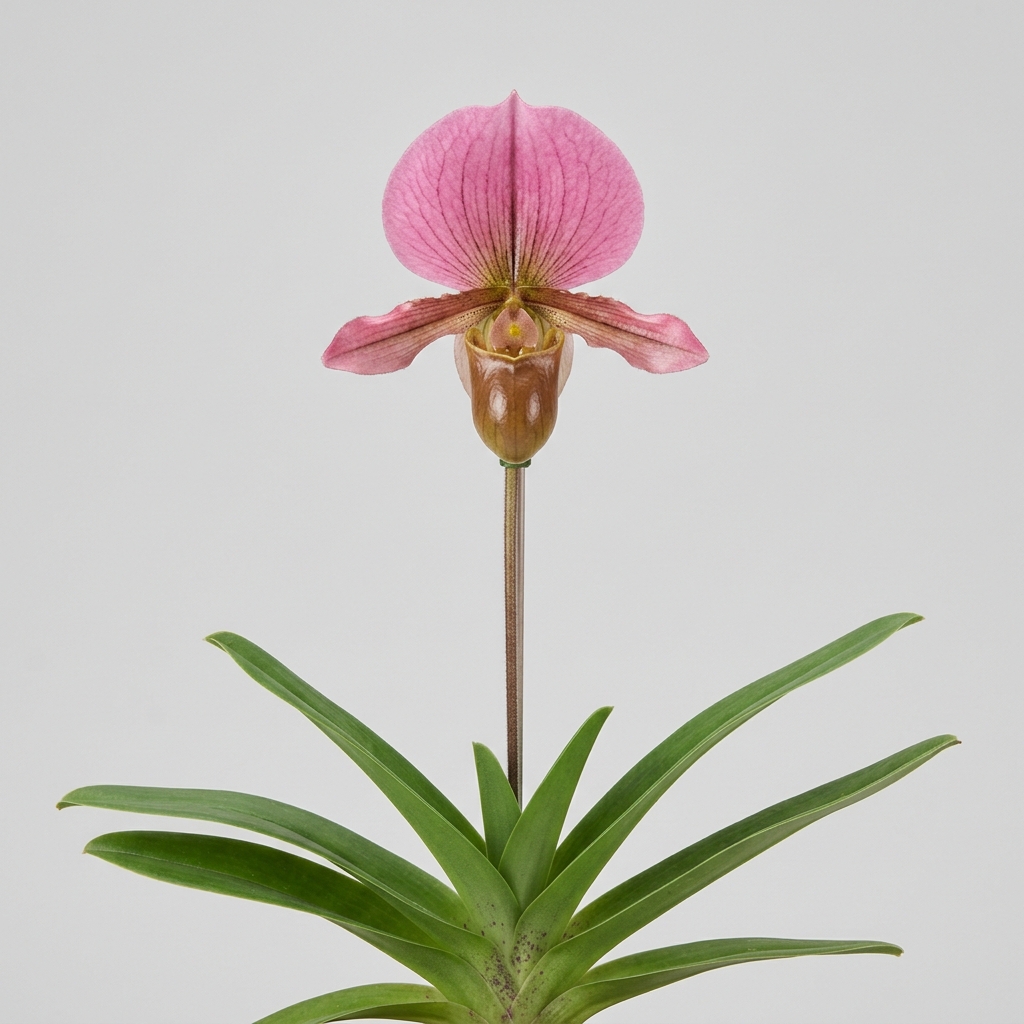
Paphiopedilum Charlesworthii is a highly prized slipper orchid celebrated throughout the horticultural world for its distinctive and dramatic floral presentation. Belonging to the genus Paphiopedilum, this terrestrial orchid is native to the high-altitude regions of Southeast Asia, where it grows in pockets of humus on limestone cliffs. Indoor growers and collectors value this species for its compact growth habit and its remarkably oversized, fan-shaped dorsal sepal that stands out in any orchid collection.
Cultivated specimens of this orchid produce single, long-lasting flowers on upright spikes that rise elegantly above a neat rosette of narrow, strap-like green leaves. The foliage often features subtle purple spotting near the base, adding year-round visual interest even when the plant is not in bloom. Because of its manageable size and relatively straightforward care requirements compared to more temperamental slipper orchids, it remains a favorite for both intermediate hobbyists and dedicated orchid exhibitors.
💡 Did You Know?
The striking pink dorsal sepal of Paphiopedilum Charlesworthii is not just for show; in its native habitat, this oversized, colorful structure acts as a highly effective visual beacon to attract specific insect pollinators, guiding them directly toward the pouch-like lip to ensure successful pollination.
🌿 Botanical Overview
Paphiopedilum Charlesworthii is characterized by its compact, sympodial growth habit. Unlike epiphytic orchids that grow on trees, this species is primarily lithophytic or terrestrial, anchoring its roots in decaying organic matter and moss-filled crevices along limestone formations. This natural habitat dictates much of its root structure, which consists of thick, hairy, brownish roots designed to absorb moisture and nutrients from thin layers of leaf litter.
The foliage of this orchid grows in a fan-shaped rosette. The leaves are typically solid green on the upper surface, lacking the heavy mottling seen in some other slipper orchids, but they frequently display fine purple or reddish-brown speckling at the very base of the leaf undersides. This compact vegetative growth makes it an excellent candidate for windowsill cultivation or small-space grow setups.
🌸 Flower Characteristics
The defining feature of Paphiopedilum Charlesworthii is undoubtedly its magnificent dorsal sepal. This upper sepal is exceptionally large, broad, and flat, often displaying striking shades of rose-pink, fuchsia, or white with delicate darker veining. The contrast between this expansive dorsal sepal and the rest of the flower creates a dramatic visual impact.
Below the dorsal sepal, the pouch-like lip (labellum) is typically a glossy, helmet-shaped structure colored in shades of bronze, copper, or brownish-green. The lateral petals are relatively small, spreading horizontally or slightly downward, and are finished in matching earthy tones. Each flower is borne singly on an upright, pubescent (hairy) inflorescence that can reach up to 15 to 25 centimeters in height, presenting the bloom well above the foliage.
Fragrance & Bloom Profile
While some orchid species are grown primarily for their sweet or spicy scents, Paphiopedilum Charlesworthii is grown almost exclusively for its visual aesthetics. A noticeable fragrance is not consistently documented in common grower references for this species. Any scent produced is typically described as extremely faint or virtually undetectable to the human nose.
What it lacks in fragrance, however, it more than makes up for in bloom longevity. A single flower can remain pristine on the plant for six to eight weeks, and sometimes longer under optimal, cool growing conditions. The heavy substance of the petals and sepals helps the flower resist wilting, providing a long-lasting autumn display.
Parentage & Hybrid Lineage
Paphiopedilum Charlesworthii is a naturally occurring species rather than a man-made hybrid, first described in the late 19th century. In the orchid trade, select line-bred cultivars have been developed to enhance the size, flatness, and color intensity of the dorsal sepal. These line-bred variations are often referred to by specific cultivar names when awarded by orchid societies.
Because of its dominant and highly desirable pink dorsal sepal, this species has been widely used as a parent in complex slipper orchid hybridization. It passes on its compact growth habit and distinct pink coloration to its progeny. When evaluating a specific plant, growers should note whether they have the pure species or one of its many primary or complex hybrids, as care requirements remain similar but can vary slightly.
🌱 Growing Conditions
To successfully cultivate Paphiopedilum Charlesworthii, growers should attempt to mimic its native cool-to-intermediate mountain habitat. It thrives in low to medium indirect light, similar to the light levels preferred by Phalaenopsis orchids. Avoid direct afternoon sunlight, which can easily scorch the solid green leaves; instead, opt for filtered east-facing windows or shaded artificial LED setups.
💡 Care Tip
Always water this orchid from the top of the pot, but take care to avoid getting water trapped in the center of the leaf rosette. Standing water in the crown can quickly lead to crown rot, which is often fatal to single-fan slipper orchids.
Temperature control is crucial for encouraging healthy growth and reliable blooming. This orchid prefers daytime temperatures between 20°C and 25°C (68°F to 77°F), with a distinct drop at night to around 12°C to 15°C (54°F to 59°F). This nocturnal temperature drop, particularly in the late summer and early autumn, is the primary trigger for spike initiation. Maintain moderate to high humidity levels of 50% to 70%, supported by gentle, continuous air movement to prevent stagnant air pockets.
Watering, Feeding & Potting Media
Unlike epiphytic orchids with pseudobulbs, Paphiopedilum orchids do not store large reserves of water. Consequently, they should never be allowed to dry out completely. The potting medium should remain consistently damp but never waterlogged. Water the plant thoroughly when the top layer of the medium begins to feel slightly dry to the touch, using rainwater, distilled water, or low-mineral tap water.
A well-draining, moisture-retentive potting mix is essential. A standard mix of fine-grade fir bark, perlite, and chopped sphagnum moss works exceptionally well. Because this species naturally grows near limestone, many growers recommend adding a small amount of calcium carbonate, dolomite lime, or crushed oyster shells to the potting mix to maintain a slightly alkaline to neutral pH. Feed the plant with a highly diluted, balanced orchid fertilizer every second or third watering during the active growing season, flushing the pot with pure water periodically to prevent salt buildup.
Blooming Season & Care Notes
The typical blooming season for Paphiopedilum Charlesworthii occurs in the autumn, extending into the early winter months. As the days shorten and night temperatures begin to cool, the plant will initiate a single flower spike from the center of the mature leaf fan. Once the spike appears, avoid changing the plant’s orientation relative to the light source, as this can cause the developing bud to twist or grow at an awkward angle.
After the flower eventually fades, cut the spike down close to the base of the leaf fan using a sterile cutting tool. Repotting is best performed in the spring, just as new vegetative growths begin to emerge from the base of the old fan. Slipper orchids generally benefit from annual or biennial repotting to refresh the organic media before it decomposes and suffocates the roots.
⚠️ Common Issues
⚠️ Common Mistake
A frequent mistake is allowing the potting medium to dry out completely between waterings, treating it like a Phalaenopsis or Cattleya. Because Paphiopedilum orchids lack pseudobulbs to store water, prolonged dryness will rapidly damage the roots and cause the foliage to dehydrate.
- Root Rot: Caused by overwatering or compacted, decomposing potting media that deprives roots of oxygen.
- Bud Blast: Occurs when sudden changes in temperature, low humidity, or drafts cause developing flower buds to wither and die before opening.
- Leaf Scorch: Bleached or yellowed patches on the leaves resulting from exposure to direct, unfiltered sunlight.
- Mealybugs and Scale: Common pests that hide in the tight crevices at the base of the leaf fans; treat promptly with insecticidal soap or horticultural oil.
- Bacterial Soft Rot: Dark, watery spots on the leaves that spread rapidly in warm, humid conditions with poor air circulation.
❓ Frequently Asked Questions
How often should I water my Paphiopedilum Charlesworthii?
Water your orchid when the top half-inch of the potting medium feels slightly dry, typically every 5 to 7 days depending on your home’s humidity and temperature. Slipper orchids lack water-storing pseudobulbs, so the media should remain consistently moist but never soggy or waterlogged.
Why is my orchid not blooming?
The most common reason for a lack of blooms is insufficient light or a lack of a nighttime temperature drop. Ensure the plant receives bright, filtered light and experiences a distinct drop in night temperatures to around 12°C to 15°C (54°F to 59°F) during the late summer and early autumn to trigger spike development.
Does this orchid require calcium additives?
Yes, because Paphiopedilum Charlesworthii is a lithophytic species naturally found on limestone cliffs, it benefits from calcium. Adding a small amount of dolomite lime, crushed oyster shells, or a calcium-rich top dressing to the potting media helps mimic its natural habitat and supports healthy growth.
Can I grow Paphiopedilum Charlesworthii under LED lights?
Absolutely. This orchid adapts very well to artificial lighting. Position the plant under moderate-intensity LED grow lights, ensuring the leaves do not become warm to the touch. Keep the lights on for about 12 to 14 hours a day during the growing season, shortening the duration slightly in winter.
⭐ Final Growing Notes
Paphiopedilum Charlesworthii remains one of the most rewarding slipper orchids to cultivate, offering an unmatched combination of compact foliage and spectacular, long-lasting autumn blooms. By providing consistent moisture, intermediate temperatures, and a touch of calcium in the potting medium, growers can enjoy the dramatic display of its iconic pink dorsal sepal year after year. It is a timeless addition that brings classic botanical elegance to any indoor orchid collection.
⚕️ Health, Safety & Edibility
Understanding how a plant interacts with people, pets, and the surrounding environment is part of responsible cultivation. This section uses conservative, general guidance and does not replace professional medical or veterinary advice.
Human Safety: No published evidence currently identifies species-specific toxicity concerns for Paphiopedilum Charlesworthii during normal handling. As with most ornamental plants, it should not be intentionally consumed.
Pet Safety: Published information does not indicate that this orchid commonly poses a toxicity concern for cats or dogs. However, chewing leaves, flowers, roots, or potting media may still cause mild digestive upset.
Edibility: This orchid is cultivated for ornamental display rather than food. Ornamental plants may carry fertilizers, pesticides, or other horticultural treatments that make them unsuitable for consumption.
Skin Contact: Routine handling is not generally associated with skin irritation. Gardeners with sensitive skin may prefer wearing gloves when repotting, pruning, or handling potting media.
🌱 Propagation Tip
Slipper orchids like this species are propagated by division rather than stem cuttings. Wait until the plant has developed at least six healthy leaf fans, then carefully divide it during spring repotting, ensuring each new division has at least three mature fans and a healthy root system.
⭐ Expert Advice
To achieve the largest and most vibrant pink dorsal sepals, keep the plant on the cooler side of its range as the flower bud is developing. Cooler night temperatures during spike elongation help intensify the pink pigments and expand the sepal to its maximum potential.




Leave A Comment