
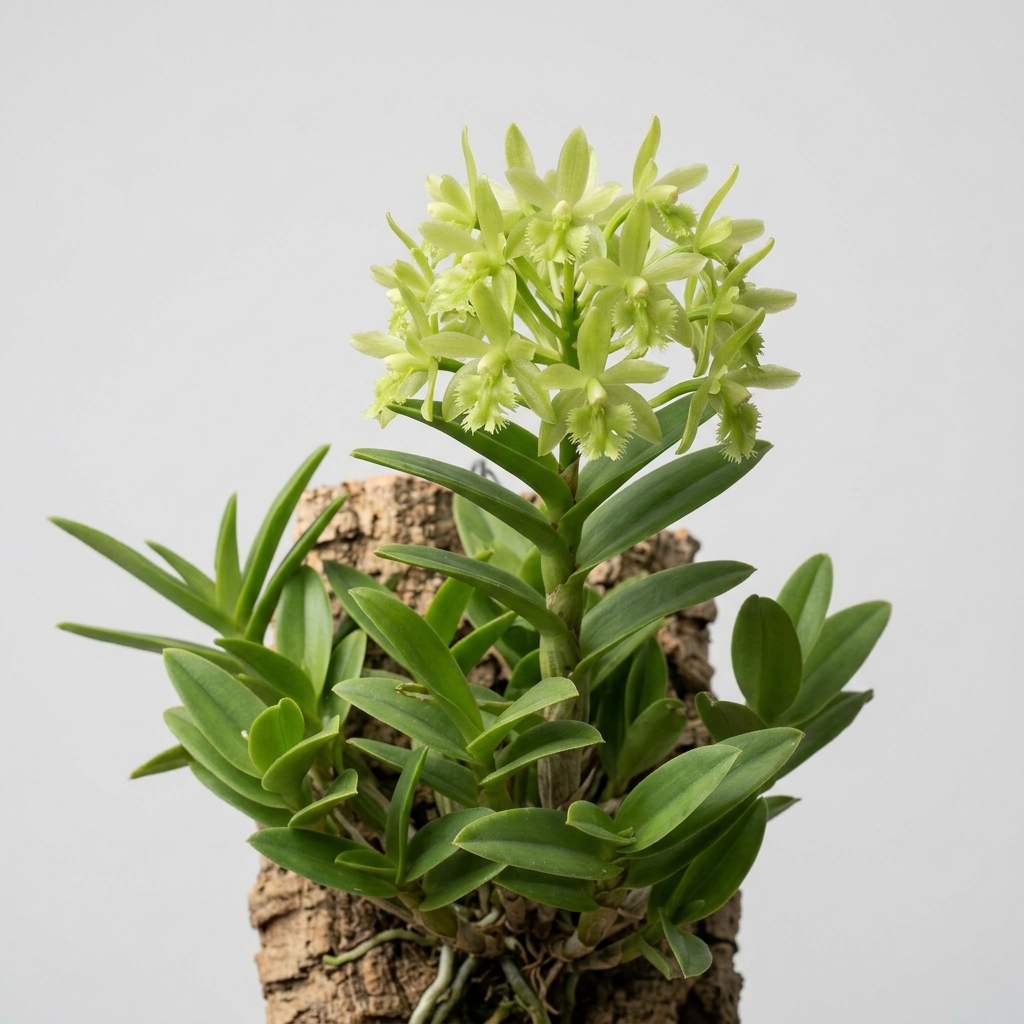
Epidendrum Difforme is a fascinating and highly distinctive member of the orchid family, prized by collectors for its unique green blooms and compact growth habit. Often referred to as the tufted Epidendrum, this species or species complex stands out from its reed-stem relatives due to its shorter, clumping stems and terminal clusters of translucent flowers.
Cultivators value this orchid not only for its unusual botanical aesthetic but also for its adaptable nature in home and greenhouse environments. While it lacks the flashy, vibrant colors of hybrid cattleyas, its subtle elegance, nocturnal fragrance, and reliable growth make it a rewarding addition for both intermediate growers and dedicated orchid enthusiasts.
💡 Did You Know?
The nocturnal of Epidendrum Difforme is specifically adapted to attract night-flying moths. While the flowers remain virtually scentless during the day to conserve energy, they release a powerful, sweet, and spicy perfume as soon as the sun sets, filling the growing space with an enchanting aroma.
🌿 Botanical Overview
Epidendrum Difforme is native to a wide range of tropical and subtropical regions across the Americas, including parts of Florida, the Caribbean, Central America, and northern South America. In its natural habitat, it grows primarily as an epiphyte on tree branches in moist forests, where it benefits from high humidity and constant air movement.
Unlike the tall, leggy reed-stem Epidendrums commonly grown in gardens, this species maintains a relatively compact stature. The stems are somewhat flattened, fleshy, and covered with alternating, light green leaves that provide an attractive backdrop even when the plant is not in bloom.
🌸 Flower Characteristics
The flowers of Epidendrum Difforme are uniquely structured, appearing in dense, head-like clusters at the apex of the mature stems. Each cluster can contain several star-shaped, translucent green to pale yellow-green blossoms that seem to glow when backlit by soft light.
The individual flowers feature narrow petals and sepals, with a prominent, broad, three-lobed lip that dominates the bloom’s appearance. The glossy, almost waxy texture of the flowers gives them a long-lasting quality, often remaining fresh for several weeks.
Fragrance & Bloom Profile
One of the most captivating features of this orchid is its nocturnal fragrance. During the day, the flowers may emit little to no scent, but as dusk approaches, they release a powerful, sweet, and slightly spicy aroma designed to attract night-pollinating moths.
The blooming cycle is highly dependent on environmental cues, but flowers typically emerge in the late summer or autumn months. The density of the flower head creates a striking presentation that contrasts beautifully with the plant’s clean foliage.
Parentage & Hybrid Lineage
Epidendrum Difforme is historically classified as a distinct species rather than a man-made hybrid. However, taxonomists often refer to it as a species complex because several closely related variations exist across its vast geographical range.
In hybridizing, it has been used occasionally to introduce compact growth habits, green coloration, and nocturnal fragrance to intergeneric crosses. Because registration records can sometimes be inconsistent, growers should treat specific cultivar lineages with cautious optimism unless verified by official orchid registries.
🌱 Growing Conditions
To cultivate this orchid successfully, mimic its native canopy environment by providing medium to bright indirect light. Avoid direct midday sunlight, which can easily scorch the fleshy leaves, but ensure the light is strong enough to encourage robust stem development.
💡 Care Tip
To maintain the ideal balance of moisture and aeration, consider using a clay pot rather than plastic. Clay pots allow the potting medium to breathe, reducing the risk of root rot while still supporting the consistent this species prefers.
Temperature ranges should ideally remain in the warm to intermediate category, with daytime temperatures between 75°F and 85°F, and a slight drop at night to around 60°F to 65°F. High humidity of 60% to 80% combined with gentle, continuous air circulation is critical to prevent stagnant air pockets and fungal issues.
Watering, Feeding & Potting Media
During the active growing season, Epidendrum Difforme requires consistent moisture. The potting medium should never be allowed to dry out completely for extended periods, though it must drain rapidly to prevent root rot.
A potting mix composed of fine to medium fir bark blended with perlite and a small amount of sphagnum moss works exceptionally well. Alternatively, because of its epiphytic nature, this orchid thrives when mounted on cork bark or tree fern plaques, provided the grower can maintain high humidity and water the plant daily. Feed with a diluted, balanced orchid fertilizer every two to three weeks during active growth.
Blooming Season & Care Notes
The primary blooming period occurs from mid-summer through late autumn, though well-established plants under stable greenhouse conditions may bloom at other times of the year. Once the flowers fade, do not cut the green stems, as they continue to support the plant’s overall energy reserves.
Repotting is best performed in the spring, just as new root growth begins to emerge from the base of the newest stems. Avoid over-potting; this orchid prefers to be slightly snug in its container, which helps ensure the media dries out at an appropriate rate.
⚠️ Common Issues
⚠️ Common Mistake
A common mistake is allowing the air to become stagnant in high- environments. Without adequate air movement, moisture can collect on the leaves and flower clusters, rapidly leading to fungal spotting or devastating crown rot.
- Root rot: Caused by overwatering or compacted, poorly draining potting media.
- Leaf scorch: Yellow or brown patches on the foliage resulting from direct, intense sunlight.
- Spider mites and scale: Common pests that thrive in dry, low-humidity environments.
- Bud blast: Premature dropping of flower buds due to sudden temperature drops or low humidity.
- Fungal leaf spot: Dark spots on leaves caused by poor air circulation in high-humidity conditions.
❓ Frequently Asked Questions
How do I encourage my Epidendrum Difforme to bloom?
Ensure the plant receives adequate indirect light and a slight drop in night temperatures during the late summer. Consistent watering and high humidity are also key to supporting healthy bud development.
Can this orchid be grown mounted on cork bark?
Yes, mounting is an excellent option that mimics its natural epiphytic growth. However, mounted plants require daily watering or misting and very high ambient humidity to prevent the roots from drying out excessively.
Why are the leaves on my orchid turning yellow?
Yellowing leaves can indicate either excessive direct sunlight or overwatering. Check the roots first; if they are firm and white, reduce light exposure. If they are mushy and brown, reduce watering and repot in fresh media.
Is Epidendrum Difforme suitable for beginners?
It is generally considered an intermediate orchid. While it is relatively hardy, its requirements for high humidity and consistent moisture make it slightly more demanding than common grocery store phalaenopsis orchids.
⭐ Final Growing Notes
Epidendrum Difforme remains a highly rewarding species for growers seeking something beyond the ordinary. By focusing on high humidity, consistent moisture, and excellent air movement, you can enjoy its unique, translucent green blooms and enchanting nocturnal fragrance for many years to come.
⚕️ Health, Safety & Edibility
Understanding how a plant interacts with people, pets, and the surrounding environment is part of responsible cultivation. This section uses conservative, general guidance and does not replace professional medical or veterinary advice.
Human Safety: No published evidence currently identifies species-specific toxicity concerns for Epidendrum Difforme during normal handling. As with most ornamental plants, it should not be intentionally consumed.
Pet Safety: Published information does not indicate that this orchid commonly poses a toxicity concern for cats or dogs. However, chewing leaves, flowers, roots, or potting media may still cause mild digestive upset.
Edibility: This orchid is cultivated for ornamental display rather than food. Ornamental plants may carry fertilizers, pesticides, or other horticultural treatments that make them unsuitable for consumption.
Skin Contact: Routine handling is not generally associated with skin irritation. Gardeners with sensitive skin may prefer wearing gloves when repotting, pruning, or handling potting media.
🌱 Propagation Tip
This orchid can be propagated by division once the plant has grown large and has at least six to eight healthy stems. Carefully separate the rhizome into sections with at least three mature stems each, ensuring minimal disturbance to the active root system.
⭐ Expert Advice
Keep a close eye on the root tips during the spring growth flush. Repotting exactly when new green root tips begin to emerge ensures the plant establishes itself quickly in its new medium with minimal transplant shock.




Leave A Comment