
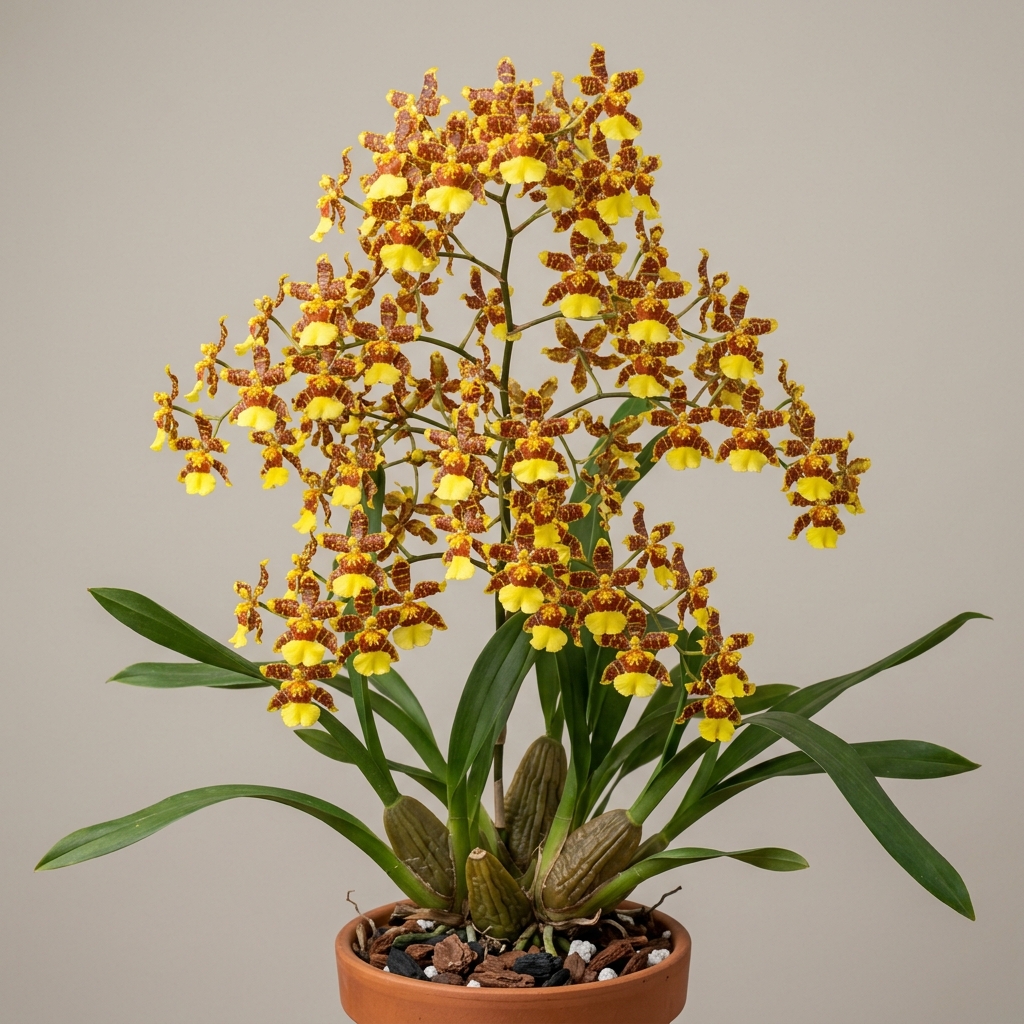
Oncidium Sphacelatum, commonly celebrated for its dramatic and highly productive flowering displays, is a robust species orchid native to Central America and parts of Mexico. Known for producing exceptionally long, arching inflorescences that can carry hundreds of small, vibrant blossoms, this orchid is a favorite among collectors who appreciate high-impact floral presentations. Its vigorous growth habit and resilience make it an excellent choice for growers looking to transition from basic hybrid orchids to species cultivation.
In cultivation, this species is highly valued for its large, compressed pseudobulbs and long, strap-like leaves that form dense, attractive clumps. The contrast between the bright yellow petals and the rich, reddish-brown markings of the flowers creates a striking visual effect that brightens any growing space. While it requires ample room to accommodate its expansive root system and tall flower spikes, its straightforward care requirements ensure rewarding results for dedicated enthusiasts.
💡 Did You Know?
Oncidium Sphacelatum belongs to the Oncidium orchid group, where flower presentation is often just as important as . White-flowered cultivars are especially valued indoors because their pale blooms reflect well and pair easily with many home, greenhouse, and display settings.
🌿 Botanical Overview
Oncidium Sphacelatum is a large-stature epiphytic or occasionally lithophytic orchid found naturally in warm, low-elevation forests. It typically grows on large tree branches where it receives filtered sunlight and excellent air circulation. The plant features prominent, tightly clustered pseudobulbs that are sharply compressed and can reach significant sizes, serving as vital water and nutrient storage organs during drier periods.
From the base of these pseudobulbs, long, arching, grass-like leaves emerge, creating a lush, fountain-like foliage profile. The root system is extensive, consisting of fine, white roots that rapidly colonize potting media or mount surfaces. This vigorous growth habit allows the plant to quickly establish itself and support the massive energy demands of its seasonal blooming cycle.
🌸 Flower Characteristics
The defining feature of Oncidium Sphacelatum is its spectacular branching inflorescence, which can easily reach lengths of three to six feet. Each spike can support dozens, sometimes hundreds, of small, dynamic flowers measuring approximately one inch in diameter. The individual blossoms exhibit the classic “dancing lady” shape characteristic of the genus, with a prominent, bright yellow trilobed lip that dominates the flower’s presentation.
The sepals and petals are relatively narrow, reflexed, and heavily barred with rich chestnut or reddish-brown markings. This intricate patterning creates a beautiful contrast against the solid yellow of the labellum. The flowers are arranged closely along the branching lateral spikes, creating a dense, cloud-like effect of yellow and gold when the plant is in full bloom.
Fragrance & Bloom Profile
The fragrance of Oncidium Sphacelatum is often described as subtle, carrying a mild, sweet, or slightly herbal scent that is most noticeable during the morning hours when temperatures begin to rise. However, fragrance intensity can be highly variable and cultivar-dependent, with some specimens exhibiting almost no detectable scent.
The blooms are remarkably long-lasting for an Oncidium species, often remaining fresh for six to eight weeks under optimal environmental conditions. To maximize the lifespan of the flowers, growers should avoid getting water directly on the petals and maintain stable temperatures during the blooming cycle.
Parentage & Hybrid Lineage
As a distinct botanical species rather than a man-made hybrid, Oncidium Sphacelatum possesses a pure genetic lineage documented across its native Mesoamerican range. It has been utilized extensively in orchid hybridization programs to introduce vigor, high flower count, and branching spike habits to modern Oncidium intergeneric hybrids.
Because it is a wild species, variations in flower size, color intensity, and plant stature exist among different collected clones and line-bred populations. When purchasing this orchid, growers are acquiring a piece of natural evolutionary history rather than a highly selected, sterile cultivar, which adds to its botanical appeal.
🌱 Growing Conditions
To thrive, Oncidium Sphacelatum requires bright, indirect light, similar to the light levels preferred by many Cattleya species. A location near an east- or shaded south-facing window is ideal. The leaves should maintain a light, grassy-green color; dark green leaves indicate insufficient light, while yellowing or reddish-purple tinting suggests the light is too intense.
💡 Care Tip
For best results, grow Oncidium Sphacelatum in bright filtered with steady and gentle airflow. Avoid placing the plant in harsh midday sun, but do not keep it in a dark corner; weak is one of the most common reasons cultivated orchids refuse to rebloom.
This orchid prefers intermediate to warm temperatures, ideally ranging from 70°F to 85°F (21°C to 29°C) during the day, with a night drop of about 10°F to 15°F to help initiate flower spikes. Relative humidity should be maintained between 50% and 70%, supported by strong, continuous air movement to prevent fungal pathogens from settling on the foliage.
Watering, Feeding & Potting Media
During the active growing season in spring and summer, Oncidium Sphacelatum requires frequent and thorough watering. The potting medium should be allowed to approach dryness but never dry out completely. In the winter, when growth slows, watering should be reduced significantly, allowing the medium to dry out more thoroughly between applications while ensuring the pseudobulbs do not shrivel excessively.
A balanced, water-soluble orchid fertilizer applied at quarter or half strength every two weeks during active growth supports the plant’s rapid development. The ideal potting medium is a well-draining, coarse bark mix blended with perlite and charcoal to ensure rapid drainage. Due to its vigorous root system, repotting is typically necessary every two years, preferably just as new root growth emerges from the base of the newest pseudobulbs.
Blooming Season & Care Notes
Oncidium Sphacelatum typically initiates its blooming cycle in late winter or early spring, with flowers opening sequentially through the spring months. As the massive flower spikes begin to emerge from the base of the mature pseudobulbs, they require sturdy staking to support the weight of the developing buds.
Once the blooming cycle is complete, the old flower spikes should be cut back close to the base of the pseudobulb using sterilized cutting tools. This is also the optimal window for repotting or dividing the plant, as the post-bloom period coincides with the initiation of new vegetative growths and fresh root tips.
⚠️ Common Issues
⚠️ Common Mistake
The most common mistake is by calendar instead of root and potting-media condition. Oncidium roots need moisture and air at the same time, so constantly wet bark or sphagnum can lead to root loss even when the leaves still look healthy.
- Root Rot:
Caused by overwatering or a degraded, compacted potting medium that suffocates the fine root system. - Leaf Spotting: Fungal or bacterial spots can develop on the leaves if water is allowed to sit on the foliage in stagnant air.
- Pseudobulb Shriveling: Indicates dehydration, which can be caused by either underwatering or a loss of roots due to rot.
- Pest Infestations: Mealybugs and scale insects can hide in the tight crevices of the pseudobulb sheaths and under leaves.
- Bud Blast:
Sudden drops in humidity or temperature fluctuations can cause developing flower buds to yellow and drop prematurely.
❓ Frequently Asked Questions
How often should I water my Oncidium Sphacelatum?
Watering frequency depends on your environmental conditions, but generally, you should water thoroughly when the top inch of the potting medium feels dry. During active summer growth, this may be every few days, while winter resting periods require much less frequent watering.
Why are the leaves on my orchid turning yellow?
Yellowing leaves can indicate excessive direct sunlight, which scorches the foliage, or it can be a sign of root loss due to overwatering. Check the root system; if the roots are firm and white, reduce light intensity slightly. If they are mushy and brown, repot immediately into fresh media.
Does Oncidium Sphacelatum need to be staked?
Yes, staking is highly recommended. Because this species produces exceptionally long, heavy, and branching flower spikes, they can easily bend or break under their own weight or tip the pot over if not properly supported with a sturdy stake.
Can I grow Oncidium Sphacelatum under LED grow lights?
Yes, this orchid adapts well to indoor cultivation under high-output LED grow lights. Ensure the lights are kept at a safe distance to prevent heat stress, and aim for a photoperiod of 12 to 14 hours daily to simulate its natural tropical environment.
⭐ Final Growing Notes
Oncidium Sphacelatum remains an iconic representative of the orchid world, offering an unparalleled floral show for those who can accommodate its generous size. By providing bright indirect light, consistent moisture during the growing season, and excellent air circulation, growers can enjoy the spectacular “golden shower” of blooms year after year. Its robust nature and forgiving temperament make it a highly rewarding species that anchors any diverse orchid collection.
⚕️ Health, Safety & Edibility
Understanding how a plant interacts with people, pets, and the surrounding environment is part of responsible cultivation. This section uses conservative, general guidance and does not replace professional medical or veterinary advice.
Human Safety: No published evidence currently identifies species-specific toxicity concerns for Oncidium Sphacelatum during normal handling. As with most ornamental plants, it should not be intentionally consumed.
Pet Safety: Published information does not indicate that this orchid commonly poses a toxicity concern for cats or dogs. However, chewing leaves, flowers, roots, or potting media may still cause mild digestive upset.
Edibility: This orchid is cultivated for ornamental display rather than food. Ornamental plants may carry fertilizers, pesticides, or other horticultural treatments that make them unsuitable for consumption.
Skin Contact: Routine handling is not generally associated with skin irritation. Gardeners with sensitive skin may prefer wearing gloves when repotting, pruning, or handling potting media.
🌱 Propagation Tip
Propagation should be approached patiently. Most home growers should wait for natural keikis or divide only mature, healthy plants when the orchid type allows it. Never remove a young growth until it has strong roots and enough leaves to support itself away from the parent plant.
⭐ Expert Advice
Repot after flowering when fresh root tips begin to appear. This timing helps the plant anchor quickly into new bark or sphagnum and reduces stress, especially for orchids grown indoors where airflow, , and drying speed can change from season to season.




Leave A Comment