
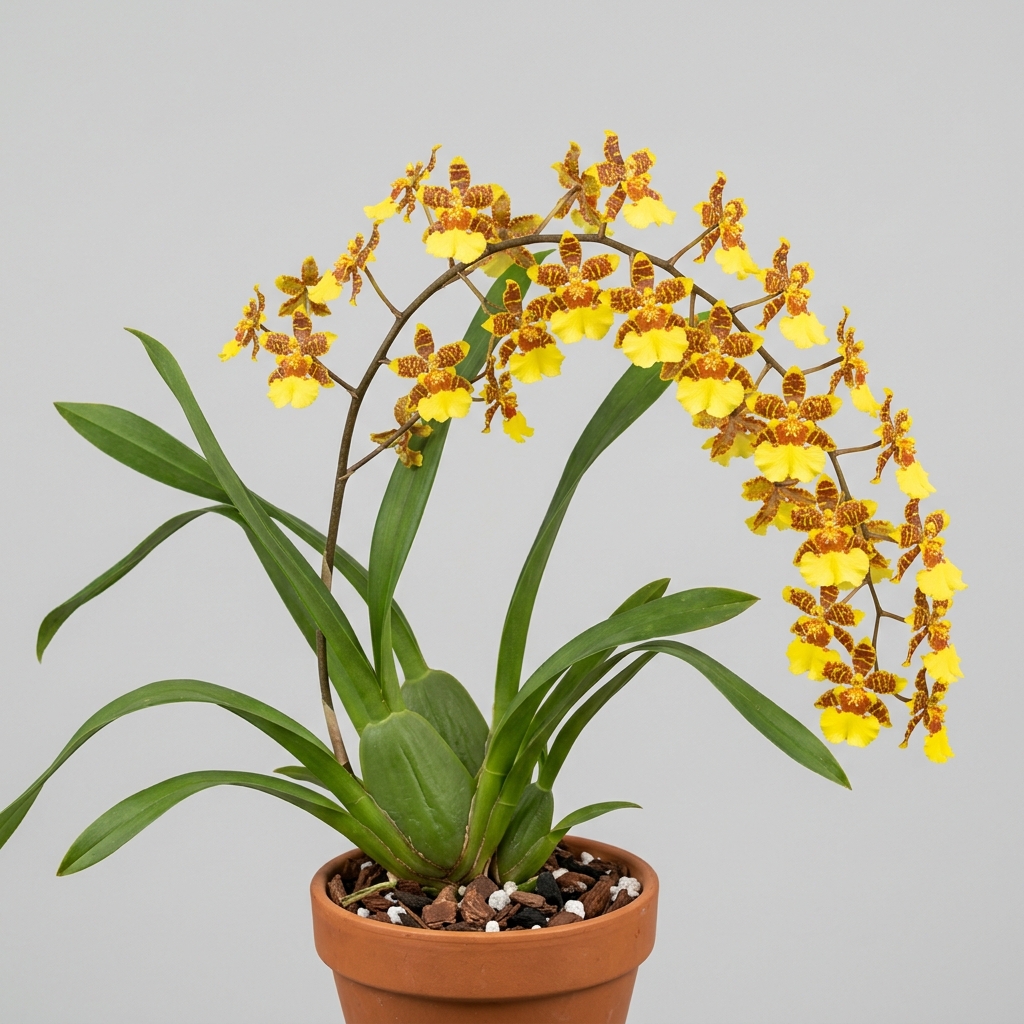
Oncidium Baueri is a striking orchid highly valued by collectors for its spectacular, arching flower spikes that can produce dozens of vibrant blooms. Belonging to the popular Oncidium genus, commonly known as the dancing lady orchids, this plant is celebrated for its vigorous growth habit and dramatic floral displays. It is an excellent choice for growers looking to add a touch of tropical elegance and architectural scale to their indoor or greenhouse collections.
In its natural habitat, this epiphytic orchid thrives in warm, humid environments, clinging to tree branches where it receives filtered sunlight and excellent air circulation. Cultivated specimens adapt well to home environments when provided with bright indirect light and a well-draining potting medium. Its resilient nature and reliable blooming cycle make it a rewarding orchid for both intermediate hobbyists and dedicated collectors.
💡 Did You Know?
Oncidium Baueri is famous for producing some of the longest flower spikes in the Oncidium , occasionally reaching lengths of over six feet in optimal conditions. This dramatic growth habit allows the orchid to elevate its blooms high above the surrounding foliage in its native canopy, ensuring maximum visibility for forest pollinators.
🌿 Botanical Overview
Oncidium Baueri is characterized by its robust vegetative growth, featuring large, compressed pseudobulbs that act as water and nutrient storage organs. From the base of these pseudobulbs, long, strap-like leaves emerge, presenting a rich green coloration and a slightly leathery texture. The root system is typically fine and fibrous, adapted for clinging to bark and absorbing moisture rapidly from the air.
As an epiphyte, this orchid relies heavily on its pseudobulbs to survive periods of lower moisture in its native tropical habitats. The overall plant size can become quite substantial over time, requiring adequate space to accommodate its spreading foliage and massive inflorescences. Understanding its physical structure is key to providing the appropriate pot size and mounting options.
🌸 Flower Characteristics
The defining feature of Oncidium Baueri is its magnificent, branched inflorescence, which can easily reach several feet in length. Each spike can carry a multitude of small to medium-sized flowers, creating a cloud-like effect of color. The individual flowers display the classic dancing lady shape, dominated by a broad, flared lip or labellum.
The color palette is a striking combination of bright yellow and rich reddish-brown or mahogany markings. The sepals and petals are typically narrow and barred with brown, while the prominent yellow lip stands out as the visual focal point. This contrast ensures that even though the individual flowers are relatively small, the collective display is exceptionally showy.
Fragrance & Bloom Profile
While some growers report a very subtle, sweet scent under warm, bright conditions, the fragrance of Oncidium Baueri is not consistently documented or prominent in all specimens. The primary appeal of this orchid lies in its visual impact rather than its perfume.
The blooms are remarkably long-lasting, often remaining fresh on the spike for several weeks to a couple of months. The sequential opening of the flowers along the branched spike extends the overall blooming period, providing a sustained display of color during its active flowering phase.
Parentage & Hybrid Lineage
Oncidium Baueri is recognized as a naturally occurring species within the Oncidium genus, though it is sometimes distributed in the horticultural trade under various cultivar or grex designations. Because of its robust growth and impressive flower count, it has been used historically in breeding programs to introduce vigor and high bud counts to Oncidium hybrids.
Its exact hybrid lineage or award history in specific regional societies is not consistently documented in common grower references, as variation exists among cultivated clones. Growers should treat it as a classic representative of the large-stature, yellow-and-brown Oncidium group.
🌱 Growing Conditions
To cultivate Oncidium Baueri successfully, providing bright, indirect light is essential. A position near an east- or shaded south-facing window is ideal, where the leaves can receive sufficient light to turn a healthy light green. Dark green leaves often indicate insufficient light, which can prevent blooming, while reddish-purple tinting suggests the light is too intense.
💡 Care Tip
Position your orchid in a location with continuous, gentle air movement, such as near an oscillating fan. Good airflow dries excess moisture on the leaves quickly, preventing fungal spots and helping the roots breathe.
This orchid prefers intermediate to warm temperatures, ideally ranging from 65 to 85 degrees Fahrenheit during the day, with a slight drop at night to stimulate flower spike development. Relative humidity should be maintained between 50% and 70%. Adequate air movement is critical at all times to prevent stagnant air from encouraging fungal or bacterial pathogens on the foliage.
Watering, Feeding & Potting Media
Watering should be frequent and thorough during the active growing season, allowing the potting medium to approach dryness but not dry out completely. When the pseudobulbs are actively growing, they require consistent moisture to plump up fully. During the winter rest period, watering should be reduced, allowing the medium to dry out more substantially between waterings.
A balanced, water-soluble orchid fertilizer applied at quarter-strength every two weeks during the growing season supports healthy development. For potting media, a well-draining mixture of medium-grade fir bark, perlite, and charcoal works exceptionally well. Some growers prefer adding a small amount of sphagnum moss to retain light moisture, especially in drier home environments.
Blooming Season & Care Notes
Oncidium Baueri typically initiates its blooming cycle in the late spring or summer, though variations can occur depending on local growing conditions. As the flower spike begins to emerge from the base of the newest mature pseudobulb, it may require staking to support the weight of the massive, branching inflorescence.
Once the flowers fade, the spike should be cut back to the base of the pseudobulb. Repotting is best performed in the spring, just as new root growth begins to emerge from the base of the young pseudobulbs. This minimizes transplant shock and allows the orchid to establish quickly in its new container.
⚠️ Common Issues
⚠️ Common Mistake
A frequent error is potting this orchid in a container that is too large. Oncidiums prefer to be slightly root-bound, and excess holds too much water, which can quickly lead to root rot.
- Root Rot: Caused by overwatering or compacted potting media that retains too much moisture, leading to mushy, black roots.
- Leaf Spotting: Fungal or bacterial spots can develop on the leaves if water is allowed to sit on the foliage overnight or if air circulation is poor.
- Shriveled Pseudobulbs: A sign of dehydration, which can result from either underwatering or root loss due to overwatering.
- Pests: Mealybugs, scale, and spider mites can occasionally target the tender new growth and flower buds.
- Bud Blast: Sudden dropping of unopened flower buds, often triggered by rapid changes in temperature, drafty locations, or low humidity.
❓ Frequently Asked Questions
How often should I water my Oncidium Baueri?
Water your orchid when the potting medium is almost dry, typically once or twice a week depending on your home’s temperature and humidity. Always check the moisture level of the bark before watering.
Why are the pseudobulbs on my orchid shriveling?
Shriveled pseudobulbs indicate the plant is not absorbing enough water. This can be due to underwatering or, conversely, overwatering which has rotted the roots and left the plant unable to take up moisture.
Does Oncidium Baueri require staking?
Yes, because the flower spikes can grow exceptionally long and carry numerous heavy blooms, staking is highly recommended to prevent the spike from bending or breaking under its own weight.
Can I grow Oncidium Baueri under artificial lights?
Yes, this orchid can be grown successfully under high-output LED or fluorescent grow lights, provided the lights are kept at an appropriate distance to deliver bright, indirect light without overheating the foliage.
⭐ Final Growing Notes
Oncidium Baueri remains a classic favorite among orchid enthusiasts due to its dramatic, cloud-like floral displays and robust growth habit. While its large size and long flower spikes require a bit of extra space, its care requirements are straightforward enough for intermediate growers to master. By providing bright indirect light, consistent moisture during the growing season, and excellent air circulation, you can enjoy its spectacular golden blooms year after year.
⚕️ Health, Safety & Edibility
Understanding how a plant interacts with people, pets, and the surrounding environment is part of responsible cultivation. This section uses conservative, general guidance and does not replace professional medical or veterinary advice.
Human Safety: No published evidence currently identifies species-specific toxicity concerns for Oncidium Baueri during normal handling. As with most ornamental plants, it should not be intentionally consumed.
Pet Safety: Published information does not indicate that this orchid commonly poses a toxicity concern for cats or dogs. However, chewing leaves, flowers, roots, or potting media may still cause mild digestive upset.
Edibility: This orchid is cultivated for ornamental display rather than food. Ornamental plants may carry fertilizers, pesticides, or other horticultural treatments that make them unsuitable for consumption.
Skin Contact: Routine handling is not generally associated with skin irritation. Gardeners with sensitive skin may prefer wearing gloves when repotting, pruning, or handling potting media.
🌱 Propagation Tip
This orchid is best propagated by division during repotting. Ensure that each division has at least three to four healthy, mature pseudobulbs with active lead growth to guarantee the new plants have enough stored energy to establish successfully.
⭐ Expert Advice
To trigger reliable blooming, try to provide a slight drop of 10 to 15 degrees Fahrenheit between day and night during the autumn months, while slightly reducing to mimic its natural seasonal cycle.




Leave A Comment