
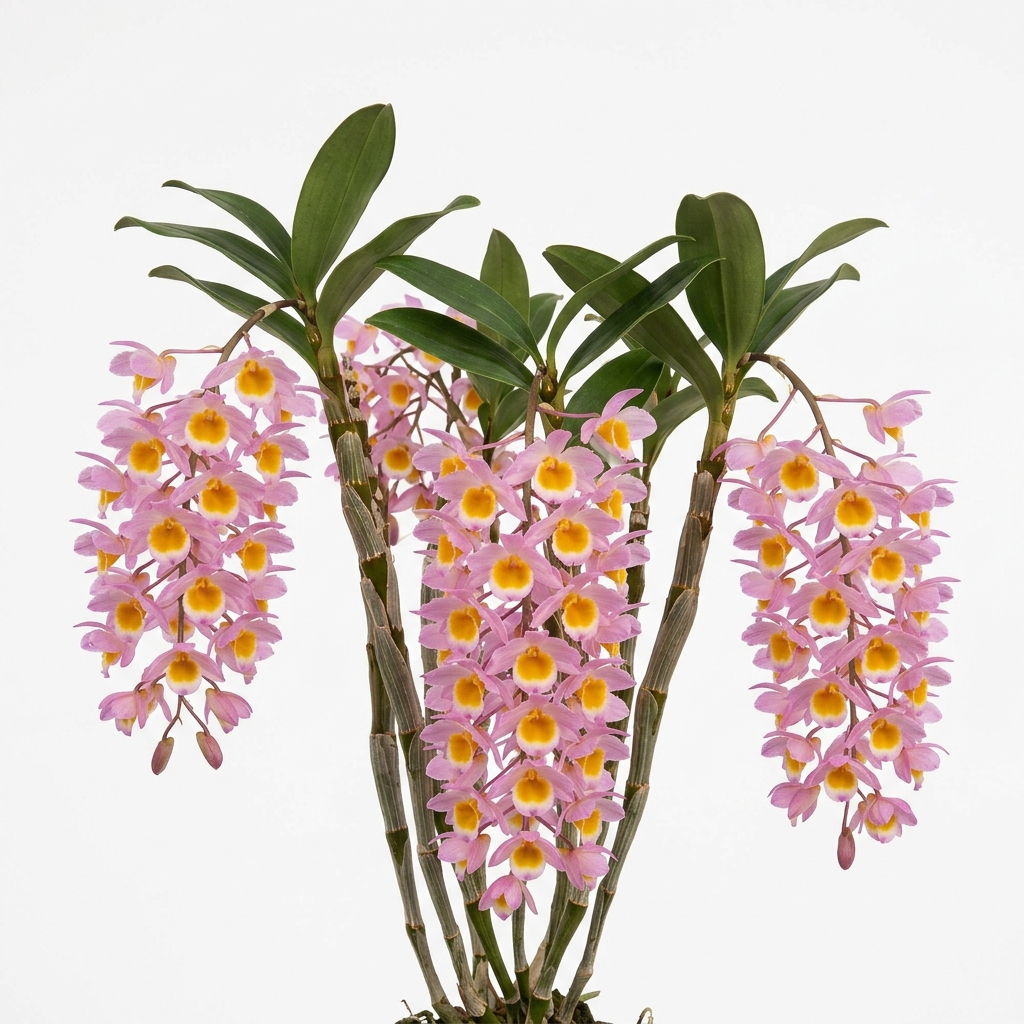
Dendrobium Bronckartii is a highly prized orchid known for its spectacular, cascading clusters of delicate pink and white blossoms. Originating from the mountainous regions of Southeast Asia, particularly Vietnam, this robust epiphytic orchid is cherished by collectors for its dramatic pendulous inflorescences and attractive, cane-like pseudobulbs.
While sometimes classified by taxonomists under or alongside Dendrobium amabile, growers often maintain the name Bronckartii to distinguish specific horticultural selections. Its ability to produce dense, showy flower showers makes it a standout specimen in any intermediate to warm greenhouse or indoor growing space.
💡 Did You Know?
Dendrobium Bronckartii belongs to the Callista section of orchids, which are famous for their grape-like clusters of flowers. In their native habitats of Vietnam, these orchids grow high up on tree branches where they receive bright, filtered sunlight and excellent air circulation, adapting perfectly to a cycle of wet summers and dry, cooler winters.
🌿 Botanical Overview
Dendrobium Bronckartii shows a classic sympodial growth habit, characterized by upright, multi-angled pseudobulbs that can reach significant heights under optimal conditions. These sturdy, cane-like structures store water and nutrients, allowing the plant to withstand seasonal dry periods in its native habitat. The leathery, dark green leaves emerge near the apex of the canes, providing a lush backdrop for the blooms.
This orchid belongs to the Callista section of the Dendrobium genus, a group celebrated for producing dense, hanging clusters of flowers. The root system is typically vigorous, consisting of thick, white epiphytic roots covered in velamen to maximize moisture absorption from the air and rain.
🌸 Flower Characteristics
The flowers of Dendrobium Bronckartii are renowned for their soft, pastel coloration, typically featuring pale pink to rose-lavender sepals and petals. The most striking feature is the rounded, fringed lip, which displays a rich, golden-yellow to orange center that contrasts beautifully with the lighter surrounding segments. Individual flowers are tightly packed along a pendulous spike that emerges from the upper nodes of mature canes, creating a dramatic, grape-like cluster effect.
Fragrance & Bloom Profile
While some growers report a delicate, sweet fragrance reminiscent of honey or soft citrus, the scent profile of Dendrobium Bronckartii can be subtle and is highly dependent on environmental factors such as temperature and humidity. The blooms typically open simultaneously on the spike, creating an immediate and high-impact visual display. However, like many members of the Callista section, the individual flowers are relatively short-lived, usually lasting between one to two weeks.
Parentage & Hybrid Lineage
In botanical nomenclature, Dendrobium Bronckartii is widely considered a synonym or close relative of the species Dendrobium amabile. Because it is primarily grown as a species selection rather than a complex artificial hybrid, its lineage is direct and natural. However, because taxonomic classifications within the Callista section can sometimes be fluid, growers should note that plants labeled as Bronckartii may exhibit slight variations in flower size and color intensity compared to standard amabile specimens.
🌱 Growing Conditions
To thrive, Dendrobium Bronckartii requires bright, filtered light, similar to the conditions preferred by many Cattleya orchids. Direct midday sun should be avoided to prevent leaf scorch, but high light levels are essential for triggering seasonal blooming. It performs best in intermediate to warm temperatures, with daytime highs of 75°F to 85°F (24°C to 29°C) and a noticeable drop at night to stimulate growth and flower bud initiation. High humidity levels of 60% to 80% coupled with strong air movement are crucial to mimic its native forest canopy environment.
💡 Care Tip
To achieve the best flowering display, place your Dendrobium Bronckartii in a location that receives bright, indirect , such as an east- or shaded south-facing window. Ensure there is constant, gentle air movement around the plant to prevent stagnant moisture on the leaves and roots.
Watering, Feeding & Potting Media
During the active spring and summer growing season, Dendrobium Bronckartii requires frequent watering and should not be allowed to dry out completely. Apply a balanced, diluted orchid fertilizer weekly to support the rapid development of new canes. As winter approaches, watering should be significantly reduced, allowing the potting medium to dry out between light waterings, and fertilizer should be withheld. A well-draining medium such as coarse fir bark, charcoal, and perlite mix is ideal, though many growers successfully cultivate this species on mounts or in slatted wooden baskets to accommodate its pendulous blooming habit.
Blooming Season & Care Notes
The primary blooming season for Dendrobium Bronckartii occurs in late spring to early summer. Flower buds initiate during the cooler, drier winter rest period, making temperature management during these months critical. Once the flower spikes begin to emerge from the upper nodes of the canes, avoid moving the plant or changing its orientation to light, as this can cause the buds to twist or drop. After blooming has finished, resume regular watering and feeding to encourage the next cycle of vegetative growth.
⚠️ Common Issues
⚠️ Common Mistake
The most common mistake is failing to provide a dry winter rest. Continuing to water and fertilize heavily during the cooler winter months often results in root rot and causes the orchid to produce vegetative keikis instead of the highly anticipated spring flower spikes.
- Root Rot:
Caused by overwatering or compacted, poorly draining potting media, especially during the winter rest period. - Bud Blast:
Sudden changes in temperature, low humidity, or drafts can cause developing flower buds to yellow and drop before opening. - Spider Mites and Scale: These common pests can infest the undersides of leaves and crevices of pseudobulbs, particularly in dry environments.
- Shriveled Canes: While slight wrinkling is normal during the winter rest, severe shriveling during the growing season indicates underwatering or root loss.
❓ Frequently Asked Questions
How do I trigger blooms on my Dendrobium Bronckartii?
To encourage blooming, provide a distinct winter rest period with cooler night temperatures, reduced watering, and no fertilizer. High light levels throughout the year are also essential for the plant to store enough energy to produce flowers.
Can Dendrobium Bronckartii be grown mounted?
Yes, mounting on cork bark or tree fern plaques is highly effective because it accommodates the natural pendulous habit of the flower spikes and ensures excellent drainage. However, mounted plants require more frequent watering and high ambient humidity.
Why are the leaves on my orchid turning yellow?
Yellowing leaves can indicate overwatering, insufficient light, or natural aging of older foliage. If the yellowing is accompanied by soft, mushy stems, check the roots immediately for signs of rot.
How long do the flowers of Dendrobium Bronckartii last?
The stunning flower clusters typically last between 10 to 14 days. While the bloom period is relatively short compared to other orchid genera, the sheer volume and beauty of the flowers make the display highly rewarding.
⭐ Final Growing Notes
Dendrobium Bronckartii remains a highly rewarding species for intermediate to advanced orchid enthusiasts who can accommodate its seasonal care requirements. By providing bright light, high humidity, and a disciplined winter rest, growers are rewarded with one of the most breathtaking floral displays in the orchid world.
⚕️ Health, Safety & Edibility
Understanding how a plant interacts with people, pets, and the surrounding environment is part of responsible cultivation. This section uses conservative, general guidance and does not replace professional medical or veterinary advice.
Human Safety: No published evidence currently identifies species-specific toxicity concerns for Dendrobium Bronckartii during normal handling. As with most ornamental plants, it should not be intentionally consumed.
Pet Safety: Published information does not indicate that this orchid commonly poses a toxicity concern for cats or dogs. However, chewing leaves, flowers, roots, or potting media may still cause mild digestive upset.
Edibility: This orchid is cultivated for ornamental display rather than food. Ornamental plants may carry fertilizers, pesticides, or other horticultural treatments that make them unsuitable for consumption.
Skin Contact: Routine handling is not generally associated with skin irritation. Gardeners with sensitive skin may prefer wearing gloves when repotting, pruning, or handling potting media.
🌱 Propagation Tip
Propagation is most successful through division of mature clumps during repotting, ensuring each new division has at least three to four healthy, active pseudobulbs. Occasionally, this orchid may produce adventitious offsets known as keikis along the canes, which can be carefully removed and potted once they develop several independent roots.
⭐ Expert Advice
When repotting Dendrobium Bronckartii, choose a container or basket that barely accommodates the root mass. These orchids prefer to be slightly root-bound, and excess can retain too much moisture, increasing the risk of root decline. Repot only when the potting medium begins to break down or new growth starts in spring.




Leave A Comment