
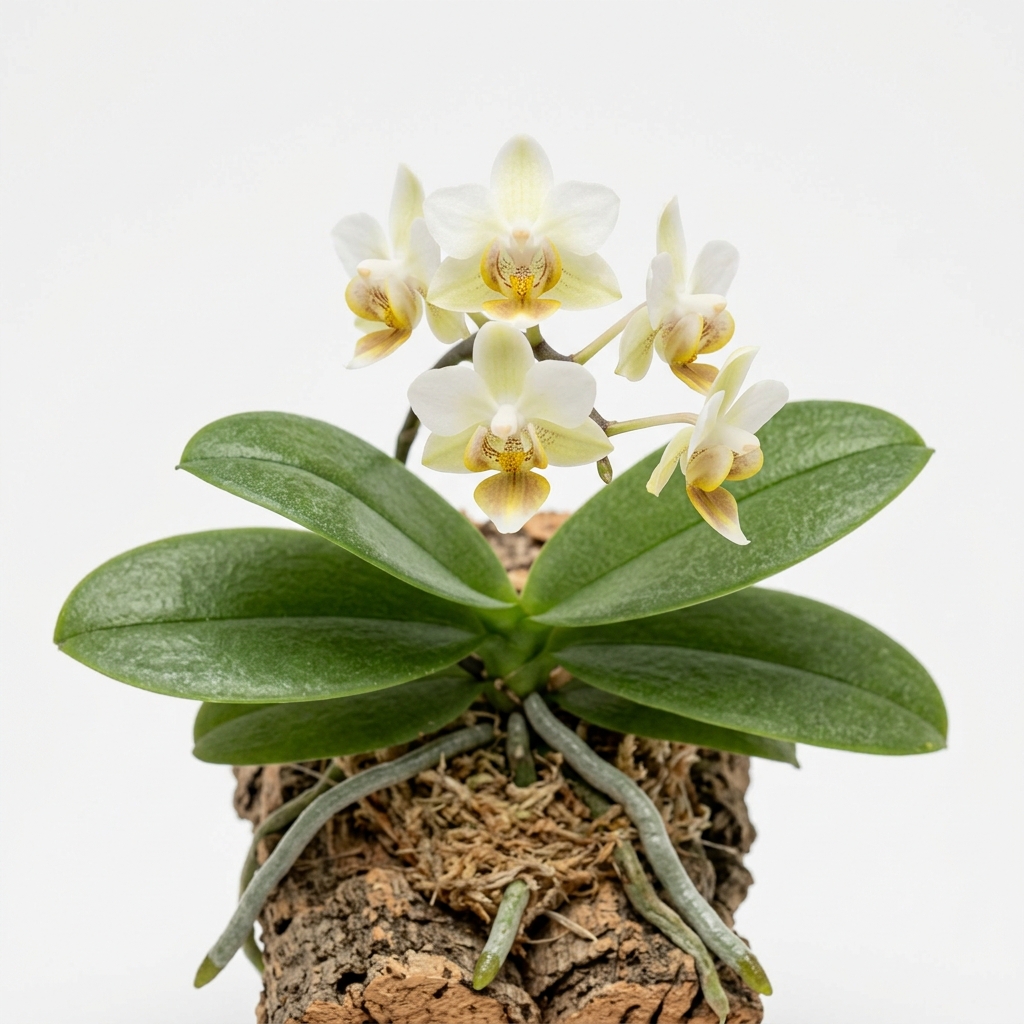
Phalaenopsis Gibbosa is a charming miniature orchid species highly prized by collectors for its delicate stature and intricate floral morphology. Native to the humid forests of Southeast Asia, this epiphytic orchid offers a distinct departure from the large, mass-market moth orchids commonly found in retail stores. Its compact growth habit makes it an useful selection for terrarium culture, mount cultivation, or windowsill growing where space is at a premium.
Enthusiasts are particularly drawn to the species for its unique, pouch-like lip and the elegant presentation of its small blossoms. While it requires a bit more attention to humidity and moisture consistency than its larger hybrid relatives, Phalaenopsis Gibbosa rewards attentive growers with a highly rewarding and visually captivating display.
💡 Did You Know?
Phalaenopsis Gibbosa belongs to a specialized group of miniature orchids that have adapted to life on thin tree branches. Because they have very little water-retaining tissue compared to larger orchids, they rely on rapid moisture absorption and high atmospheric to survive dry spells in their native Southeast Asian forest canopies.
🌿 Botanical Overview
Phalaenopsis Gibbosa is a naturally occurring species within the genus Phalaenopsis, characterized by its diminutive size and monopodial growth habit. The plant typically produces a short stem clothed in a few fleshy, elliptic-obovate leaves that rarely exceed a few inches in length. These leaves are generally a deep green, sometimes displaying a subtle silvery sheen or faint mottling under optimal light conditions.
In its native habitat, this epiphyte clings to the mossy branches of trees in moist, shaded environments. Its root system is relatively extensive for the size of the plant, featuring fleshy, active roots that are adapted to absorbing moisture rapidly from the air and rain while drying out quickly. Understanding this natural epiphytic lifestyle is key to successfully maintaining the species in a home or greenhouse environment.
🌸 Flower Characteristics
The blossoms of Phalaenopsis Gibbosa are small, typically measuring under an inch in diameter, but they make up for their size with their exquisite structure. The sepals and petals are generally white to pale greenish-yellow, providing a clean backdrop for the more colorful and complex lip. The lip, or labellum, is the defining feature of the flower, often displaying a prominent, sack-like or gibbous shape with yellow and light brown or pink markings.
Flowers are borne on short, arching inflorescences that emerge from the leaf axils. A single spike can carry several flowers, presenting them in a loose, elegant cluster. The overall visual effect is one of delicate complexity, encouraging close inspection to fully appreciate the intricate details of the floral anatomy.
Fragrance & Bloom Profile
Fragrance in Phalaenopsis Gibbosa is not consistently documented as a primary feature of the species. While some growers report a very faint, sweet scent under warm, humid conditions during the peak of the day, others find the flowers to be virtually unscented. The primary appeal of this orchid remains its visual charm rather than its olfactory profile.
The blooms are relatively long-lasting for a miniature species, often remaining pristine for several weeks if environmental conditions are kept stable. Sudden changes in temperature or a drop in humidity can, however, shorten the lifespan of the flowers or cause undeveloped buds to drop prematurely.
Parentage & Hybrid Lineage
Unlike the complex man-made hybrids that dominate the commercial orchid market, Phalaenopsis Gibbosa is a distinct, naturally occurring species. It is classified within the subgenus Parishianae, a group known for miniature growth habits and unique lip structures.
While it is primarily grown as a species by collectors, hybridizers have occasionally used Phalaenopsis Gibbosa in breeding programs to introduce miniature growth habits and unique lip shapes to new generations of compact hybrids. However, these hybrid lines are specialized and not as widely distributed in the general trade as those derived from larger species.
🌱 Growing Conditions
To thrive, Phalaenopsis Gibbosa requires conditions that mimic its native forest canopy habitat. It prefers moderate to low light levels, typical of the shaded understory. Direct, harsh sunlight must be avoided as it will quickly scorch the thin leaves of this miniature plant. Bright, filtered light or high-quality LED grow lights are ideal.
💡 Care Tip
Maintain high levels of 60% to 80% and ensure constant, gentle air movement around the plant. This balance prevents the foliage from remaining wet for too long, reducing the risk of rot while keeping the roots hydrated.
Temperature ranges should be kept warm to intermediate, ideally between 65°F and 80°F (18°C to 27°C) during the day, with a slight drop at night to encourage healthy growth and eventual blooming. High humidity is crucial for this species, ideally maintained between 60% and 80%. Good air movement is equally important to prevent stagnant air from encouraging fungal or bacterial pathogens.
Watering, Feeding & Potting Media
Watering practices must balance the plant’s need for moisture with its requirement for rapid drying. If grown on a mount, such as cork bark or tree fern fiber, Phalaenopsis Gibbosa may require daily misting or watering in warm weather. If potted, a highly open, free-draining medium is essential. A mix of fine-grade fir bark, perlite, and a small amount of chopped sphagnum moss works well.
Fertilization should be light and consistent. Use a balanced, water-soluble orchid fertilizer diluted to one-quarter strength every second or third watering during the active growing season. Flush the medium thoroughly with pure water periodically to prevent harmful mineral salt buildup, which can damage the sensitive roots.
Blooming Season & Care Notes
Phalaenopsis Gibbosa typically initiates its blooming cycle in the spring or early summer, though variations can occur depending on local growing conditions and indoor climates. The development of the flower spike is a slow process that requires stable environmental conditions.
Once blooming is complete, the old flower spike can be left intact if it remains green, as it may occasionally produce secondary branches or even keikis, though many growers prefer to cut it back to the base to encourage the plant to direct its energy into new leaf and root growth. Repotting or remounting is best done in the spring, just as new root tips begin to emerge.
⚠️ Common Issues
⚠️ Common Mistake
A frequent error is potting this miniature orchid in heavy, dense soil or standard potting mix. Its roots require rapid drying cycles and high oxygen levels; using a dense medium will quickly lead to root suffocation and rot.
- Root rot caused by overwatering or compacted, poorly draining potting media.
- Bud blast, where developing buds yellow and drop, often triggered by sudden drafts, low humidity, or temperature fluctuations.
- Spider mites and mealybugs, which can hide in the tight crevices of the miniature foliage.
- Leaf scorch or yellowing from exposure to excessive direct sunlight.
- Fungal spotting on leaves due to high humidity combined with inadequate air circulation.
❓ Frequently Asked Questions
Can Phalaenopsis Gibbosa be grown on a mount?
Yes, mounting is often considered the preferred method of cultivation for this miniature species. Growing it on cork bark or a tree fern mount allows the roots to dry rapidly, mimicking its natural epiphytic habitat. However, mounted plants require high ambient humidity and more frequent watering, often daily.
Why are the leaves on my Phalaenopsis Gibbosa turning yellow?
Yellowing leaves can indicate several issues. If the lower, oldest leaf yellows and drops naturally, it is usually normal aging. However, widespread yellowing often points to excessive light exposure, overwatering leading to root damage, or a severe nutrient deficiency.
How often should I fertilize this miniature orchid?
This species is a light feeder. It is best to apply a highly diluted, balanced orchid fertilizer at one-quarter of the recommended strength every two to three weeks during the active growing season. Always flush the pot or mount with clean water between fertilizer applications to prevent salt buildup.
Is Phalaenopsis Gibbosa suitable for a terrarium?
Yes, its miniature size and high humidity requirements make it an excellent candidate for a terrarium or vivarium. Ensure that the terrarium has adequate ventilation, perhaps using a small computer fan, to prevent stagnant air, which can quickly lead to rot in enclosed spaces.
⭐ Final Growing Notes
Phalaenopsis Gibbosa is a rewarding gem for any orchid enthusiast willing to accommodate its preference for high humidity and careful moisture management. By mimicking its natural forest canopy home through filtered light, excellent air movement, and a free-draining root environment, you can enjoy the delicate, intricate beauty of this miniature species for years to come.
⚕️ Health, Safety & Edibility
Understanding how a plant interacts with people, pets, and the surrounding environment is part of responsible cultivation. This section uses conservative, general guidance and does not replace professional medical or veterinary advice.
Human Safety: No published evidence currently identifies species-specific toxicity concerns for Phalaenopsis Gibbosa during normal handling. As with most ornamental plants, it should not be intentionally consumed.
Pet Safety: Published information does not indicate that this orchid commonly poses a toxicity concern for cats or dogs. However, chewing leaves, flowers, roots, or potting media may still cause mild digestive upset.
Edibility: This orchid is cultivated for ornamental display rather than food. Ornamental plants may carry fertilizers, pesticides, or other horticultural treatments that make them unsuitable for consumption.
Skin Contact: Routine handling is not generally associated with skin irritation. Gardeners with sensitive skin may prefer wearing gloves when repotting, pruning, or handling potting media.
🌱 Propagation Tip
Propagation of this species is typically achieved through the careful separation of keikis (baby plants) that occasionally form on old flower spikes or at the base of the parent plant. Wait until the keiki has developed several strong roots before detaching it.
⭐ Expert Advice
If growing this species on a mount, wrap a small amount of high-quality sphagnum moss around the roots to help retain moisture. This is especially helpful in home environments where maintaining constant high can be challenging.

Leave A Comment