
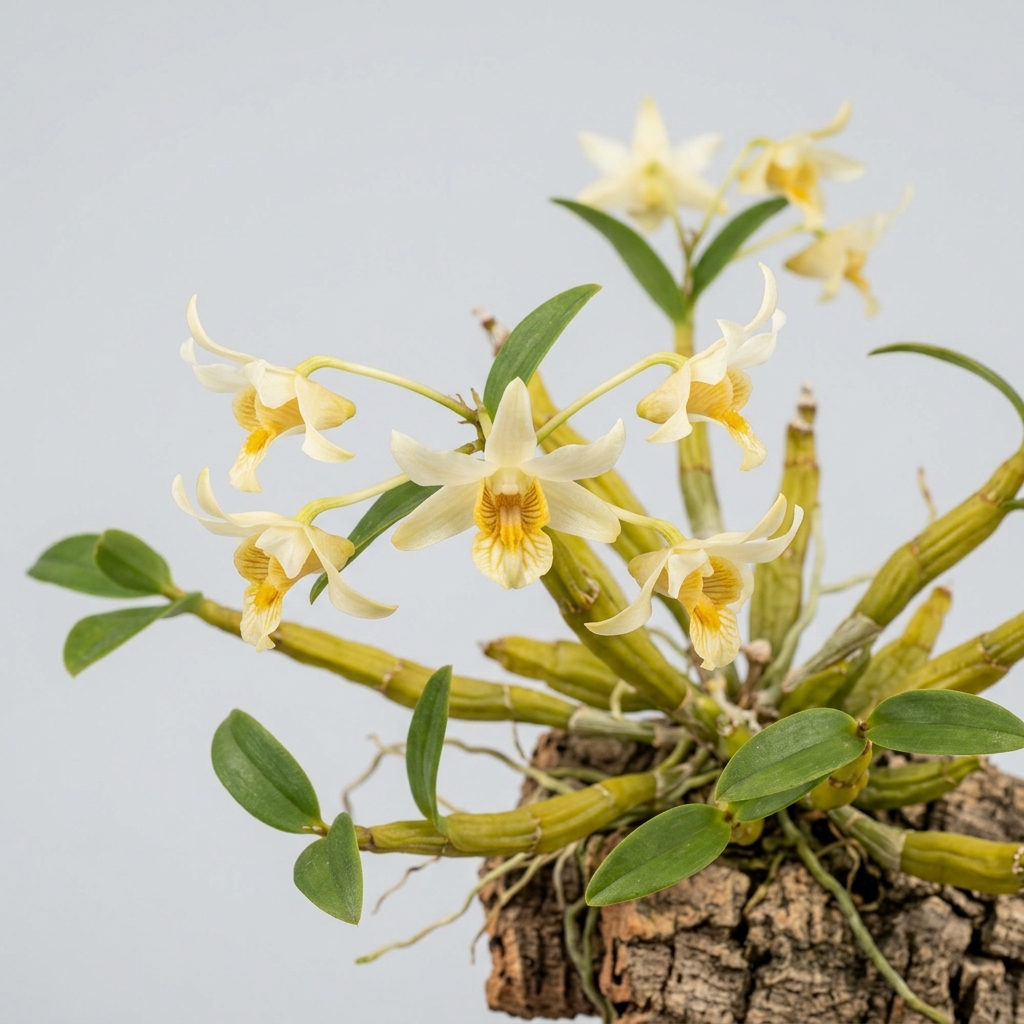
Dendrobium Plicatile is an intriguing epiphytic orchid species highly valued by collectors for its unique growth habit and ephemeral blooms. Belonging to the vast and diverse Dendrobium genus, this plant features distinctive branched pseudobulbs that give it a scrambling, architectural appearance quite unlike typical sympodial orchids.
While its blossoms are famously short-lived, often lasting only a single day, they are produced in successive flushes throughout the year, triggered by environmental cues. This rapid, synchronized blooming mechanism, combined with the plant’s robust and adaptable nature, makes it a rewarding subject for growers seeking an unconventional orchid with dynamic behavior.
💡 Did You Know?
Dendrobium Plicatile is part of the Dendrobium orchid group, a favorite among growers because its flowers, growth habit, and care needs make it useful for comparing cultivated orchids within the same . Observing its leaves, roots, and bloom spikes can help growers understand how this cultivar responds to indoor conditions.
🌿 Botanical Overview
Dendrobium Plicatile shows a distinctive growth habit characterized by slender, creeping rhizomes that produce yellow-green, flattened pseudobulbs. Each pseudobulb typically terminates in a single, leathery, lanceolate leaf. Over time, the plant forms a dense, branching mat, making it highly suitable for mounting or basket culture where its sprawling stems can drape naturally.
Historically associated with the genus Flickingeria due to its vegetative structure and short-lived flowers, modern botanical classification places this species within the section Dendrobium. Its vegetative resilience allows it to withstand brief periods of drought, storing moisture within its specialized pseudobulbs to survive seasonal shifts in its native Southeast Asian habitats.
🌸 Flower Characteristics
The flowers of Dendrobium Plicatile emerge from the nodes near the leaf bases at the apex of the pseudobulbs. Each blossom is relatively small, typically measuring between one to two inches in diameter. The petals and sepals are narrow, ranging in color from a translucent cream to a soft, buttery yellow.
The most striking feature of the flower is its complex lip, which is heavily fringed, folded, or plicate—giving the species its botanical name. The lip often displays intricate markings of golden yellow, orange, or faint purple, serving as a visual guide for natural pollinators during the brief window the flower remains open.
Fragrance & Bloom Profile
The fragrance of Dendrobium Plicatile is often described as sweet, resembling ripe melon or honey, though its intensity can vary depending on temperature and humidity. Because the flowers open rapidly and typically fade within twelve to twenty-four hours, the scent profile is fleeting.
This ephemeral blooming strategy, known as gregarious flowering, is often triggered by a sudden drop in temperature, such as after a heavy rainstorm. In a greenhouse or indoor collection, multiple plants or multiple stems on a single specimen will often burst into bloom simultaneously, creating a spectacular, if brief, display of color and scent.
Parentage & Hybrid Lineage
As a naturally occurring species rather than a man-made hybrid, Dendrobium Plicatile possesses a wild lineage rooted in the tropical forests of Asia. It is not widely used in commercial hybridization programs due to the short lifespan of its individual flowers, which limits its appeal for cut-flower production.
However, its genetic stability and unique vegetative architecture make it a subject of interest for specialized orchid breeders. In common grower references, registered hybrids involving this species are rare, and it is primarily cultivated and appreciated in its true species form by orchid enthusiasts.
🌱 Growing Conditions
To cultivate Dendrobium Plicatile successfully, growers should replicate its native canopy environment. It thrives in bright, indirect light, similar to the dappled sunlight found in tropical tree crowns. Direct midday sun should be avoided to prevent leaf scorch, though morning or late afternoon sun can encourage more robust blooming.
💡 Care Tip
For best results, grow Dendrobium Plicatile in bright filtered with steady and gentle airflow. Avoid placing the plant in harsh midday sun, but do not keep it in a dark corner; weak is one of the most common reasons cultivated orchids refuse to rebloom.
Temperature ranges should ideally remain warm to intermediate, with daytime temperatures between 75°F and 85°F and a slight drop at night to stimulate growth. High humidity levels of 60% to 80% are essential, coupled with strong air movement to prevent stagnant moisture from settling on the foliage and roots.
Watering, Feeding & Potting Media
During the active spring and summer growing seasons, Dendrobium Plicatile requires frequent watering. The roots should be allowed to dry slightly between waterings but never dry out completely for extended periods. If mounted on cork or tree fern slabs, daily misting or soaking may be necessary during hot weather.
A balanced, diluted orchid fertilizer applied weekly at quarter-strength supports the rapid development of new pseudobulbs. For potted specimens, a highly porous, free-draining medium such as medium-grade fir bark mixed with perlite and charcoal is recommended. Repotting should only be done when new root growth is visible at the base of the newest pseudobulbs.
Blooming Season & Care Notes
Blooming can occur at almost any time of the year, though flushes are most common during the warm summer and autumn months. Because the buds develop rapidly and open almost overnight, growers must monitor the plant closely to catch the display.
After the flowers fade, do not cut the pseudobulbs or stems unless they are completely dry and brown, as they continue to store energy and can produce flowers from the same nodes in later seasons. Minimizing disturbance to the root system during the blooming cycle helps prevent premature bud drop.
⚠️ Common Issues
⚠️ Common Mistake
The most common mistake is by calendar instead of root and potting-media condition. Dendrobium roots need moisture and air at the same time, so constantly wet bark or sphagnum can lead to root loss even when the leaves still look healthy.
- Bud Blast:
Sudden changes in humidity or drafty conditions can cause developing buds to yellow and drop before opening. - Root Rot:
Overwatering or using a compacted, degraded potting medium deprives roots of oxygen, leading to decay. - Dehydration:
Shriveled pseudobulbs indicate insufficient watering or low humidity, especially in mounted specimens. - Pests:
Spider mites and mealybugs can occasionally target the tender new growth and leaf axils. - Leaf Spotting: Fungal or bacterial spots may develop if water is allowed to sit on the leaves overnight without adequate air circulation.
❓ Frequently Asked Questions
Why do the flowers of my Dendrobium Plicatile fade so quickly?
This species is genetically programmed for ephemeral blooming, with individual flowers typically lasting only 12 to 24 hours. This is a natural adaptation designed to maximize pollination efficiency through synchronized, mass-blooming events triggered by environmental changes.
Can I grow Dendrobium Plicatile indoors under LED lights?
Yes, this orchid adapts well to indoor cultivation under high-output LED grow lights. Position the plant to receive bright, full-spectrum light for 12 to 14 hours a day, ensuring that humidity levels remain high and air circulation is maintained with a small fan.
How often should I water a mounted Dendrobium Plicatile?
Mounted specimens dry out much faster than potted ones. In typical household or greenhouse conditions, a mounted plant may require daily watering or heavy misting during the warm summer months, reducing to every two to three days in winter.
Is Dendrobium Plicatile suitable for beginner orchid growers?
While its temperature and watering needs are relatively straightforward, its short-lived flowers and sprawling growth habit make it better suited for intermediate growers who understand how to manage high humidity and mounted culture.
⭐ Final Growing Notes
Dendrobium Plicatile offers a fascinating departure from more conventional, long-lasting orchid hybrids. Its architectural, branching form provides year-round visual interest, while the sudden, explosive bursts of fragrant, fringed blossoms deliver a delightful reward for the attentive grower. By providing bright light, high humidity, and excellent drainage, collectors can enjoy this dynamic species for many years.
⚕️ Health, Safety & Edibility
Understanding how a plant interacts with people, pets, and the surrounding environment is part of responsible cultivation. This section uses conservative, general guidance and does not replace professional medical or veterinary advice.
Human Safety: No published evidence currently identifies species-specific toxicity concerns for Dendrobium Plicatile during normal handling. As with most ornamental plants, it should not be intentionally consumed.
Pet Safety: Published information does not indicate that this orchid commonly poses a toxicity concern for cats or dogs. However, chewing leaves, flowers, roots, or potting media may still cause mild digestive upset.
Edibility: This orchid is cultivated for ornamental display rather than food. Ornamental plants may carry fertilizers, pesticides, or other horticultural treatments that make them unsuitable for consumption.
Skin Contact: Routine handling is not generally associated with skin irritation. Gardeners with sensitive skin may prefer wearing gloves when repotting, pruning, or handling potting media.
🌱 Propagation Tip
Propagation should be approached patiently. Most home growers should wait for natural keikis or divide only mature, healthy plants when the orchid type allows it. Never remove a young growth until it has strong roots and enough leaves to support itself away from the parent plant.
⭐ Expert Advice
Repot after flowering when fresh root tips begin to appear. This timing helps the plant anchor quickly into new bark or sphagnum and reduces stress, especially for orchids grown indoors where airflow, , and drying speed can change from season to season.

Leave A Comment