
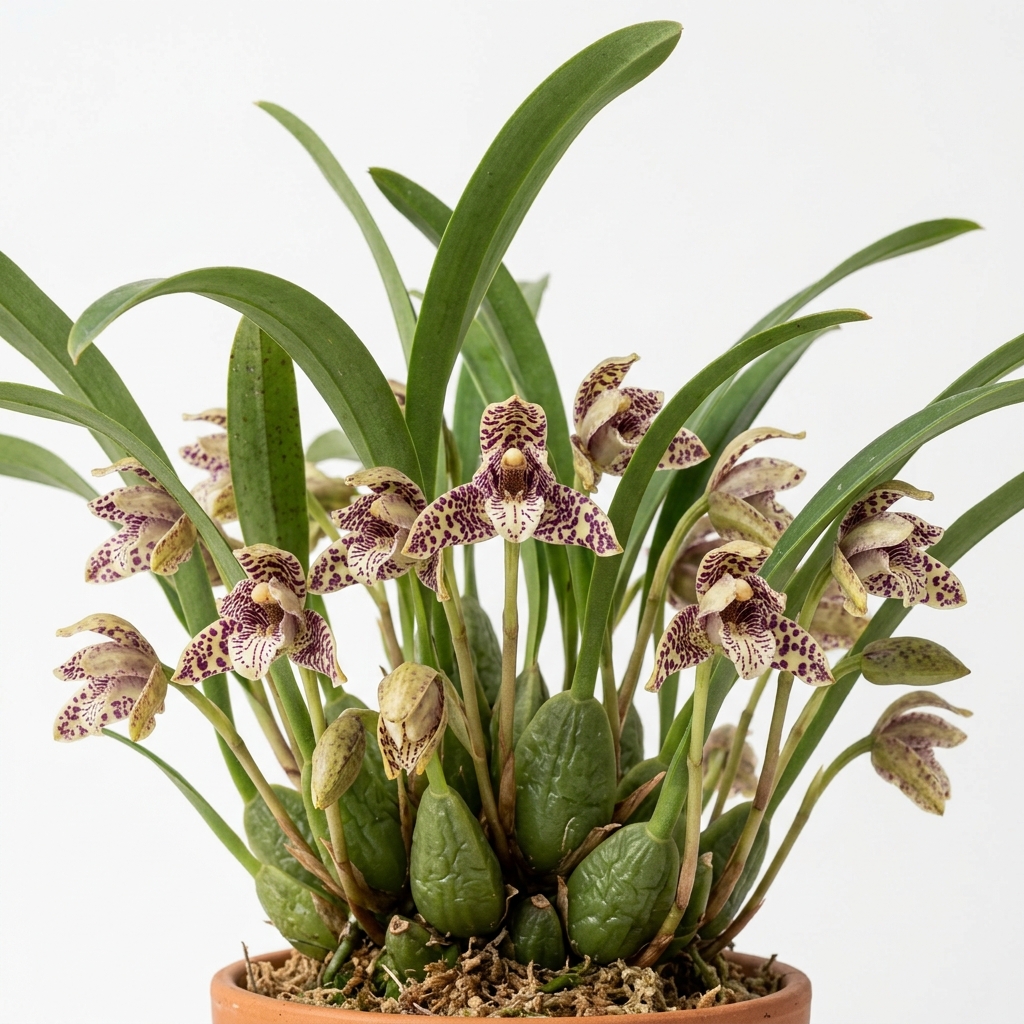
Maxillaria Picta is a highly esteemed orchid species native to the rainforests of Brazil and Argentina, widely celebrated among collectors for its striking floral presentation and robust growth habit. Characterized by its clustered, egg-shaped pseudobulbs and narrow, leathery leaves, this sympodial epiphyte produces an abundance of individual flowers that emerge from the base of mature growths. Growers particularly value this orchid for its reliable blooming nature and its ability to adapt to a variety of indoor and greenhouse environments.
Unlike many orchids that produce long, multi-flowered spikes, this species sends up numerous single-flowered inflorescences, creating a dense halo of color around the base of the plant. The blossoms feature a captivating contrast of yellow, cream, and deep purple speckling, making it a visually dramatic addition to any collection. Its relatively compact size and vigorous vegetative growth make it an excellent choice for both intermediate hobbyists and experienced orchid enthusiasts looking to diversify their collections.
💡 Did You Know?
The name Maxillaria is derived from the Latin word maxilla, meaning jawbone, which refers to the distinct jaw-like appearance of the column and lip structure found in many of its flowers. Maxillaria Picta beautifully showcases this unique botanical feature, combining intricate evolutionary design with a powerful that attracts specific pollinators in its native South American habitats.
🌿 Botanical Overview
Maxillaria Picta belongs to the diverse genus Maxillaria, which comprises hundreds of species native to the tropical and subtropical regions of the Americas. In its natural habitat, this epiphyte grows on moss-covered tree trunks and branches, where it benefits from high humidity, frequent rainfall, and excellent air circulation. The plant structure consists of tightly grouped, slightly compressed pseudobulbs, each topped with one or two upright, linear leaves that can reach up to ten inches in length.
The root system is relatively fine and fibrous, adapted to gripping rough bark and absorbing moisture rapidly from passing rain showers. Over time, a healthy specimen will form a dense, specimen-sized clump, producing dozens of pseudobulbs that support multiple active growth leads. This robust vegetative habit ensures that the plant remains attractive even when not in bloom.
🌸 Flower Characteristics
The flowers of Maxillaria Picta are typically two to nearly three inches in diameter, characterized by their thick, waxy texture and distinct color patterning. The sepals and petals are generally incurved, displaying a base color of pale yellow to rich cream, heavily marked on the reverse side with dark purple or reddish-brown spots and streaks. The lip, or labellum, is typically white or light yellow, adorned with fine purple veins or spots, and features a fleshy callus near the center.
Each flower is borne singly on a short, upright to arching peduncle that arises from the base of the pseudobulb. Because the plant produces these individual flower stems in great numbers, a mature specimen can display dozens of open flowers simultaneously, clustered closely around the foliage. The blooms are long-lasting, often remaining in pristine condition for several weeks under optimal environmental conditions.
Fragrance & Bloom Profile
One of the most compelling attributes of Maxillaria Picta is its intense and delightful fragrance. The flowers emit a strong, sweet scent that is commonly described as a blend of honey, vanilla, and ripe watermelon. This fragrance is typically most pronounced during the morning and early afternoon hours, especially when the plant is exposed to warm, bright conditions.
While fragrance intensity can vary slightly depending on the specific clone and growing environment, it is generally considered one of the more reliably fragrant species in the genus. The combination of its striking visual patterns and its rich, room-filling perfume makes it a standout performer during its annual blooming cycle.
Parentage & Hybrid Lineage
As a naturally occurring species rather than a man-made hybrid, Maxillaria Picta possesses a pure genetic lineage shaped by evolutionary adaptation in the wild. While it is not a hybrid itself, it has occasionally been used in breeding programs to introduce fragrance, compact growth habits, and unique spotting patterns to intergeneric hybrids within the Maxillariinae subtribe.
In commercial cultivation, growers may encounter specific selected clones or line-bred cultivars that exhibit superior flower size, more intense coloration, or exceptionally vigorous growth. However, the majority of plants available in the trade retain the classic characteristics of the wild species, and exact clonal parentage or registration history is rarely documented in standard hobbyist databases.
🌱 Growing Conditions
To cultivate Maxillaria Picta successfully, growers should aim to replicate its native montane forest environment. This orchid thrives in bright, indirect light, similar to the conditions preferred by many Cattleya or Miltonia species. A location near an east- or shaded south-facing window, or under high-quality LED grow lights, provides the ideal intensity to promote strong pseudobulb development and abundant flowering.
💡 Care Tip
To maximize flower production, ensure your orchid receives a distinct drop of 10 to 15 degrees Fahrenheit at night during the autumn months. This natural cooling period mimics its native habitat and acts as the primary trigger for the initiation of flower buds at the base of the pseudobulbs.
Temperature: wise, this species is classified as a cool-to-intermediate grower. It prefers daytime temperatures ranging from 65 to 78 degrees Fahrenheit, with a distinct drop of 10 to 15 degrees at night to stimulate bud initiation. High humidity is crucial, ideally maintained between 50% and 70%, coupled with continuous, gentle air movement to prevent stagnant air pockets and fungal pathogens.
Watering, Feeding & Potting Media
During the active growing season in spring and summer, Maxillaria Picta requires consistent moisture. The potting medium should be watered thoroughly just as it approaches dryness, but it must never be allowed to sit in standing water, which can quickly lead to root rot. In the winter months, watering should be reduced slightly, allowing the medium to dry out more completely between applications, though the pseudobulbs should never be allowed to shrivel severely.
A well-draining potting mix is essential for maintaining root health. A blend of fine to medium fir bark, perlite, and chopped sphagnum moss works exceptionally well in plastic or clay pots. Alternatively, this species can be mounted on cork bark or tree fern slabs if high humidity can be consistently maintained. Feed the plant weekly with a balanced, diluted orchid fertilizer at one-quarter to one-half strength during active growth, flushing the pot with pure water once a month to prevent salt buildup.
Blooming Season & Care Notes
The primary blooming season for Maxillaria Picta typically occurs in late winter to early spring, though occasional off-season blooms can occur. Bud development begins at the base of the matured pseudobulbs from the previous season’s growth. During this critical period, it is important to maintain stable environmental conditions, avoiding sudden temperature fluctuations or drafty areas that could cause bud blast.
Once the flowering cycle is complete, the plant will enter a brief period of semi-dormancy before initiating new vegetative growths. Repotting is best performed during this transitional phase, just as new roots begin to emerge from the base of the new leads. This timing ensures rapid establishment in the fresh medium with minimal transplant shock.
⚠️ Common Issues
⚠️ Common Mistake
Avoid keeping the potting medium constantly saturated or allowing the pot to sit in a tray of standing water. While this species enjoys consistent moisture, suffocated roots will quickly rot, leading to dehydrated pseudobulbs and a rapid decline in overall plant health.
- Root Rot:
Caused by overwatering or compacted, decaying potting media that deprives roots of oxygen. - Leaf Spotting: Often a result of water droplets remaining on the foliage overnight in cool, stagnant conditions.
- Bud Blast:
Premature dropping of buds due to sudden drops in humidity, drafty locations, or extreme temperature swings. - Pseudobulb Shriveling: A sign of dehydration, indicating either insufficient watering or a compromised root system unable to absorb moisture.
- Pests:
Scale, mealybugs, and spider mites can occasionally colonize the tight crevices between pseudobulbs and leaf bases.
❓ Frequently Asked Questions
How do I encourage my Maxillaria Picta to bloom?
To encourage abundant blooming, ensure the plant receives bright, indirect light throughout the year and a distinct temperature drop of 10 to 15 degrees Fahrenheit at night during the autumn months. This cooling period mimics its natural seasonal cycle and triggers bud development at the base of mature pseudobulbs.
Why are the pseudobulbs on my orchid shriveling?
Shriveled pseudobulbs indicate that the plant is not absorbing enough water. This can be caused by underwatering or, conversely, by overwatering, which rots the root system and leaves the orchid unable to take up moisture. Inspect the roots to determine the exact cause before adjusting your watering schedule.
Can Maxillaria Picta be grown mounted instead of potted?
Yes, this species can be successfully grown mounted on cork bark or tree fern slabs. However, mounted plants dry out much faster than potted ones and typically require daily watering or misting, as well as a consistently high-humidity environment to prevent dehydration.
What is the best potting mix for this orchid species?
A well-draining mix consisting of fine to medium fir bark, perlite, and a small amount of chopped sphagnum moss is ideal. This combination retains adequate moisture while allowing excellent airflow around the fine root system, preventing compaction and rot.
⭐ Final Growing Notes
Maxillaria Picta remains a highly rewarding orchid that brings a touch of tropical elegance and delightful fragrance to any indoor garden. By providing bright indirect light, consistent moisture, and moderate temperatures, growers can enjoy a spectacular annual display of spotted, honey-scented blossoms. Its resilient nature and compact growth habit make it an enduring favorite that continues to stand the test of time in the orchid-growing community.
⚕️ Health, Safety & Edibility
Understanding how a plant interacts with people, pets, and the surrounding environment is part of responsible cultivation. This section uses conservative, general guidance and does not replace professional medical or veterinary advice.
Human Safety: No published evidence currently identifies species-specific toxicity concerns for Maxillaria Picta during normal handling. As with most ornamental plants, it should not be intentionally consumed.
Pet Safety: Published information does not indicate that this orchid commonly poses a toxicity concern for cats or dogs. However, chewing leaves, flowers, roots, or potting media may still cause mild digestive upset.
Edibility: This orchid is cultivated for ornamental display rather than food. Ornamental plants may carry fertilizers, pesticides, or other horticultural treatments that make them unsuitable for consumption.
Skin Contact: Routine handling is not generally associated with skin irritation. Gardeners with sensitive skin may prefer wearing gloves when repotting, pruning, or handling potting media.
🌱 Propagation Tip
Propagate this species by division during the spring repotting cycle. Ensure each division contains at least three to four healthy, mature pseudobulbs with an active lead. Use a sterile cutting tool to divide the rhizome, and pot the new divisions in a fine bark mix, keeping them slightly shaded until new root growth is established.
⭐ Expert Advice
If you struggle with low indoor , grow this orchid in a clay pot filled with a mix of fine bark and sphagnum moss, placed over a tray. The clay pot allows the roots to breathe while the moss retains just enough moisture to keep the fine root system hydrated without risking rot.

Leave A Comment