
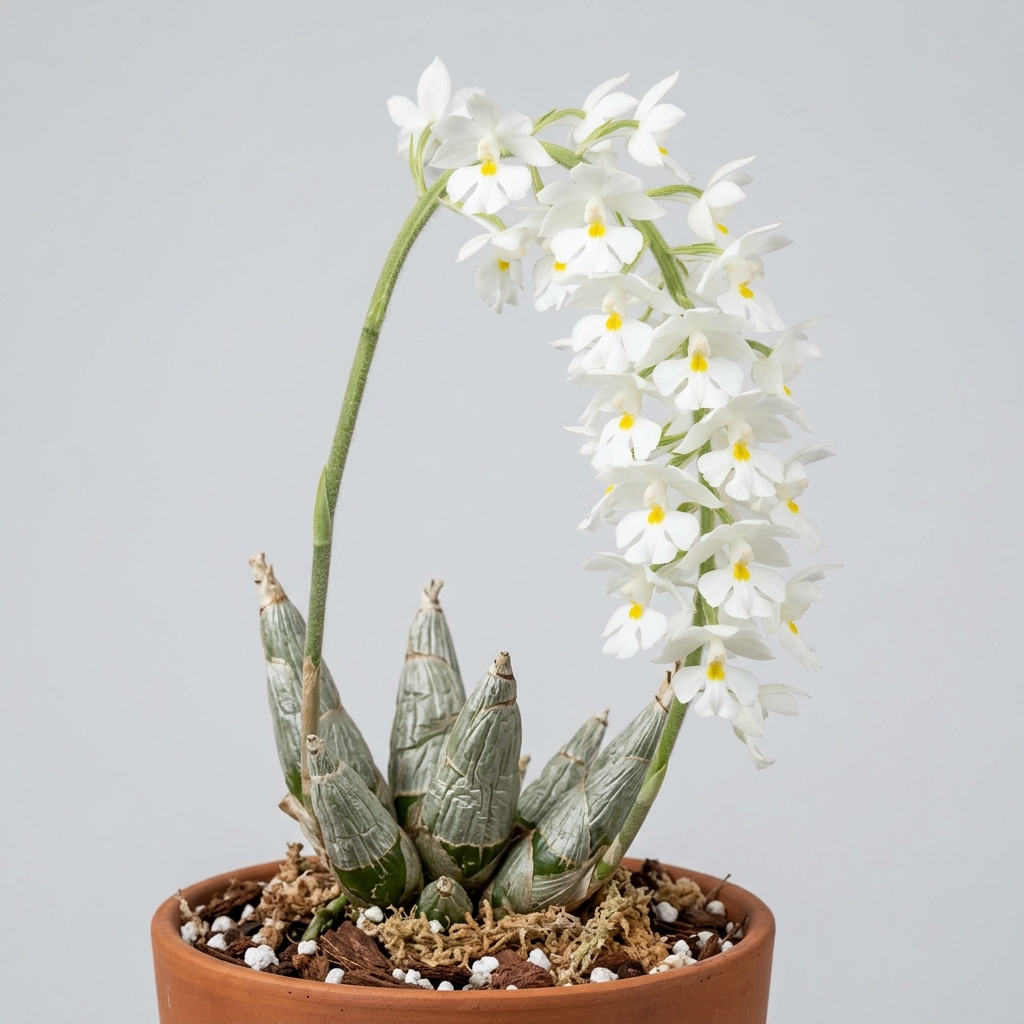
Calanthe Vestita is a highly esteemed terrestrial orchid species celebrated for its elegant, arching spikes of pristine white flowers. Native to the tropical forests of Southeast Asia, this deciduous orchid presents a dramatic seasonal transformation that captivates collectors and casual growers alike. Its striking floral display, which typically emerges from bare pseudobulbs after the foliage has dropped, makes it a standout feature in late autumn and winter collections.
Unlike many epiphytic orchids, Calanthe Vestita thrives in a more terrestrial-style potting medium and follows a strict annual growth cycle. Cultivators value this orchid not only for its delicate, long-lasting blossoms but also for its predictable growth rhythm, which rewards attentive care with a spectacular seasonal show. Understanding its distinct active growth and dormant phases is the key to successfully maintaining this classic species over many years.
💡 Did You Know?
Calanthe Vestita was one of the very first orchid species used in artificial hybridization. Its cross with Calanthe masuca in the mid-nineteenth century produced Calanthe Dominyi, marking a historic milestone in orchid breeding history and proving that orchids could be successfully hybridized by humans.
🌿 Botanical Overview
Calanthe Vestita is characterized by its large, prominent, silvery-green pseudobulbs that store water and nutrients to survive dry periods. During the spring and summer, these pseudobulbs produce broad, pleated, lanceolate leaves that can grow quite large, giving the plant a lush, tropical appearance. The foliage is deciduous, naturally yellowing and dropping off as the plant enters its autumn dormancy.
This shedding of leaves is a natural physiological response rather than a sign of ill health. Once the foliage has fallen, the plant redirects its stored energy into producing tall, arching flower spikes from the base of the mature pseudobulbs. This unique growth habit ensures that the delicate flowers are displayed without any foliage obstructing their view.
🌸 Flower Characteristics
The blossoms of Calanthe Vestita are noted for their pristine white sepals and petals, which contrast beautifully with a deeply lobed lip or labellum. The lip typically features a vibrant spot of color at its center, ranging from golden yellow to deep red or magenta, depending on the specific variety or clone. Each arching inflorescence can carry dozens of individual flowers, opening sequentially from the base upward.
The flowers are relatively large for the genus, often measuring up to two inches across. They are arranged elegantly along a pubescent, or slightly hairy, flower spike that can reach up to two feet in length. The overall presentation is one of airy elegance, with the white blooms appearing to float on delicate stems.
Fragrance & Bloom Profile
While some growers report a very subtle, clean scent under warm, humid conditions, the fragrance of Calanthe Vestita is not consistently documented or prominent in most cultivated specimens. The primary appeal of this orchid lies in its visual presentation rather than its olfactory profile.
The blooms are remarkably long-lasting, often remaining fresh for several weeks to a couple of months if kept in cool, draft-free conditions. Because the flowers open sequentially, the overall blooming period of a single spike can extend over a significant portion of the winter season, providing welcome color when many other plants are dormant.
Parentage & Hybrid Lineage
Calanthe Vestita is a naturally occurring species rather than a man-made hybrid, though it has been widely used in orchid breeding since the nineteenth century. It is a primary parent of many classic deciduous Calanthe hybrids, including the famous Calanthe Veitchii, which was one of the earliest artificial orchid hybrids ever registered.
In modern horticulture, specimens labeled Calanthe Vestita are typically either wild-type species selections or line-bred cultivars selected for larger flower size, cleaner white petals, or more intense coloration in the lip. Because documentation on historical collections can vary, growers should treat specific clonal names with cautious optimism regarding their exact lineage.
🌱 Growing Conditions
During its active growing phase in spring and summer, Calanthe Vestita prefers warm temperatures ranging from 70°F to 85°F during the day, with a slight drop at night. It thrives in bright, filtered light, similar to the conditions preferred by Cattleyas or Phalaenopsis, but should be protected from direct midday sun, which can easily scorch the thin, pleated leaves.
💡 Care Tip
Always water this orchid at the pot level rather than from above. The thin, pleated leaves of Calanthe Vestita are highly sensitive to standing water, which can quickly encourage fungal leaf spot diseases if left on the foliage.
Good air circulation is essential to prevent fungal and bacterial issues on the foliage, especially in high-humidity environments. Maintain relative humidity levels between 50% and 70% during the growing season. When the plant enters its winter dormant phase, temperatures should be kept cooler, ideally between 55°F and 65°F, to help initiate and sustain the blooming process.
Watering, Feeding & Potting Media
Watering practices must change dramatically depending on the season. In spring, as new growth emerges from the base of the pseudobulbs, begin watering moderately. Once the root system is well established and the leaves are growing rapidly, water copiously and apply a balanced, diluted orchid fertilizer weekly. The potting medium should remain consistently moist but never waterlogged.
The ideal potting medium for this terrestrial species is more moisture-retentive than standard orchid bark. A mix of fine fir bark, sphagnum moss, perlite, and a small amount of peat or leaf mold works well. When the leaves begin to yellow in autumn, gradually reduce watering. Once the leaves have completely fallen, stop fertilizing entirely and reduce watering to an absolute minimum, only watering lightly if the pseudobulbs show severe shriveling.
Blooming Season & Care Notes
The blooming season typically spans from late autumn through the winter months. The flower spikes emerge from the base of the leafless pseudobulbs and grow rapidly. During this time, keep the plant in a cool, bright location to prolong the life of the blossoms.
Repotting should be done annually in early spring, just as the new growths and fresh roots begin to appear at the base of the old pseudobulbs. Gently remove the old potting medium, trim away dead roots from the previous year, and pot the pseudobulbs into fresh media. You can separate individual pseudobulbs at this time to propagate the plant, ensuring each division has at least one strong, healthy pseudobulb.
⚠️ Common Issues
⚠️ Common Mistake
The most common mistake is the orchid during its winter dormancy. Once the leaves drop, the plant cannot process water. Continuing to water normally during this period will inevitably lead to root rot and the loss of the pseudobulb.
- Leaf Spotting: The thin, pleated leaves are susceptible to fungal spotting if water is allowed to sit on the foliage or if air circulation is inadequate. Always water the medium directly rather than overhead.
- Pseudobulb Rot: Overwatering during the winter dormant period is the most common cause of plant loss, leading to soft, black, rotted pseudobulbs. Keep the plant dry once leaves have dropped.
- Bud Blast: Sudden changes in temperature, low humidity, or drafts can cause the developing flower buds to yellow and drop before opening.
- Spider Mites: These pests can attack the thin leaves during the warm, dry summer months. Inspect the undersides of the leaves regularly and treat with insecticidal soap if detected.
❓ Frequently Asked Questions
Why are the leaves on my Calanthe Vestita turning yellow and falling off?
This is a completely natural part of the orchid’s annual growth cycle. Calanthe Vestita is a deciduous species that sheds its leaves every autumn before blooming. Do not panic; simply reduce watering significantly as the leaves drop.
How often should I water Calanthe Vestita during its winter rest?
During the winter rest, watering should be almost entirely suspended. Only apply a very small amount of water if you notice the pseudobulbs shriveling excessively. Overwatering during this dormant phase will quickly cause the roots and pseudobulbs to rot.
What type of potting mix is best for this orchid?
Unlike epiphytic orchids, Calanthe Vestita prefers a terrestrial-style mix that retains more moisture. A blend of fine orchid bark, peat moss, perlite, and chopped sphagnum moss provides the perfect balance of moisture retention and drainage.
Can I grow Calanthe Vestita under artificial LED lights?
Yes, Calanthe Vestita can be grown successfully under LED grow lights. Position the plant so it receives moderate to bright light during the spring and summer growing season, ensuring the lights are kept at a safe distance to avoid overheating the thin leaves.
⭐ Final Growing Notes
Calanthe Vestita is a rewarding and unique orchid that offers a fascinating glimpse into the diversity of the Orchidaceae family. By respecting its natural seasonal cycle of heavy summer watering and strict winter dryness, growers can enjoy a spectacular display of elegant white blooms year after year. It remains an essential addition for any collector looking to expand their expertise beyond standard epiphytic orchids.
⚕️ Health, Safety & Edibility
Understanding how a plant interacts with people, pets, and the surrounding environment is part of responsible cultivation. This section uses conservative, general guidance and does not replace professional medical or veterinary advice.
Human Safety: Species-specific human toxicity data for Calanthe Vestita is limited. Use conservative handling practices and avoid intentional consumption.
Pet Safety: Pet-specific safety information for Calanthe Vestita is limited, so keep it away from animals that commonly chew plants.
Edibility: Calanthe Vestita should not be treated as edible. Ornamental specimens may contain natural irritants or horticultural residues that make them unsuitable for consumption.
Skin Contact: Skin irritation is not well documented for this plant, but gloves are sensible when repotting, pruning, or handling potting media.
🌱 Propagation Tip
Propagate Calanthe Vestita during the spring repotting process. Individual pseudobulbs can be carefully separated once new growth begins. Ensure each division has a healthy pseudobulb and a developing eye at its base to guarantee successful establishment.
⭐ Expert Advice
To maximize the flower count and spike length, feed heavily with a high-nitrogen fertilizer during the peak summer growing phase. The larger and plumper you can get the pseudobulbs by autumn, the more spectacular the winter floral display will be.

Leave A Comment