
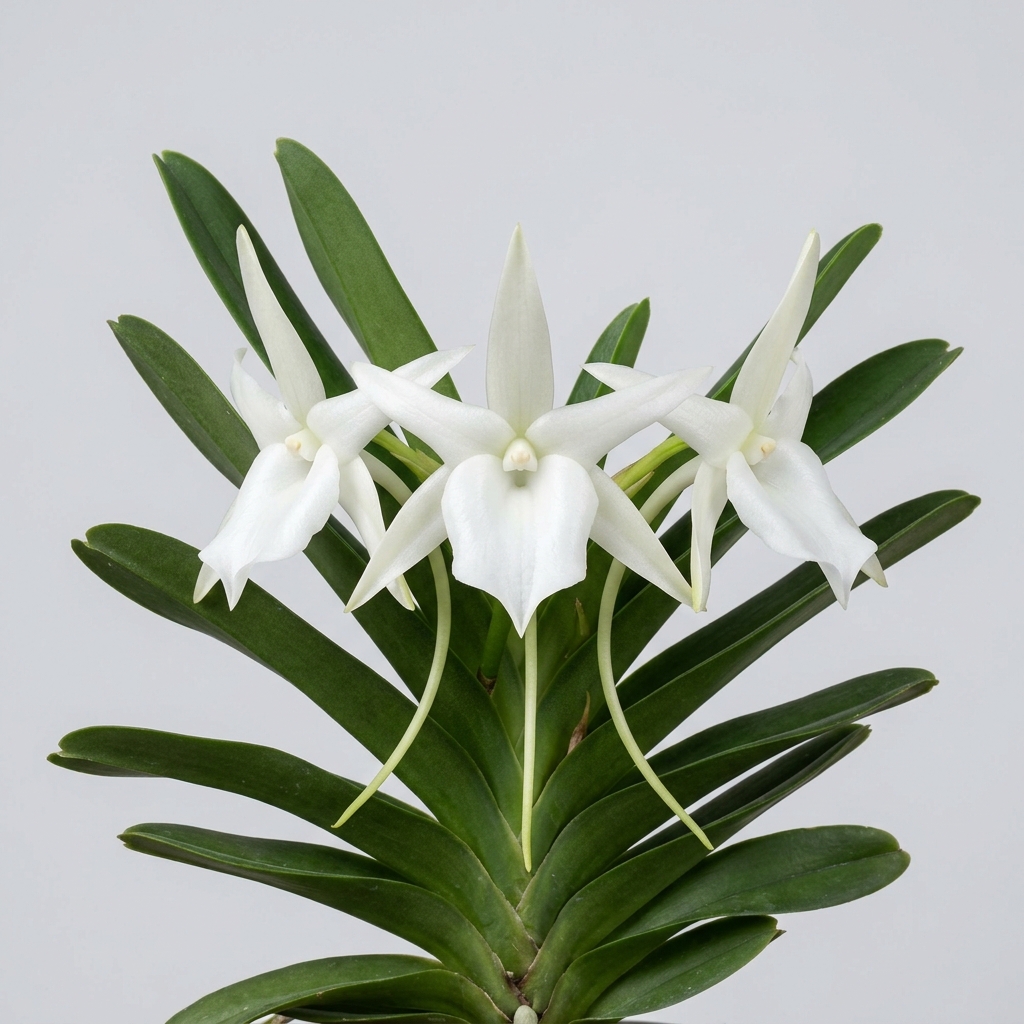
Angraecum Magdalenae is a highly celebrated orchid species within the Vandeae tribe, renowned for its striking, pristine white blossoms and relatively compact growth habit compared to its larger relatives. Originating from the rocky, montane regions of Madagascar, this orchid has captured the attention of enthusiasts worldwide due to its architectural foliage and exceptionally large, waxy flowers. Growers prize this plant not only for its dramatic visual appeal but also for its manageable size, making it an excellent candidate for indoor or greenhouse cultivation.
Unlike some of the more sprawling members of the Angraecum genus, this orchid maintains a neat, fan-like growth pattern with thick, leathery leaves that provide year-round structural beauty. When in bloom, the contrast between the dark green, succulent-like foliage and the luminous, long-spurred white flowers creates a breathtaking display. Cultivating this species successfully requires a balance of bright, filtered light, high humidity, and a distinct seasonal watering regime that mimics its natural high-altitude habitat.
💡 Did You Know?
Angraecum Magdalenae is often called the Queen of Angraecums due to its exceptionally large, crystalline white flowers. In its native Madagascar, it grows as a lithophyte on exposed, mossy sandstone rocks rather than on trees, adapting to high-altitude winds and intense sunlight.
🌿 Botanical Overview
Angraecum Magdalenae, often referred to as the Queen of Angraecums, is a lithophytic or epiphytic orchid native to the central highlands of Madagascar. In its natural environment, it grows on moss-covered rocks and in humus-filled crevices at elevations ranging from 800 to 2,000 meters. This high-altitude origin dictates its preference for cooler temperatures and distinct seasonal shifts compared to lowland tropical orchids.
The plant features a short stem clothed in tightly overlapping, distichous leaves that form a compact, symmetrical fan. These leaves are thick, rigid, and covered in a subtle glaucous sheen, which helps the plant conserve moisture during dry spells. Its root system is robust and fleshy, adapted to clinging to rocky substrates and absorbing atmospheric moisture rapidly.
🌸 Flower Characteristics
The blossoms of Angraecum Magdalenae are among the most spectacular in the genus, typically measuring between three to four inches in diameter. The petals and sepals are broad, fleshy, and crystalline white, presenting a star-like shape with a prominent, broad lip. A defining feature of this flower is its long, downward-curving nectar spur, which can extend several inches from the back of the lip, a classic evolutionary trait of angraecoid orchids adapted for moth pollination.
Flowers are borne on short, sturdy inflorescences that emerge from the leaf axils, usually carrying one to three blossoms per spike. The flowers are remarkably long-lasting, often remaining pristine for several weeks due to their heavy, waxy substance. Their crystalline texture catches the light beautifully, giving them a luminous quality.
Fragrance & Bloom Profile
One of the most alluring attributes of Angraecum Magdalenae is its intense, intoxicating fragrance. The scent is strictly nocturnal, beginning to release as dusk falls and reaching its peak intensity in the middle of the night. Growers describe the fragrance as a rich, sweet blend of jasmine, gardenia, and warm vanilla, designed to attract night-flying hawkmoths in its native habitat.
During the day, the flowers remain virtually odorless, conserving energy until the evening hours. The bloom cycle typically lasts for four to six weeks, during which the fragrance consistently fills the growing space each night. This powerful olfactory profile makes it a favorite choice for indoor growers who appreciate evening-scented plants.
Parentage & Hybrid Lineage
Angraecum Magdalenae is a naturally occurring species rather than a man-made hybrid, meaning its genetic lineage is preserved directly from wild populations. In orchid registration records, it is recognized as a distinct species within the genus Angraecum. However, its outstanding floral characteristics and compact habit have made it a highly desirable parent in hybridizing programs.
It has been crossed with other angraecoid species to produce notable primary hybrids, such as Angraecum Crestwood (a cross between Angraecum Veitchii and Angraecum Magdalenae). These hybrids often aim to combine the large flower size and fragrance of Magdalenae with the vigor and warmth tolerance of other species. In general grower references, pure strains of Angraecum Magdalenae remain highly sought after by species purists.
🌱 Growing Conditions
To cultivate Angraecum Magdalenae successfully, growers must replicate the bright, airy, and cool-to-intermediate conditions of the Malagasy highlands. The plant thrives in bright, filtered light, similar to the light levels required for Cattleyas. While it can tolerate some direct morning sun, harsh afternoon sunlight will scorch the thick leaves, so appropriate shading is essential.
💡 Care Tip
Ensure your growing area has excellent air movement, especially when is high. A small oscillating fan running continuously near the plant helps prevent fungal leaf spots and mimics the breezy montane conditions of its native habitat.
Temperature management is crucial for this species. It prefers daytime temperatures between 70 and 80 degrees Fahrenheit, with a significant drop at night to around 55 to 60 degrees Fahrenheit. This nocturnal temperature drop is vital for triggering bud initiation and maintaining overall plant vigor. High humidity of 60% to 80% is ideal, coupled with strong, continuous air movement to prevent fungal pathogens from settling on the foliage.
Watering, Feeding & Potting Media
Watering practices should align with the seasonal rhythms of its native habitat. During the active growing season in spring and summer, Angraecum Magdalenae requires regular, thorough watering, allowing the potting medium to become almost dry before watering again. In the winter, watering should be reduced, providing just enough moisture to keep the leaves and roots from shriveling.
A coarse, open potting medium is essential to ensure rapid drainage and excellent root aeration. A mix of large-grade fir bark, charcoal, and perlite works well in clay pots, which help cool the roots. Alternatively, the plant can be mounted on cork slabs or tree fern plaques if high humidity can be consistently maintained. Feed the plant with a balanced, diluted orchid fertilizer weekly during the growing season, flushing the pot with pure water once a month to prevent salt buildup.
Blooming Season & Care Notes
The primary blooming season for Angraecum Magdalenae occurs from late autumn through early spring, though occasional off-season blooms can occur. As the days shorten and night temperatures drop in autumn, the plant begins to initiate flower spikes from the lower leaf axils. During this development phase, avoid moving the plant or changing its orientation to the light source, as sudden changes can cause the developing buds to blast.
After blooming is complete, the plant enters a semi-dormant rest period. This is the ideal time to assess the potting medium. Repotting should be done sparingly, as Angraecum roots are notoriously sensitive to disturbance and can take a long time to recover. Only repot when the medium has begun to decompose or the plant has completely outgrown its container, taking care to minimize root damage.
⚠️ Common Issues
⚠️ Common Mistake
A frequent error is repotting this orchid too often. Angraecum Magdalenae has highly sensitive roots that resent disturbance. Repotting annually or damaging the roots during the process can set the plant's growth back by several seasons.
- Root Rot:
Caused by overwatering or a degraded, compacted potting medium that suffocates the roots. - Bud Blast:
Developing buds may turn yellow and drop due to sudden changes in temperature, low humidity, or drafts. - Leaf Spotting: Fungal or bacterial spots can develop on the leaves if water is allowed to sit in the crown or leaf axils overnight without adequate air circulation.
- Spider Mites and Scale: These pests can occasionally infest the tight crevices between the overlapping leaves; treat promptly with insecticidal soap or horticultural oil.
- Dehydration:
Indicated by wrinkled, leathery leaves and shriveled roots, often due to underwatering or a completely dead root system.
❓ Frequently Asked Questions
How often should I water my Angraecum Magdalenae?
Watering frequency depends on your growing environment, but generally, you should water thoroughly when the potting medium is nearly dry. During the active summer growth phase, this may be every few days, while in the winter rest period, it may be reduced to once every week or two.
Why are the buds on my orchid turning yellow and falling off?
This is known as bud blast and is typically caused by environmental stress. Common culprits include sudden drops in humidity, cold drafts, moving the plant while buds are forming, or allowing the potting medium to dry out completely during spike development.
Can I grow Angraecum Magdalenae under LED grow lights?
Yes, this species adapts well to LED grow lights. Ensure the lights provide a broad spectrum and are positioned to deliver moderately bright light levels, similar to what you would provide for Cattleyas, while monitoring leaf temperature to avoid heat stress.
How do I know when it is time to repot my orchid?
Only repot Angraecum Magdalenae when the potting medium has broken down and is retaining too much moisture, or when the plant has physically outgrown its pot. Because this species dislikes root disturbance, repotting should only be done every three to four years, ideally just after blooming as new root growth begins.
⭐ Final Growing Notes
Angraecum Magdalenae is a rewarding and highly distinctive orchid that brings a touch of Madagascan wilderness to any collection. While its specific requirements for cool night temperatures and high humidity demand some attention, its compact size and magnificent, night-fragrant blooms make it well worth the effort. By respecting its sensitive root system and providing a distinct winter rest, growers can enjoy the spectacular display of the Queen of Angraecums for many years.
⚕️ Health, Safety & Edibility
Understanding how a plant interacts with people, pets, and the surrounding environment is part of responsible cultivation. This section uses conservative, general guidance and does not replace professional medical or veterinary advice.
Human Safety: No published evidence currently identifies species-specific toxicity concerns for Angraecum Magdalenae during normal handling. As with most ornamental plants, it should not be intentionally consumed.
Pet Safety: Published information does not indicate that this orchid commonly poses a toxicity concern for cats or dogs. However, chewing leaves, flowers, roots, or potting media may still cause mild digestive upset.
Edibility: This orchid is cultivated for ornamental display rather than food. Ornamental plants may carry fertilizers, pesticides, or other horticultural treatments that make them unsuitable for consumption.
Skin Contact: Routine handling is not generally associated with skin irritation. Gardeners with sensitive skin may prefer wearing gloves when repotting, pruning, or handling potting media.
🌱 Propagation Tip
Propagation of this species is typically achieved through seed culture in a laboratory. While mature plants may occasionally produce basal offsets or keikis, these should only be detached when they have developed several robust roots of their own to ensure survival.
⭐ Expert Advice
To trigger reliable winter blooming, ensure the plant experiences a distinct drop in night temperatures down to 55 to 60 degrees Fahrenheit during the early autumn months, accompanied by a slight reduction in .

Leave A Comment