
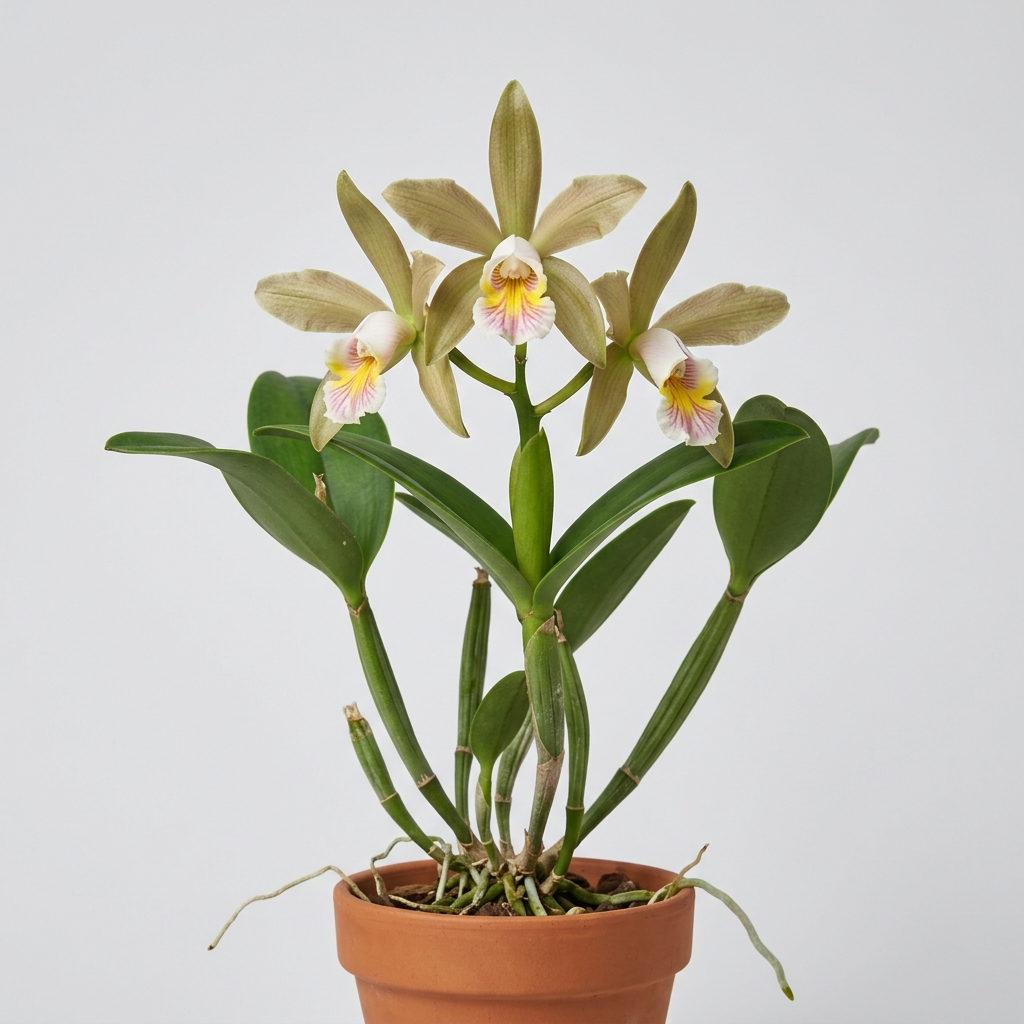
Cattleya Forbesii is a highly regarded bifoliate orchid species native to the coastal forests of southern Brazil. Revered by collectors for its understated elegance and resilient nature, this orchid produces distinctive greenish-yellow to bronze-tan flowers featuring a beautifully detailed, tubular lip. Unlike some of its more flamboyant relatives in the Cattleya genus, this species appeals to growers who appreciate architectural form, subtle color palettes, and reliable growth habits.
In cultivation, Cattleya Forbesii is celebrated for its adaptability and relatively compact growth habit compared to larger labiate cattleyas. Its slender, cylindrical pseudobulbs typically bear two leathery leaves, making it an excellent candidate for windowsill culture, greenhouse benches, or mounted displays. This species is often recommended for intermediate growers looking to transition from common hybrids to true species orchids, offering a rewarding blooming cycle with minimal fuss.
💡 Did You Know?
Unlike many flashy Cattleya species that rely on vibrant purples and pinks to attract pollinators, Cattleya Forbesii utilizes a highly specialized, tubular lip with bright yellow and red interior striping. This unique structure acts as a precise visual guide for native bees in its coastal Brazilian habitat, ensuring efficient pollination while the green-tan petals help the flower blend into the surrounding foliage.
🌿 Botanical Overview
Cattleya Forbesii was first described in the early 19th century and is named in honor of the English botanist John Forbes. In its native Brazilian habitat, it grows primarily as an epiphyte or lithophyte in coastal scrub forests known as restingas. In these coastal environments, the plants are exposed to bright light, high humidity, and constant sea breezes, which has equipped the species with a robust tolerance for varying moisture levels and temperature fluctuations.
The vegetative structure of this orchid consists of slender, cane-like pseudobulbs that can reach up to twelve inches in height. Each pseudobulb is topped by two oblong, leathery leaves that help the plant conserve water during drier periods. Its root system is vigorous, producing thick, velamen-covered roots designed to cling tightly to tree bark or rocky substrates while rapidly absorbing atmospheric moisture and nutrients.
🌸 Flower Characteristics
The blossoms of Cattleya Forbesii are structurally fascinating and distinct from the classic, large-flowered Cattleya hybrids. Each inflorescence emerges from a green sheath at the apex of the mature pseudobulb, bearing between two and five flowers that typically measure three to four inches in diameter. The sepals and petals are relatively narrow and starry, displaying a range of colors from pale apple-green to warm olive-tan or bronze, depending on the specific clone and light intensity during development.
The defining feature of the flower is its tubular lip, or labellum. The exterior of the lip is a clean, contrasting white, while the interior is adorned with rich yellow coloration and intricate, radiating lines of rose-pink or crimson. This striking interior patterning serves as a guide for natural pollinators and provides a beautiful contrast to the subdued tones of the surrounding petals.
Fragrance & Bloom Profile
While not as intensely perfumed as some of its larger-flowered relatives, Cattleya Forbesii produces a delicate, pleasing fragrance that is most noticeable during the morning hours. The scent is commonly described as sweet, clean, and slightly herbal or spicy, though fragrance intensity can vary depending on temperature, humidity, and individual plant genetics.
The flowers are relatively long-lasting for a Cattleya species, often remaining in pristine condition for three to five weeks if kept in a cool, draft-free environment. To maximize the lifespan of the blooms, growers should avoid getting water directly on the petals and sepals, which can encourage fungal spotting or premature senescence.
Parentage & Hybrid Lineage
As a naturally occurring species rather than a man-made hybrid, Cattleya Forbesii possesses a stable genetic profile that has made it a valuable parent in orchid breeding. Hybridizers have long valued this species for its compact growth habit, ease of culture, and the unique tubular shape of its lip.
When crossed with other Cattleya species or allied genera, it frequently passes on its robust growth characteristics and yellow-throated lip patterning. While some historical registration records exist for primary hybrids, modern growers often seek out select line-bred cultivars of the species itself, which have been selected over generations for improved flower size, flatter segments, and more intense lip coloration.
🌱 Growing Conditions
To cultivate Cattleya Forbesii successfully, growers should attempt to replicate its bright, breezy coastal habitat. It thrives in bright, filtered light, ideally receiving around 2,000 to 3,000 foot-candles. A southern or eastern exposure with sheer curtain shading is often ideal for indoor growers, while greenhouse growers may require light shading during the peak of summer to prevent leaf scorch.
💡 Care Tip
To mimic the coastal restinga habitat of Cattleya Forbesii, always prioritize excellent air movement around the foliage and root zone. Placing a small fan near your growing area to create a gentle, continuous breeze will help dry the potting medium efficiently and significantly reduce the risk of fungal leaf spot and root rot.
Temperature: wise, this species is highly adaptable, classified as an intermediate to warm grower. It prefers daytime temperatures between 75°F and 85°F and a nighttime drop to 60°F to 65°F. Maintaining a relative humidity level of 60% to 80% is optimal, accompanied by continuous, gentle air movement to prevent stagnant air pockets that can harbor pathogens.
Watering, Feeding & Potting Media
Proper watering is critical to the health of Cattleya Forbesii. During the active growing season in spring and summer, the plant should be watered thoroughly and then allowed to dry out almost completely before the next application. In winter, when growth slows, watering frequency should be reduced, though the pseudobulbs should never be allowed to shrivel severely.
A highly porous, fast-draining potting medium is essential. Coarse fir bark mixed with horticultural charcoal and perlite works exceptionally well in plastic or clay pots. Alternatively, because of its epiphytic nature, this species is an excellent candidate for mounting on cork bark or tree fern plaques, provided the grower can maintain adequate daily humidity and watering. Feed the plant weekly with a balanced, highly diluted orchid fertilizer during active growth, flushing the pot with pure water once a month to prevent salt buildup.
Blooming Season & Care Notes
Cattleya Forbesii typically initiates its blooming cycle in the late spring or summer months, though well-grown specimens may occasionally produce a secondary flush of flowers in the autumn. The flower buds develop within a protective sheath at the top of the newly matured pseudobulb. During this period, avoid shifting the plant’s orientation relative to the light source, as this can cause the buds to twist or develop at awkward angles.
Once the blooming cycle is complete, the orchid enters a brief period of semi-dormancy. This is the ideal time to perform any necessary repotting or dividing, just as new root tips begin to emerge from the base of the lead pseudobulb. Avoid disturbing the root system unless the potting medium has begun to decompose or the plant has physically outgrown its container.
⚠️ Common Issues
⚠️ Common Mistake
A frequent mistake is keeping the potting medium constantly wet or using a heavy, moisture-retentive soil mix. Cattleya Forbesii has thick roots that require a distinct wet-to-dry cycle. Overwatering or using degraded bark will suffocate the root system, leading to rapid root loss, pseudobulb shriveling, and the eventual decline of the entire plant.
- Root Rot:
Caused by overwatering or a degraded potting medium that retains too much moisture, leading to soft, black roots and shriveled pseudobulbs. - Scale and Mealybugs: These common pests often hide under the dry, papery sheaths surrounding the pseudobulbs; remove sheaths carefully to inspect and treat with insecticidal soap or neem oil.
- Bud Blast:
Sudden drops in humidity, extreme temperature fluctuations, or drafts can cause developing buds to turn yellow and drop before opening. - Leaf Scorch: Exposure to direct, unshaded midday sun can cause yellowing leaves or permanent black, dry burn patches on the foliage.
❓ Frequently Asked Questions
How often should I water my Cattleya Forbesii?
Watering frequency depends heavily on your growing environment, pot type, and medium. Generally, water thoroughly once or twice a week during the active growing season, allowing the medium to dry out almost completely between waterings. Reduce watering in the winter.
Can Cattleya Forbesii be grown under LED lights?
Yes, this species adapts well to artificial lighting. Ensure the LED fixtures provide a broad spectrum suitable for orchids and are positioned close enough to deliver bright, intermediate-level light without generating excessive heat that could dry out the foliage.
Why are the leaves on my orchid turning yellow?
Yellowing leaves can indicate several issues. If the older, basal leaves are shedding naturally, it is normal. However, widespread yellowing may suggest overwatering (leading to root loss), insufficient nutrients, or excessive direct sunlight.
When is the best time to repot this orchid?
The optimal time to repot is immediately after flowering has finished and just as new root growth begins to emerge from the base of the newest pseudobulb. This ensures the plant establishes quickly in its new medium with minimal transplant shock.
⭐ Final Growing Notes
Cattleya Forbesii remains a classic choice for orchid enthusiasts due to its unique color palette, manageable size, and forgiving nature. By providing bright, filtered light, excellent drainage, and consistent air movement, growers can enjoy the subtle beauty of its intricately patterned blooms year after year. Whether mounted on cork or grown in a traditional clay pot, this Brazilian species is a rewarding addition to any diverse orchid collection.
⚕️ Health, Safety & Edibility
Understanding how a plant interacts with people, pets, and the surrounding environment is part of responsible cultivation. This section uses conservative, general guidance and does not replace professional medical or veterinary advice.
Human Safety: No published evidence currently identifies species-specific toxicity concerns for Cattleya Forbesii during normal handling. As with most ornamental plants, it should not be intentionally consumed.
Pet Safety: Published information does not indicate that this orchid commonly poses a toxicity concern for cats or dogs. However, chewing leaves, flowers, roots, or potting media may still cause mild digestive upset.
Edibility: This orchid is cultivated for ornamental display rather than food. Ornamental plants may carry fertilizers, pesticides, or other horticultural treatments that make them unsuitable for consumption.
Skin Contact: Routine handling is not generally associated with skin irritation. Gardeners with sensitive skin may prefer wearing gloves when repotting, pruning, or handling potting media.
🌱 Propagation Tip
Propagation is best achieved through division of mature plants during the spring repotting cycle. Ensure that each division contains at least three to four healthy, mature pseudobulbs with an active lead eye. Use a sterile cutting tool to divide the rhizome, and pot the new divisions in a highly porous, fast-draining bark mix to encourage rapid root establishment.
⭐ Expert Advice
For an exceptionally natural presentation, try mounting Cattleya Forbesii on a cork bark plaque rather than potting it. Secure the plant firmly with monofilament line and a small pad of high-quality sphagnum moss around the roots. Mounted plants will require more frequent , but they reward the grower with incredibly healthy, aerial root systems that mimic their wild epiphytic growth habit.

Leave A Comment