
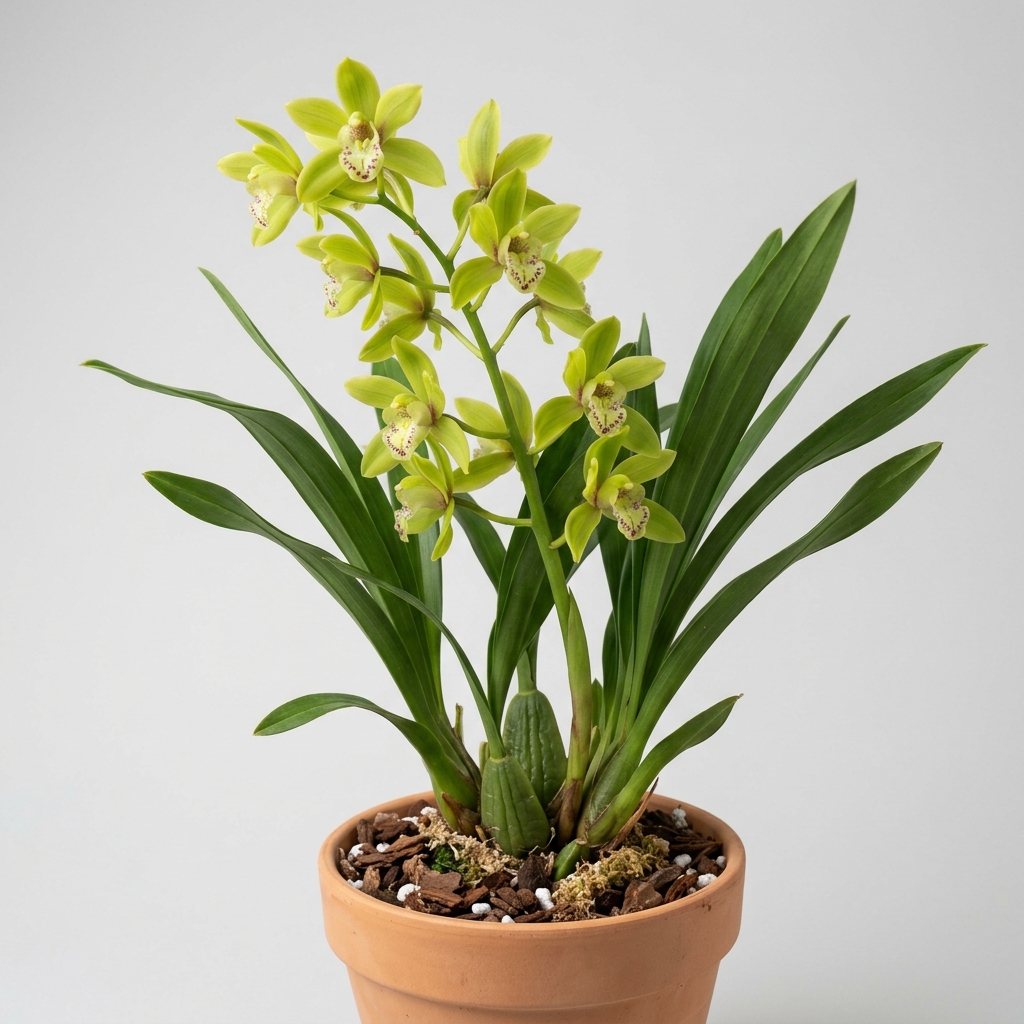
Cymbidium Chloranthum is an intriguing and highly valued species within the popular Cymbidium genus, cherished by collectors for its distinctive apple-green to yellow-green blossoms. Native to the humid, lower montane forests of Southeast Asia, this orchid offers a refreshing departure from the typical cool-growing requirements of many of its montane relatives. Its elegant, compact growth habit and striking floral presentation make it a standout addition to any diverse orchid collection.
In cultivation, this species produces upright to arching inflorescences that carry multiple medium-sized flowers, creating a beautiful contrast against its deep green, strap-like foliage. While it is less common in mass commercial cultivation than complex modern hybrids, it offers a highly rewarding experience for intermediate growers who can provide the warm-to-intermediate temperatures and consistent humidity it naturally craves.
💡 Did You Know?
Unlike the majority of popular Cymbidium species that require chilly autumn nights to trigger their spectacular blooms, Cymbidium Chloranthum is native to equatorial Southeast Asia. This means it thrives in warmer, more consistent household temperatures, making it a far more adaptable choice for indoor growers who struggle with cool-climate orchids.
🌿 Botanical Overview
Cymbidium Chloranthum features a classic sympodial growth habit, characterized by clustered, slightly compressed pseudobulbs that are wrapped in protective leaf sheaths. The leaves are linear, arching, and leathery, typical of the genus but relatively compact compared to giant terrestrial Cymbidiums, making it much easier to accommodate on indoor windowsills or in modest greenhouse spaces.
In its natural habitat, this orchid grows primarily as an epiphyte on mossy tree trunks or occasionally as a lithophyte on shaded rocks throughout Malaysia, Sumatra, and Borneo. This equatorial origin dictates its preference for higher minimum temperatures and more consistent humidity than its Himalayan cousins, which are accustomed to distinct seasonal chills.
🌸 Flower Characteristics
The flowers of Cymbidium Chloranthum are typically three to five centimeters in diameter, arranged neatly along an erect or slightly arching spike that emerges from the base of the mature pseudobulb. Each inflorescence can bear numerous blooms, creating a dense and visually striking display when the plant reaches maturity.
The sepals and petals are narrow, spreading, and present clean shades of green or greenish-yellow. The lip, or labellum, serves as the focal point of the flower; it is usually pale yellow or white, adorned with striking reddish-brown or purple spots and bars that provide a beautiful contrast to the solid green tepals.
Fragrance & Bloom Profile
The fragrance of Cymbidium Chloranthum is not consistently documented across all cultivated specimens, with some growers reporting a delicate, subtle herbal or sweet scent under warm, bright conditions, while others note little to no detectable aroma. This variation suggests that fragrance intensity may be highly dependent on clone selection and environmental factors.
Individual flowers are remarkably long-lasting, often remaining pristine for four to six weeks if the plant is kept in stable indoor conditions away from drafts. The blooming cycle typically occurs once a year, bringing a vibrant burst of cool green color to the growing area.
Parentage & Hybrid Lineage
Cymbidium Chloranthum is a naturally occurring species rather than a man-made hybrid. Because of this, its genetic makeup is stable, and its characteristics reflect the evolutionary adaptations developed in its native Southeast Asian rainforests.
While not as heavily hybridized as some of the larger, cool-growing species, it has been used occasionally by breeders seeking to introduce warm-tolerance, compact growth habits, and unique green coloration into modern Cymbidium lines. However, exact hybrid lineages involving this species are specialized and not as widely documented in mass-market catalogs.
🌱 Growing Conditions
To successfully cultivate this species, growers should aim to replicate its native tropical forest canopy. It prefers bright, indirect light; direct midday sun can easily scorch the leaves, while insufficient light will result in dark green, floppy foliage and a failure to produce flower spikes.
💡 Care Tip
To keep this orchid thriving, place it in a location with bright, filtered and continuous air movement. A small oscillating fan nearby can help mimic its native forest canopy environment, preventing stagnant air and reducing the risk of fungal leaf spots.
Temperature management is crucial. Unlike cool-growing Cymbidiums, this species thrives in intermediate to warm conditions, with ideal daytime temperatures ranging from 21 degrees to 29 degrees Celsius, and a slight drop at night. Continuous, gentle air movement is essential to prevent fungal infections in the high-humidity environments it prefers.
Watering, Feeding & Potting Media
Keep the medium evenly moist but never waterlogged during the active spring and summer growing seasons. Reduce watering slightly in winter, allowing the medium to dry out partially between waterings, but never allow the pseudobulbs to shrivel significantly.
Apply a balanced, diluted orchid fertilizer weekly or bi-weekly during active growth, following the common grower practice of feeding weakly, weekly. A coarse, free-draining potting mix is critical; a blend of medium-grade fir bark, perlite, and horticultural charcoal works exceptionally well to retain light moisture while ensuring excellent drainage.
Blooming Season & Care Notes
Blooming typically occurs in late spring or early summer, triggered by the natural increase in light and temperature. Once the flower spike begins to emerge, avoid moving the plant or changing its orientation to the light source, as this can cause the developing buds to twist or fail to open properly.
Repotting should only be done immediately after flowering has finished, typically every two to three years when the potting medium begins to break down. This minimizes root disturbance and allows the plant to establish itself in fresh media before the next growing cycle begins.
⚠️ Common Issues
⚠️ Common Mistake
The most common mistake is treating this species like a standard cool-growing Cymbidium by exposing it to near-freezing winter temperatures. Such cold exposure can severely damage the foliage and rot the root system of this warm-natured equatorial native.
- Root Rot: Caused by overwatering or compacted, poorly draining media that suffocates the roots.
- Leaf Scorch: Yellowing or black patches on leaves resulting from excessive direct sunlight.
- Bud Blast: Premature dropping of flower buds due to sudden temperature fluctuations, low humidity, or drafts.
- Pests: Susceptibility to spider mites, scale, and mealybugs, especially in dry indoor environments.
- Foliar Spotting: Fungal or bacterial spots arising from stagnant air and water sitting on the leaves overnight.
❓ Frequently Asked Questions
How often should I water Cymbidium Chloranthum?
Water when the top inch of the medium feels dry, typically once or twice a week depending on your local temperature and humidity. Do not let the roots sit in standing water, as this species requires excellent drainage.
Does Cymbidium Chloranthum require a cold period to bloom?
Unlike many cool-growing Cymbidium species, this warm-to-intermediate grower does not require a severe winter chill to trigger blooming. A mild drop in night temperatures in autumn is usually sufficient.
What is the best potting mix for this orchid?
A well-aerated mix of medium-grade fir bark, perlite, and horticultural charcoal is ideal. This ensures rapid drainage while retaining just enough moisture for the roots to thrive.
Why are the flower buds falling off before opening?
This is known as bud blast and is typically caused by environmental stress, such as sudden drafts, low humidity, extreme temperature shifts, or dry roots during spike development.
⭐ Final Growing Notes
Cymbidium Chloranthum represents a delightful departure from standard cool-growing orchids, offering warm-climate and indoor growers a manageable, beautiful species to cultivate. With its striking green flowers, compact stature, and relatively straightforward care requirements, it remains a highly rewarding addition to any diverse orchid collection.
⚕️ Health, Safety & Edibility
Understanding how a plant interacts with people, pets, and the surrounding environment is part of responsible cultivation. This section uses conservative, general guidance and does not replace professional medical or veterinary advice.
Human Safety: No published evidence currently identifies species-specific toxicity concerns for Cymbidium Chloranthum during normal handling. As with most ornamental plants, it should not be intentionally consumed.
Pet Safety: Published information does not indicate that this orchid commonly poses a toxicity concern for cats or dogs. However, chewing leaves, flowers, roots, or potting media may still cause mild digestive upset.
Edibility: This orchid is cultivated for ornamental display rather than food. Ornamental plants may carry fertilizers, pesticides, or other horticultural treatments that make them unsuitable for consumption.
Skin Contact: Routine handling is not generally associated with skin irritation. Gardeners with sensitive skin may prefer wearing gloves when repotting, pruning, or handling potting media.
🌱 Propagation Tip
Propagation is best achieved by division during repotting, ensuring that each new division has at least three healthy, mature pseudobulbs. Avoid dividing the plant too frequently, as larger specimens tend to produce more robust and frequent flower spikes.
⭐ Expert Advice
When repotting, choose a deep pot rather than a shallow one, as Cymbidium roots tend to grow downwards. Always wait until new root growth is visible at the base of the newest pseudobulb before repotting to ensure rapid establishment in the fresh medium.




Leave A Comment