
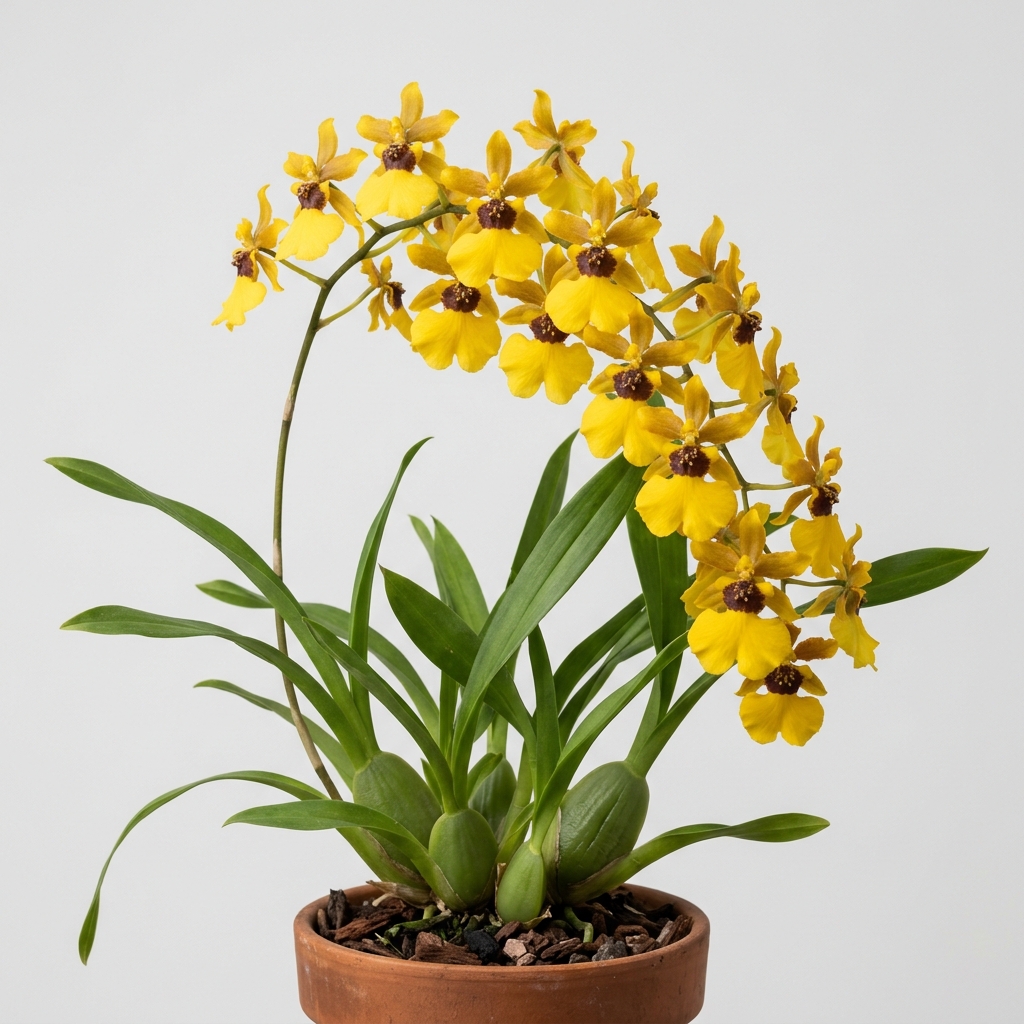
Oncidium Croesus is a captivating orchid highly valued by collectors for its compact growth habit and striking, contrast-rich blossoms. Belonging to the diverse Oncidium alliance, this orchid is particularly celebrated for its manageable size, making it an excellent choice for indoor growers and greenhouse enthusiasts alike. Its bright, cheerful flowers bring a touch of tropical elegance to any collection without demanding the extensive space required by larger orchid genera.
As an epiphyte native to the humid forests of South America, Oncidium Croesus shows classic sympodial growth with neat clusters of pseudobulbs. Growers prize this selection not only for its visual appeal but also for its relative resilience when provided with consistent cultural conditions. Understanding its specific environmental preferences is the key to unlocking regular, abundant blooming cycles year after year.
💡 Did You Know?
Oncidium Croesus is sometimes affectionately referred to as a dancing lady orchid due to the distinctive shape of its flaring lip, which resembles a flowing skirt. This visual illusion is common among many species in the Oncidium , making them a favorite for artistic floral displays and interactive botanical exhibits.
🌿 Botanical Overview
Oncidium Croesus is characterized by its compact, sympodial growth habit. The plant produces small, compressed, oblong-ovoid pseudobulbs that grow tightly together. Each pseudobulb is typically topped with one or two narrow, strap-like leaves that are flexible yet sturdy, exhibiting a healthy mid-green coloration under proper lighting conditions.
In its natural habitat, this orchid grows as an epiphyte, anchoring itself to the bark of trees where it benefits from excellent drainage and constant air circulation. The root system is relatively fine and fibrous, designed to quickly absorb moisture from rain and dew before drying out rapidly. This physiological structure dictates much of its care requirements in a home or greenhouse setting.
🌸 Flower Characteristics
The blossoms of Oncidium Croesus are the primary draw for orchid enthusiasts. The flowers are relatively small but are produced in generous numbers on arching or sub-erect inflorescences that emerge from the base of the mature pseudobulbs. Each bloom features bright golden-yellow petals and sepals that contrast dramatically with a prominent, dark reddish-brown to almost black crest or callus on the lip.
This distinctive dark center creates a striking visual focal point, giving the flowers an almost insect-like appearance designed to attract natural pollinators. The lip, or labellum, is broad and flaring, typical of the Oncidium genus, and serves as a landing platform. The overall presentation of the flower spike is airy and elegant, with multiple blooms open simultaneously to create a vibrant display.
Fragrance & Bloom Profile
While many members of the Oncidium alliance are famous for their intense, sweet perfumes, the fragrance profile of Oncidium Croesus is not consistently documented across all cultivated specimens. Some growers report a very faint, sweet, or grassy scent detectable only during the warmest hours of midday, while others find the blooms to be entirely unscented.
The longevity of the flowers is highly dependable, often lasting between three to five weeks under optimal environmental conditions. To maximize the lifespan of the blooms, it is best to keep the plant in a slightly cooler, stable environment once the buds have fully opened, avoiding sudden drafts or direct sunlight which can cause premature fading.
Parentage & Hybrid Lineage
In botanical literature, Oncidium Croesus is often treated as a distinct species native to Brazil, though it is sometimes classified under the genus Gomesa (as Gomesa croesus) due to ongoing taxonomic revisions within the Oncidiinae subtribe. Because of these shifting classifications, its exact status as a species versus a historical cultivar or hybrid can sometimes be confusing in commercial trade.
In the horticultural market, it is primarily grown and distributed under its established name, Oncidium Croesus. It has been used occasionally in hybridizing programs to introduce its compact growth habit and intensely contrasting lip coloration to new crosses. When purchasing this orchid, growers should rely on reputable nurseries that document the specific clonal or regional origin of their stock.
🌱 Growing Conditions
To cultivate Oncidium Croesus successfully, providing bright, filtered light is essential. An east-facing window or a shaded south-facing window is generally ideal. The leaves should maintain a light green hue; dark green leaves indicate insufficient light, while yellowish or reddish-tinged leaves suggest the light is too intense.
💡 Care Tip
To maintain the ideal for Oncidium Croesus without risking root rot, place the pot on a tray filled with pebbles and water. Ensure the bottom of the pot rests on the dry pebbles, never touching the water directly, to allow evaporation to naturally humidify the surrounding air.
Temperature: wise, this orchid thrives in intermediate to warm conditions. Daytime temperatures between 70F and 85F are ideal, with a slight drop of 10F to 15F at night to encourage robust growth and trigger flower spike development. High humidity levels between 50% and 70% are highly beneficial, provided there is constant, gentle air movement to prevent stagnant moisture from settling on the foliage.
Watering, Feeding & Potting Media
Watering should be approached with a soak and dry strategy. Because of its fine root system, Oncidium Croesus does not tolerate waterlogged conditions, which quickly lead to root rot. Water the plant thoroughly when the potting medium is nearly dry, but do not allow the pseudobulbs to shrivel severely. During the active growing season in spring and summer, watering frequency will need to be increased.
A high-quality, free-draining potting mix is crucial. A blend of fine-grade fir bark, perlite, and a small amount of chopped sphagnum moss works exceptionally well in plastic or clay pots. Alternatively, because of its compact size, this orchid is an excellent candidate for mounting on cork bark or tree fern plaques, provided the grower can maintain the high humidity and frequent misting required for mounted specimens. Feed with a balanced, diluted orchid fertilizer every two to three weeks during active growth, flushing the pot with pure water periodically to prevent salt buildup.
Blooming Season & Care Notes
Oncidium Croesus typically initiates its blooming cycle in the spring or early summer, though variations can occur depending on local growing conditions. The flower spikes emerge from the sheath at the base of the most recently matured pseudobulb. During spike development, it is critical to maintain stable environmental conditions and avoid moving the plant to prevent bud blast.
Once the blooming cycle is complete, the old flower spike should be cut back close to the base of the pseudobulb using sterilized cutting tools. This is also the ideal time to evaluate the plant for repotting. Repotting should only be performed when new root growth is visible at the base of the newest pseudobulbs, typically every two years, to refresh the decomposing media and allow room for future growth.
⚠️ Common Issues
⚠️ Common Mistake
A frequent error is potting Oncidium Croesus in a container that is too large. These orchids prefer to be slightly root-bound in a snug pot. An oversized pot holds excess moisture in the center of the medium, which leads to root suffocation and rot before the plant can establish.
- Root Rot: Caused by overwatering or compacted, decaying potting media that retains too much moisture around the fine roots.
- Leaf Spotting: Fungal or bacterial spots can develop on the foliage if water is allowed to sit on the leaves overnight without adequate air circulation.
- Bud Blast: The sudden drying and dropping of unopened buds, usually triggered by rapid changes in temperature, low humidity, or drafts.
- Pseudobulb Shriveling: A sign of dehydration, which can be caused by underwatering or, paradoxically, by root rot where the plant has lost the roots needed to absorb water.
- Pests: Mealybugs, spider mites, and scale insects can occasionally infest the tight crevices between pseudobulbs and leaf sheaths.
❓ Frequently Asked Questions
How often should I water Oncidium Croesus?
Watering frequency depends on your environment, but generally, Oncidium Croesus should be watered every 5 to 7 days. Allow the potting medium to dry out significantly, but not completely, before watering again. Mounted plants will require daily misting or soaking.
Why are the leaves on my orchid turning yellow?
Yellowing leaves can indicate a few different issues. If the older, lower leaves are yellowing naturally, it may just be normal shedding. However, widespread yellowing often points to excessive direct sunlight or root damage from overwatering.
Can Oncidium Croesus be grown under LED lights?
Yes, this compact orchid adapts very well to artificial lighting. Place the plant under full-spectrum LED grow lights, keeping it far enough away to avoid heat stress while ensuring it receives bright, indirect light for 12 to 14 hours daily.
What should I do if the pseudobulbs start to shrivel?
Slight wrinkling of older pseudobulbs is normal, but severe shriveling indicates water stress. Check the roots immediately. If they are healthy and white, increase watering frequency. If they are brown and mushy, the plant has root rot and must be repotted into fresh media.
⭐ Final Growing Notes
Oncidium Croesus is a delightful and rewarding orchid that brings a splash of vibrant color to any indoor garden. By mimicking its natural epiphytic habitat through bright, filtered light, moderate watering, and excellent air movement, growers of all experience levels can enjoy its stunning, high-contrast blooms. Its compact size and reliable nature make it a true gem in the world of cultivated orchids.
⚕️ Health, Safety & Edibility
Understanding how a plant interacts with people, pets, and the surrounding environment is part of responsible cultivation. This section uses conservative, general guidance and does not replace professional medical or veterinary advice.
Human Safety: No published evidence currently identifies species-specific toxicity concerns for Oncidium Croesus during normal handling. As with most ornamental plants, it should not be intentionally consumed.
Pet Safety: Published information does not indicate that this orchid commonly poses a toxicity concern for cats or dogs. However, chewing leaves, flowers, roots, or potting media may still cause mild digestive upset.
Edibility: This orchid is cultivated for ornamental display rather than food. Ornamental plants may carry fertilizers, pesticides, or other horticultural treatments that make them unsuitable for consumption.
Skin Contact: Routine handling is not generally associated with skin irritation. Gardeners with sensitive skin may prefer wearing gloves when repotting, pruning, or handling potting media.
🌱 Propagation Tip
This orchid is best propagated by division during the repotting process. Ensure that each divided section, or division, contains at least three to four healthy, mature pseudobulbs with active root initials. Avoid dividing the plant too small, as larger clumps recover much faster and bloom sooner.
⭐ Expert Advice
If your Oncidium Croesus is healthy but refuses to bloom, try increasing the levels slightly and ensuring a distinct drop of about ten degrees Fahrenheit at night. This natural thermal cue mimics the seasonal shifts of its native habitat and is highly effective at triggering new flower spikes.




Leave A Comment