
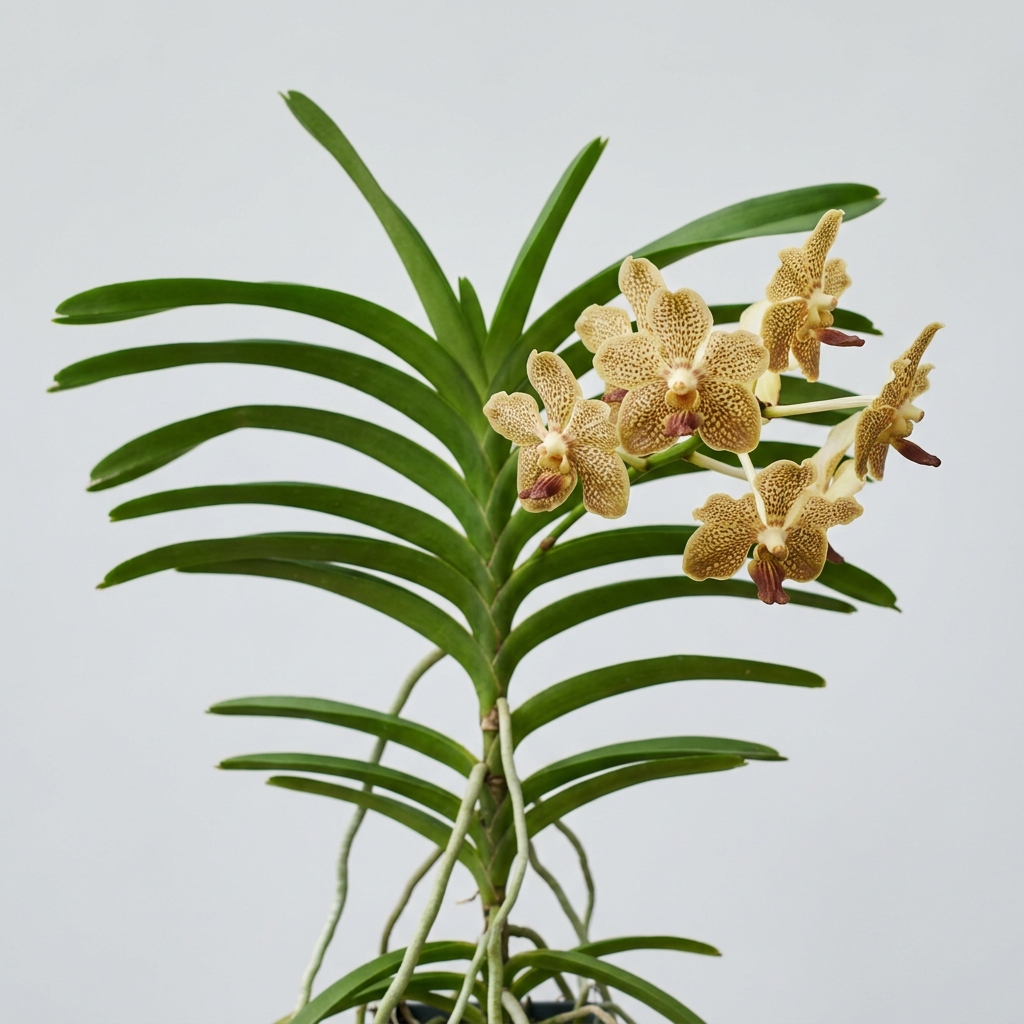
Vanda Scandens is an intriguing orchid within the Vanda alliance, highly appreciated by collectors for its distinct growth habit and striking floral display. Like many members of its genus, this orchid shows a monopodial growth pattern, producing thick, aerial roots that absorb moisture and nutrients directly from the surrounding atmosphere. Its architectural form makes it a standout addition to any tropical plant collection.
Cultivators value Vanda Scandens for its vibrant blooms and robust nature. While it requires specific environmental conditions to thrive—namely high light levels, consistent warmth, and elevated humidity—it rewards dedicated growers with long-lasting flowers that add a dramatic, exotic flair to greenhouses, shade houses, or bright indoor growing spaces.
💡 Did You Know?
The name scandens translates from Latin as climbing or scrambling. This refers to the orchid's natural growth habit in the wild, where its monopodial stem can grow quite tall over many years, scrambling up tree trunks and branches in search of brighter while anchoring itself with an extensive network of tough, clinging aerial roots.
🌿 Botanical Overview
Vanda Scandens shows the classic monopodial growth habit characteristic of the Vanda genus. This means the plant grows upward from a single stem, producing alternating, strap-like leaves that form a distinct V-shaped fan. Over time, the stem elongates, and the plant may take on a climbing or scrambling appearance, which is reflected in its botanical name.
A defining feature of this orchid is its extensive, thick aerial root system. These roots are covered in a specialized, spongy layer of cells called velamen, which acts like a sponge to rapidly absorb water and nutrients from the air. In their native tropical habitats, these roots anchor the plant securely to tree branches, allowing it to grow high above the forest floor where light levels are optimal.
🌸 Flower Characteristics
The flowers of Vanda Scandens are produced on axillary flower spikes that emerge from the leaf joints. Each spike can carry multiple blooms, presenting a striking cluster of flowers that stand out against the green foliage. The petals and sepals are typically well-formed, displaying a range of colors from soft cream and yellow to deeper bronze or brown tones, often accented by intricate spotting or tessellation.
The lip, or labellum, is a crucial feature of the flower, designed to guide natural pollinators. It often features contrasting coloration or detailed markings that enhance the overall visual appeal of the bloom. The flowers are known for their firm, waxy texture, which contributes to their long-lasting nature on the plant.
Fragrance & Bloom Profile
Fragrance within Vanda Scandens is not consistently documented across all cultivated specimens. While some growers report a delicate, sweet, or slightly spicy scent that becomes more pronounced during warm, sunny days, other specimens may exhibit no noticeable fragrance. This variability is common among orchids where environmental factors and individual genetics play a significant role in scent production.
When in bloom, the flowers can remain fresh and vibrant for several weeks, provided the plant is kept in a stable environment. To maximize the lifespan of the blooms, growers should avoid getting the flowers wet during watering and maintain moderate humidity levels without allowing water to pool on the petals.
Parentage & Hybrid Lineage
The exact taxonomic status and hybrid lineage of Vanda Scandens are not consistently documented in common horticultural references. It is often treated as a distinct species or a specific selection within the broader Vanda genus. Because documentation can be limited, growers should focus on providing standard warm-growing Vanda care rather than relying on specific hybrid parentage guidelines.
In the orchid trade, plants labeled as Vanda Scandens are valued for preserving the wild, natural charm of monopodial orchids. Their growth habits and floral structures closely mirror those of ancestral species found in the tropical regions of Asia and the Western Pacific, making them highly desirable for collectors interested in species-type orchids.
🌱 Growing Conditions
To cultivate Vanda Scandens successfully, replicating its native tropical environment is essential. This orchid thrives in bright, indirect light. While it can tolerate some direct morning sun, harsh afternoon sunlight can scorch the leaves. High-intensity LED grow lights are an excellent alternative for indoor growers who lack sufficient natural window light.
💡 Care Tip
To maintain optimal hydration without risking rot, thoroughly drench the bare roots of Vanda Scandens until they turn a vibrant green color. In dry indoor environments, this may require soaking the roots in a bucket of room- water for fifteen to twenty minutes daily.
Temperature is another critical factor. Vanda Scandens prefers warm to intermediate conditions, with daytime temperatures ideally ranging between 75°F and 85°F, and a slight drop at night to no lower than 60°F. High humidity, ideally between 60% and 80%, combined with continuous, gentle air movement, is vital to keep the aerial roots healthy and prevent fungal infections.
Watering, Feeding & Potting Media
Because Vanda Scandens is best grown bare-root in wooden baskets or mounted on plaques, its watering needs differ significantly from terrestrial or sympodial orchids. Without potting media to retain moisture, the roots must be watered frequently. Daily misting or soaking the entire root system in water for fifteen to twenty minutes is highly recommended, especially during warm summer months.
Feeding should be done regularly using a balanced, water-soluble orchid fertilizer diluted to quarter or half strength. Since there is no soil or bark to hold nutrients, applying a weak fertilizer solution weekly during the active growing season is highly effective. Flush the roots with pure water periodically to prevent any mineral salt buildup.
Blooming Season & Care Notes
Vanda Scandens typically initiates blooms during the warmer months of spring and summer, though flowering can occur at other times of the year if optimal growing conditions are maintained. Once a flower spike begins to emerge, avoid changing the plant’s orientation to the light source, as this can cause the developing buds to twist or fail to open properly.
After the blossoms have faded and the flower spike has completely dried and turned brown, it can be carefully snipped off near the base of the stem using sterilized cutting tools. Repotting or basket maintenance is rarely needed for bare-root specimens, but if the wooden basket begins to decay, the entire basket can simply be placed inside a larger one to minimize root disturbance.
⚠️ Common Issues
⚠️ Common Mistake
A frequent error is potting Vanda Scandens in standard, fine-grade orchid potting mix. This suffocates the thick aerial roots, leading to rapid root rot and plant decline. These orchids must have maximum airflow around their root systems, which is why bare-root basket cultivation is highly recommended.
- Root Rot:
Occurs rapidly if the orchid is potted in dense, moisture-retaining media that suffocates the roots. - Leaf Spotting: Fungal or bacterial spots can develop on the foliage if water is allowed to sit on the leaves overnight without adequate airflow.
- Bud Blast:
The sudden dropping or yellowing of flower buds before they open, usually caused by rapid changes in temperature, low humidity, or drafts. - Dehydration:
Indicated by shriveled, leathery leaves and dry, brittle, white roots that fail to turn green when watered. - Pests:
Scale insects and mealybugs can occasionally hide in the leaf axils or on the undersides of leaves.
❓ Frequently Asked Questions
How often should I water Vanda Scandens?
If grown bare-root, Vanda Scandens should be watered daily. Thoroughly wet the roots until they turn from a silvery-white to a vibrant green. During hot, dry weather, twice-daily watering or a twenty-minute root soak may be necessary to keep the plant hydrated.
Why are the leaves on my Vanda Scandens turning yellow and dropping?
Yellowing leaves can indicate several issues, including overwatering if the roots are kept too wet, underwatering if the plant is severely dehydrated, or a natural shedding of older, lower leaves. Ensure the plant has excellent airflow and that only the oldest leaves at the bottom of the stem are dropping.
Can I grow Vanda Scandens indoors without a greenhouse?
Yes, you can grow Vanda Scandens indoors, but you must compensate for lower indoor humidity. Placing a humidifier nearby, growing the plant over a large humidity tray, and utilizing high-output LED grow lights will help replicate the necessary tropical conditions.
What is the best way to mount or pot Vanda Scandens?
The most successful method is growing Vanda Scandens bare-root in a slatted wooden basket or mounted on a cork bark plaque. This allows the extensive aerial root system to hang freely in the air, mimicking its natural epiphytic growth habit and preventing root rot.
⭐ Final Growing Notes
While Vanda Scandens requires a dedicated approach to watering and humidity, its unique climbing growth habit and exotic floral displays make it an exceptionally rewarding orchid to cultivate. By focusing on bright, filtered light, consistent warmth, and maintaining a healthy, bare-root environment with excellent air circulation, growers can enjoy the tropical beauty of this remarkable cultivar for many years to come.
⚕️ Health, Safety & Edibility
Understanding how a plant interacts with people, pets, and the surrounding environment is part of responsible cultivation. This section uses conservative, general guidance and does not replace professional medical or veterinary advice.
Human Safety: No published evidence currently identifies species-specific toxicity concerns for Vanda Scandens during normal handling. As with most ornamental plants, it should not be intentionally consumed.
Pet Safety: Published information does not indicate that this orchid commonly poses a toxicity concern for cats or dogs. However, chewing leaves, flowers, roots, or potting media may still cause mild digestive upset.
Edibility: This orchid is cultivated for ornamental display rather than food. Ornamental plants may carry fertilizers, pesticides, or other horticultural treatments that make them unsuitable for consumption.
Skin Contact: Routine handling is not generally associated with skin irritation. Gardeners with sensitive skin may prefer wearing gloves when repotting, pruning, or handling potting media.
🌱 Propagation Tip
Vanda orchids are monopodial and do not divide like sympodial orchids. Propagation is typically achieved by waiting for the plant to naturally produce a keiki, or offshoot, along the main stem. Once the keiki has developed several robust roots of its own, it can be carefully severed and mounted independently.
⭐ Expert Advice
If your Vanda Scandens refuses to bloom despite healthy green growth, it is likely not receiving enough . Gradually increase its exposure to bright, filtered sunlight or position it closer to high-intensity LED grow lights. A slight drop in night temperatures can also help stimulate spike production.

Leave A Comment