
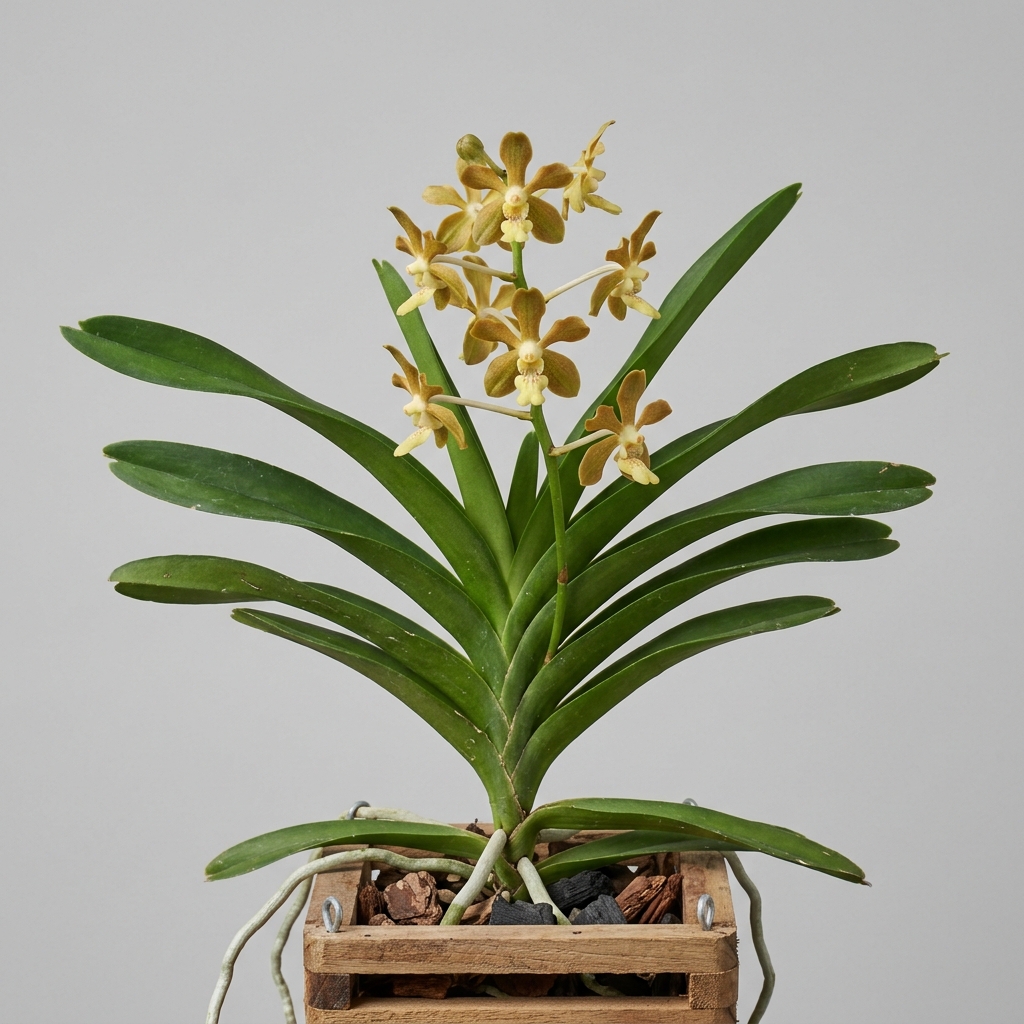
Vanda Thwaitesii is a fascinating and highly sought-after epiphytic orchid that occupies a unique niche within the Vanda alliance. Originally native to the tropical forests of Sri Lanka and parts of southern India, this species is appreciated by collectors for its distinct growth habit and intriguing floral structure. While less common in mass commercial cultivation than larger-flowered hybrid Vandas, it offers a rewarding challenge for dedicated orchid enthusiasts seeking to preserve and study rare botanical species.
In cultivation, this orchid shows a classic monopodial growth pattern, producing thick, leathery leaves arranged in a neat v-shaped fan. The flowers, though typically smaller than those of modern complex hybrids, display a subtle, rustic beauty with warm ochre, yellow, or brownish tones. Understanding its specific environmental preferences is key to successfully maintaining this rare gem in a home or greenhouse collection.
💡 Did You Know?
Vanda Thwaitesii is historically linked to the monotypic Taprobanea, named after the ancient Greek term for Sri Lanka, "Taprobane." This classification highlights its unique evolutionary position and geographical isolation, making it a prized specimen for botanical historians and orchid collectors who appreciate species with distinct regional origins.
🌿 Botanical Overview
Vanda Thwaitesii, historically associated with the monotypic genus Taprobanea or sometimes grouped under Robiquetia, is primarily recognized today within the broader Vanda group by many horticulturalists. It is an epiphytic species adapted to warm, humid environments where it grows anchored to tree branches, absorbing moisture and nutrients from the air and passing rain. Its natural habitat features seasonal moisture variations, which influences its growth cycle in cultivation.
The vegetative structure of the plant is robust yet compact compared to giant Vanda species. It features strap-like, bilobed leaves that are highly efficient at conserving water. Thick, silvery aerial roots emerge from the stem, serving both to anchor the plant and to rapidly absorb atmospheric moisture and nutrients.
🌸 Flower Characteristics
The blossoms of Vanda Thwaitesii are characterized by their distinct, somewhat cupped shape and rustic color palette. The sepals and petals typically present shades of dull yellow, ochre, or pale greenish-brown, often accented by subtle reddish-brown spotting or flushing. The lip, or labellum, is a key diagnostic feature, showing a complex structure with a short, saccate spur that is characteristic of its evolutionary lineage.
Flowers are produced on axillary inflorescences that emerge from the leaf axils. Each spike can carry multiple moderately sized blooms, arranged in a relatively dense raceme. The presentation is elegant, with the flowers nodding slightly, creating a highly natural and wild botanical aesthetic.
Fragrance & Bloom Profile
The fragrance profile of Vanda Thwaitesii is not consistently documented in mainstream horticultural literature. Some growers report a faint, sweet, or slightly spicy scent detectable only during the warmest hours of the day, while others note no discernible fragrance. This variability may be due to environmental factors such as temperature, humidity, and light levels, or individual plant genetics.
Individual flowers are relatively long-lasting, often remaining in good condition for several weeks if kept in a stable, cool environment away from direct drafts. The overall blooming display is highly dependent on the vigor of the plant and the quality of care provided during the preceding growth season.
Parentage & Hybrid Lineage
Unlike many of the brightly colored Vanda hybrids found in garden centers, Vanda Thwaitesii is a distinct naturally occurring species rather than a man-made cultivar. Its hybrid lineage is therefore non-existent in the traditional sense, though it remains a subject of interest for orchid breeders looking to introduce unique structural traits or species-specific hardiness into new hybrid lines.
Taxonomic classification of this species has historically been fluid, with some botanical authorities placing it in the genus Taprobanea as Taprobanea spathulata or associating it with Robiquetia. For growers, maintaining accurate labeling and sourcing plants from reputable nurseries that document species origin is highly recommended to preserve the genetic integrity of this rare orchid.
🌱 Growing Conditions
To cultivate Vanda Thwaitesii successfully, growers must replicate its native tropical canopy environment. It requires bright, filtered light to thrive and initiate blooming. While it enjoys strong light, direct midday sun can easily scorch the leathery foliage, so a location with dappled sunlight or high-quality LED grow lights is ideal.
💡 Care Tip
Ensure your Vanda Thwaitesii receives robust air movement, especially after . A small oscillating fan placed near the growing area helps dry the leaf axils quickly, preventing crown rot and fungal spotting while mimicking the natural breezes of its native canopy.
Temperature ranges should mimic warm to intermediate tropical climates. Daytime temperatures between 75°F and 85°F (24°C to 29°C) are optimal, with a slight drop at night to stimulate growth. High humidity, ideally between 60% and 80%, is crucial for the health of its extensive aerial root system. Strong air movement must be maintained at all times to prevent stagnant moisture from causing fungal or bacterial issues.
Watering, Feeding & Potting Media
Watering practices for Vanda Thwaitesii must accommodate its bare-root or highly aerated growing style. In high-humidity greenhouses, it is often grown bare-root in wooden baskets, requiring daily misting or soaking, sometimes multiple times a day during hot summer months. If grown in pots, a very coarse, free-draining medium such as large-grade charcoal, coarse fir bark, or chunky tree fern fiber must be used to ensure the roots dry rapidly after watering.
Feeding should be frequent but light, following the “weakly, weekly” rule. A balanced, water-soluble orchid fertilizer diluted to one-quarter strength can be applied during active growth. It is essential to flush the root system with pure water periodically to prevent harmful fertilizer salt buildup, which can damage the sensitive root tips.
Blooming Season & Care Notes
Vanda Thwaitesii typically initiates its blooming cycle in the late spring or summer months, responding to the increase in day length and ambient temperatures. Once the flower spike begins to emerge from the leaf axils, growers should avoid changing the plant’s orientation to the light source, as this can cause the developing buds to twist or develop unevenly.
After the blooming cycle is complete, the old flower spike should be cut back close to the stem using sterilized cutting tools. Repotting or basket maintenance is best performed during the active root growth phase immediately following the bloom cycle, allowing the plant to quickly establish in its new environment.
⚠️ Common Issues
⚠️ Common Mistake
A frequent error is growing Vanda Thwaitesii in standard, dense potting soil or fine bark mixes. This suffocates the thick aerial roots, leading to rapid root rot. Always use extremely coarse, free-draining media or grow the plant bare-root in a basket.
- Root Rot:
Occurs when the root system remains wet for extended periods due to compacted media or poor airflow. - Dehydration:
Indicated by shriveled, wrinkled leaves and dry, brittle roots, usually caused by insufficient watering or low humidity. - Bud Blast:
The premature dropping or yellowing of flower buds, often triggered by sudden changes in temperature, drafts, or low humidity. - Pests:
Scale insects, mealybugs, and spider mites can occasionally colonize the leaf axils; treat promptly with insecticidal soap or horticultural oil. - Leaf Spotting: Fungal or bacterial spots can develop if water is allowed to sit on the foliage overnight without adequate air circulation.
❓ Frequently Asked Questions
Can Vanda Thwaitesii be grown indoors without a greenhouse?
Yes, it can be grown indoors if provided with bright indirect light, high humidity, and excellent air circulation. Many indoor growers use humidifiers, grow lights, and open slatted baskets to mimic greenhouse conditions successfully.
How often should I water Vanda Thwaitesii when grown bare-root?
Bare-root plants typically require daily watering or heavy misting, and may need multiple waterings per day during hot, dry summer weather. The roots should turn from silvery-white to bright green, indicating they have absorbed sufficient moisture.
Why are the lower leaves of my Vanda Thwaitesii turning yellow and dropping?
Lower leaf loss can be a natural sign of aging, but sudden or excessive dropping often indicates stress from severe dehydration, underwatering, or a sudden drop in ambient humidity levels.
What is the best potting medium if I cannot grow it bare-root?
If basket culture is not feasible, use an extremely loose, chunky medium such as large-grade horticultural charcoal, coarse fir bark, or volcanic rock in a highly ventilated orchid pot to ensure rapid drainage.
⭐ Final Growing Notes
Vanda Thwaitesii is a rewarding species that brings a touch of wild, tropical elegance to any serious orchid collection. While its environmental demands for high humidity, bright light, and constant airflow require more attention than common hybrid orchids, the preservation of this rare botanical species is a deeply satisfying endeavor. By closely mimicking its natural epiphytic habitat, growers can enjoy the unique beauty of its rustic blooms for years to come.
⚕️ Health, Safety & Edibility
Understanding how a plant interacts with people, pets, and the surrounding environment is part of responsible cultivation. This section uses conservative, general guidance and does not replace professional medical or veterinary advice.
Human Safety: No published evidence currently identifies species-specific toxicity concerns for Vanda Thwaitesii during normal handling. As with most ornamental plants, it should not be intentionally consumed.
Pet Safety: Published information does not indicate that this orchid commonly poses a toxicity concern for cats or dogs. However, chewing leaves, flowers, roots, or potting media may still cause mild digestive upset.
Edibility: This orchid is cultivated for ornamental display rather than food. Ornamental plants may carry fertilizers, pesticides, or other horticultural treatments that make them unsuitable for consumption.
Skin Contact: Routine handling is not generally associated with skin irritation. Gardeners with sensitive skin may prefer wearing gloves when repotting, pruning, or handling potting media.
🌱 Propagation Tip
Propagation of this species is typically achieved through the division of basal offsets, known as keikis, once they have developed several strong aerial roots of their own. Carefully sever the keiki using a sterile blade and mount it independently to establish.
⭐ Expert Advice
To encourage reliable blooming, provide a slight drop in night temperatures during the late winter and early spring. This natural differential, combined with high levels, signals the plant to initiate flower spikes from the mature leaf axils.

Leave A Comment