
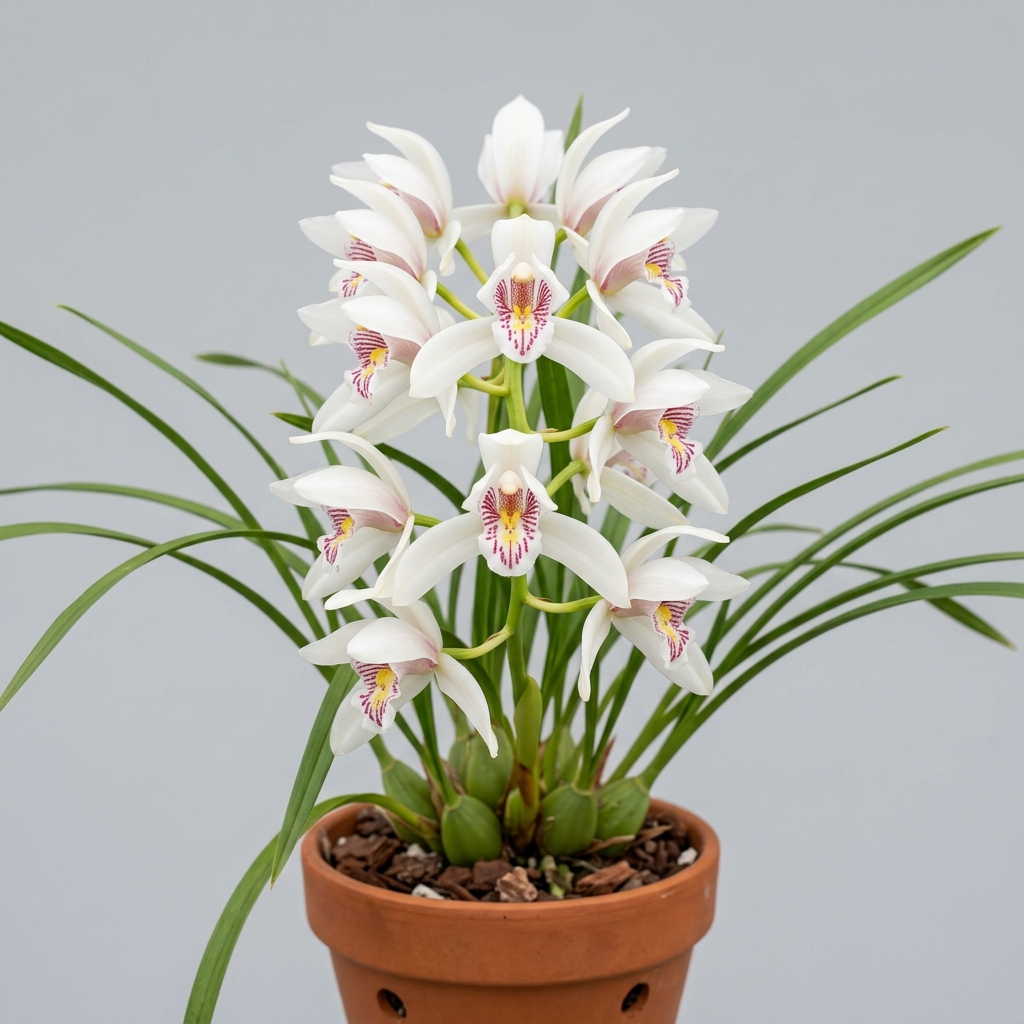
Cymbidium Erythrostylum is a highly prized orchid species native to the high-altitude regions of Vietnam, celebrated for its elegant growth habit and uniquely structured blossoms. Unlike many of its widely hybridized relatives, this species maintains a compact stature and a graceful, grass-like foliage profile that appeals to both collectors and casual growers. Its distinctive floral presentation makes it a standout addition to any cool-to-intermediate orchid collection.
Growers particularly value this orchid for its striking autumn blooms, which feature pristine white petals and sepals contrasted by a vividly marked red and yellow lip. Its relatively modest size compared to large standard Cymbidiums allows it to fit comfortably on windowsills or in small greenhouse spaces. Cultivating this species successfully requires an understanding of its specific environmental preferences, which mimic the moist, cool montane forests of its native habitat.
💡 Did You Know?
Cymbidium Erythrostylum is highly unusual among Cymbidiums because its petals point forward to form a protective hood over the column. This unique evolutionary adaptation is thought to protect the orchid's reproductive organs from heavy mountain rains in its native Vietnamese cloud forests, ensuring successful pollination.
🌿 Botanical Overview
Cymbidium Erythrostylum is a sympodial epiphytic or lithophytic orchid species native to Vietnam, where it typically grows on mossy trees or rocks in wet montane forests at elevations of 1,500 meters or higher. It features tightly clustered, ovate pseudobulbs that are slightly compressed, each bearing several arching, narrow, linear-lanceolate leaves. The foliage is thin and grass-like, presenting a delicate texture even when the plant is not in flower.
Because of its montane origin, this orchid is adapted to environments with high humidity, consistent air movement, and distinct seasonal temperature fluctuations. Understanding these natural conditions is key to maintaining its vigor in a home or greenhouse setting, as it relies on buoyant air and cool nights to thrive and initiate its annual growth cycle.
🌸 Flower Characteristics
The blossoms of Cymbidium Erythrostylum are highly distinctive, characterized by their unique forward-pointing petals that curve over the column, creating a hooded or cup-like appearance. The sepals are stark white, spreading outward to frame the bloom, while the petals remain closely aligned with the center. This structural arrangement gives the flower a refined, architectural silhouette that sets it apart from more open-flowered Cymbidium species.
The most dramatic feature of the flower is its three-lobed lip, or labellum, which is adorned with intense reddish-purple stripes and spots over a pale yellow or cream-colored base. The column itself is often a rich red, giving rise to the species name. Individual flowers typically measure around 5 to 8 centimeters in diameter and are borne on arching or semi-erect inflorescences that emerge from the base of the mature pseudobulbs.
Fragrance & Bloom Profile
While some growers report a faint, delicate sweetness emanating from the flowers on warm, bright mornings, the fragrance of Cymbidium Erythrostylum is generally considered subtle and is not consistently documented as a strong feature in all specimens. The primary appeal of the bloom profile remains its striking visual contrast and elegant form rather than an intense scent.
Each flower spike can produce between five and ten blossoms, which open progressively and remain in excellent condition for several weeks if kept in cool, stable conditions. The pristine white of the sepals combined with the dramatic red markings on the lip ensures that even a single blooming spike creates a commanding visual display.
Parentage & Hybrid Lineage
As a distinct botanical species rather than a man-made hybrid, Cymbidium Erythrostylum does not have a complex parentage of mixed cultivars. However, it has played a monumental role in orchid hybridization history. Breeders have frequently utilized this species to introduce its desirable traits—such as early autumn blooming, compact growth, and pure white coloration—into modern miniature and standard Cymbidium hybrids.
When researching this orchid in historical registration databases, growers will find it listed as a primary parent for numerous award-winning grexes. While these hybrids often possess greater environmental tolerance, many collectors still prefer the pure, unaltered form of the original species for its unique petal posture and historical significance.
🌱 Growing Conditions
To cultivate Cymbidium Erythrostylum successfully, growers must provide cool to intermediate temperatures. Ideal daytime temperatures range from 18 to 24 degrees Celsius, with a necessary drop at night to around 10 to 15 degrees Celsius. This nocturnal temperature differential is crucial, particularly in the late summer and early autumn, to stimulate the development of flower spikes.
💡 Care Tip
To achieve the essential autumn drop indoors, place your orchid near an open window or on a protected porch during late summer nights. This simple exposure to cooler evening air is often the exact trigger needed to initiate flower spikes.
Light levels should be bright but filtered, avoiding direct midday sun which can easily scorch the thin, grass-like leaves. A location with eastern exposure or dappled southern light is typically ideal. Additionally, constant, gentle air circulation is vital to prevent stagnant moisture from settling on the foliage, which can invite fungal pathogens in high-humidity environments.
Watering, Feeding & Potting Media
During the active growing season in spring and summer, Cymbidium Erythrostylum requires frequent watering to keep the potting medium evenly moist but never waterlogged. The pseudobulbs act as water storage organs, but the fine root system is sensitive to both extreme drought and prolonged saturation. As temperatures cool in the winter, watering frequency should be reduced, allowing the medium to dry out slightly more between applications.
Feeding should be consistent but dilute. A balanced orchid fertilizer applied at a quarter or half strength every two weeks during active growth supports robust pseudobulb development. The ideal potting medium is a well-draining, moisture-retentive mix, typically composed of medium-grade fir bark blended with perlite, charcoal, and a small amount of sphagnum moss to maintain humidity around the roots.
Blooming Season & Care Notes
The natural blooming season for Cymbidium Erythrostylum occurs in the autumn and early winter, making it a highly valued species for late-season color. Once the flower spikes begin to emerge from the base of the pseudobulbs, they should be supported with stakes if they become too heavy, though many growers prefer to let them arch naturally for a more organic presentation.
Repotting is best performed in the spring, immediately after the flowering cycle has concluded and new vegetative growths begin to appear. It is advisable to repot only when the potting medium begins to decompose or the plant has completely outgrown its container, as Cymbidium roots prefer to be somewhat snug. Care should be taken not to damage the active root tips during this process.
⚠️ Common Issues
⚠️ Common Mistake
A frequent error is keeping this orchid too warm during the late summer and autumn months. Without a consistent night-time drop of about ten degrees, the plant will continue to produce vegetative growth but will fail to develop any flower spikes.
- Root Rot:
Caused by overwatering or a compacted potting medium that prevents adequate drainage and oxygen flow to the root zone. - Leaf Tip Burn: Often a result of mineral buildup from hard water or excessive fertilizer; flushing the pot with pure water can help mitigate this.
- Bud Blast:
Sudden drops in humidity, extreme temperature fluctuations, or drafts can cause developing flower buds to yellow and drop prematurely. - Pest Infestations: Spider mites and scale insects can occasionally target the thin foliage, especially in dry indoor environments; treat promptly with insecticidal soap or neem oil.
❓ Frequently Asked Questions
How do I trigger blooming in Cymbidium Erythrostylum?
Blooming is primarily triggered by a distinct drop in night temperatures during the late summer and early autumn. Ensuring the plant experiences nights around 10 to 13 degrees Celsius, combined with bright, filtered light, will encourage the initiation of flower spikes.
Can this orchid be grown indoors on a windowsill?
Yes, it can be grown indoors if placed on a bright east-facing windowsill. However, providing the necessary cool night temperatures and high humidity can be challenging in standard home environments, so utilizing a cool room or a sheltered patio during autumn nights is recommended.
What type of potting mix is best for repotting?
A well-draining mixture of medium-grade fir bark, perlite, and horticultural charcoal works exceptionally well. Adding a small amount of chopped sphagnum moss can help retain the consistent moisture that this species prefers without suffocating the roots.
Why are the leaves on my orchid turning yellow?
Yellowing leaves can indicate several issues, including overwatering, insufficient light, or natural aging of older pseudobulbs. If the yellowing is accompanied by soft, mushy roots, it is likely a sign of root rot, requiring immediate repotting into fresh media.
⭐ Final Growing Notes
Cymbidium Erythrostylum remains an exquisite gem of the orchid world, offering a rewarding challenge for growers who can accommodate its cool-temperature requirements. Its unique floral architecture, characterized by forward-swept white petals and a vividly painted lip, provides a sophisticated aesthetic that modern hybrids rarely duplicate. By mimicking its native montane habitat with bright light, high humidity, and cool autumn nights, enthusiasts can enjoy the timeless elegance of this Vietnamese species year after year.
⚕️ Health, Safety & Edibility
Understanding how a plant interacts with people, pets, and the surrounding environment is part of responsible cultivation. This section uses conservative, general guidance and does not replace professional medical or veterinary advice.
Human Safety: No published evidence currently identifies species-specific toxicity concerns for Cymbidium Erythrostylum during normal handling. As with most ornamental plants, it should not be intentionally consumed.
Pet Safety: Published information does not indicate that this orchid commonly poses a toxicity concern for cats or dogs. However, chewing leaves, flowers, roots, or potting media may still cause mild digestive upset.
Edibility: This orchid is cultivated for ornamental display rather than food. Ornamental plants may carry fertilizers, pesticides, or other horticultural treatments that make them unsuitable for consumption.
Skin Contact: Routine handling is not generally associated with skin irritation. Gardeners with sensitive skin may prefer wearing gloves when repotting, pruning, or handling potting media.
🌱 Propagation Tip
Propagate this species by dividing mature specimens during spring repotting. Ensure each division has at least three healthy, active pseudobulbs with a strong root system. Avoid dividing the plant too frequently, as larger clumps produce far more spectacular floral displays.
⭐ Expert Advice
When , always use rainwater, distilled water, or reverse osmosis water if your tap water is hard. This species is particularly sensitive to soluble salt accumulation, which quickly manifests as unsightly black tips on its delicate, grass-like foliage.

Leave A Comment