
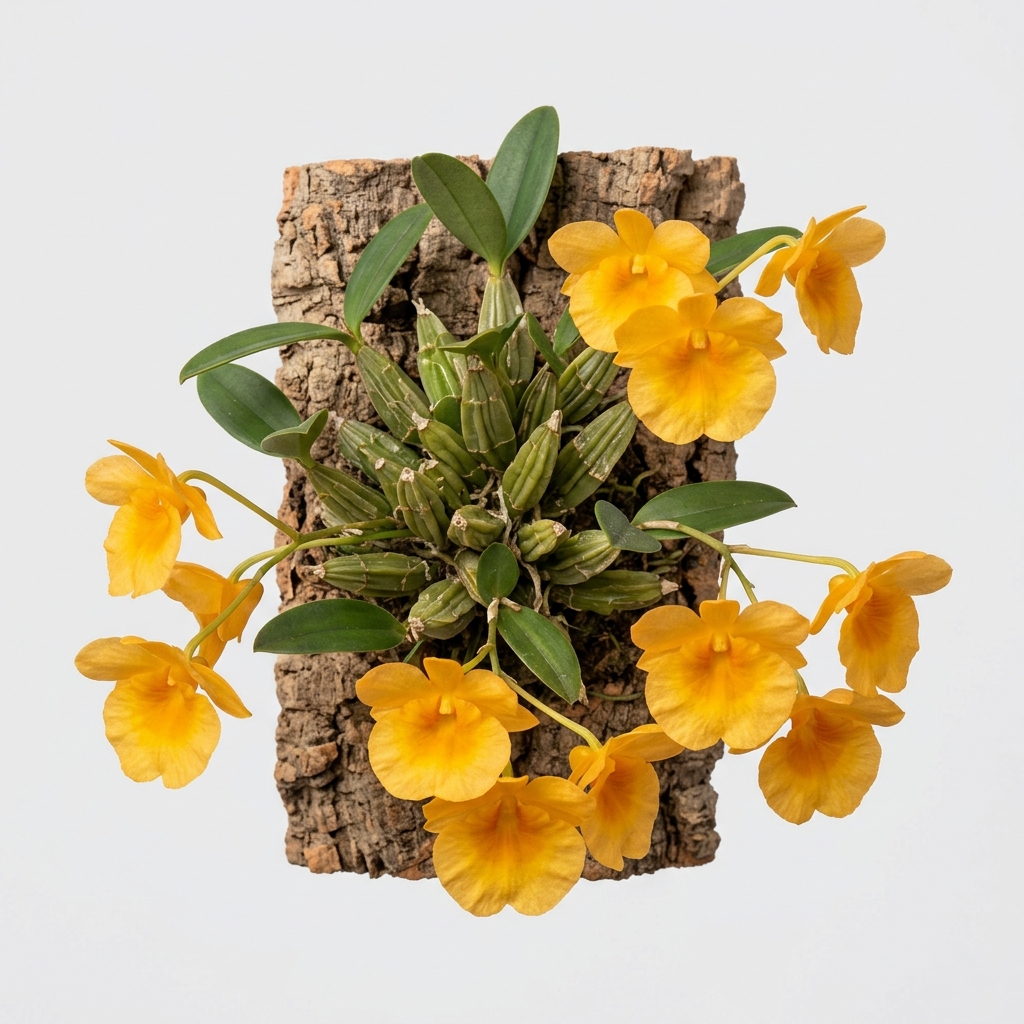
Dendrobium Jenkinsii is a captivating miniature epiphytic orchid highly prized by collectors for its compact growth habit and vibrant floral display. Native to the montane forests of Southeast Asia and the Eastern Himalayas, this dwarf species produces tightly clustered, flattened pseudobulbs topped with single, leathery evergreen leaves. Despite its diminutive stature, it stands out in any collection, particularly when its cascading clusters of golden-yellow blossoms emerge in the spring.
Cultivating this orchid successfully requires an understanding of its seasonal growth cycle, which includes a distinct dry winter rest period. Growers value Dendrobium Jenkinsii not only for its space-saving dimensions but also for its resilience when mounted on cork or hardwood. When its specific environmental needs are met, this charming miniature rewards keepers with a spectacular, albeit brief, canopy of coin-like flowers that brighten up any growing space.
💡 Did You Know?
Dendrobium Jenkinsii is often confused with its close relative, Dendrobium lindleyi. While they look similar, Dendrobium Jenkinsii is a true miniature, featuring significantly smaller, flattened pseudobulbs that form dense creeping mats, and it typically produces only one to three flowers per stem rather than the long, multi-flowered racemes of its larger cousin.
🌿 Botanical Overview
Dendrobium Jenkinsii is characterized by its unique vegetative structure. The pseudobulbs are notably short, compressed, and flattened, growing in dense, creeping mats that hug the mounting substrate. Each pseudobulb is topped by a single, tough, elliptic leaf that remains green year-round under proper care. This compact growth form is an adaptation to its natural epiphytic habitat, where it clings to the bark of deciduous trees in open forests.
In nature, these plants experience dramatic seasonal shifts. The summer monsoon brings heavy rainfall and high humidity, prompting rapid vegetative growth. In contrast, the winter months are characterized by cool, dry, and sunny conditions. Understanding this natural rhythm is the key to maintaining the plant’s health and ensuring it has the energy required to produce its signature spring blooms.
🌸 Flower Characteristics
The flowers of Dendrobium Jenkinsii are relatively large compared to the size of the plant itself, often measuring up to three centimeters in diameter. They are typically borne on short, pendant inflorescences that emerge from the nodes of mature pseudobulbs. Each spike usually carries one to three flowers, though well-established specimen plants can produce dozens of spikes simultaneously, creating a spectacular blanket of gold.
The blossoms feature broad, rounded petals and sepals of a rich, golden-yellow hue. The prominent lip, or labellum, is kidney-shaped to circular, often displaying a slightly deeper orange-yellow center with a finely fringed or pubescent margin. The overall effect is a flat, open flower that resembles a small golden coin, catching the light beautifully.
Fragrance & Bloom Profile
The fragrance of Dendrobium Jenkinsii is generally described as mild and sweet, with subtle honey-like notes that become more pronounced in warm, bright conditions. However, fragrance intensity can be highly variable and is often grower-reported as faint or inconsistent. Some individuals may perceive little to no scent, while others enjoy a delicate perfume during the peak of the daytime warmth.
The blooms typically last for two to three weeks, depending on environmental conditions. Cooler temperatures and moderate humidity during the flowering period can help prolong the life of the blossoms. While the individual flowers are relatively short-lived compared to some other Dendrobium species, the sheer density of the bloom display on a mature specimen makes it a highly rewarding event.
Parentage & Hybrid Lineage
Dendrobium Jenkinsii is a distinct, naturally occurring species rather than a man-made hybrid. It belongs to the section Callista within the genus Dendrobium, a group known for its showy, often yellow or white flowers and prominent lips. For many years, it was considered a variety of the closely related Dendrobium lindleyi (formerly known as Dendrobium aggregatum), and the two are still frequently confused in the trade.
While they share similar floral characteristics, Dendrobium Jenkinsii is distinguished by its smaller, more flattened pseudobulbs, single-leaved growth habit, and fewer flowers per inflorescence. Because of its desirable miniature size and vibrant color, it has been used occasionally in hybridizing programs to introduce compact growth habits to larger Dendrobium lines, though registered hybrids remain relatively limited compared to other sections of the genus.
🌱 Growing Conditions
To thrive, Dendrobium Jenkinsii requires bright, filtered light. It can tolerate some direct morning sun, but protection from intense midday rays is essential to prevent the foliage from scorching. High light levels are crucial during the summer growing season to build up the energy reserves necessary for flowering, and bright light should be maintained throughout the winter rest.
💡 Care Tip
Provide excellent air movement around your Dendrobium Jenkinsii, especially when grown in high . Strong air circulation mimics its natural canopy environment, helps dry the roots quickly after , and significantly reduces the risk of fungal and bacterial infections on the tightly packed pseudobulbs.
Temperature requirements vary by season. During the active summer growth phase, the plant prefers warm to intermediate temperatures, ideally ranging from 20 to 30 degrees Celsius. In the winter, temperatures should be significantly cooler, dropping to 10 to 15 degrees Celsius at night. Good air circulation is vital at all times to prevent stagnant moisture and reduce the risk of fungal infections.
Watering, Feeding & Potting Media
During the active spring and summer growth periods, Dendrobium Jenkinsii should be watered copiously. The roots should dry out slightly between waterings, but the plant should never remain completely dry for long. Weekly applications of a balanced orchid fertilizer, diluted to quarter or half strength, will support robust vegetative growth.
Because of its creeping growth habit, this species is best grown mounted on cork bark, tree fern plaques, or hardwood mounts. If mounting is not practical, it can be grown in small, shallow clay pots or wooden baskets filled with a highly porous, fast-draining medium such as medium-grade fir bark mixed with perlite or charcoal. Repotting or remounting should only be done in the spring, just as new root growth begins.
Blooming Season & Care Notes
The primary blooming season for Dendrobium Jenkinsii is spring. Triggering this floral display requires a strict winter rest period starting in late autumn, typically around November. During this time, watering must be drastically reduced, allowing the pseudobulbs to dry out thoroughly between light mistings. Mist only enough to prevent the pseudobulbs from shriveling excessively; slight wrinkling is normal and expected.
Fertilization must be stopped completely during the winter rest. Maintain high light levels and cool temperatures during this period. In early spring, as temperatures begin to rise and tiny flower buds emerge from the pseudobulbs, gradually resume regular watering and feeding. Avoid moving the plant or changing its orientation once the buds form, as this can cause bud drop.
⚠️ Common Issues
⚠️ Common Mistake
The most common mistake is failing to provide a strict dry winter rest. Continuing to water and fertilize normally during the winter months will result in lush vegetative growth but will completely prevent the orchid from producing its beautiful spring flowers.
- Shriveled Pseudobulbs: Excessive shriveling during the summer indicates under-watering, while moderate wrinkling during the winter rest is normal.
- Root Rot:
Caused by over-watering or poor drainage, especially if grown in pots with compacted media. Mounted plants rarely suffer from this issue. - Bud Blast:
Sudden drops in humidity, drafts, or moving the plant while buds are developing can cause them to yellow and fall off before opening. - Pests:
Scale insects and spider mites can occasionally hide in the crevices between the tightly packed pseudobulbs. Treat with insecticidal soap or neem oil. - Lack of Blooms: Usually the result of insufficient light during the summer or a winter rest period that was too warm or too wet.
❓ Frequently Asked Questions
How do I trigger blooms on my Dendrobium Jenkinsii?
To trigger blooming, you must provide a cool, dry winter rest starting in late autumn. Reduce watering to occasional light mistings to prevent extreme shriveling, stop all fertilizing, and keep the plant in a bright, cool location with night temperatures around 10 to 15 degrees Celsius until buds appear in spring.
Is it better to mount Dendrobium Jenkinsii or grow it in a pot?
Mounting on cork bark or hardwood is highly recommended for this species. Its creeping growth habit and need for rapid drying after watering make mounts ideal. If you must pot it, use a small, shallow basket with a very coarse, fast-draining bark medium.
Why are the pseudobulbs on my orchid wrinkling?
Slight wrinkling of the pseudobulbs is normal during the dry winter rest. However, if severe shriveling occurs during the active summer growing season, it is a sign of dehydration, which may be caused by under-watering or root loss due to rot.
How much light does Dendrobium Jenkinsii need?
This orchid requires bright, filtered light to thrive and bloom. It can tolerate some direct morning sunlight, but needs protection from harsh afternoon sun. High light levels are especially important during the winter rest to promote bud development.
⭐ Final Growing Notes
Dendrobium Jenkinsii is a rewarding miniature orchid that brings a burst of golden sunshine to any growing space. While its seasonal care requirements—particularly the dry winter rest—demand some discipline from the grower, its compact size and spectacular spring blooms make it an exceptional choice for both space-conscious hobbyists and experienced collectors. By mimicking its natural montane habitat, you can enjoy this delightful species for many years.
⚕️ Health, Safety & Edibility
Understanding how a plant interacts with people, pets, and the surrounding environment is part of responsible cultivation. This section uses conservative, general guidance and does not replace professional medical or veterinary advice.
Human Safety: No published evidence currently identifies species-specific toxicity concerns for Dendrobium Jenkinsii during normal handling. As with most ornamental plants, it should not be intentionally consumed.
Pet Safety: Published information does not indicate that this orchid commonly poses a toxicity concern for cats or dogs. However, chewing leaves, flowers, roots, or potting media may still cause mild digestive upset.
Edibility: This orchid is cultivated for ornamental display rather than food. Ornamental plants may carry fertilizers, pesticides, or other horticultural treatments that make them unsuitable for consumption.
Skin Contact: Routine handling is not generally associated with skin irritation. Gardeners with sensitive skin may prefer wearing gloves when repotting, pruning, or handling potting media.
🌱 Propagation Tip
Propagate this orchid by division during the spring when new root growth is just beginning. Ensure each division has at least three to four healthy, mature pseudobulbs. Gently separate the rhizome and secure the new division tightly to its new mount or basket to encourage rapid establishment.
⭐ Expert Advice
When mounting Dendrobium Jenkinsii on cork bark, use a very thin layer of sphagnum moss under the roots to help retain a small amount of moisture during the initial establishment phase. Once the roots firmly grip the bark, the moss can be allowed to decay naturally.

Leave A Comment