
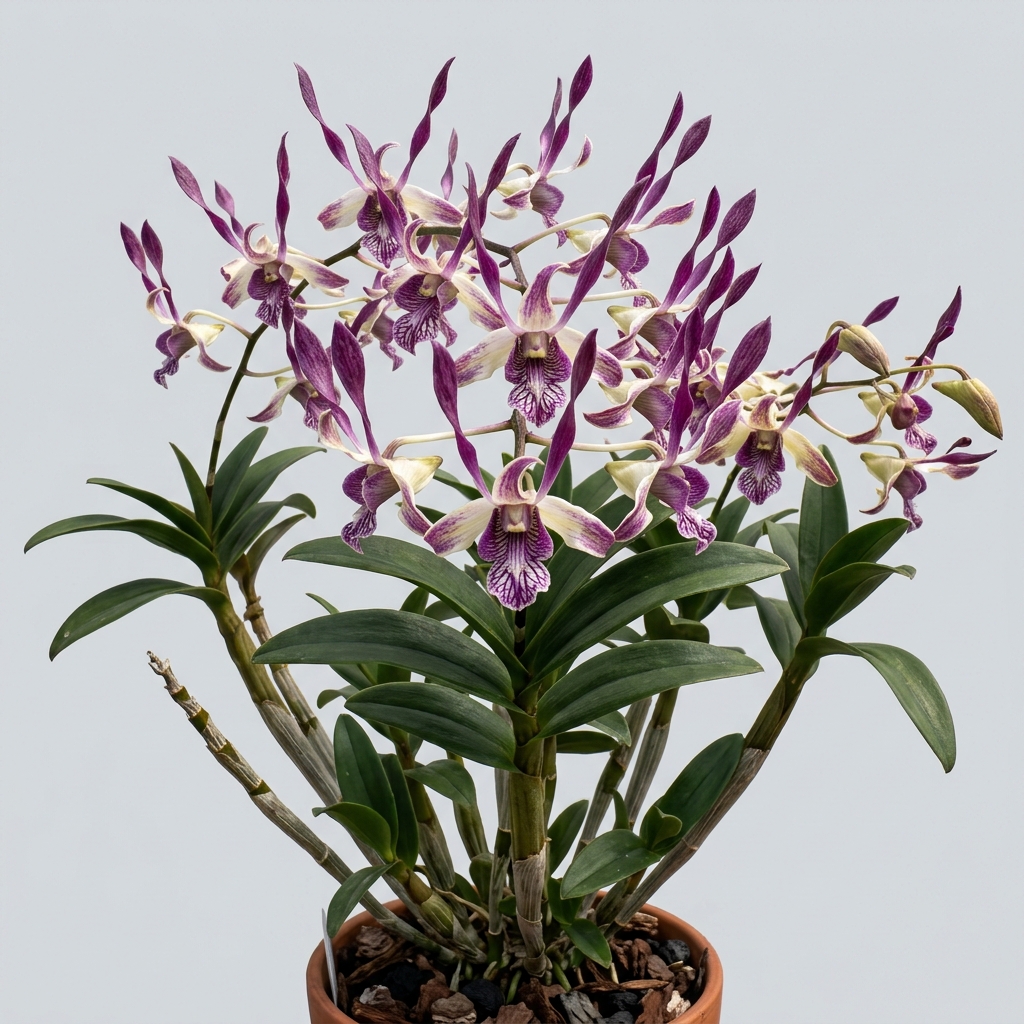
Dendrobium Taurinum, commonly known as the Bulls-horn Dendrobium, is a striking and robust orchid species celebrated for its unique, horn-like floral structure. Native to the tropical lowlands of the Philippines and neighboring regions, this epiphytic orchid is highly prized by collectors for its impressive stature and long-lasting, architectural blooms. Its dramatic presentation makes it a standout addition to any warm-climate orchid collection.
Cultivating this species successfully requires an understanding of its natural coastal and forest habitats. It thrives in bright, warm environments with high humidity and consistent air movement. While it can grow quite large over time, its rewarding growth habit and spectacular flowering displays make the effort well worth it for intermediate to advanced orchid enthusiasts.
💡 Did You Know?
The species name taurinum is derived from the Latin word for bull, directly referencing the upright, twisted petals that closely resemble a bull's horns. This unique floral morphology is an evolutionary adaptation designed to attract specific pollinators in its native coastal habitats.
🌿 Botanical Overview
Dendrobium Taurinum belongs to the Spatulata section of the genus Dendrobium, often referred to as the “antelope orchids” due to their twisted, upright petals. In its native habitat, it typically grows as an epiphyte on mangrove trees or in coastal forests at low elevations. This environment exposes the plant to bright sunlight, warm temperatures, and constant coastal breezes.
The plant features robust, cane-like pseudobulbs that can reach impressive heights, sometimes exceeding several feet under optimal conditions. These canes are clad in leathery, distichous leaves that help the plant retain moisture in its warm, breezy natural habitat. Understanding this growth habit is key to providing the correct structural support and environmental conditions in cultivation.
🌸 Flower Characteristics
The flowers of Dendrobium Taurinum are the primary draw for collectors, characterized by their distinctive twisted petals that resemble the horns of a bull. These petals are typically long, narrow, and upright, exhibiting shades of purple, bronze, or deep violet. The sepals are generally shorter, broader, and lighter in color, often showing white, cream, or pale green hues that contrast beautifully with the darker petals.
The lip, or labellum, is prominent and features intricate veining, often in shades of magenta or purple, with a ruffled margin. The flowers are produced on long, arching inflorescences that emerge from the upper nodes of mature canes. A single spike can carry numerous blooms, creating a dramatic, long-lasting display that remains attractive for several weeks.
Fragrance & Bloom Profile
The fragrance of Dendrobium Taurinum is a subject of some variation among growers. While some specimens are reported to produce a mild, sweet, or slightly spicy scent during the warmest parts of the day, others appear to have no detectable fragrance. This variation may be due to environmental factors, the specific clone, or the time of day the flowers are observed.
The blooms are exceptionally long-lasting, often remaining fresh on the plant for up to two months under ideal conditions. The waxy texture of the petals and sepals helps the flowers resist dehydration, ensuring a prolonged display. To maximize the bloom life, growers should avoid getting water directly on the open flowers and maintain stable environmental conditions.
Parentage & Hybrid Lineage
Dendrobium Taurinum is a naturally occurring species rather than a man-made hybrid. Within the Spatulata section, it has been used extensively in breeding programs to introduce vigor, upright growth habits, and the desirable “antelope” flower form to new hybrids. Its genetic contributions often result in offspring with robust canes and long-lasting, multi-flowered spikes.
Because it is a species, plants sold under this name should ideally exhibit the characteristic features of the wild population. However, line breeding of select clones has occurred to improve flower color intensity and plant habit. When purchasing, growers should look for reputable sources to ensure they are obtaining a true-to-type representation of this magnificent species.
🌱 Growing Conditions
To cultivate Dendrobium Taurinum successfully, mimicking its warm, coastal native habitat is essential. It requires bright, filtered light to partial direct sunlight. In northern climates, some direct morning sun is beneficial, but protection from intense midday sun is necessary to prevent leaf scorch. High light levels are crucial for stimulating the development of strong canes and later flowering.
💡 Care Tip
Provide strong air movement around your Dendrobium Taurinum, especially when keeping levels high. Active air circulation prevents moisture from pooling on the leaves and helps mimic the coastal breezes of its native Philippine habitat.
Temperature ranges should remain warm to hot throughout the year. Daytime temperatures between 80°F and 90°F are ideal, with a slight drop at night to no lower than 60°F to 65°F. High humidity, ideally between 60% and 80%, must be maintained alongside excellent air circulation. Stagnant air in high-humidity environments can quickly lead to fungal or bacterial issues.
Watering, Feeding & Potting Media
During the active growing season, typically from spring through autumn, Dendrobium Taurinum requires frequent and thorough watering. The potting medium should be allowed to dry slightly between waterings, but never dry out completely for extended periods. In winter, when growth slows, watering should be reduced, allowing the medium to dry out more thoroughly between applications while preventing the canes from shriveling.
A balanced orchid fertilizer, diluted to half or quarter strength, should be applied weekly during the active growth phase. Flushing the pot with pure water once a month helps prevent fertilizer salt buildup. Due to its epiphytic nature, a coarse, fast-draining potting medium is essential. A mix of large fir bark, charcoal, and perlite works well, or the plant can be grown in a wooden basket to accommodate its extensive root system.
Blooming Season & Care Notes
Dendrobium Taurinum typically blooms from spring to autumn, though flowering can occur at other times of the year depending on local growing conditions. The flower spikes emerge from the upper nodes of mature, leafy canes. It is important not to cut old canes unless they are completely dry and dead, as they store water and nutrients that support new growth and future blooms.
Repotting should be done only when necessary, typically every two to three years as the potting medium begins to break down or the plant outgrows its container. The best time to repot is in the spring, just as new root growth is initiating from the base of the newest pseudobulbs. Minimize root disturbance during this process to avoid setback.
⚠️ Common Issues
⚠️ Common Mistake
A frequent mistake is keeping the potting medium constantly wet during the cooler winter months. While this orchid enjoys moisture during active growth, cold and wet roots will quickly rot, leading to a decline in plant health and loss of canes.
- Root Rot: Caused by overwatering or a degraded, poorly draining potting medium that suffocates the roots.
- Leaf Scorch: Yellow or brown patches on the leaves resulting from sudden exposure to intense, direct sunlight.
- Bud Blast: The premature dropping of flower buds, often triggered by sudden changes in temperature, low humidity, or drafty conditions.
- Pests: Spider mites, mealybugs, and scale can occasionally infest the foliage and canes, requiring prompt treatment with insecticidal soap or neem oil.
- Shriveled Canes: A sign of dehydration, which can be caused by either underwatering or a loss of roots due to rot.
❓ Frequently Asked Questions
How do I encourage my Dendrobium Taurinum to bloom?
To stimulate blooming, ensure the plant receives high light levels, warm temperatures, and consistent fertilizer during its active growth phase. A slight reduction in watering and a minor drop in night temperatures during the cooler months can also help trigger spike development.
Can Dendrobium Taurinum be grown mounted?
Yes, this species can be grown mounted on cork bark or hardwood tree fern plaques, provided you can maintain high humidity and water the plant daily during warm weather. Mounting mimics its natural epiphytic growth habit beautifully.
Why are the leaves on my orchid turning yellow and dropping?
Yellowing leaves can indicate several issues, including natural aging of older foliage, overwatering leading to root rot, or insufficient light. Examine the roots and adjust your watering schedule and light levels accordingly.
How tall does Dendrobium Taurinum grow?
In optimal conditions, mature canes of Dendrobium Taurinum can reach heights of three to five feet. Because of its large size, it requires a stable, heavy pot or secure mounting to prevent the plant from tipping over.
⭐ Final Growing Notes
Dendrobium Taurinum is a magnificent representative of the antelope-type orchids, offering a dramatic architectural presence and spectacular, long-lasting blooms. While its large size and specific warmth and light requirements may pose a challenge for space-limited growers, those who can accommodate its needs will find it to be an exceptionally rewarding and resilient species to cultivate.
⚕️ Health, Safety & Edibility
Understanding how a plant interacts with people, pets, and the surrounding environment is part of responsible cultivation. This section uses conservative, general guidance and does not replace professional medical or veterinary advice.
Human Safety: No published evidence currently identifies species-specific toxicity concerns for Dendrobium Taurinum during normal handling. As with most ornamental plants, it should not be intentionally consumed.
Pet Safety: Published information does not indicate that this orchid commonly poses a toxicity concern for cats or dogs. However, chewing leaves, flowers, roots, or potting media may still cause mild digestive upset.
Edibility: This orchid is cultivated for ornamental display rather than food. Ornamental plants may carry fertilizers, pesticides, or other horticultural treatments that make them unsuitable for consumption.
Skin Contact: Routine handling is not generally associated with skin irritation. Gardeners with sensitive skin may prefer wearing gloves when repotting, pruning, or handling potting media.
🌱 Propagation Tip
Propagation is most reliably achieved by dividing large, mature clumps during repotting, ensuring each division has at least three to four healthy canes. Occasionally, the plant may produce adventitious offsets, known as keikis, along the canes, which can be removed and potted once they develop several roots.
⭐ Expert Advice
To prevent your tall Dendrobium Taurinum from tipping over, place the plastic growing pot inside a heavy clay or ceramic cachepot. You can also use heavy stones at the bottom of the pot to provide stability for the top-heavy canes.

Leave A Comment